18 fascinating African elephant facts
Discover African elephant facts, from their intelligence and social lives to the threats they face, and learn how you can help protect these iconic animals.
Born Free calls for compassion, science and coexistence in response to troubling recent events.
(c) georgelogan.co.uk
In response to the latest proposal to kill elephants in the name of ‘population management’, Born Free’s Director of Programmes Helen Bushell explores the issue in more depth, and discusses how the value of an elephant extends far beyond just the individual.

Helen Bushell
Across southern Africa, proposals to cull elephants are resurfacing with alarming frequency. From Zimbabwe’s renewed plans to kill more elephants as part of a so‑called management exercise, following the culling of 200 elephants in 2024, and Botswana’s authorisation of elephant slaughter for national celebrations in 2025, to recent indications that more than 1,200 elephants may be “inevitably” culled in KwaZulu‑Natal, South Africa, a troubling pattern is emerging.
These decisions are often justified under the banners of ‘overpopulation’ or ‘human safety’, while ignoring both scientific evidence and the profound social, ecological and ethical costs of culling.
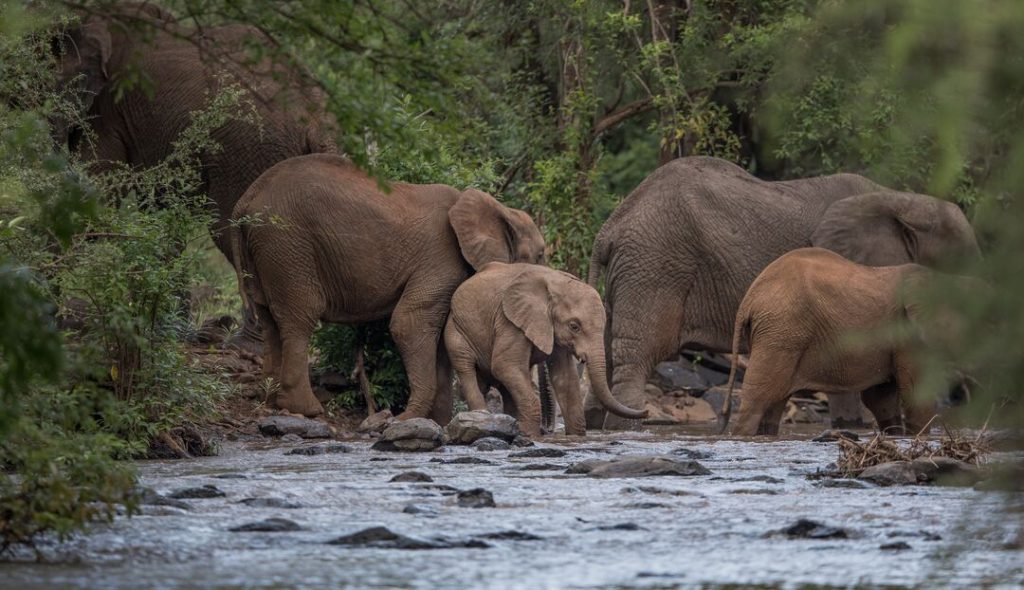
Elephants are among the most socially complex land mammals on Earth. They live in tight‑knit family groups led by experienced matriarchs, whose knowledge guides the herd through droughts, conflict and environmental change. Removing individuals – especially older females or bulls – tears these societies apart. Research shows that culling can destabilise herds for decades, disrupting learning, communication, reproduction and calf survival, and exacerbating conflicts between elephants and people.
When governments frame culling as a ‘management tool’, they overlook the trauma inflicted on surviving elephants. These are sentient beings that suffer grief, stress and long-term psychological harm. Any management policy that disregards elephant welfare or social cohesion is fundamentally flawed.
Elephants are not only valuable in their own right – they also shape the landscapes they inhabit. Their movements open pathways and waterholes used by countless other species, their feeding behaviour models habitats that support biodiversity and their movements and migrations redistribute seeds and nutrients across ecosystems.
Elephants are ecosystem engineers
In many regions, elephants are keystone species: when they are removed or disrupted, entire ecological systems begin to unravel. Research shows that soil carbon and other nutrients are much higher in areas with elephants than in similar habitats without them – under proposed systems for PESA (Payment for Ecosystem Services of Animals) the measurable difference that each elephant makes can be monetised. Culling is not only damaging to individual elephants and the wider habitats they inhabit – it also makes no economic sense.
Claims that culling can be justified based on elephant numbers alone do not consider multiple other factors that determine their ecological impacts. These include habitat condition, rainfall patterns, human encroachment and landscape fragmentation, all of which play far more significant roles. Simplistic ‘carrying capacity’ arguments based solely on estimates of elephant numbers must not be used to justify killing elephants.
Zimbabwe’s recent culls – including killing elephants for meat during periods of drought – have already demonstrated how quickly lethal measures can become normalised. Botswana’s slaughter of elephants for Independence Day festivities demonstrates how easily ‘management’ can slide into political symbolism. And in South Africa, proposals to kill over a thousand elephants rest on shaky scientific foundations and disregard mandatory non‑lethal alternatives.
Normalising elephant killing risks fuelling demand for bushmeat, undermining conservation, and eroding public trust. It also contradicts global efforts to secure a future for elephants in the face of climate change, habitat loss, and poaching pressure.
Across Africa, human activity – not elephant abundance – is the primary driver of conflict between people and elephants. Expanding agriculture, fencing, settlement growth and habitat fragmentation squeeze elephants into smaller spaces and cut off traditional migration routes, increasing the likelihood of encounters with people.
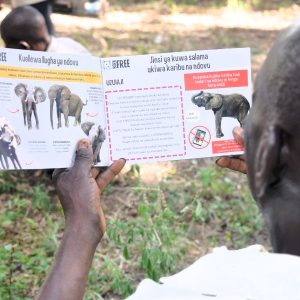
Born Free’s elephant toolkit
Culling does nothing to address these root causes and instead makes conflict worse by disrupting elephant social groups and precipitating changes in their behaviour. To limit conflict, governments must work with elephant experts and communities to design and implement coexistence programmes to connect key habitats, and to deter elephants from foraging on crops or entering human settlements using non-lethal detection and deterrent techniques. Born Free’s field conservation and community engagement projects work in synergy to address this very issue.
Where elephant populations are genuinely outgrowing the available habitat because the space in which they can move has been restricted by human activities, contraception can be deployed to manage population growth. Translocation of some family groups has also been successfully used in some cases.
These humane approaches protect both people and elephants while preserving the integrity of elephant societies.
Born Free urges governments across southern Africa to reject culling as a management tool. It is inhumane and unethical, disrupts elephant family groups and societies, leads to increased conflict with people, and damages the wider ecology.
Instead, we call for the development of science‑based, humane management plans; investment in coexistence strategies, the protection and restoration of elephant habitats, transparent decision‑making grounded in welfare and conservation ethics, the full involvement of local communities, and regional collaboration to protect those populations that cross national borders.
Elephants are not expendable. They are architects of Africa’s wild landscapes, cultural icons, and sentient beings whose lives matter. Their future – and the future of the ecosystems they sustain – depends on compassionate, forward‑thinking conservation and management, which have always formed the basis for Born Free’s work.