
18 fascinating African elephant facts
Discover African elephant facts, from their intelligence and social lives to the threats they face, and learn how you can help protect these iconic animals.
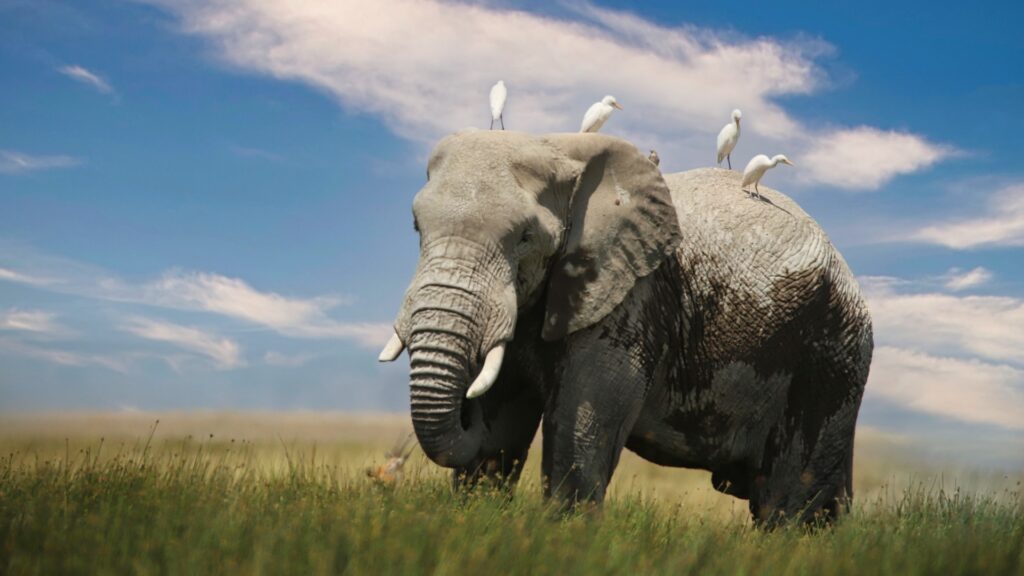
African elephant (c) Koushik Chatterjee / wildearth_images_
African elephants are the largest living land animal in the world. They are incredibly intelligent, have complex social bonds, an emotional depth that is still being understood by people and are vital to maintaining healthy ecosystem. African elephants are threatened with extinction and need our help. Keep reading to learn more about these marvellous mammals and find out what you can do to help protect them.
1. African Savannah elephants are the largest land animals on Earth
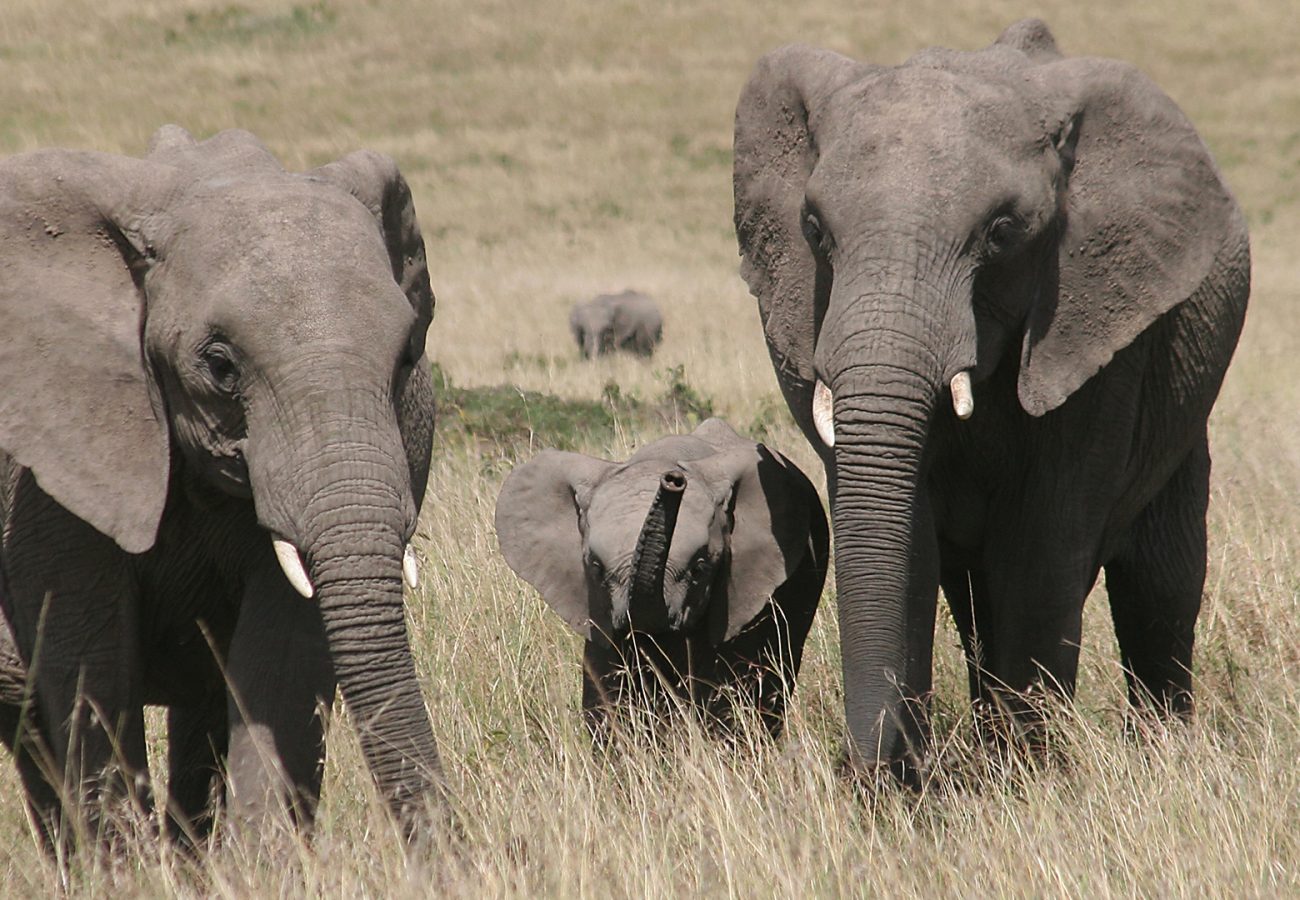
African Savannah elephants are the largest living land mammals. Adults can reach up to 3.7 metres (12ft) at the shoulder and males on average weigh 6,000kg. African elephants have noticeably bigger ears than Asian elephants.
2. There are two distinct species of African elephant
African elephants are split into two species: Savannah elephant (Loxodonta africana) and Forest elephant (Loxodonta cyclotis). They were only formally recognised as separate species in 2021, based on genetic and physical differences. Forest elephant’s tusks are more downward-pointing and straighter than Savannah elephants.
3. Both African elephant species are threatened with extinction
The IUCN Red List classified Savannah elephants as Endangered and Forest elephants as Critically Endangered. Forest elephant populations dropped considerably, by an estimated 62% between 2002 and 2011 in their central African range. Some estimates suggest that 50 years ago, Africa had over one million elephants.
(c) georgelogan.co.uk
4. African elephants have extraordinary trunks
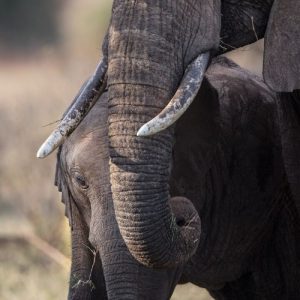
Elephant’s trunks are unique – they are the only living mammal with one. Stretching as long as 1.5 metres, their trunks are prehensile – meaning that they are adapted for holding, grasping and wrapping around objects. Trunks were formed by a fusion of the nose and upper lip and have many functions such as breathing, smelling, supporting eating and drinking and communication.
5. They have an incredible sense of smell
African elephants have relatively poor eyesight but an exceptional sense of smell. They can detect water using smell – even underground! Elephants will dig up water pipes to access water sources if needed but it remains uncertain from how far away they can smell water. When scenting the air, elephants raise their trunks like a periscope.
6. Elephants don’t actually drink through their trunks
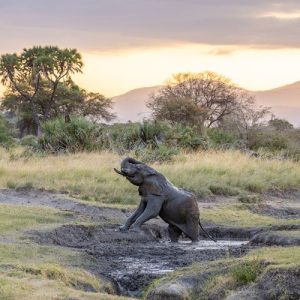
When drinking, elephants can suck up water into their trunk. They then spray the water into their mouths. Trunks are also used to spray water over their bodies to cool down.
7. African elephants’ ears act like air conditioning
Their large ears, the biggest of any animal, help regulate body temperature. A network of blood vessels allows heat to escape when ears are flapped. Elephants can increase blood flow to their ears in hot conditions to help cool down and restrict this in cold environments, preventing heat loss.
8. Tusks are teeth, and both sexes usually have them
African elephant tusks are elongated incisor teeth. Both males and females can grow tusks, though female’s tusks are usually smaller and thinner than males. Savannah elephants have bigger tusks than forest elephants, but forest elephant tusks are harder.
Tusks are used for:
- Digging for water and minerals
- Stripping bark or knocking over trees
- Moving heavy objects
- Defence
Elephants will often have a dominant tusk, like how humans have a dominant hand. An elephant’s dominant tusk can be identified as it may be more worn down that their other tusk.
9. African elephants eat enormous amounts of food
African elephants are herbivores. To feed their large bodies, they need vast amounts of food and can spent up to 18 hours a day feeding. Savannah elephants primarily eat browse (trees and shrubs) but when growing grasses and other food is seasonally available, they will include this. Forest elephants mainly eat fruit, leaves and bark along with seeds, branches and roots.
(c) Will Burrard-Lucas
10. They are vital engineers of African ecosystems
African elephants are keystone species. They create pathways used by other animals, enlarge waterholes, and turn over soil. Forest elephants are crucial seed dispersers, earning them the nickname “forest gardeners”. By promoting large tree growth, forest elephants help store carbon and combat climate change.
11. African elephants are highly intelligent and emotional
Elephants are extremely intelligent, with the largest brain of any living land mammal. Elephants recognise individuals, show empathy and compassion, and form lifelong social bonds. They have amazing spatial memory and can remember the location of watering holes and safe places across vast areas.
12. Elephant families are led by experienced females
Females and young live in tight-knit family herds led by a matriarch, usually one of the older members of the family, full of knowledge and wisdom. Males leave their natal herd after reaching adolescence at around 12-15 years old and then they usually live alone or in small bachelor groups but will associate with family herds from time to time to mate with females or to socialise with their natal family herd.
13. African elephants mourn their dead
Elephants can recognise the bones and tusks of deceased elephants. They may touch and examine remains, stand vigil for hours or days, or pause at places where loved ones died. These behaviours suggest deep emotional awareness and long memories.
14. African elephants are pregnant for nearly two years
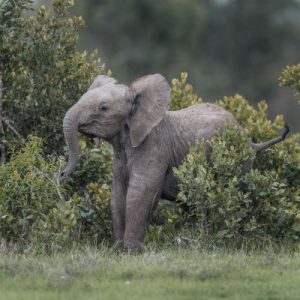
Both Savannah and Forest elephants are pregnant for around 22 months on average, giving birth to one calf. However, there are several known instances of twins being born although this is much harder for the mother to keep both healthy and alive. Savannah elephant infants weigh around 90 – 120 kilograms when they’re born and are less than a metre tall, at their shoulders.
(c) georgelogan.co.uk
15. Elephants communicate in many ways
Elephant communication is complex and still being understood by researchers. They can communicate through complex chemical compounds in their urine, saliva, gland secretions, which may convey information about age, maturity and kinship. Vocal communication also plays an important role – they can make both loud, powerful vocalisations and very low frequency sounds. These low frequency sounds can’t always be heard by people and may be transmitted through the ground.
16. Humans are the biggest threat to elephant populations
The greatest threats to both Savannah and Forest elephant populations are human-driven: ivory poaching, habitat loss, climate change and human–elephant conflict.
17. Habitat loss is pushing elephants into conflict
Expanding agriculture, mining, and settlements are shrinking elephant habitats. This increases issues such as crop raiding, retaliatory killings, and poaching risk. Forest elephants are especially vulnerable due to fragmented habitats, something which is projected to increase further in coming years.
18. African elephants urgently need our help
Both African elephant species are at risk of extinction without urgent action. Conservation priorities include protecting habitats, supporting coexistence with local communities, and ending the ivory trade.
Born Free works to protect elephants in the wild and supporting their conservation, as well as campaigning against elephants in captivity. The needs of elephants cannot be met in captive environments, such as zoos.
You can support our work by adopting the elephant family today and signing our petition for an Elephant-Free UK.
ADOPT THE ELEPHANT FAMILY
The Elephant Family are a large herd who live in Kenya’s Amboseli Park, at the foot of Mount Kilimanjaro.
They are monitored by the Amboseli Elephant Research Project – the longest-running project of its kind in Africa. Your adoption will help with elephant monitoring and conservation work.