
16 interesting Asian elephant facts
Discover Asian elephant facts, from their intelligence and cultural significance to the threats they face, and learn how you can help protect these animals.
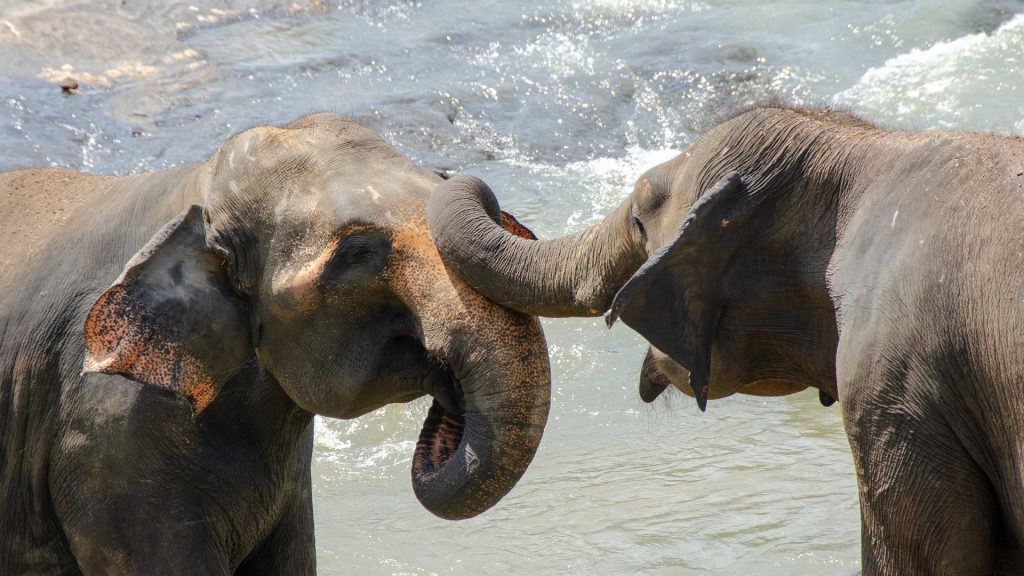
Asian elephants are some of the most fascinating animals on Earth. Known for their intelligence and strong family bonds, these mega-herbivores play a vital role in maintaining healthy forest ecosystems across Asia. Culturally significant across much of their range, these giants are Endangered. Keep reading to find out more and how you can help.
1. Asian elephants are a single species with three subspecies
Asian elephants (Elephas maximus) comprise four recognised subspecies: Indian elephant (Elephas maximus indicus) – found across mainland Asia; Sri Lankan elephant (Elephas maximus maximus) – living only in Sri Lanka; Bornean elephant (Elephas maximus borneensis) living on the island of Borneo and the Sumatran elephant (Elephas maximus sumatranus), the smallest of the subspecies, found only on the Indonesian island of Sumatra.
2. Asian elephants are smaller than their African cousins
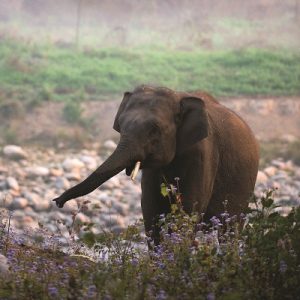
Asian elephants are the second-largest land animals after African elephants. The Indian subspecies is the largest of the Asian elephants and adults typically reach around 7.9 –8.9 feet (2–3 m) at the shoulder, and 2,700 – 3,600kg in weight.
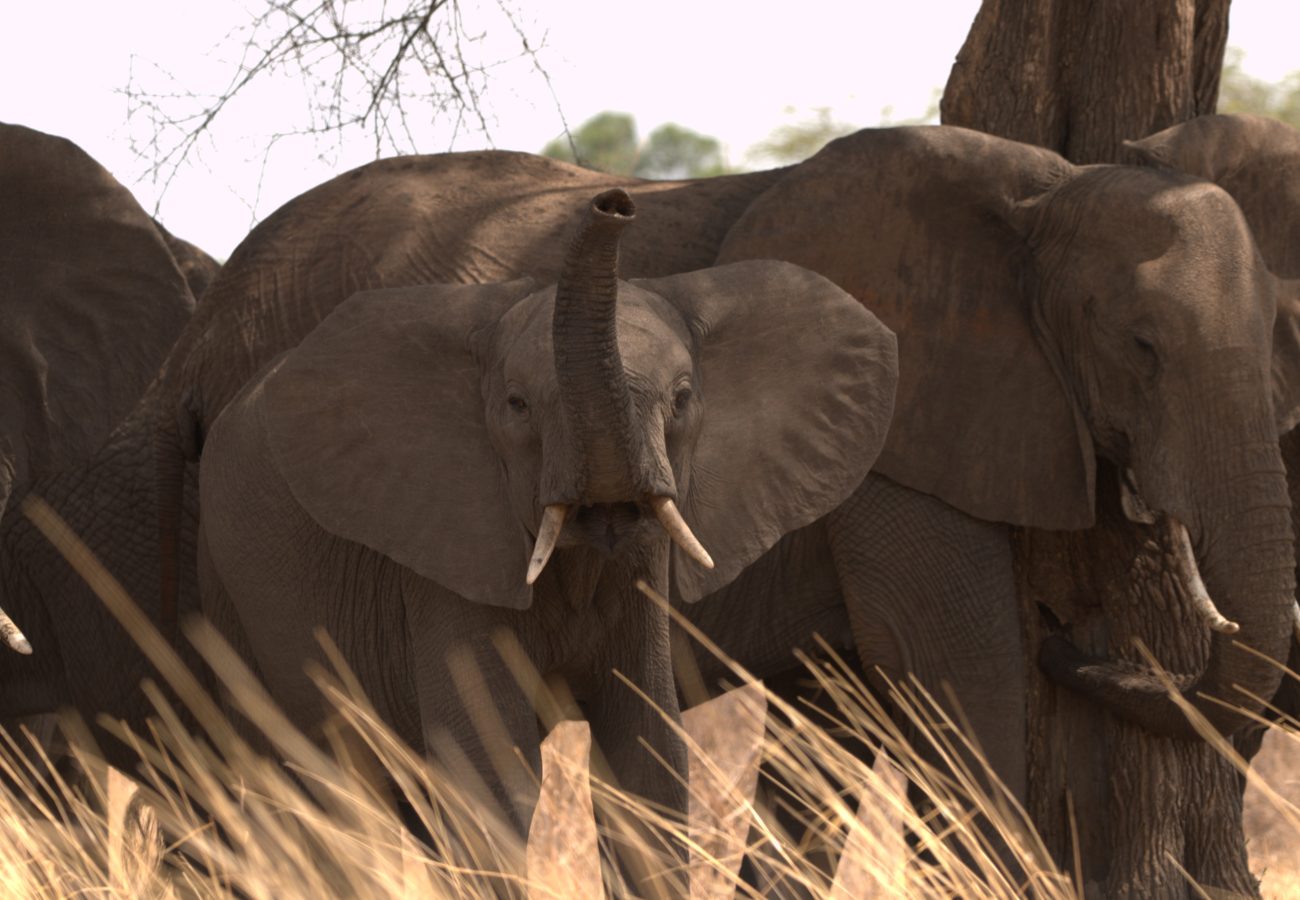
They have smaller, rounded ears compared to African elephant’s large, triangular ears. Asian elephant ears also have patches of mottled white or pink – this is one of the easiest ways to tell the difference between the African and Asian elephants.
3. Asian elephants are Endangered and populations are declining rapidly
According to the IUCN Red List, Asian elephants are Endangered. Last assessed in 2019, their population is decreasing. Some estimates suggest there are only around 40,000–50,000 elephants remaining in the wild across 13 countries, but this figure may only be a rough guess. More research is needed to determine the actual population of Asian elephants.
The Sumatran subspecies is Critically Endangered, with the population highly fragmented. The Bornean subspecies is classed as Endangered by the IUCN, yet only around 1,000 individuals remain.
4. Only some males have visible tusks
Unlike African elephants, only some male Asian elephants grow prominent tusks. Females and many males are tuskless, with very few tusked wild males left as a result of ivory poaching. Instead, some females will have small ‘tushes’ – these are small teeth that rarely extend beyond the mouth.
5. Their trunks are incredibly versatile tools
Asian elephant’s trunks contain thousands of muscles and are highly sensitive. Their trunks are used to breathe, lift objects, eat, smell and spray their body with dirt or water. Trunks also play an important role in communication. Asian elephant trunks have one “finger-like” projection at the tip while African elephants have two.
6. Asian elephants live in a range of habitats and are regarded as ‘umbrella species’
Asian elephants live in forests including tropical evergreen, moist deciduous and dry thorn forests, grasslands, cultivated lands and scrublands. It remains unclear which of these habitats is Asian elephants’ ideal habitat as many of the landscapes they inhabit have been modified by humans.
As elephants range over such large areas, they are often considered an ‘umbrella’ species – by conserving Asian elephant habitats, several other species will also be protected. Elephants can also disperse seeds over large distances, making them responsible for maintaining plant diversity in ecosystems.
 7. Asian elephants are highly intelligent and self-aware
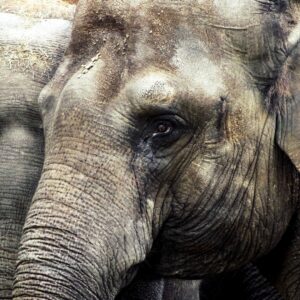
Asian elephants are highly intelligent and self-aware animals. Scientific studies have shown that they can recognise themselves in mirrors and demonstrate body-awareness, alongside advanced abilities such as problem-solving, cooperation and social learning.
8. They are deeply social animals with matriarchal herds
Female Asian elephants and their young, live in well-defined matriarchal communities or clans, made up of adult females, sub-adults and juveniles. Their society has a fission-fusion dynamic, which means that while they live within a defined clan, they will separate into smaller groups as they move around the landscape.
Adult males (bulls) are mainly solitary but will form loose social bonds with other males. They will only temporarily associate with female groups.
9. Asian elephants communicate in sophisticated ways
Elephants use vocalisations including trumpets, rumbles, roars, and chirps to communicate. They aren’t limited to vocal communication however; chemical communication and touch are also important mechanisms.
10. Asian elephants consume vast amounts of food
Asian elephants are herbivores and generalists – they eat vast amounts of plants throughout their day. Their diet includes grasses, bamboo, bark, roots, leaves, and cultivated crops like bananas and sugarcane. It will vary depending on season and food availability. Many Asian elephants live so close to humans across their range that, unfortunately, they also utilise a lot of human-food sources like crops but also waste dumps for food. In Sri Lanka and India, elephants regularly enter rubbish tips, looking for food and unknowingly consuming plastic waste.
11. The lifespan on Asian elephants in the wild is 60-70 years old
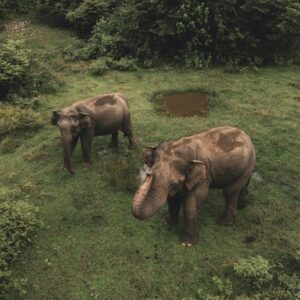
But in captivity, this is much shorter. The median lifespan of captive-born elephants is approximately half that of their wild conspecifics, with the median lifespan on elephants born into captivity in the UK currently less than 20 years. Read our Elephants in Zoos: A Legacy of Shame to find out more.
(c) SB Bandara, Unsplash
12. They play a vital role in Asian culture and religion
Asian elephants hold deep cultural and spiritual significance across Asia. They feature prominently in Hinduism (the elephant-headed god Ganesha), Buddhism, and local folklore. Despite this reverence, captive elephants are often exploited for tourism, logging, and ceremonies. If you see an elephant encaged, raise the red flag and report it.
13. Behind tourist activities which offer elephant rides and close interactions, there’s often a darker reality
While it can be appealing to interact with elephants, Born Free strongly advises people not to engage in close contact activities with elephants or ride elephants. In order to tame elephants for close human contact, they may routinely undergo abusive training regimes, with young elephants often the victims of this brutality.
14. Habitat loss is one of the greatest threats to Asian elephants
Increasing human infrastructure, including settlements, plantations, industry and transport links have squeezed Asian elephant populations into ever-decreasing pockets of forest, with traditional migratory routes blocked.
15. Human-elephant conflict causes tragedy on both sides
As wildlife and people are forced to live closer and closer together, human-elephant conflict is a serious threat to both people and elephants. Sadly, hundreds of people are killed by elephants each year in Asia, often when elephants raid crops or enter villages. In retaliation, elephants are poisoned, shot, or trapped, with hundreds killed annually.
Conservation efforts which focus on creating buffer zones, early warning systems, and community-based solutions are working to reduce conflict.
16. Asian elephants need our help
Asian elephants face extinction without urgent conservation action. Priorities include protecting and connecting habitats, ending captive exploitation, and supporting local communities to coexist with elephants.
Born Free campaigns to end the captivity of wild animals and protect elephants in their natural habitats. Our work to combat the global ivory trade aims to help to reduce the threat of elephant poaching and support conservation efforts worldwide. You can support our work by signing our petition for an elephant-free UK, supporting an end to elephants being confined in UK zoos.
LOVE ELEPHANTS?
Adopt the Elephant Family - a large herd who live in Kenya’s Amboseli Park, at the foot of Mount Kilimanjaro. Adopting an elephant helps support our work to stop elephants from being poached and killed for their ivory, as well as support ranger patrols that monitor and protect wild elephants, and work with communities to reduce conflict between people and elephants.