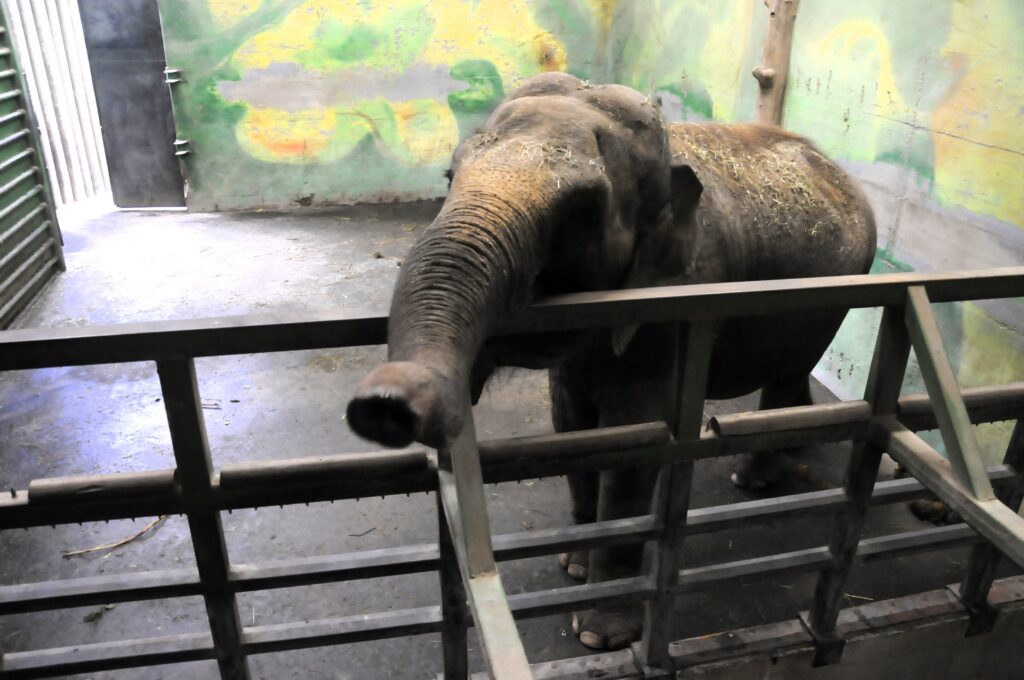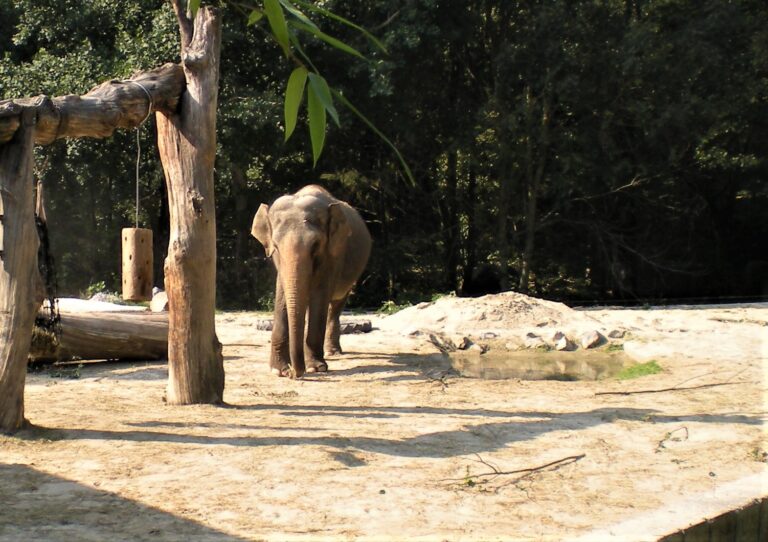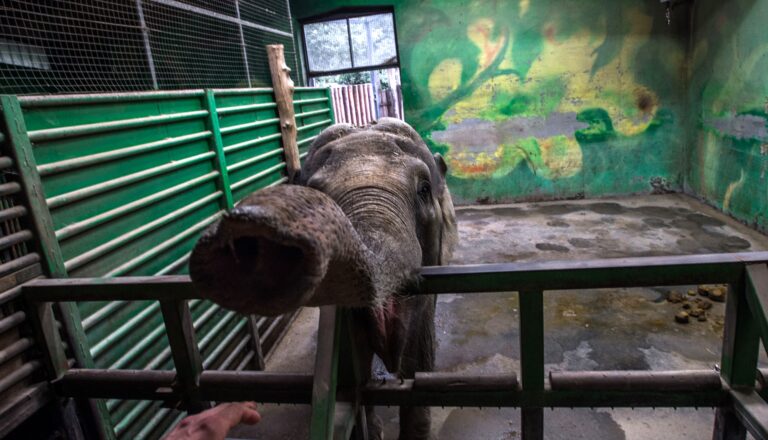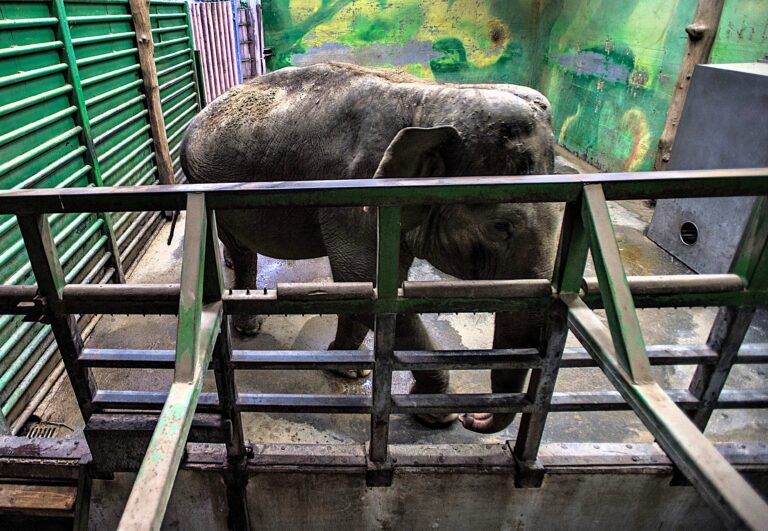
Ganga is a female Asian elephant kept alone at Ljubljana Zoo in Slovenia.
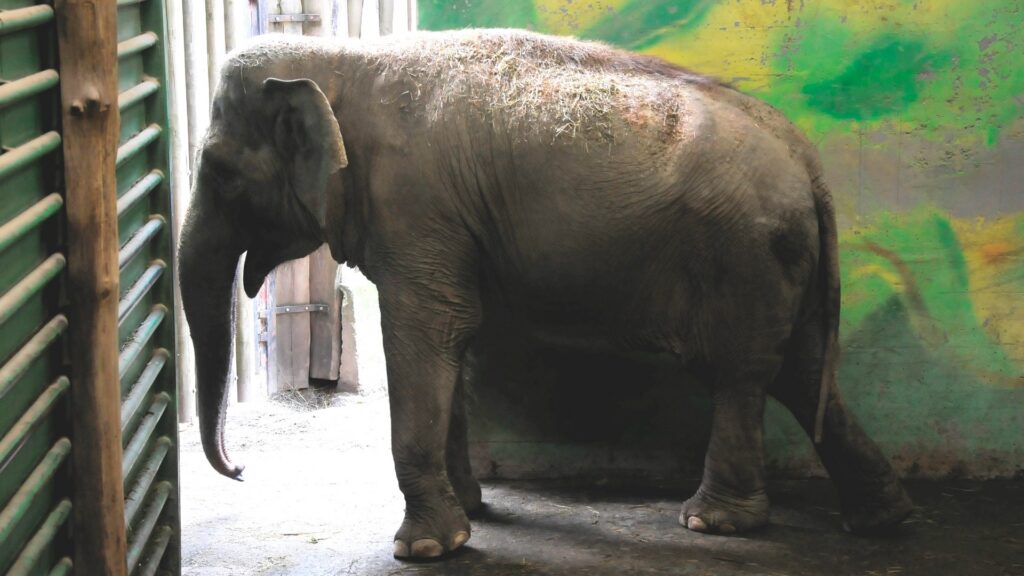
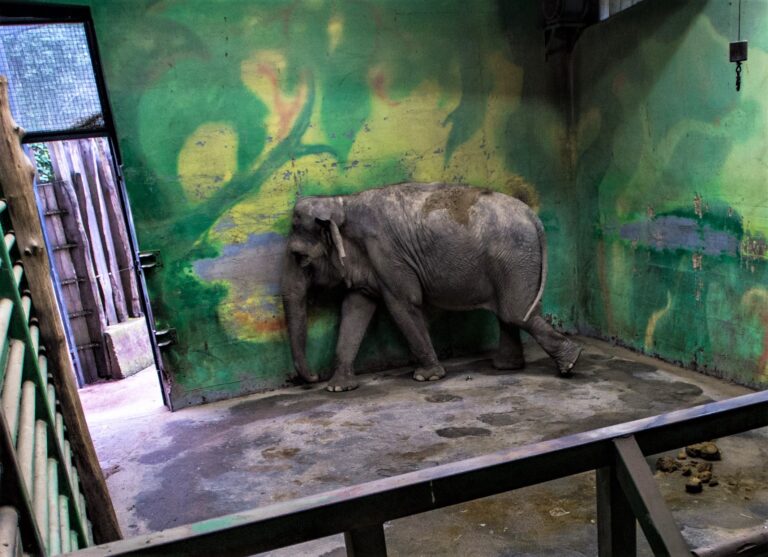
Ganga at Ljubljana Zoo, Slovenia, in 2013 © Born Free
Slovenian media reports state that in 1977 Ganga, then aged approximately two years old, was transferred from Kanpur Zoo in India and shipped on a voyage that took 20 days to arrive in the Yugoslav city of Rijeka.
The ship was said to be transporting ten containers, each holding one baby elephant. It is believed that Ganga was one of a group of elephants who had been bought by a Dutch trader who subsequently sold them to zoos in the region. Ganga was selected to go to Ljubljana Zoo.
After arriving in Rijeka in the cold, snowy winter, according to workers at the time Ganga did not want to leave the ship to board a truck that would transport her the 75 miles to Ljubljana. The whole day was reportedly spent collecting ‘greens’ and attempting to lure her onto the truck, which was eventually accomplished. The then director of the Ljubljana Zoo, who was also a veterinarian, recalled how he was advised by the ship’s steward to pour a litre of rum into her bucket of drinking water to keep her calm on the journey.
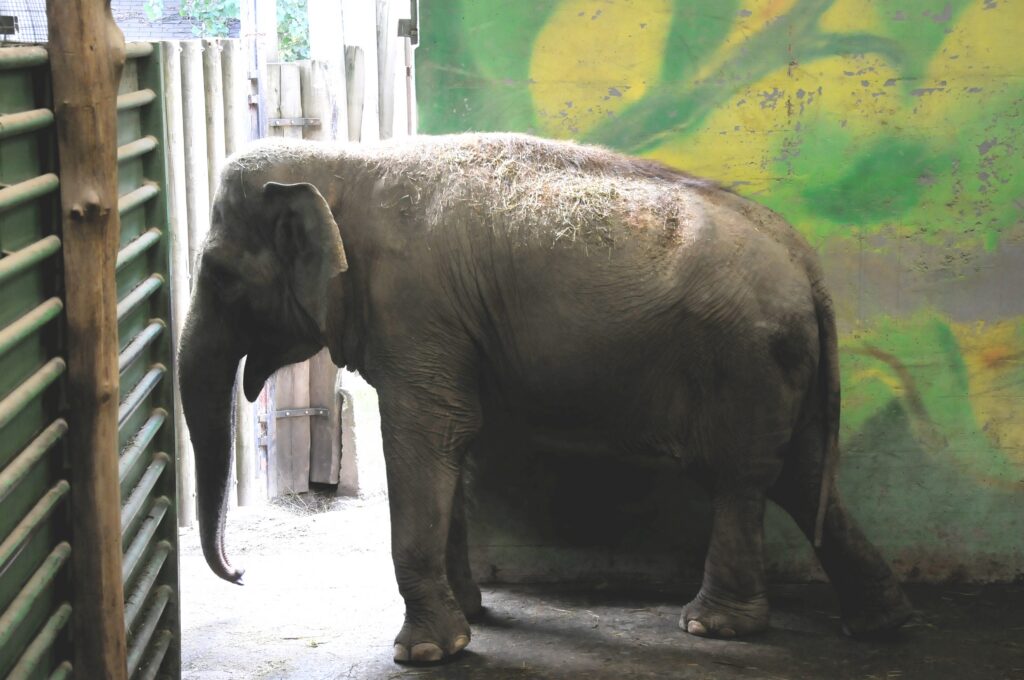
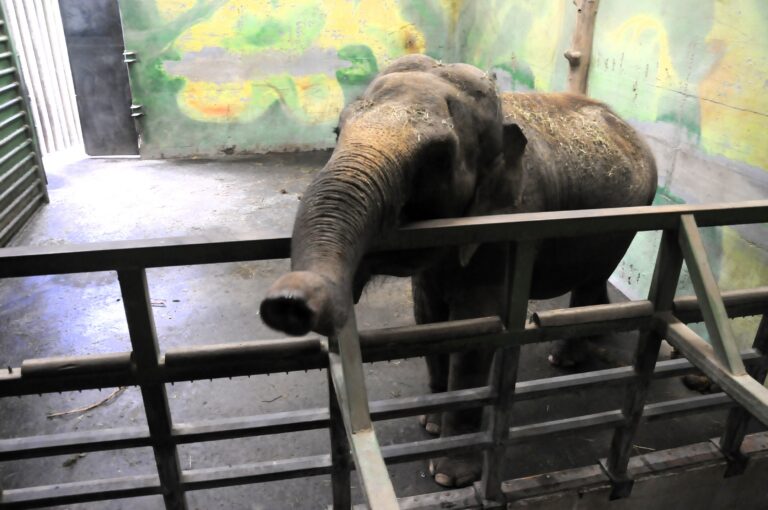
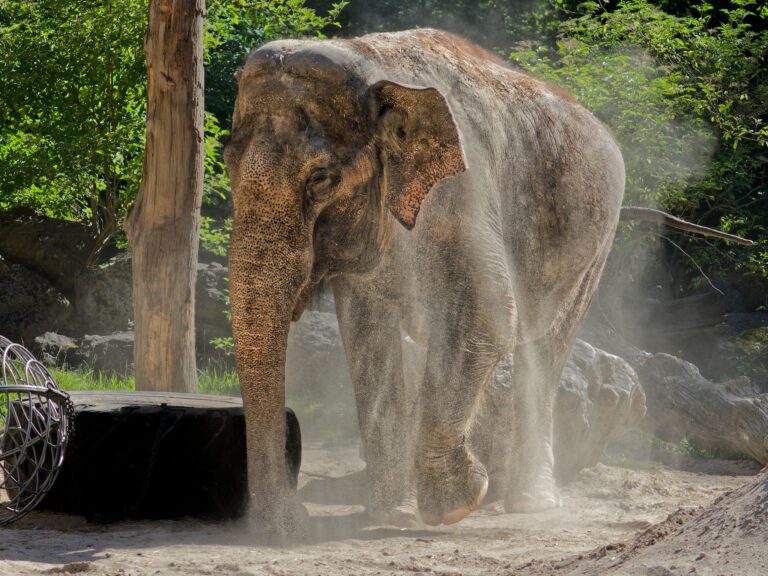
Ganga at Ljubljana Zoo in 2016 © Jo-Anne McArthur, Born Free
Her arrival at the zoo was reportedly a ‘big challenge’ for both Ganga and her keepers, who had little experience in caring for an elephant. The elephant enclosure was apparently still under construction after her arrival. One keeper at the time recalled that Ganga was scared and even aggressive when she arrived at the zoo, and she reportedly attacked a veterinarian during her time in quarantine, but they managed to tempt her by feeding her onions.
A few years later, another Indian elephant named Inda reportedly arrived at the zoo, however, attempts to introduce Inda to Ganga did not go well. Ganga apparently pushed Inda into a ‘ditch’ and injured her. Inda was then relocated to a different facility. An African elephant named Temba was also brought in, but again the pairing did not work out. Temba later died, and Ganga has remained alone ever since. As elephants are such complex, social animals, whose natural biology and behaviour is based on living within closely bonded matriarchal herds, Ganga’s situation is both sad and unacceptable.
The zoo has decided that, after so many years, relocating Ganga to a new environment or introducing her to other elephants would be too stressful. She reportedly has a ‘close relationship’ with her keepers, and is managed under a system of free contact, whereby her keepers are allowed to share the same space as the elephant, rather than protected contact, where the keeper is separated by a barrier.
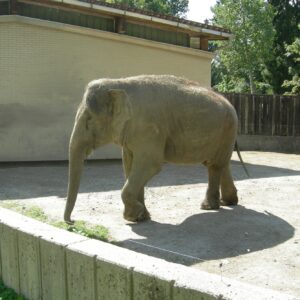
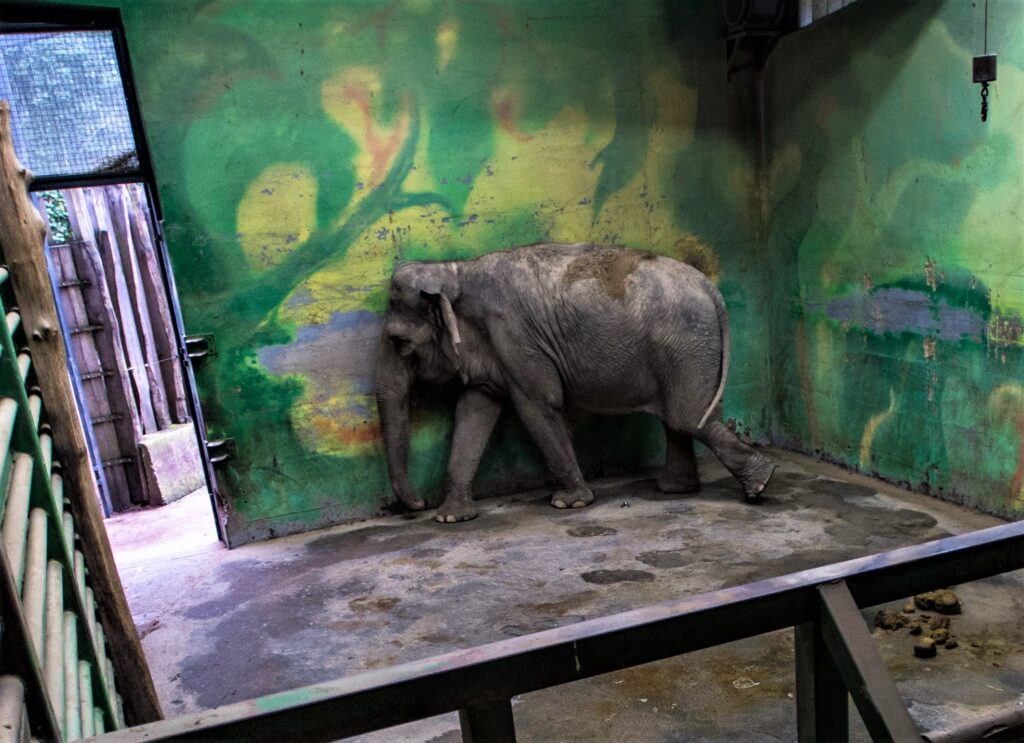
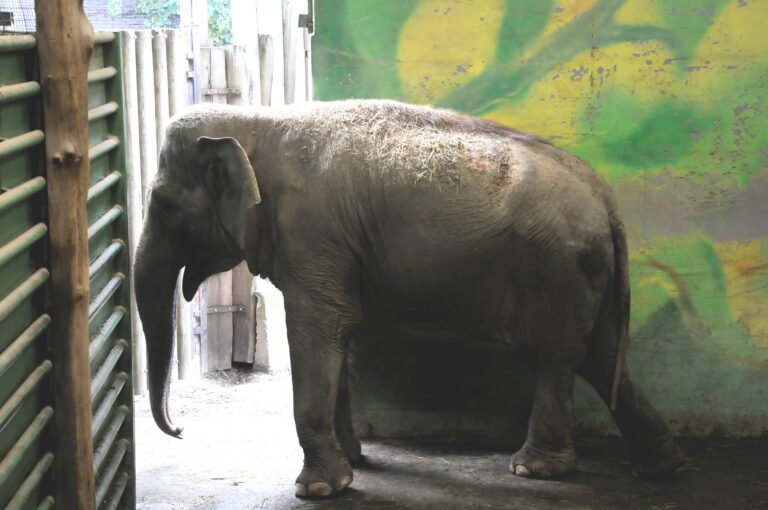
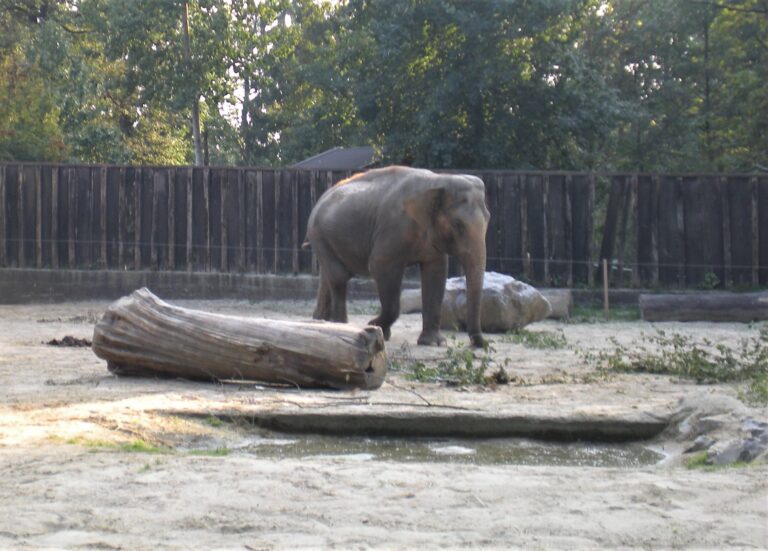
Ganga in 2006 © Pinky sl. (Wikimedia Commons)
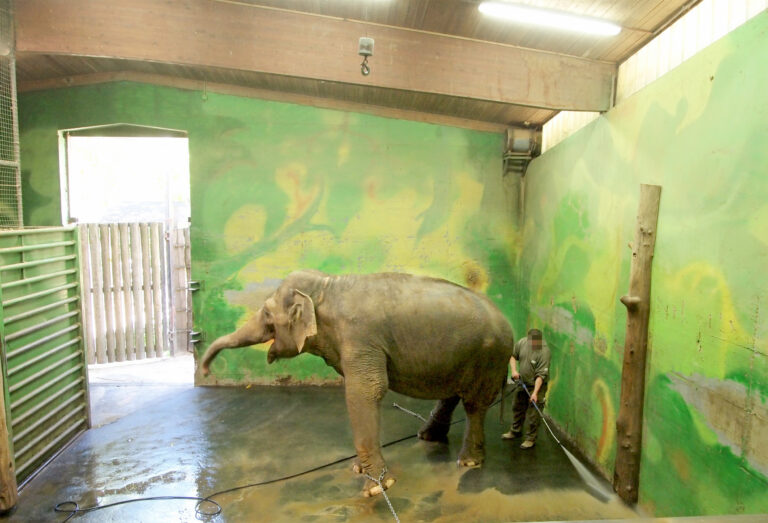
To try to prevent or manage the many ailments and physical problems experienced by captive elephants, Ganga undergoes routine health checks and procedures. Through daily training sessions, she has been taught to perform various behaviours on demand that facilitate veterinary examination and treatment, when needed, such as opening her mouth to allow her teeth to be examined; desensitising her ears for blood tests; lifting and holding up her feet; and blowing water out of her trunk for tuberculosis testing. Despite her training, Ganga is still chained during some procedures or while her enclosure is maintained.
Ganga needs regular nail inspection and foot care to identify any signs of damage and irregularities. Her nails grow constantly and in her confined captive environment they don’t wear down as they would do naturally in the wild. The horny layer of skin on the soles of her feet also becomes thickened and can interfere with her walking. Therefore, she reportedly needs to have a monthly pedicure during which her nails are shortened, cuticles trimmed, and the skin on the soles of her feet filed down, using saws, brushes, and an angle grinder.
From videos posted online, the afternoon public ‘training sessions’ appear to be more entertainment focused, with Ganga trained to lift and roll large logs, raise her feet, and receive food treats. She is also trained to ‘play’ the mouth organ (supposedly used as part of her TB trunk washing technique).
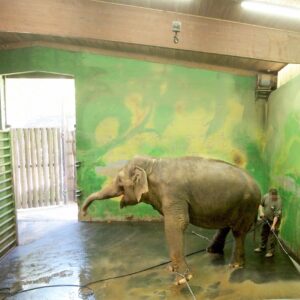
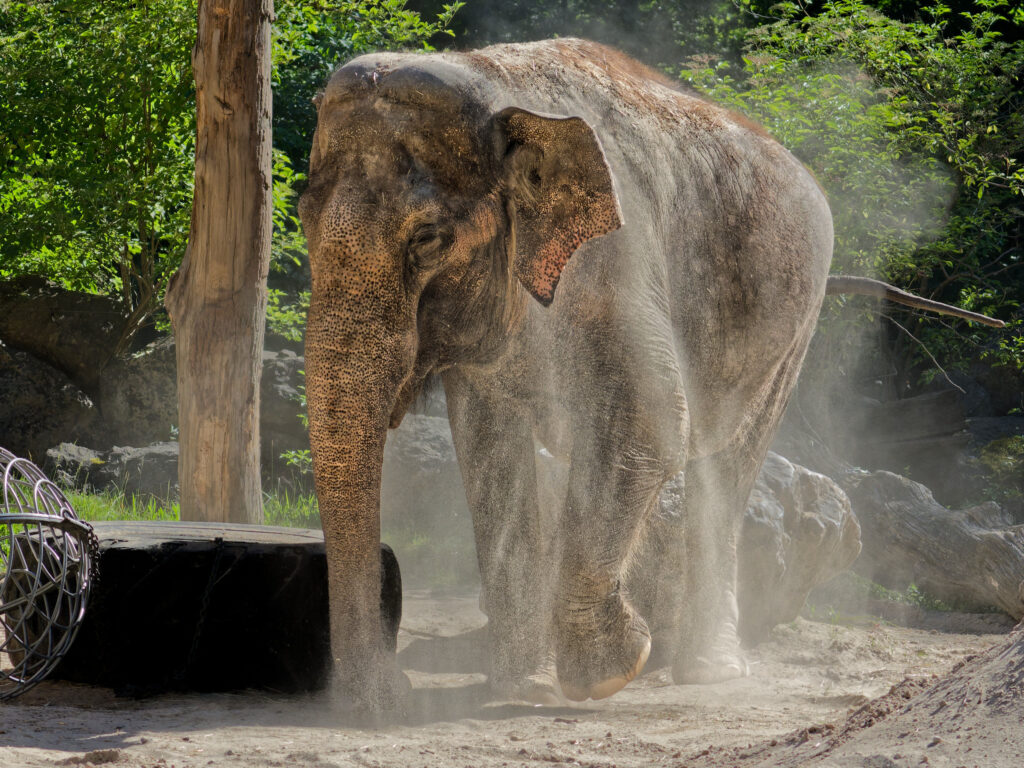
Ganga at Ljubljana Zoo in 2014, chained during routine maintenance (c) Tiia Monto (Wikimedia commons)
In the winter, the zoo has stated that Ganga is very sensitive to the cold and when the temperatures drop below zero, she doesn’t go outside, even if the door is left open. Ganga has been observed repeatedly pacing in circles in her concrete-floored indoor quarters. The force and pressure on her aging joints is immense. Although her outside enclosure has a softer, sandy substrate, little shade has historically been provided from the hot summer sun and Ganga has often retreated to her small inside quarters. A shade sail and air conditioner were added to her enclosure with a water-mister reportedly helping to cool her down during a 2022 heatwave in Ljubljana.
Ljubljana Zoo has been a full member of the European Association of Zoos and Aquaria (EAZA), which claims to be a coalition made up of ‘progressive zoos’, since 1999, yet the zoo has been slow to implement significant improvements to Ganga’s enclosure.
In 2024, when Ganga was 49 years old, extensive work reportedly got underway to create a larger pool in her enclosure that would finally allow her to immerse herself in water. Her previous ‘pool’ was very small and shallow.
Media reports in 2025 stated that there are plans to carry out extensive renovation of Ljubljana Zoo, at a cost of 40 million euros. The plans reportedly include the demolition of the elephant enclosure, which will be replaced with a ‘state-of-the-art habitat designed to meet the modern behavioural needs of elephants’. It is unclear exactly how these plans will evolve and whether Ganga will benefit.