Celebrating World Ranger Day in Kenya
Today, we honour the remarkable heroes who protect and monitor wildlife on the frontline, not least our own Twiga Team, hard at work in the heart of Kenya.
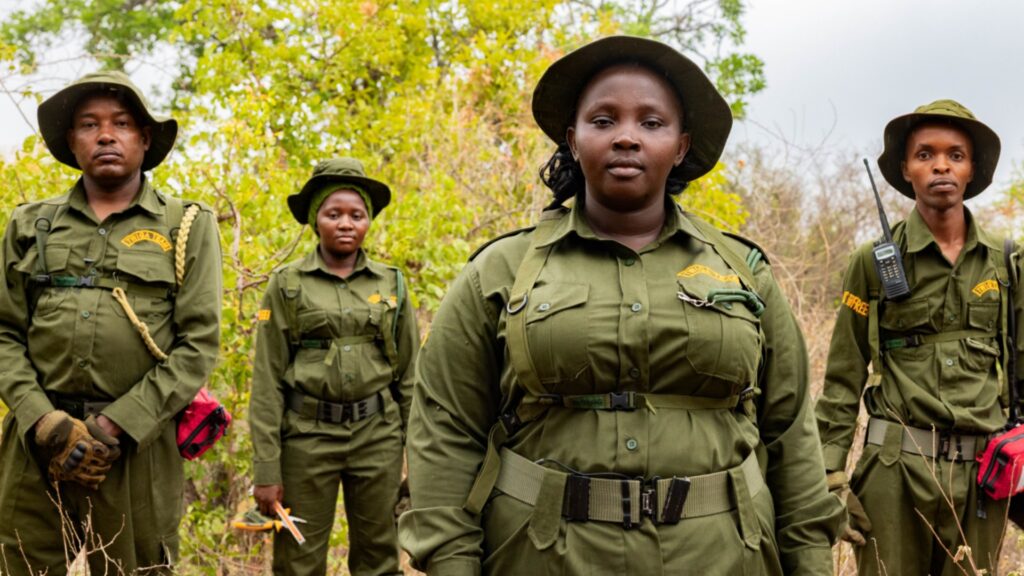
L-R: Shadrack, Amina, Jackline and Bernard C) Peter Ndung’u
It’s World Ranger Day (31st July), the perfect opportunity to celebrate the wider work and ever-expanding expertise of Born Free’s Twiga Team. No two days are the same for Shadrack, Amina, Jackline and Bernard, and – backed by supporters like you – they’re ready to rise to every challenge.
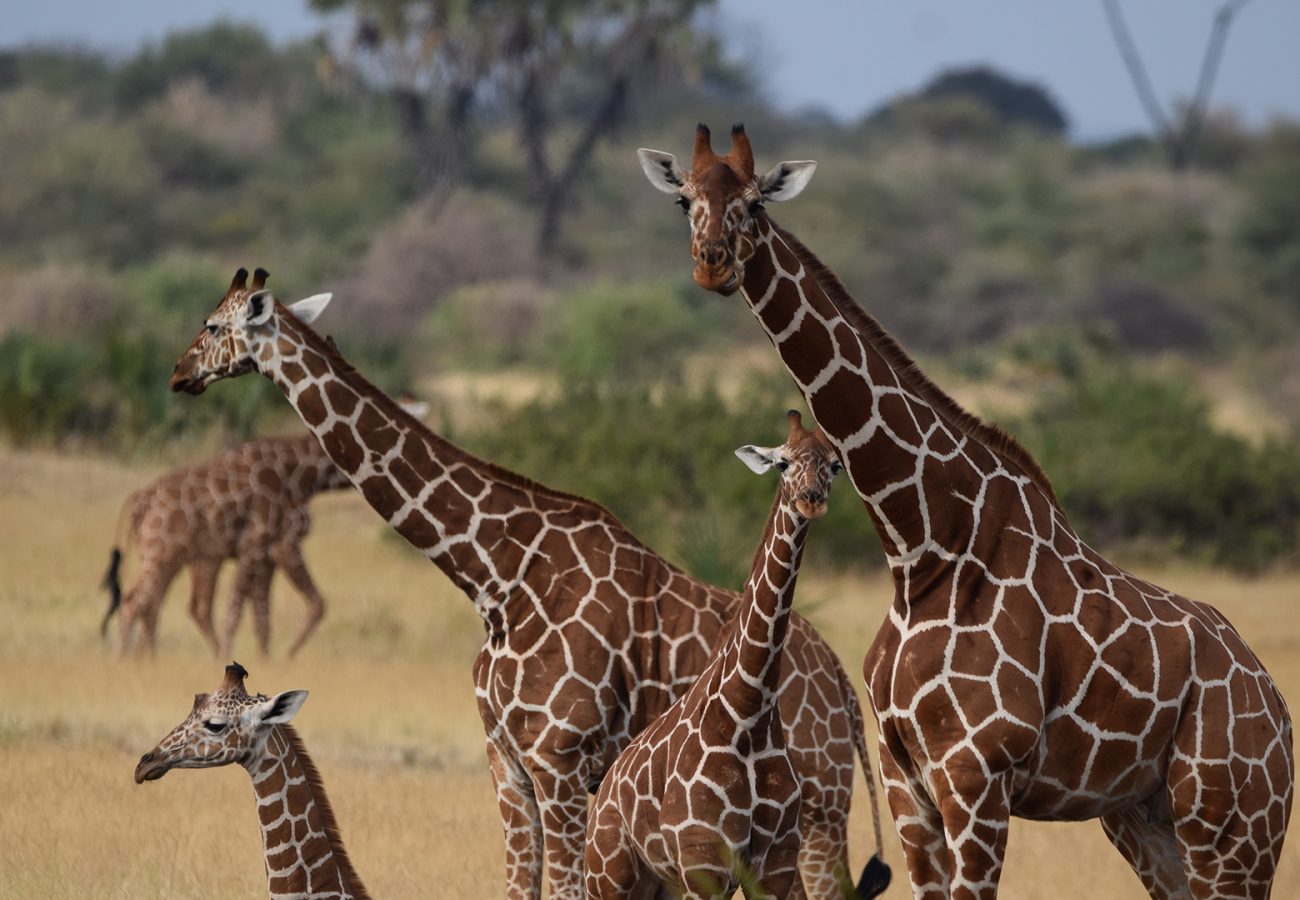
Twiga is the Swahili word for ‘giraffe’ and, since 2022, our team has patrolled Meru National Park, removing the deadly snares which pose a major threat to giraffes and other animals. But you might be surprised by how much more our eco-scout ‘rangers’ do to protect wildlife and people – from preventing illegal ivory trade, to fighting wildfires.
“Covering 340 square miles, Meru National Park is home to a plethora of wildlife, including iconic species such as reticulated giraffes, savannah elephants and lions,” explains Anna Cryer from our Conservation team. “To help ensure these species and many more remain safe, our Twiga Team patrols the park to remove snares, covering hundreds of miles every year. Since this work began four years ago, they’ve removed nearly 2,000 of these lethal loops of wire – such incredible work.”
Intended to trap wild animals for their meat, snares are indiscriminate, and can lead to long and painful deaths for wildlife. Illegally set by poachers, each snare removed helps prevent a wild animal suffering. But, while getting rid of snares is vital to protect wildlife, this isn’t all the Twiga Team do. They can encounter unexpected situations when out on patrol, so are always ready to adapt and react as needed.
Fighting ivory trade
Last year, on one routine patrol in the park, the team came across an elephant carcass. The size of the bones suggested it was an adult male elephant, who had died perhaps two months previously. Happily, all evidence pointed towards this bull dying from natural causes, rather than at the hands of people – something we wish for every elephant. The elephant’s tusks were also still present – a clear sign the elephant hadn’t been targeted by poachers for ivory.
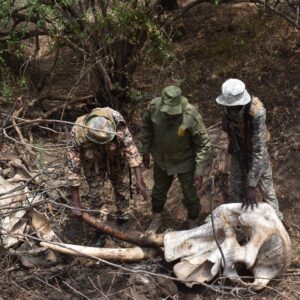
Interestingly, elephant carcasses are a vital part of the food chain, providing an important food source for scavengers, and releasing minerals back into the earth as they decompose. But sadly, despite the ban on international commercial trade in elephant ivory, their tusks can still be a lucrative black-market commodity.
The Twiga Team immediately reported the discovery to the Kenya Wildlife Service (KWS), who collected the tusks for secure storage. Each tusk recovered prevents it from entering the illicit ivory supply chain.
While this elephant had already died, had his tusks entered this illegal trade, they would feed demand for ivory, and put other elephants at increased risk of being targeted by poachers. Ensuring this doesn’t happen helps protect future generations of elephants across Africa.
Fighting wildfires
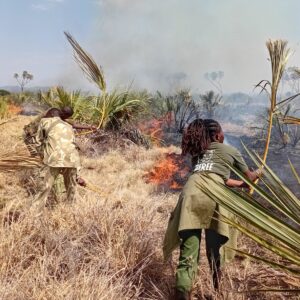
Another time on patrol, a fire was spotted within the park by the Twiga Team. We suspect this was deliberately started by poachers, as burning an area shortly after rainfall can encourage the growth of fresh, nutritious grass and vegetation. This attracts animals to the scorched area, making them easier to locate, target, and trap.
But fires can grow alarmingly quickly due to dry conditions, and they present a serious threat to human and animal life, as well as precious habitats. In recent years, such fires have become a pressing issue in and around Meru National Park.
So, when the team spotted the flames, they knew they had to act quickly and bravely spent 13 hours battling the fire alongside KWS rangers. A total of 32 acres of wildlife habitat was sadly burned but, without the Twiga Team’s quick action, this could have been much worse.
Illegal activities, and snakes
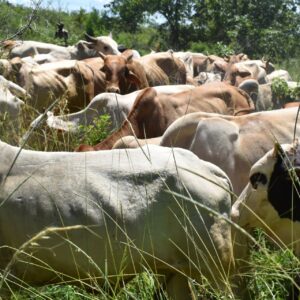 Other Twiga Team patrols have encountered illegal fishing, logging and grazing – all activities which aren’t allowed in the park. They always patrol in partnership with KWS rangers so, where enforcement action is required, suspects can be apprehended and the KWS Investigation Unit can respond to each case.
Amazing Shadrack, Amina, Bernard and Jackline have all been part of the Twiga Team since Day One, and recently added another skill to their growing portfolio: safe snake handling.
There are 140 species of snakes in Kenya, many of which can be found in Meru. While several of these species aren’t venomous, others have a dangerous bite and can be deadly. Building their confidence and knowledge of snakes, learning how to respond during encounters and developing handling techniques, helps keep the team safe when out on patrol.
Increasing their skill toolkit helps the Twiga Team be better able to expertly respond to whatever challenges may occur. Every day is so different for Shadrack, Amina, Bernard and Jackline. But your support ensures they can remain ‘on the ground’, where they are needed, protecting the wildlife of Meru National Park.
WANT TO SUPPORT OUR CONSERVATION WORK?
We strive for coexistence, where wildlife and people can live safely and peacefully alongside one another. We are working to ensure a future where wild animals can live their lives free from harmful exploitation – and where ecosystems are thriving. Will you stand with us?