
10 incredible African forest elephant facts
Discover African forest elephant facts, from their role as forest gardeners to their critically endangered status. learn why protecting them matters.
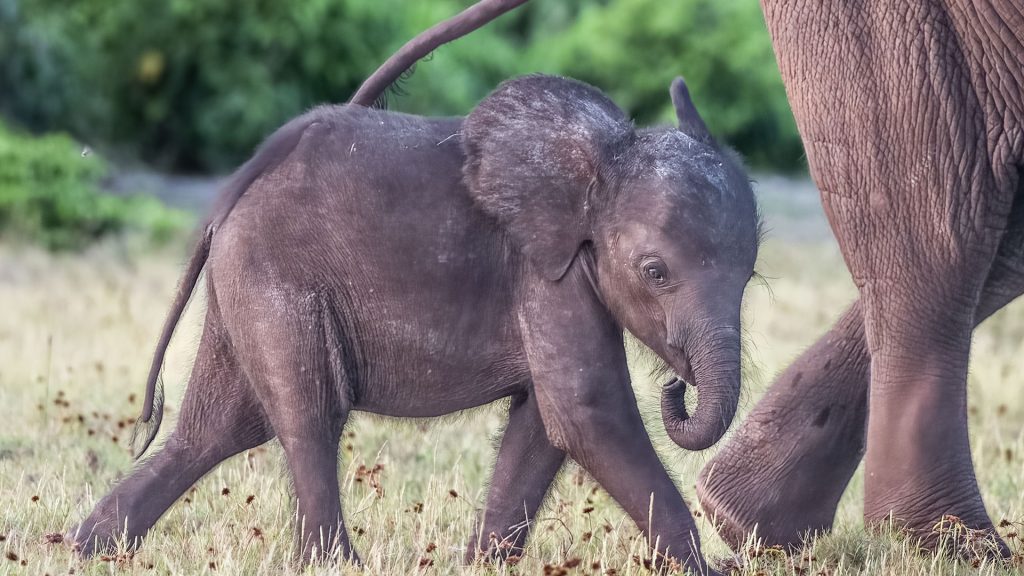
African forest elephant calf (c) Dave Currey
African forest elephants are one of the two species of elephant found in the African continent. They are the lesser-known cousins of savannah elephants, but by no means less important. Living in the forests of Central and West Africa, forest elephants play an irreplaceable role in maintaining tropical forests.
Forest elephants are Critically Endangered and have lost an estimated 86% of their population in just three decades. Despite this crisis, they remain relatively unknown compared to savannah elephants.
1. Forest elephants are their own distinct species
Until 2021, African elephants were considered one species, with forest and savannah elephants categorised as sub-species. But in 2021, the IUCN officially recognised these two as distinct species. Genetic and morphological research showed that forest elephants (Loxodonta cyclotis) and savannah elephants (Loxodonta Africana) began diverging around six million years ago.
This distinction is crucial for conservation; each species needs tailored protection strategies suited to their specific habitat and behaviour.
2. They’re smaller and built for forest life
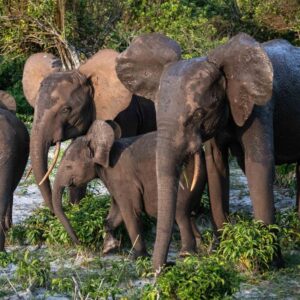
(c) davecurrey.com
Forest elephants are noticeably smaller than their savannah relatives, with more compact bodies. Other differences include: smaller, more rounded ears than savannah elephants, tusks which point downwards rather than curving upwards, and flatter backs. Male forest elephants are around 2.4 – 3 metres tall at their shoulders, while bull savannah elephants are usually 3.2-4 metres tall.
Despite being smaller, forest elephants are still one of the largest land mammals in the world and can weigh 4,000 kilos (4 tonne)! Their more compact size helps them navigate dense undergrowth of the African forests.
3. Forest elephants are the gardeners of the Congo Basin
They’re often called gardeners of Africa’s rainforests, and for good reason. Forest elephants consume plant seeds and disperse them throughout the forest in their dung. On average, seeds are dispersed five kilometres away, but some have been recorded as dispersed over 100 kilometres away! Depositing seeds far from parent trees in nutrient-rich dung is effectively planting the next generation of forest.
4. Without them, rainforests would fundamentally change
Forest elephants are key to dispersing large-seeded tree species, which once grown, store more carbon than smaller trees. The loss of large herbivores in Amazonia has already had implications on the carbon storage for the rainforests and without forest elephants in Africa, the same could occur. Protecting forest elephants means protecting a crucial climate ally.
5. They’re critically endangered and vanishing fast
The IUCN Red List classifies forest elephants as Critically Endangered – the most severe category before extinction in the wild. While their population is estimated to be around 145,000 individuals, it is decreasing and highly fragmented. In some countries, the forest elephant population is fewer than a hundred individuals.
6. Poaching has devastated their populations
Forest elephant tusks are prized in the illegal ivory trade and poaching for ivory is the leading cause of death of African forest elephants. Their forest habitat can provide cover for poachers, making detection and enforcement extremely difficult.
(c) davecurrey.com
7. They’re extremely elusive and difficult to study
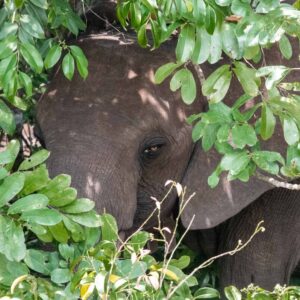
Unlike savannah elephants observed on open grasslands, forest elephants live in dense, sometimes remote rainforests, with limited visibility. Scientists rely more heavily on camera traps, dung surveys, and acoustic monitoring to study them.
8. Forest elephants create trails through the forest
Forest elephants carve out distinct trails through dense vegetation, creating networks of pathways in the forest. These elephant pathways are used by countless other species, from gorillas and forest antelope to smaller mammals, making it a lot easier for them to navigate the thick undergrowth. They also create and maintain forest clearings, often called ‘bais’ which are used by a wide variety of forest fauna and flora.
9. They face threats beyond poaching
Habitat loss, fragmentation and rapid land use change is an increasing threat to forest elephant populations. As human populations grow and land is increasingly converted to agriculture and used for infrastructure development, forest elephant populations are pushed into closer contact with people, leading to conflict.
Climate change will also be an increasing threat to both species of African elephants, as it is to many other species of wildlife, with weather extremes and unpredictable conditions shrinking habitats and reducing food availability.
10. Saving forest elephants requires urgent, targeted action
Conservation priorities include strengthening anti-poaching efforts, securing and reconnecting fragmented habitats, and supporting local communities as conservation partners.
International cooperation is essential; forest elephants’ range across 22 African countries, requiring coordinated protection. Born Free supports forest elephant conservation through habitat protection and anti-poaching initiatives in Cameroon, and advocates to end the ivory trade.
Your donation helps protect these critically endangered climate heroes.
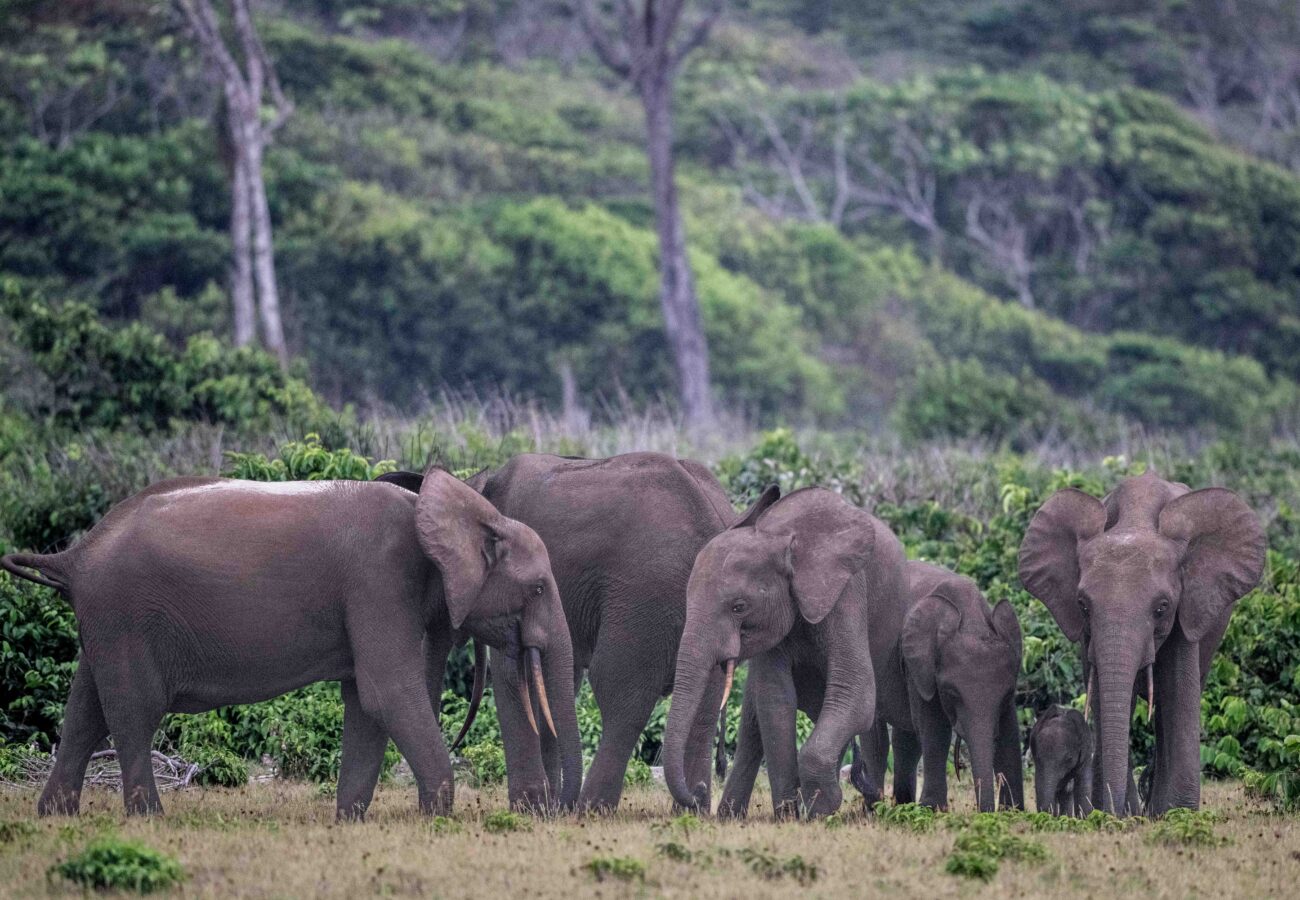
Protect forest elephants
You can help protect forest elephants, by becoming a Born Free supporter and helping to fund our vital work to protect their habitats and end the ivory trade.