
SCIENTIFIC NAME
Manis javanica
Manis javanica
They are classed as ‘Critically Endangered’ by the IUCN and extremely rare in parts of their range, which includes the tropical forests and peat-swamps of Singapore, Malaysia, Indonesia, Thailand, and Viet Nam.
Manis javanica
Critically Endangered
140cm (including tail)
4-7kg
Carnivorous/insectivorous (feeding primarily on ants and termites)
Tropical forests, plantations, and peat-swamps
Southeast Asia, including Singapore, Malaysia, Indonesia, Thailand, and Viet Nam
Unknown, declining
Hunting, illegal wildlife trade, habitat loss
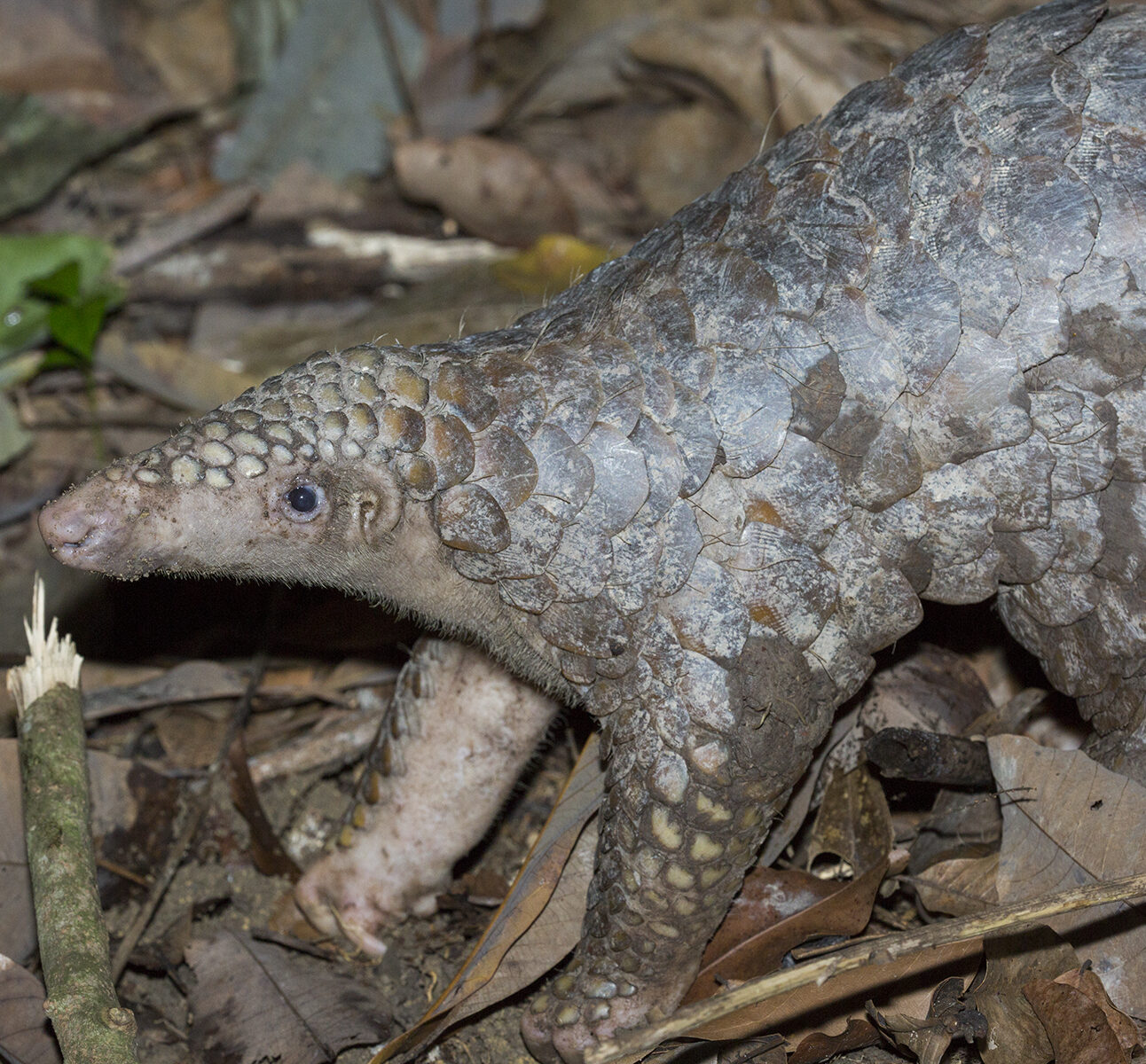
Sunda pangolins sometimes have white scales on their tails, but researchers aren’t sure why.
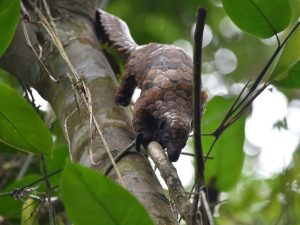
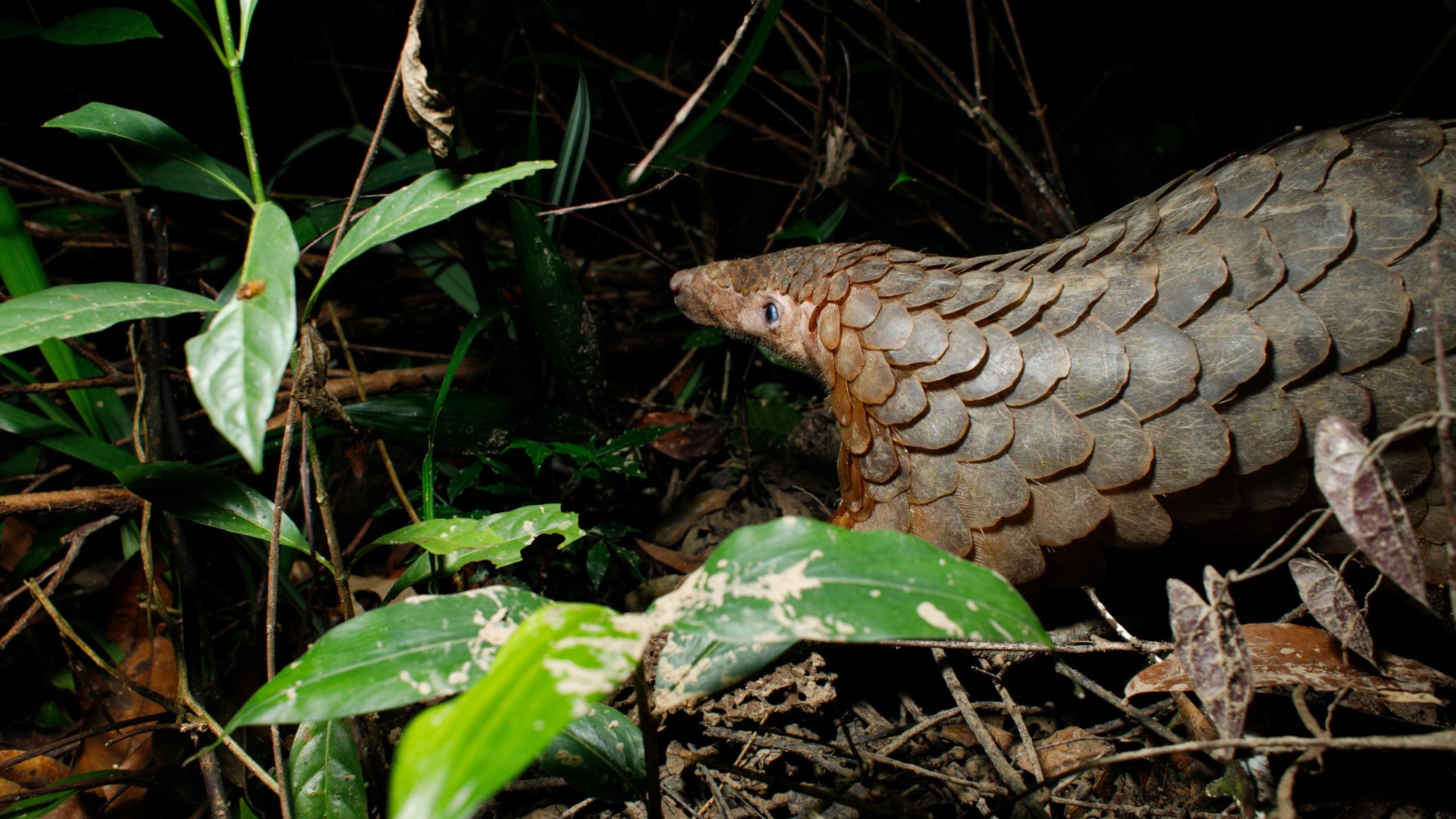
Pangolins are unique animals; they are the only mammal covered in scales. They have long tails and cone shaped heads, with long tongues.
Their prehensile tail, which is capable of grasping, helps them climb and when threatened, they roll into a tight ball for defence, with their scales providing a protective armour.
Sunda pangolins have dark brown scales across their body and often have ‘white’ scales on their tail.
The Sunda pangolin range overlaps with Chinese pangolins and they can be distinguished from this species by having fewer rows of scales across their back, longer, more slender tails and shorter forelimb claws.
In 2005, Philippine pangolins were recognised as a distinct species from Sunda pangolins, and these two species can be distinguished by Sunda pangolins having larger scales than Philippine pangolins, along with a longer head and body to tail length ratio.
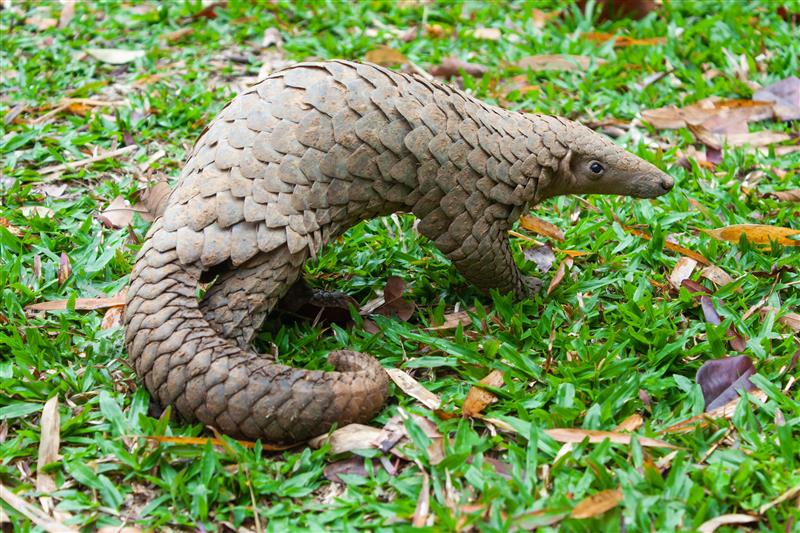
A sunda pangolin (c) iStock
Sunda pangolins live across mainland and island Southeast Asia. They are found from central Myanmar, Thailand, Viet Nam, Lao PDR, Cambodia, Malaysia, Indonesia and Singapore. Sunda pangolins may be no longer present in some areas of their range in Thailand, Myanmar and Lao PDR due to hunting.
Sunda pangolins habitat includes primary and secondary tropical forests, cultivated land, including oil palm plantations, and peat-swamp forests. Sunda pangolins in Singapore have existed for decades, despite low-quality forest.
Sunday pangolin diet mainly consists of ants and termites and they play an important role in regulating insect populations. Alongside ants and termites, Sunda pangolins will also eat worms, crickets, larvae, flies and grass. Pangolins have a very long, sticky tongue, which they use to catch their prey.
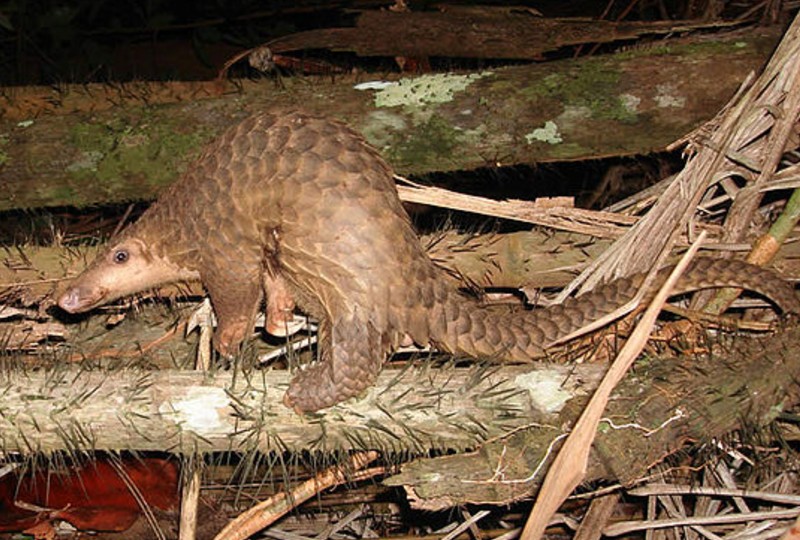
A sunda pangolin (c) US Fish & Wildlife Service, Flickr Creative Commons
Little is known about this secretive, nocturnal pangolin. In Viet Nam, hunters have reported that Sunda pangolins are more arboreal than Chinese pangolins, spending more time in trees. Their long tails assist with climbing, and they will climb trees to gain access to ant nests.
Sunda pangolins sleep in hollows, usually in or at the base of trees. Like other pangolins, Sunda pangolins are capable swimmers and can live in wetland ecosystems.
Sunda pangolins breed all year round, except in the northern areas of their range where they may be seasonal breeders, as colder temperatures reduce prey activity.
They give birth to a single young after a 6-month gestation period. Infants will stay with their mother for around 3-4 months after birth. Females reach reproductive maturity at around one year old.
Across Sunda pangolin’s range, overexploitation by people remains the primary threat to this species. They are highly sought after for their scales and meat, primarily for use in traditional medicine and luxury dishes, particularly in China and Viet Nam.
In Viet Nam, local use of pangolins has halted in some areas, where they have been hunted traditionally for years, as the price for selling nationally or internationally is so high.
Forest clearing for agriculture has reduced Sunda pangolins’ natural habitat, particularly in Malaysia and Thailand. The construction of roads into previously inaccessible areas also opens new areas to hunters.
Natural predators may include large cats, but humans remain the biggest Sunda pangolin predator.


You can learn all about them by following the links below:
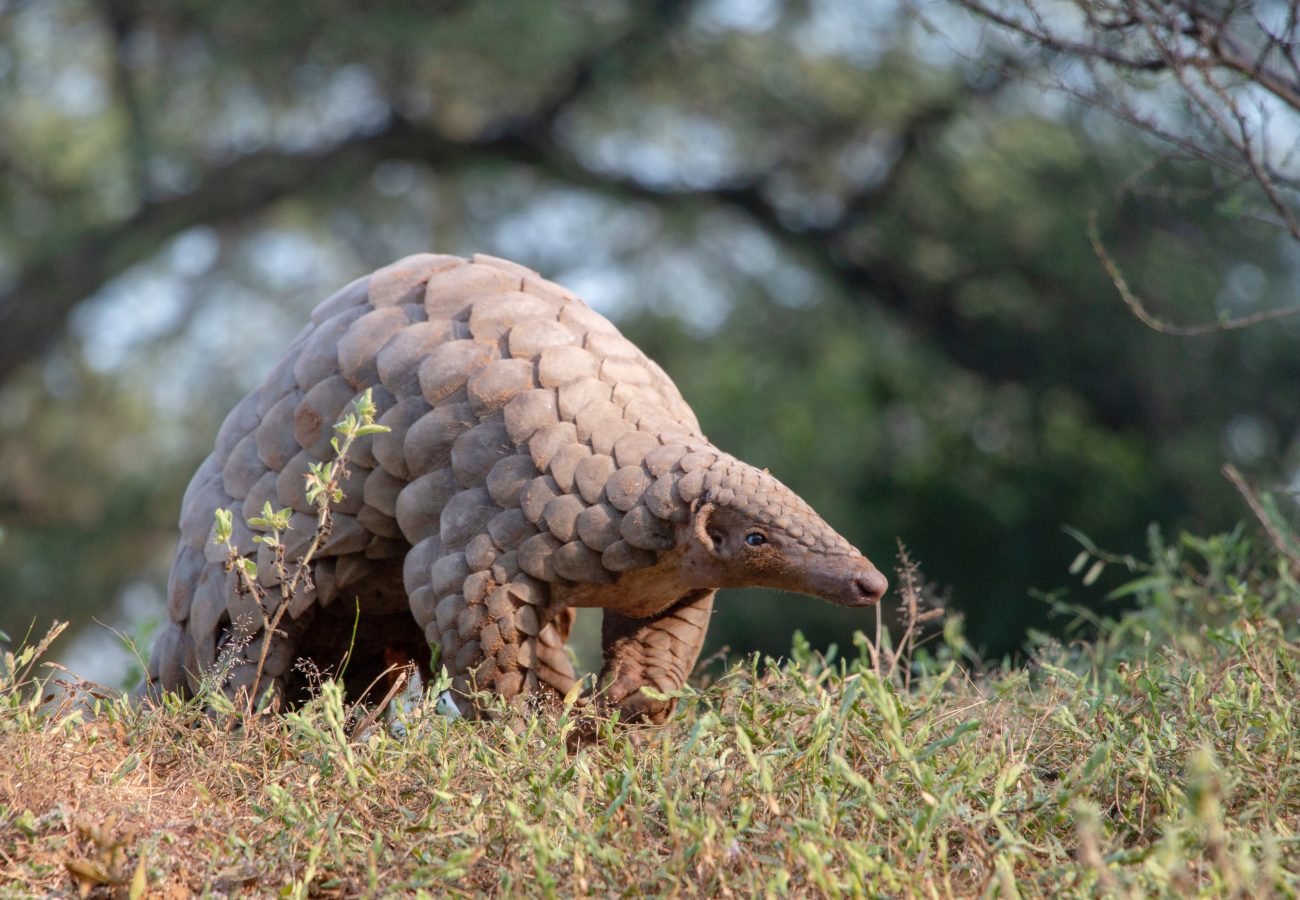
The Pangolin Family lives in Malawi, in southeast Africa. Pangolins are one of the most illegally traded mammal species. Lilongwe Wildlife Trust rescues pangolins who are injured, orphaned or confiscated from wildlife traffickers.
Your adoption will help Born Free care for pangolins rescued and rehabilitated by Lilongwe Wildlife Trust, and to monitor their progress once released back into the wild. In addition, your adoption will help to fund our work to campaign against the illegal wildlife trade and protect their natural habitat.