<?xml version="1.0" encoding="utf-8"?>
<rss version="2.0" xmlns:content="http://purl.org/rss/1.0/modules/content/">
	<channel>
		
		<title>Born Free Foundation: Latest News</title>
		<link>http://www.bornfree.org.uk/</link>
		<description>Latest Born Free News</description>
		<language>en</language>
		<image>
			<title>Born Free Foundation: Latest News</title>
			<url>http://www.bornfree.org.uk/fileadmin/rss_icon.gif</url>
			<link>http://www.bornfree.org.uk/</link>
			<width>36</width>
			<height>14</height>
			<description>Latest Born Free News</description>
		</image>
		<generator>TYPO3 - get.content.right</generator>
		<docs>http://blogs.law.harvard.edu/tech/rss</docs>


		<lastBuildDate>Thu, 23 May 2013 10:02:00 +0000</lastBuildDate>
		
		
		<item>
			<title>Giant Tortoise rescue in Ethiopia</title>
			<link>http://www.bornfree.org.uk/index.php?id=34&#38;tx_ttnews%5Btt_news%5D=1331&#38;cHash=c22f4de7e2cb784b7c1f82e4a8f0cc49</link>
			<description>Our Ethiopian rescue centre has been called upon to rescue over 30 leopard tortoises</description>
			<content:encoded><![CDATA[<p>Garden gnomes are so passé. Or so it would appear in Ethiopia. Here, the thing to have in your garden is a leopard tortoise (the Abyssinian sub-species is the largest in Africa).</p>
<p>This causes all sorts of problems: the tortoises are so strong they can break through fences and so end up on roads where they are at risk of being killed by cars. Worse, the buying and selling of tortoises is still part of the illegal wildlife trade and should be stopped. Tortoises, too, belong in the wild not someone’s garden. </p>
<p>Our Ethiopian rescue centre has been called upon to rescue over 30 of the lumbering giants. Some have cracked and damaged shells – one was even clipped by a road grading truck.</p>
<p><a href="http://www.bornfree.org.uk/shop/acatalog/Ethiopia-rescue.html" title="Opens external link in new window" target="_blank" class="external-link-new-window" >Donate to our Ethiopian Sanctuary</a></p>]]></content:encoded>
			<category>Homepage News</category>
			<category>Rescue News</category>
			
			
			<pubDate>Thu, 23 May 2013 10:02:00 +0000</pubDate>
			
		</item>
		
		<item>
			<title>Princes Stare Wildlife Extinction in the Face and call for Urgent Global Action</title>
			<link>http://www.bornfree.org.uk/index.php?id=1970</link>
			<description>At an unprecedented international meeting in London, two generations of the British Royal Family,...</description>
			<content:encoded><![CDATA[]]></content:encoded>
			<category>CITES News</category>
			
			
			<pubDate>Wed, 22 May 2013 11:56:00 +0000</pubDate>
			
		</item>
		
		<item>
			<title>Wild animals in captivity – Animal welfare, law and enforcement</title>
			<link>http://www.bornfree.org.uk/index.php?id=34&#38;tx_ttnews%5Btt_news%5D=1329&#38;cHash=edb5691cb328236fdd9fb2a72e5e83d5</link>
			<description>The Born Free Foundation is collaborating with FOUR PAWS International to host the first...</description>
			<content:encoded><![CDATA[<p>19th and 20th June 2013, Brussels</p>
<p>The Born Free Foundation is collaborating with FOUR PAWS International to host the first multi-stakeholder conference in Brussels to focus exclusively on the welfare of wild animals in captivity in the European Union. With an objective to seek workable solutions to improve the lives of wild animals kept in zoos, circuses, captive dolphin facilities and those kept as pets, the Conference will bring together key academics, industry representatives, animal welfare NGOs, government officials, Members of the European Parliament and the European Commission. </p>
<p>“Following the success of the EU Zoo Inquiry, which identified that Competent Authorities from EU countries often lack the necessary knowledge and training to effectively enforce current animal protection law, Born Free is committed to providing support and guidance to national governments wherever possible,” explained Daniel Turner, spokesperson for the Born Free Foundation. “This conference is likely to be the first step to facilitating improved legal compliance, to achieve our overall objective, to improve the lives of wild animals in captivity in the European Union. </p>
<p>Attendance to the Conference is by ‘invitation only’ and all prospective delegates are required to register <a href="fileadmin/user_upload/files/adminforms/zoocheck/Wild_animals_in_captivity_-_Registration_form.docx" title="Initiates file download" class="download" >using this form</a></p>
<p>The Conference agenda is <a href="fileadmin/user_upload/files/adminforms/zoocheck/Draft_Agenda_WILD_ANIMALS_IN_CAPTIVITY_Conference.pdf" title="Initiates file download" class="download" >available here</a></p>
<p style="margin-top:6.0pt; text-align:justify"><i>This conference is initiated, fully-funded and hosted by the international animal welfare NGOs, the Born Free Foundation and VIER PFOTEN/FOUR PAWS International, and supported by the Humane Society International (HSI), the European coalition, ENDCAP, and the Federation of Veterinarians of Europe (FVE). </i></p>]]></content:encoded>
			<category>Homepage News</category>
			<category>Zoo Check Campaign News</category>
			<category>EU Zoo Inquiry News</category>
			
			
			<pubDate>Tue, 21 May 2013 13:12:00 +0000</pubDate>
			
		</item>
		
		<item>
			<title>Proposed zoo in South Lanarkshire: Born Free speaks out</title>
			<link>http://www.bornfree.org.uk/index.php?id=34&#38;tx_ttnews%5Btt_news%5D=1328&#38;cHash=8f0948d09588eac9a03fd1a2bd23ab20</link>
			<description>Proposals have been announced for a new £85m zoo to be constructed in South Lanarkshire, Glasgow....</description>
			<content:encoded><![CDATA[<div><p>Proposals have been announced for a new £85m zoo to be constructed in South Lanarkshire, Glasgow. Wildside World Ltd claims that the new site at Cuningar Loop will have three different ‘zones’ - polar, temperate and tropical - housing a variety of animal species. Details are currently unclear but there are even indications that the zoo may intend to keep manatees.</p></div><div></div><div><p>The Born Free Foundation is very concerned about the plans - particularly the indications that Wildside World intend to exhibit tropical species such as manatees, a species not currently kept in the UK that requires highly specialised care and complex facilities.</p></div><div></div><div><p>We are also concerned that the zoo may not be financially sustainable in the long term, which might lead to declining standards of animal care and the need to find homes for animals in the event of closure. For many years, there was a zoo in the same region (Glasgow Zoo) which proved to be financially non-viable and closed in 2003; while previous plans to redevelop the site by Edinburgh Zoo have been abandoned. Such a development near Glasgow is likely to need regular income from large numbers of visitors: what is not clear is where these visitors will come from, given that the long-established Edinburgh Zoo has resorted to importing giant pandas to attract 1 million visitors. All of which raises questions as to whether the taxpayer will be left footing the bill if the development in South Lanarkshire fails to bring in enough visitor income.</p></div><div></div><div><p>Will Travers OBE, CEO of the Born Free Foundation, said “Eighty five million pounds might be the going rate to build a visitor attraction these days, but just think what that money could do if it was directed into in situ conservation instead? In my view, a new zoo in this area is simply an unwise investment all round, is repeating the mistakes of the past and is not in the best interests of animals or people&quot;</p></div><div></div><div><p>Concerns regarding the plans have also been raised by the Captive Animals’ Protection Society, OneKind and Scotland for Animals. We hope that the public will express their opposition to these plans and that Wildside World will reconsider their proposal and abandon plans to include captive wild animals and focus instead on regenerating the area in a way that matches public expectations but not at the expense of locking animals up for life.</p></div>]]></content:encoded>
			<category>Homepage News</category>
			<category>Zoo Check Campaign News</category>
			
			
			<pubDate>Mon, 20 May 2013 16:05:00 +0000</pubDate>
			
		</item>
		
		<item>
			<title>The Big Question (x2)</title>
			<link>http://www.bornfree.org.uk/blog/2013/the-big-question-x2/</link>
			<description>Born Free's CEO Will Travers blogging about the trade in wildlife and what can be done.</description>
			<content:encoded><![CDATA[]]></content:encoded>
			<category>Homepage News</category>
			<category>CITES News</category>
			
			
			<pubDate>Mon, 20 May 2013 14:42:00 +0000</pubDate>
			
		</item>
		
		<item>
			<title>Success! No dolphinaria to be allowed in India</title>
			<link>http://www.bornfree.org.uk/index.php?id=34&#38;tx_ttnews%5Btt_news%5D=1326&#38;cHash=ee8b42d1895f098ab99f682b7229bc6d</link>
			<description>We are delighted to confirm that, following preliminary reports, the Ministry of Environment and...</description>
			<content:encoded><![CDATA[<div><p>We are delighted to confirm that, following preliminary reports, the Ministry of Environment and Forests in India has now released formal confirmation that they will not allow dolphinaria to be established in the country, and State Governments in India have been advised by the Ministry to reject any proposals for dolphinaria.</p></div><div></div><div><p>The Born Free Foundation working with the Federation of Indian Animal Protection Organisations (FIAPO) and other NGOs helped to achieve this result.</p></div><div></div><div><p>A Government circular released on 17th May provides the following reasons against the keeping of cetaceans (whales, dolphins and porpoises) in captivity in India:</p></div><div></div><div><p>&quot;...cetaceans in general are highly intelligent and sensitive, and various scientists who have researched dolphin behavior have suggested that the unusually high intelligence; as compared to other animals means that dolphin should be seen as “non-human persons” and as such should have their own specific rights and is morally unacceptable to keep them captive for entertainment purpose ...cetaceans in general do not survive well in captivity. Confinement in captivity can seriously compromise the welfare and survival of all types of cetaceans by altering their behaviour and causing extreme distress.&quot;</p></div><div></div><div><p>Born Free is very proud to have been involved in this campaign and we congratulate FIAPO for their efforts on the ground to secure this landmark decision in India.</p></div><div></div><div><p>Will Travers OBE, CEO of the Born Free Foundation, remarked &quot;In many ways, India already has very progressive policies relating to wild animals in captivity - for example, a ban on most species of wild animals in circuses and the Government instruction to end the keeping of elephants in zoos. This decision on captive cetaceans confirms the status of India as a leader when it comes to wild animal welfare. We hope other countries will follow India's example and that one day this unacceptable form of wild animals exploitation will end.”</p></div>]]></content:encoded>
			<category>Homepage News</category>
			<category>Dolphin News</category>
			<category>Marine Campaign News</category>
			
			
			<pubDate>Mon, 20 May 2013 11:53:00 +0000</pubDate>
			
		</item>
		
		<item>
			<title>Bringing Justice for Central Africa's Elephants</title>
			<link>http://www.bornfree.org.uk/index.php?id=34&#38;tx_ttnews%5Btt_news%5D=1325&#38;cHash=fc1020f703442939e4524ae215cca4a8</link>
			<description>Some welcome news from the Republic of Congo – the notorious kingpin of an elephant poaching and...</description>
			<content:encoded><![CDATA[<div><p>Some welcome news from the Republic of Congo – the notorious kingpin of an elephant poaching and ivory trafficking network, operating with impunity in a National Park in the north of the country for many years, has finally been arrested and will be prosecuted.</p></div><div></div><div><p>Although long suspected of his role in the disappearance of wildlife from Odzala-Kokoua National Park, Ngondjo Ghislain, aka ‘Pepito’, had evaded capture over the years due to a combination of a lack of concrete evidence and the protection of corrupt officials. But that status quo recently began to unravel for Pepito.&nbsp;</p></div><div></div><div><p>In criminal networks like Pepito’s, trust is everything. The trust in one’s companions in crime is what oils the illegal supply and demand chain and breaking that bond of trust is therefore critical to disrupting its operation. For Pepito the end began when the arrest of two poachers in the park led to the arrest of another who in turn gave details of Pepito’s illegal activities. More evidence was gathered when a firearm amnesty led to other statements incriminating Pepito as the buyer of ivory and supplier of guns and ammunition. It later emerged that some wildlife rangers had been working in collusion with Pepito, supplying him with information about patrol routes and planned ambushes, thus allowing him to remain at large.&nbsp;</p></div><div></div><div><p>Pepito was recently finally arrested and taken to the local police station, but that was only half the story over. A riot was started outside the building by Pepito’s collaborators and fearing his escape, park officials moved Pepito to a more secure location 100km south of the park under cover of darkness.&nbsp;</p></div><div></div><div><p>Born Free is proud to be supporting <a href="http://www.palf-enforcement.org/palf_english/english.html" title="Opens external link in new window" target="_blank" class="external-link-new-window" >PALF</a> (Project for the Application of Law for Fauna), who have been working tirelessly to ensure that justice is achieved for Central Africa’s beleaguered forest elephants. In the Pepito case, as in many others, PALF has pushed hard for the full support of the judiciary, so critical for the successful prosecution of such cases. As Naftali Honig, PALF’s co-ordinator explains:&nbsp;</p></div><div></div><div><p>“All too often in the past, anti-poaching has focused on the poachers, satisfying itself with the little guy. These new cases in court in Congo are an example of a major dealer being arrested as the pinnacle of years of intelligence gathering and around a year of arrests concerning this particular trafficking network.</p></div><div></div><div><p>We have seen a lot of attempts to peddle influence in the courts in Congo, and lost cases because of it, but when a court gets serious about prosecuting all the members of an ivory trafficking network, as we are now seeing in this case, then the tables turn.</p></div><div></div><div><p>Unfortunately, this degree of depth of investigation into an ivory trafficking network is the exception rather than the rule. As Central Africa's elephant populations continue to get hammered, we need to focus on dismantling the big networks and weeding out the corruption that nourishes them in order to properly combat the illegal ivory phenomenon”.</p></div>]]></content:encoded>
			<category>Homepage News</category>
			<category>Elephants Campaign News</category>
			
			
			<pubDate>Fri, 17 May 2013 16:11:00 +0000</pubDate>
			
		</item>
		
		<item>
			<title>HRH The Duke of Gloucester Applauds Lilongwe Wildlife Centre</title>
			<link>http://www.bornfree.org.uk/index.php?id=34&#38;tx_ttnews%5Btt_news%5D=1324&#38;cHash=f965941239fc736a960ba662c2c3633c</link>
			<description>HRH The Duke of Gloucester and Born Free Foundation’s Founder Virginia McKenna OBE, both Patrons of...</description>
			<content:encoded><![CDATA[<div><p>HRH The Duke of Gloucester and Born Free Foundation’s Founder Virginia McKenna OBE, both Patrons of Malawi’s only Wildlife Rescue, Conservation and Education Centre, today helped mark the Centre’s five years of wildlife rescue and community support.</p></div><div></div><div><p>Working directly with the Department of Parks and Wildlife, Lilongwe Wildlife Centre has become Malawi’s first port of call in any wildlife emergency. &nbsp;Over 400 wild animals, either rescued from illegal trade, injured or orphaned, have been brought to the Centre where they receive expert care and rehabilitation. &nbsp;Where feasible, they are released back to the wild under carefully managed protocols.</p></div><div></div><div><p>Ms McKenna, Founder of the Born Free Foundation, stated: “Before Lilongwe Wildlife Centre existed, the illegal pet trade and bushmeat poaching in Malawi were widespread. There was nowhere for orphaned and injured wildlife to go. Now, thanks to the hard work of the caring and loyal team at the Centre, hundreds of animals have been rescued and rehabilitated and many have been released back into the wild where they belong. The Centre’s commitment to international standards of welfare is very important, and I am thrilled that it received accreditation as the world’s first ‘People and Wildlife Centre’ &nbsp;from Born Free last year.”&nbsp;</p></div><div></div><div><p>Five years ago, the Born Free Foundation joined forces with a dedicated team of individuals, led by Mark and Angela Sprong, to help develop the Centre and its philosophy. &nbsp;Recognising the need to take a holistic approach to animal welfare, habitat protection and community involvement, Lilongwe Wildlife Centre created a raft of community and wildlife support initiatives, all supported by an effective business plan that has led to the Centre becoming self-sustaining in terms of operating costs. This offers the Centre a level of financial security enabling it to carry out its life-changing day-to-day activities with growing confidence in the future.</p></div><div></div><div><p>Jonathan Vaughan, the Centre’s General Manager, summed up the community work: “The Centre reaches out to thousands of children and adults every year by offering community support programmes and educational tours. Over 17,000 local school children visited the Wildlife Centre in 2012, learning about wildlife and the things they can do to look after the environment. &nbsp;We also run community outreach programmes to help reduce deforestation and loss of habitats resulting from the unsustainable use of firewood. For example, 8,000 trees were planted last year and special groups have been set up making eco-fuel briquettes out of waste materials.&nbsp;</p></div><div></div><div><p>There are projects that help communities to live in harmony with the environment whilst also generating an income through sustainable livelihoods. Many of the people from our ‘learning through wildlife’ adult literacy programme have gone on to find employment and women from our Malambe Juice Cooperative , supported by Born Free’s Global Friend’s Programme, are now making enough money to support themselves and their families.”</p></div><div></div><div><p>HRH The Duke of Gloucester concluded: &nbsp;“The achievements of the Lilongwe Wildlife Centre in Malawi over the past 5 years are quite astounding. &nbsp;In addition to all the wild animals they have saved they have established themselves as the country’s leading environmental education resource, inspiring nearly 100,000 children who have visited the Centre or who have taken part in their outreach programmes. By embracing local community needs and working within the national curriculum, Lilongwe Wildlife Centre is working to forge a harmonious future for both people and wildlife.”&nbsp;</p></div><div></div><div><p>Malawi is known as the ‘Warm Heart of Africa’ for its beautiful landscapes, lake of stars and friendly, happy people. But it is also the 6th poorest country in the world, with most people surviving on less than $2 per day which often does not meet their minimum food requirements. There’s a high population density which puts huge pressure on natural resources like the forests since most people rely on firewood to cook their food. As a result Malawi has the world’s 5th highest rate of deforestation and this leads to problems such as soil erosion, desertification and localised climate change. &nbsp;</p></div><div></div><div><p>The good news is that a lot can be done to help people to live in harmony with the environment. As habitats are restored, not only can people earn an income from their new, sustainable living practices but Malawi’s wildlife - from birds, bees and butterflies to monkeys, lions and elephants - will have a better chance of survival in the wild, where they belong.</p>
<p>If you wish to make a donation to Lilongwe Wildlife Centre you can do so <a href="http://www.bornfree.org.uk/shop/acatalog/Lilongwe_Wildlife_Centre.html" title="Opens external link in new window" target="_blank" class="external-link-new-window" >here</a></p></div><div></div>]]></content:encoded>
			<category>Homepage News</category>
			<category>Lilongwe news</category>
			
			
			<pubDate>Fri, 17 May 2013 09:40:00 +0000</pubDate>
			
		</item>
		
		<item>
			<title>Wolf Valley Wolf Pups</title>
			<link>http://www.bornfree.org.uk/index.php?id=34&#38;tx_ttnews%5Btt_news%5D=1323&#38;cHash=9d736d5b5c039397aa697ac756d0d89d</link>
			<description>The Ethiopian wolf is even rarer than the giant panda and only 500 survive. This latest report...</description>
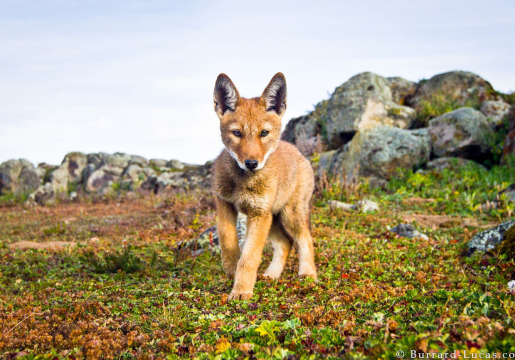
			<content:encoded><![CDATA[<div><p>The EWCP is a major project to protect the world’s rarest canid – as few as 500 of the precious Ethiopian wolves survive, which makes them three times more rare than the giant panda! The extensive afroalpine grasslands and meadows of the Web Valley area has the highest concentration of wolves in Bale, together with those on the nearby Sanetti Plateau. This is because the open landscapes are home to the wolves’ favourite prey of mole rats and other species of rats and mice.</p></div><div><p>Here’s the latest news about your wolves from Anne Marie Stewart, Field Director of the EWCP: </p>
<p>“Late last summer EWCP monitors visited the Web Valley’s Tarura pack and excitedly reported that three pups born earlier in 2012 had survived their first rainy season. This is a tough period during which we can lose around half of this age group. By autumn these three pups had graduated to sub-adult status, and are now very efficient at catching their own rodents, putting on weight as they continue to grow. </p>
<p>Tarura pack now has a total of eight adults and three sub-adults. With such large numbers they should be able to protect some of the best territory in the Web Valley from other packs, ensuring a plentiful supply of food. We ear-tagged six of the Tarura adults during the oral vaccine trials of 2011, so can easily identify pack members.</p></div><div><p>In October, the Tarura alpha female became pregnant, but very sadly the pups didn’t survive before they emerged from the den. We are not sure why this happened, but hope all three of the healthy sub-adults in the pack become adults during this coming year, and that the Tarura’s can successfully raise more pups during 2013’s breeding season.&nbsp;</p></div><div></div><div><p>In general we’re happy to report good survival rates of wolf pups over the last year, who have now all &nbsp;graduated to sub-adult status. Every wolf is so &nbsp;important, especially following the devastating disease outbreaks we saw in 2009 and 2010. Now the new breeding season is underway and other Web Valley wolf packs have had successful litters, as have the Sanetti wolves.&quot;</p>
<p>If you would like to adopt the Web Valley Wolf pack and contribute the the conservation of this beautiful endangered species, you can do so <a href="http://www.bornfree.org.uk/shop/acatalog/Wolf_Adoption.html" title="Opens external link in new window" target="_blank" class="external-link-new-window" >here</a>.</p></div>]]></content:encoded>
			<category>Homepage News</category>
			<category>Wolves Campaign News</category>
			
			
			<pubDate>Thu, 16 May 2013 10:49:00 +0000</pubDate>
			
		</item>
		
		<item>
			<title>We will not allow dolphinariums</title>
			<link>http://www.bornfree.org.uk/index.php?id=34&#38;tx_ttnews%5Btt_news%5D=1322&#38;cHash=076c8d13aa02a44f55dae08667cf9c6c</link>
			<description>Born Free welcomes announcement from Indian Minister, and calls for action to legislate accordingly</description>
			<content:encoded><![CDATA[<p><b>&quot;We will not allow dolphinariums&quot;<br /></b></p>
<p>This very welcome statement has been made by India’s Minister of Environment and Forests, Shrimati Jayanthi Natarajan to the Hindustan Times and will, we hope, soon translate into legislation.<br /><br />Following a plea by colleagues from FIAPO* in India, Born Free immediately helped develop and fund campaign action to tackle plans to build several dolphinaria in India.&nbsp; Like the UK, India does not have any captive dolphins, and with both national and international support pouring into the campaign to ‘stop it before it starts’ it looks like there could be a positive outcome for dolphins.<br /><br />In a letter to the Minister, Born Free Founder and Trustee, Virginia McKenna OBE, summarised the controversy that surrounds keeping dolphins in captivity and called on the Minister to secure a compassionate future for these magnificent animals that reflects India’s other progressive animal welfare laws.<br /><br />It is essential now though that this positive statement becomes enshrined in legislation ensuring India remains free from captive dolphin facilities.&nbsp; Please write to the Minister (details below) welcoming her statement and requesting that her sentiments be reflected in legal measures at the earliest opportunity.<br /><br />Smt. Jayanthi Nataranjan<br />Minister of Environment and Forests<br />Government of India<br />Paryavaran Bhawan<br />CGO Complex<br />Lodhi Road<br />New Delhi - 110 003<br />India<br /><br />Email: <a href="mailto:mosefgoi@nic.in" title="mosefgoi@nic.in" class="mail" >mosefgoi@nic.in</a><br /><br /></p>
<h6>*FIAPO. Federation of Indian Animal Protection Organisations</h6>]]></content:encoded>
			<category>Homepage News</category>
			<category>Zoo Check Campaign News</category>
			<category>Marine Campaign News</category>
			
			
			<pubDate>Mon, 13 May 2013 09:12:00 +0000</pubDate>
			
		</item>
		
	</channel>
</rss>