
What makes an elephant so special?
The fascinating answer lies not only in their unique biology, but in the relationships and experiences helping shape a complex life in the wild. A deeply moving long read by Penny Banham.
Elephant arrival
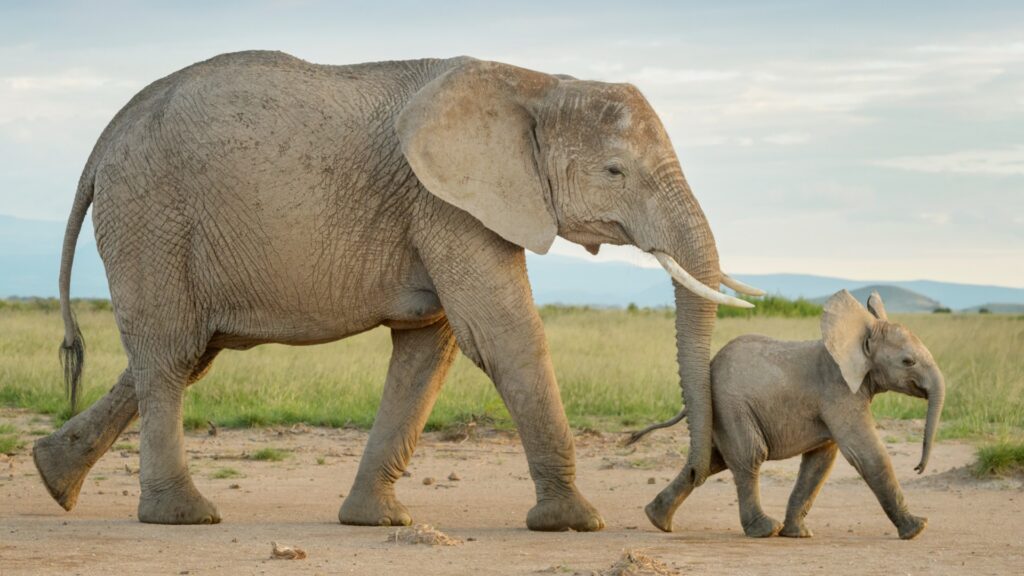
For nearly two years, a growing elephant is cocooned inside her mother, safe and warm until her arrival, thrusting her into a world that is not without its challenges. A newborn calf weighs more than 100kg, yet is wobbly and shaky, unsure of how her body works or what this long thing protruding from her face might be.
Her skin is delicate and pink, not yet hardened by the elements. Protective family members huddle around her the moment she is born, welcoming her and offering comfort to both mother and baby. This is one of the most fundamental lessons in elephant society: she will forever be connected to others.

Penny Banham, Conservation Manager
The early days are challenging, full of new experiences and short, sharp lessons. She huddles beneath her mother’s belly for much of the day, much like a human baby, drinking milk frequently and sleeping deeply. Aunties, sisters, cousins and young males all keep a watchful eye on mother and calf, ensuring both remain safe within the inner circle.
The bonds formed between the calf and her herd may last a lifetime. Those connections are strengthened every day as she grows and begins interacting more and more with others, often through touch, scent, vocal communication and visual cues.
The calf is learning a language far older than herself. Over time she begins to recognise the purpose of the rumbles, cries, roars and trumpets: reassurance from her mother, warnings from older females, invitations to play from others. Long before she understands the world, she is learning how to listen to it.
Learning to be an elephant

(c) georgelogan.co.uk
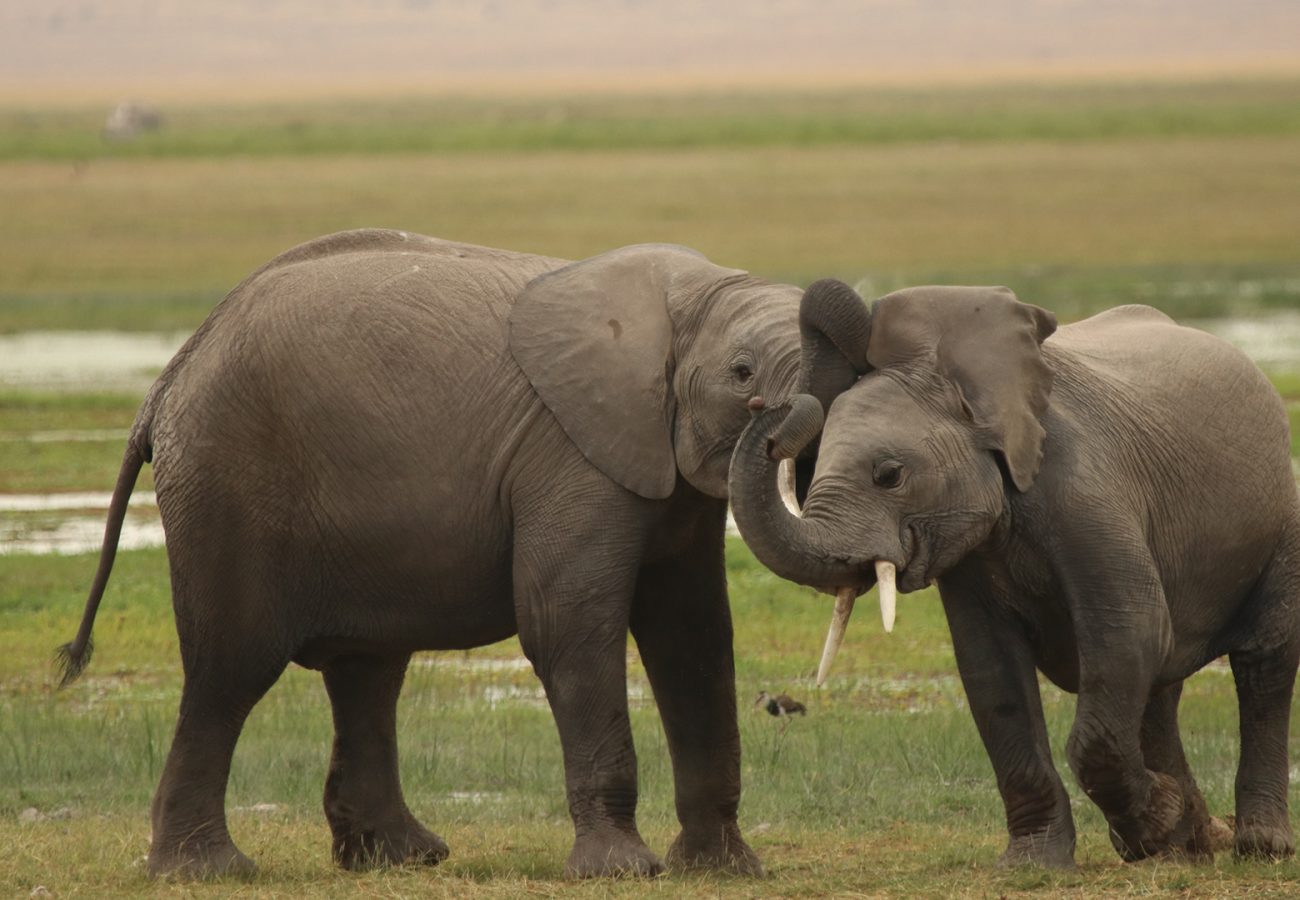
Soon the calf is venturing further away from her mother, playing with other young elephants in the herd. As calves grow, their games become more energetic. They chase one another through the herd, climb over each other and test their confidence by venturing ever further from the safety of their families before racing back again.
Every unfamiliar sight or sound becomes a source of fascination. A little egret picking its way through a swamp catches her attention and she charges after it, trunk flailing and ears spread wide. The bird merely flutters a few metres away, but she seems pleased with herself, nonetheless.
These playful encounters serve an important purpose. With every game, chase and minor misadventure, she is learning about her surroundings and her place within them. She is discovering what deserves caution, what can be ignored and how to respond to an ever-changing world. The lessons may look like play, but they are preparing her for life as an adult elephant.
Elephant school
(c) georgelogan.co.uk
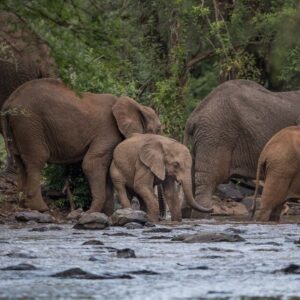
Some lessons are more difficult than others. When the long rains arrive, rivers swell and transform the landscape. One day, the matriarch pauses at the edge of a fast-moving river, assessing the safest place to cross before leading the herd into the water.
By now, the young elephant can swim, but the current is stronger than she expects. She keeps her trunk above the surface like a snorkel as she paddles beside her mother. For a moment, the force of the water pulls her away from the group. Her mother reaches towards her, slipping from her grasp before several family members rush in, forming a protective barrier against the current and saving the calf just before she was swept away.
The crossing is tiring and by the time she reaches the opposite bank she is exhausted. Her mother remains close, touching her gently with her trunk as the herd regroups and continues on its way. The danger has passed, but the experience leaves a lasting impression.
In elephant society, knowledge is often built through experience. The young elephant is learning that rivers, despite bringing life to the landscape, can also be unpredictable. The matriarch, meanwhile, adds another memory to the vast store of knowledge she carries. When the rains return and the rivers rise again, that memory may help guide her family safely through an ever-changing world.
Growing up

(c) Michael Vickers
Approaching her first decade, the young elephant has watched new calves join the herd and has begun helping to care for them. She stands over them while they rest, reassures them when they become separated from their mothers and gently guides them back towards the safety of the family. She is preparing for responsibilities that may one day become her own.
However, life is becoming more challenging. Her mother is now the matriarch, leading the herd through increasingly difficult conditions. Dry seasons seem to last longer than they once did, and food and water are becoming harder to find. During the harshest months, the older females spend hours digging into dry riverbeds to reach groundwater hidden beneath the sand. It is hard work, but knowledge like this helps the herd endure.
In one particularly difficult year, the family splits into smaller groups. Resources are scarce and there is simply not enough food to support everyone together. The young elephant, her mother, her younger brother and an aunt move beyond their usual range in search of better feeding opportunities. Her brother is thin and lethargic, and the small group follows every sign of food they can find.
Elephants and people

(c) Born Free
Eventually, their search brings them close to farmland. The scent of ripe fruit and cultivated crops is impossible to ignore. Under cover of darkness, the elephants enter the fields and feed quickly, taking advantage of a resource that requires far less effort to obtain than wild vegetation.
But the opportunity is short-lived. Farmers emerge, shouting and banging pots, their torches cutting through the darkness. The elephants retreat before anyone is harmed, but the encounter is a stark warning.
For the elephants, the farms represent food during difficult times. For the farmers, elephants are a threat to livelihoods. As people and elephants increasingly share the same landscapes, such encounters become harder to avoid and increasingly dangerous.
(c) Peter Ndung’u
Reunion
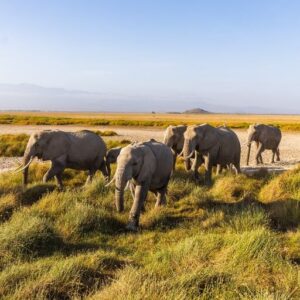
Eventually, the rains return. The land begins to recover, and the scattered family groups reunite. Deep rumbles carry through the air as relatives greet one another after months apart.
What was once a small family gathering grows into a much larger social event, with related herds joining together until hundreds of elephants may be moving through the landscape together. Old bonds are renewed, new relationships are formed and, as always, the cycle of life continues.
Wisdom years
(c) www.georgelogan.co.uk
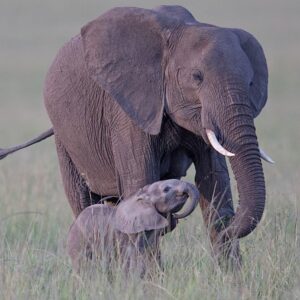
Now fully grown, the elephant has learnt much of what is needed to thrive in a changing world. She has watched young bulls leave the family herd as they mature and seek their own path. She has witnessed the deaths of older matriarchs, the arrival of new calves and, eventually, the birth of one of her own.
Years earlier, a bull had joined the herd as she came into oestrus, remaining close for several weeks. Nearly two years later, she welcomed her first calf into the world. Now she understands the vigilance of her own mother, the sleepless nights, the constant guidance and the fierce protectiveness that comes with raising a young elephant. The cycle continues, as it has for generations.
The decades continue to pass. The elephant’s body bears the signs of age: her frame is leaner, her temples more sunken and her ears hang lower than they once did. But she is the keeper of knowledge. She knows where water endures through drought, remembers safe crossings and seasonal feeding grounds, and carries the memory of routes travelled by generations before her.
The final lesson

(c) www.georgelogan.co.uk
The world has changed since she was a calf. There are more people than ever before and the places where elephants and humans can live apart continue to shrink. Rivers that once flowed year-round now run dry for much of the year and then flood dramatically at other times, and familiar feeding grounds can no longer be relied upon. The decisions she makes have become more important, not only for herself but for the family that follows her.
One day, her journey will come to an end. Her daughters may stand nearby and her grandchildren gather close, surrounded by the family she helped shape. When she is gone, the knowledge she carried will not disappear with her. It lives on in the elephants she has taught, the paths she has led them along and the lessons she has passed from one generation to the next.
Her life will become part of the herd’s collective memory. And somewhere among them, a young calf will be taking her first uncertain steps into the world, beginning the same journey many years before.
YOU CAN HELP
If like us, you’re in awe of elephants, help monitor and protect them by adopting our Elephant Family today. We’ve been helping our long-term partners at Amboseli Trust for Elephants keep them safe for a remarkable 34 years. What a privilege. They’ve taught us so much about elephant behaviour during this time.