
Vervet monkey troop rescued from conflict risk in Zambia
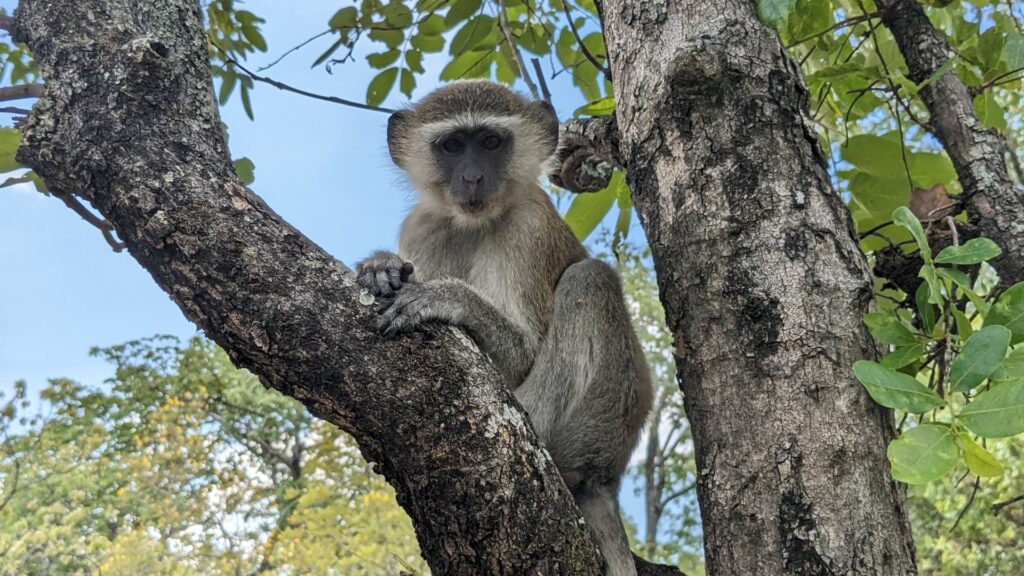
An entire troop of 26 vervet monkeys has been successfully rescued, rehabilitated and released by Born Free partner the Zambia Primate Project.
(c) Game Rangers International
Born Free’s long-term partner and primate rehabilitation expert, the Zambia Primate Project, recently responded to a call to relocate not one, not two but an astounding 26 vervet monkeys from potential human-wildlife conflict.
Native to Zambia, vervet monkeys are small-medium primates who live across eastern and southern Africa. Able to inhabit a range of environments, vervet monkeys have been able to adapt to an ever-changing world, often now found living in fragmented habitats and urban areas.
Sadly, this can lead to them being involved in human-wildlife conflict. As habitats increasingly shrink, species such as vervet monkeys live closer and closer to people, which can be detrimental for both the monkeys and people. Often considered a nuisance by people, vervets can be persecuted in response to crop raiding or from negative interactions at tourist facilities.
In Zambia’s capital, Lusaka, a troop of 26 vervets had established a territory around the State House residence and surrounding residential area. Interactions between people and monkeys were increasing, posing a risk to both the monkeys and the community. Thankfully, Born Free’s partner, the Zambia Primate Project (ZPP) was on hand to assist.
To safeguard both the local community and the monkeys, ZPP’s partners at the Department of National Parks and Wildlife made the carefully considered decision to relocate the entire troop to a protected area where they could live with minimal human disturbance.
“Moving an entire established troop required close coordination of all those involved, as well as careful planning to minimise stress and ensure that the monkeys remained together throughout the process” explained Cosmas Mumba, ZPP’s Project Manager. “Preserving their relationships was particularly important: vervet monkeys rely on complex social structures, and separating individuals could have affected both their welfare and their future prospects.”
(c) Game Rangers International
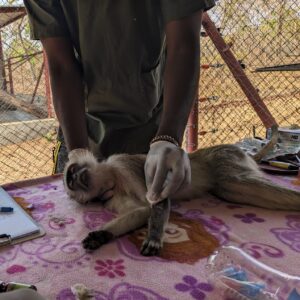
Once the troop arrived at ZPP’s Primate Transit Home, the team immediately began carrying out a comprehensive health check on each monkey. These health assessments form a critical part of the admission process for all primates entering the Transit Home, ensuring new arrivals do not introduce infectious diseases or parasites that could threaten the health of primates already undergoing rehabilitation at the facility.
When every member of the troop had been examined and cleared, they were transferred to the quarantine enclosure, where a 30-day quarantine period allowed the troop to acclimatise to their unfamiliar surroundings. It also enabled the team to closely monitor their health, behaviour and social dynamics. By monitoring the vervet’s social interactions, the ZPP could ensure the troop remain cohesive throughout the process, ready for life back in the wild.
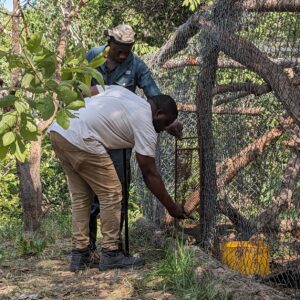
“Our team identified a suitable release site for the vervets,” continued Cosmas. “The selected site offered suitable habitat, abundant natural food sources and the environmental conditions needed to support the troop’s long-term survival. Following quarantine, the troop was transferred to the release site and housed within a temporary holding enclosure.”
(c) Game Rangers International
As they were already an established family troop, the group stabilised quickly and only stayed in the temporary enclosure for two days. This allows the monkeys to become familiar with the sights, sounds, smells and rhythms of their new surroundings while remaining within the safety of the enclosure.
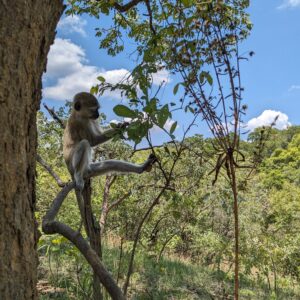
“On release day, the team opened the gate to the enclosure and, one by one, the vervet monkeys cautiously ventured into the surrounding woodland. It was wonderful to witness! Remaining together as a cohesive troop, they explored their new home deep within Kafue National Park – a protected natural environment far removed from the urban landscape they had left behind.”
The ZPP Wildlife Rescue Rangers monitored the troop after release, as they established themselves in their new habitat and provided supplementary food during the dry season, when natural food resources are limited.
(c) Game Rangers International
“Watching the troop settle into a protected natural environment was a powerful reminder of what conservation can achieve when science, compassion and collaboration come together to benefit both people and wildlife,” Cosmas added. “For this troop, the journey has not been one of returning to the wild, but of finding a safer place within it. Their relocation represents more than a successful conservation intervention; it demonstrates how thoughtful wildlife management can reduce conflict, protect communities and ensure Zambia’s remarkable biodiversity continues to thrive for generations to come.”
Zambia Primate Project (ZPP), run by Game Rangers International, rescues, rehabilitates and releases monkeys in Zambia who are victims of the illegal trade or those who are injured or impacted by human intervention, such as conflict. Since 2002, Born Free has supported ZPP’s work; they have an impressive record of rehabilitating and releasing primates, primarily vervet monkeys and baboons, but also other species on occasion, such as bushbabies.
By supporting Zambia Primate Project’s work, Born Free is playing an important part in ensuring wildlife can return to the wild, where they belong. Your support allows us to continue working with organisations such as this, who’s dedication to wild animals matches our own.