
Together, we can save the tiger
A vital meeting of India’s largest tiger conservation network has shown why our long-term mission to protect tigers is more important than ever.

Our team meet with SLTP partners in India.
Two large, one-year-old cubs play together in Panna Tiger Reserve, a park in Central India where – just a few years ago, tigers had gone extinct. A living testament to what can be achieved when people who care work together, could their future now be in jeopardy?

The large cubs playing together (c) Yash Dalmia
Our dedicated colleagues in Born Free’s Satpuda Landscape Tiger Partnership (SLTP) devote themselves to tiger conservation, and recently met in Panna Tiger Reserve met to share insights, discuss concerns and decide decisive action. Against a backdrop of considerable challenges, including looming new threats, the network is determined to continue protecting these mesmerising big cats.
“Each year, the Satpuda Landscape Tiger Partnership comes together for an annual seminar,” explains Yashvardhan Dalmia, Born Free’s Network Support Officer. “This crucial gathering helps reinforce our collective resolve, with information sharing, in-depth discussions and cohesive future planning on the agenda. This year’s seminar was no exception – hosted by the locally-based SLTP partner BAAVAN, the two-day meeting was attended by senior forestry officials and like-minded organisations.
“India has achieved considerable successes for tiger conservation in recent years. A 2022 survey estimated some 3,682 tigers, continuing a steady increase and more than doubling the number in 2006 – around 1,600. This success is a testament to India’s devotion to the tiger, but we still have so much to do, to secure their future.”
Founded by Born Free and Oxford University’s Wildlife Conservation & Research Unit (WildCRU), the Satpuda Landscape Tiger Partnership (SLTP) has been operating within Central India since 2004. Nine substituent partners – all Indian conservation organisations – work tirelessly across seven Tiger Reserves. This effort is critical. ‘Anthropogenic pressures’ (caused by people) continue to soar in India – the world’s most populous country at almost 1.5 billion.
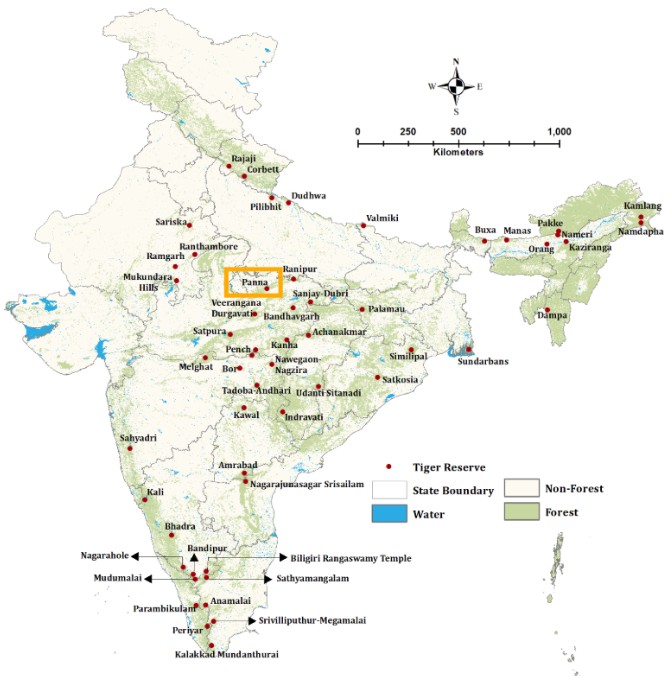
(c) NTCA Map showing locations of Tiger Reserves in India, with Panna Tiger Reserve highlighted
Wildlife is experiencing incessant and growing pressures. Across the country, several new infrastructure developments, including extensive new road networks and dozens of new river interlinking projects, threaten the integrity of remaining wildlife habitats. This includes a proposed project in Panna Tiger Reserve – home to a vital population of tigers – that would result in the loss of critical habitat.

The large cubs playing together (c) Yash Dalmia
Thankfully, many prominent conservationists, including members of SLTP, are taking action to argue against such new large-scale infrastructure projects in and around key wildlife habitats. They reason that there are too many flaws, risks and unknowns to ensure success, and the costs to the environment are too high. This is why Born Free supports our partners’ efforts to encourage the consideration of people-centred grassroots options, rather than large-scale, engineering dominated projects which may not be supported by convincing evidence.
Sadly, Panna’s tigers already have a story of hardship to tell. After being completely ‘extirpated’ (eradicated) from the park, the forestry department undertook a translocation project and introduced half a dozen tigers into Panna in the early 2000s. Together with careful management and holistic conservation efforts across a wider landscape – thanks in part to BAAVAN’s hard work – there are now several dozen tigers living across Panna.
“Our tiger sightings during the seminar – two playful one-year-old cubs near a deep gully, then later an adult female committedly marking her territory across a plateau of the park – were testament to the success of conservation efforts here,” said Dr Nikki Tagg, Born Free’s Head of Conservation, who attended this year’s seminar (see picture above). “But the reality of the looming threats, which we discussed in detail during the seminar, were a constant nagging reminder of what is at risk of being lost forever.
“Given the situation in Panna, continuing to support our colleagues through these difficult times is critical. Your kind donations and tiger adoptions are vital! The challenges are great, the mission ambitious, yet our resolve is solid – and further cemented when we come together, work together and aim for success together.”
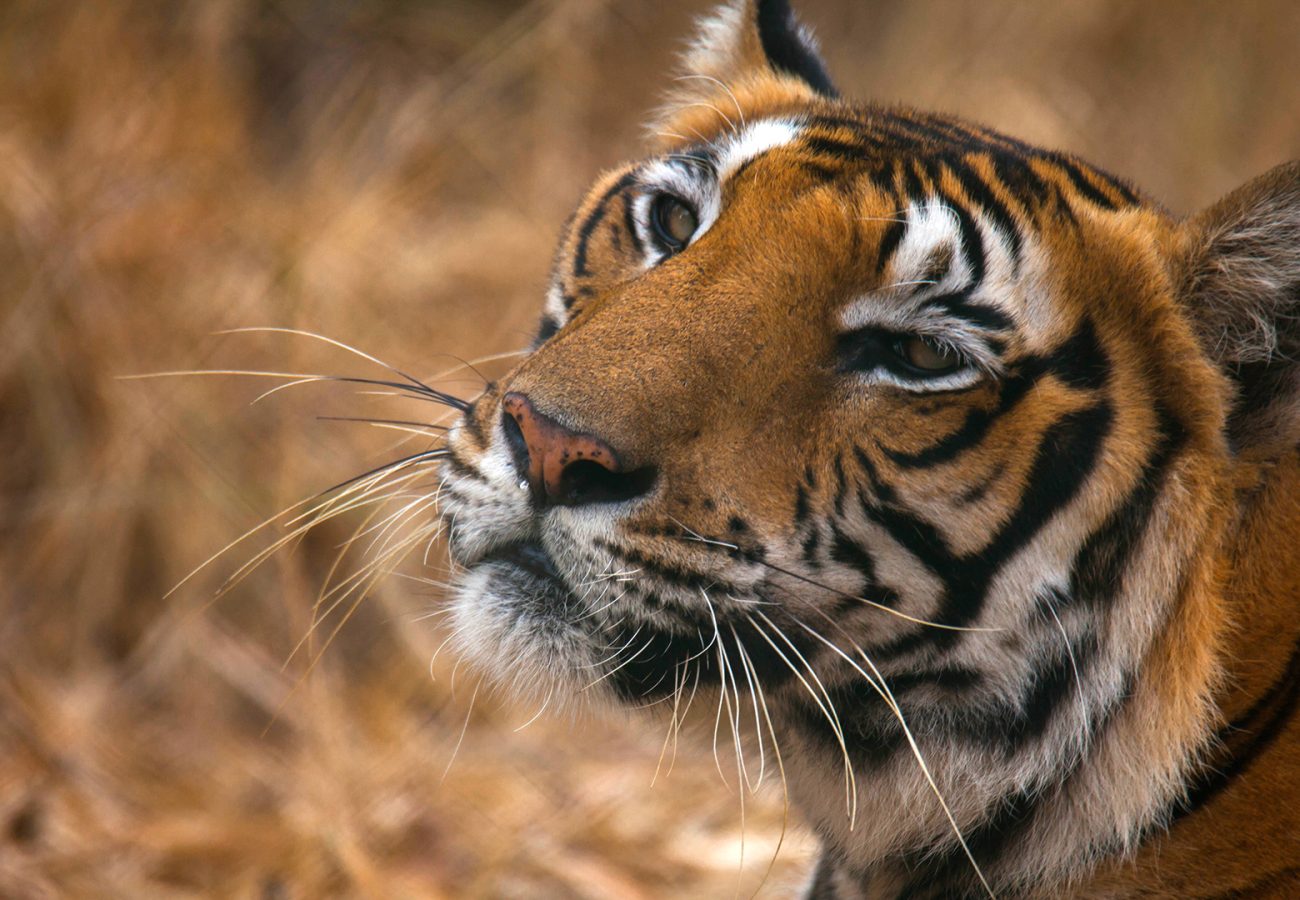
YOU CAN HELP!
Do you share our passion for this mesmerising, powerful big cat? Help make our vision of a safe future for all tigers a reality by adopting a tiger – as a gift or for yourself – today.