Wildlife champions took centre stage at Born Free’s first Inter-School Creative Showcase in South Africa.
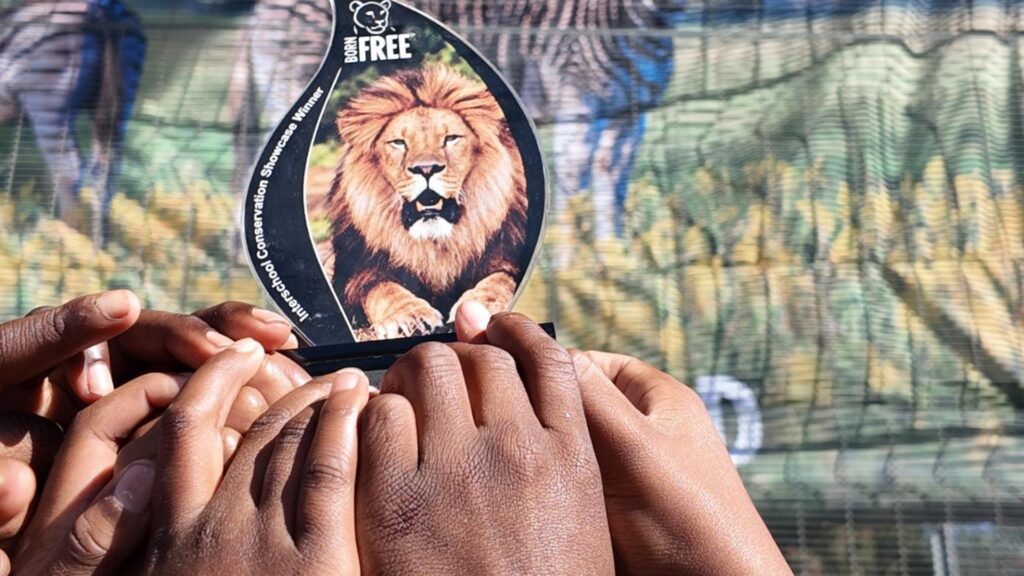
Four school conservation clubs, 116 young conservationists, one shared message: everyone has a role to play in protecting our natural environment and the wildlife that depends on it.
As part of Born Free’s community engagement work in South Africa, our team runs Conservation Clubs in four schools close to our charity’s Big Cat Sanctuary, at Shamwari Private Game Reserve, in the Eastern Cape – home to rescued lions and leopards – to tell young people about the importance of wild animals and conservation.
Working with local schools in Makhanda, Alicedale, Zuney and Riebeek East, the programme combines classroom-based learning with practical activities, covering topics such as wild habitats, biodiversity and animal welfare.
Last week, young people from all four Conservation Clubs came together, meeting one another for the first time, when Riebeek East Combined School opened its doors to host our very first Inter-School Conservation Club Creative Showcase.
Dressed in club T-shirts, designed by the students themselves, the teams arrived ready to share conservation messages they’d spent six weeks preparing. Through drama, poetry, posters, singing and dance, they brilliantly communicated the environmental challenges affecting their communities, and showed what people could do to make a difference.
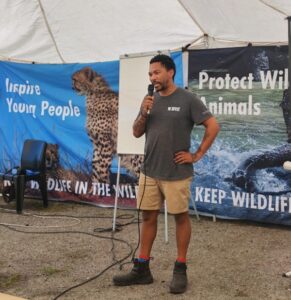
Melumzi Matiwane, Born Free’s Community Engagement Officer in South Africa, speaking at the event.
Key themes of the showcase
Water conservation was a key theme for Zuney Combined School, Hendrik Kanise Combined School and Riebeek East Combined School. Their presentations highlighted the importance of saving water and offered practical solutions for people to apply in their everyday lives. By choosing an issue that affects everyone, they demonstrated how conservation messages can connect directly with the challenges communities and individuals face.
The young people also explored the contributions wild plants and animals make to communities, and how people can help protect them. Again, the message was clear: protecting nature isn’t separate from our everyday lives. The health of our environment, the wellbeing of our communities, and the survival of wildlife are closely connected.
Finally, Ntsika Senior Secondary School’s drama focused on animal welfare, challenging the common perception that animals exist to serve people. The students encouraged compassion and highlighted the important role that animals – particularly domestic species such as donkeys – play in communities.
Sharing conservation messaging with the community
Along with the 116 school children participating in the showcase, it was also attended by a further 65 pupils from the host school, more than 80 parents, and local community stakeholders, including the police. What a wonderful way to show support for the effort that had gone into the presentations.
Speaking after the event, Born Free’s Community Engagement Coordinator Rotondwa Sithagu said: “What stood out most from the event was that learners didn’t just identify problems, but presented practical solutions that people can take home and start implementing. The presentations showed a real understanding of how our individual actions affect the environment and, ultimately, impact our own wellbeing.
“It was also fantastic to see young people speak with such conviction, exuding confidence, knowledge and passion. It shows that the Conservation Clubs are creating opportunities to not only develop environmental knowledge, but improve teamwork, communication and leadership skills too.”
Why education matters to wildlife
At Born Free, environmental education is an important part of our work to promote respect for wildlife and encourage sustainable human-wildlife coexistence. Protecting wildlife is not only about protecting animals within reserves and sanctuaries. It also means addressing the human activities that damage habitats, pollute ecosystems and compromise animal welfare.
When learners understand how litter and pollution can harm animals, why water needs to be conserved, how plants and animals depend on one another, and why animals deserve kindness and compassion, they are better equipped to make informed choices.
Just as importantly, they can share that knowledge with their families, friends and wider communities. These changes may begin with small, everyday actions, but when individuals and communities take responsibility together, they can contribute to healthier environments, better protection for wildlife and more sustainable ways of living alongside nature.
COMMUNITY ENGAGEMENT IN SOUTH AFRICA: FIND OUT MORE