
Reticulated Giraffe Facts
Explore reticulated giraffe facts: habitat, diet, life cycle, population numbers, and why this striking giraffe is Endangered.
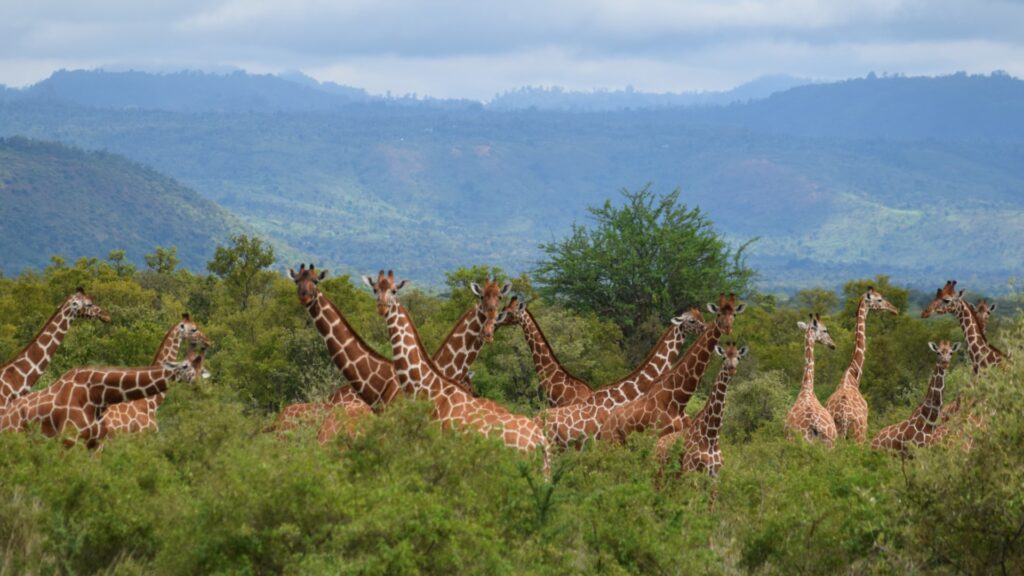
Reticulated giraffes in Meru, Kenya (c) Born Free
Reticulated giraffes are one of the four species of giraffes roaming the African continent. You can identify a reticulated giraffe by its brown-orange patches, separated by thick white lines, which form a network across the giraffe’s coat. Reticulated giraffes are considered ‘Endangered’ by the IUCN.
Keep reading to find out more about reticulated giraffe biology, behaviour and conservation status.
What Is a Reticulated Giraffe?
Scientific name: Giraffa reticulata
Reticulated giraffes are one of the four species of giraffe. It was officially recognised as a species by the IUCN in 2025, upgraded from a subspecies, following years of research.
Where Do Reticulated Giraffes Live?
Reticulated giraffes live primarily in Kenya, with some small populations in Ethiopia and Somalia.
Historically, reticulated giraffe range was spread further across these three countries, but habitat fragmentation has significantly reduced their range.
Are Reticulated Giraffes Endangered?
Reticulated giraffes were classified as ‘Endangered’ by the IUCN in 2018.
Their population declined significantly from the 1980s to the mid-2010s, but reticulated giraffe populations are now recovering and showing signs of increasing.
Born Free’s Saving Meru’s Giants programme is dedicated to protecting reticulated giraffes in and around Meru National Park in Kenya.
Reticulated Giraffe Habitat and Adaptations
 Adaptations for survival:
- A giraffe’s long tongue is prehensile, meaning that it can grasp things. This special adaption allows them to strip leaves off branches with ease.
- Because drinking can be a dangerous challenge for giraffes, they have adapted to survive without drinking water every day.
- Extra long necks allow reticulated giraffes to access the leaves and shoots at the top of trees, areas where other herbivores are unable to reach.
- Their patchy coat provides camouflage, helping them be less vulnerable to predators.
- Over short distances, giraffe’s long legs help them run fast.
- Adult reticulated giraffes can deliver a powerful kick to deter predators.
Habitat:
- Reticulated giraffes live in savanna, shrubland and subtropical / dry forests.
- They can live alongside livestock and people, particularly in northern Kenya, where pastoralism is the dominant lifestyle.
- The development of roads, fences and infrastructure is fragmenting their habit, threatening populations.
What do Reticulated Giraffes eat?
Acacia trees make up a big part of reticulated giraffe’s diet. Feasting on the leaves and shoots, they have evolved to be able to eat from these spiky trees.
Alongside eating leaves and shoots, they will also eat flowers, seeds and bark.
One study found reticulated giraffes spent over 40% of their day feeding.
Reticulated Giraffe Life Cycle
Female giraffes are pregnant for around 15 months. When calves are born, they already stand at around 6ft (m) tall and weigh around 65 kilograms.
Calves will feed from their mothers for 9-12 months.
More research is needed to know the lifespan of reticulated giraffes. It is likely around 25 years in the wild.
What Is Special About Reticulated Giraffes?
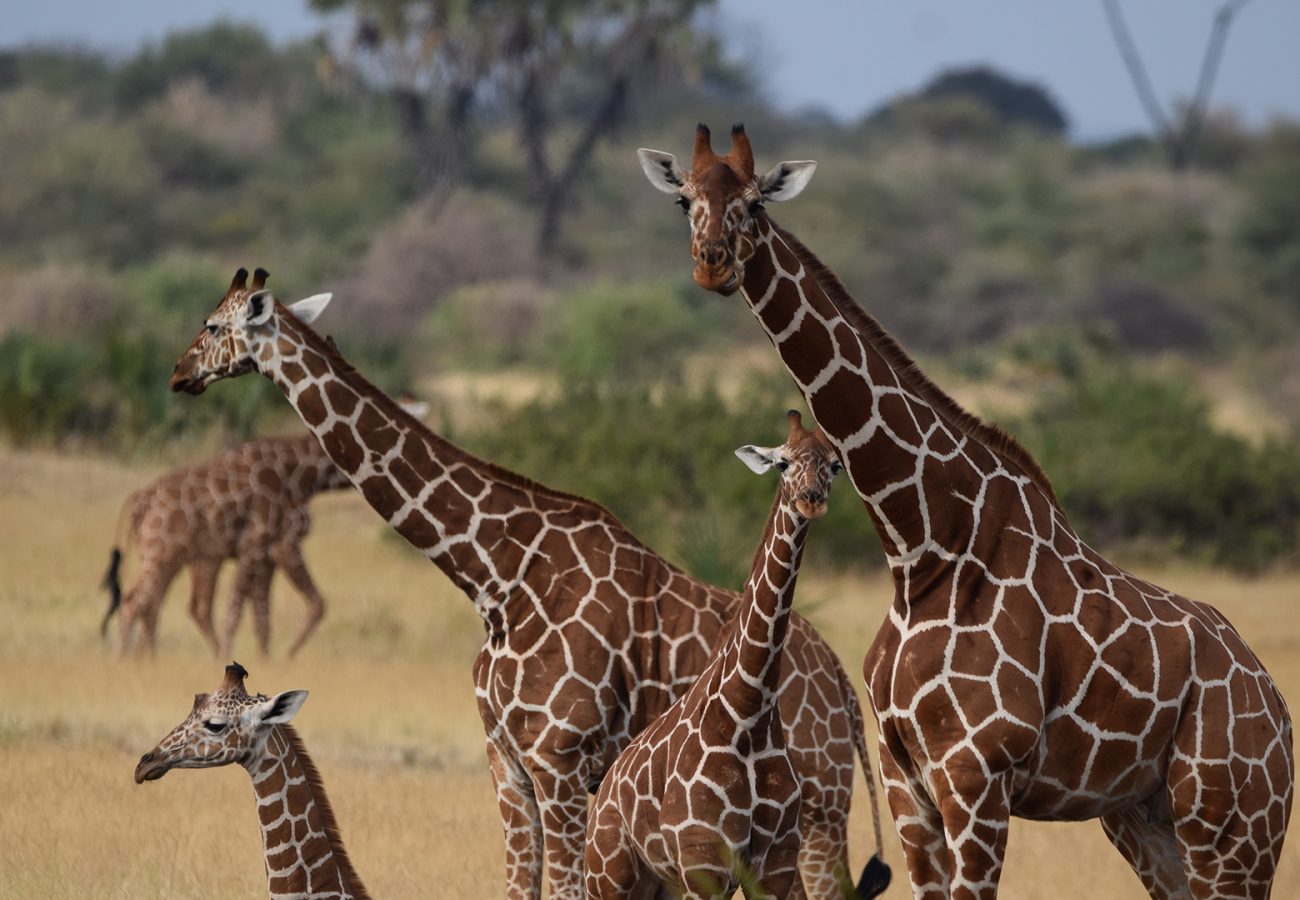
 Reticulated giraffes are often considered the most striking giraffe species. Each reticulated giraffe’s coat pattern is unique – no two individuals are the same.
They only live in three countries in the wild.
Where does the name ‘Reticulated Giraffe’ come from?
The term ‘reticulated’ means something that is arranged or constructed in a net-like pattern or network. Reticulated giraffe’s distinct white lines between their patches make up a network across their whole coat, including their legs.
How can we protect Reticulated Giraffes for the Future?
Some estimates suggest that 95% of reticulated giraffes live outside of protected areas. It has never been more important to protect this species.
Born Free’s Community Engagement and Conservation teams in Kenya work closely with communities to empower them with the skills and knowledge to support conservation and help protect vital giraffe habitat.
Our Twiga Team patrol Meru National Park, removing deadly snares which giraffe’s long legs are easily caught in, leading to a slow and painful death.
YOU CAN HELP GIRAFFES!
The Giraffe Family live in Meru National Park, Kenya. Adopting them today will help us monitor wild giraffe populations, protect their natural habitat, and introduce measures to reduce conflict between people and wildlife.