
Restoring habitats to restore hope in Kenya
At Kathithine Comprehensive School, students don’t just learn about conservation, they grow trees, restore land and become community ambassadors. Ivy Malemba reports.
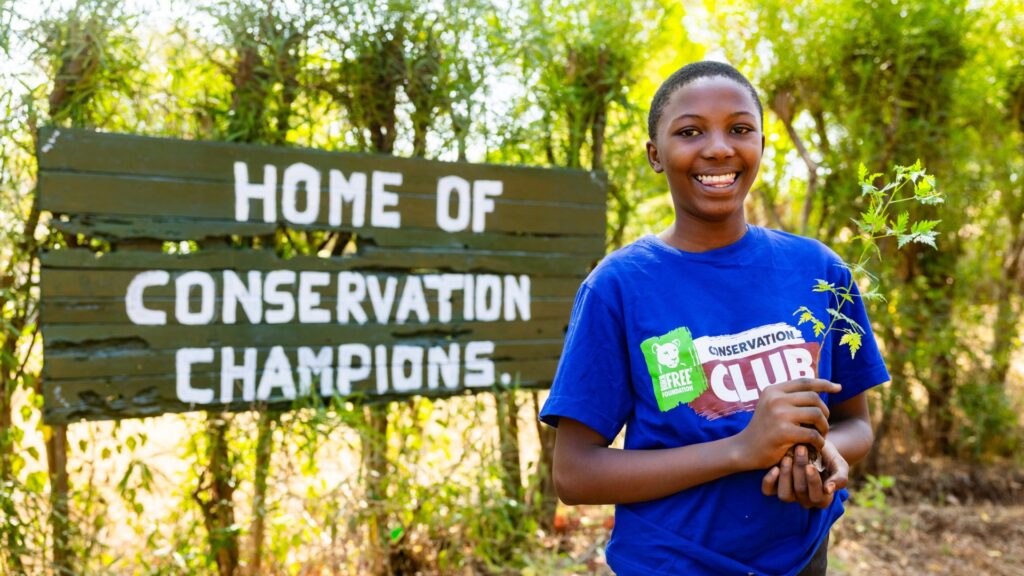
A student at Kathithine Comprehensive School (c) Peter Ndung’u
What if the purpose of school wasn’t just to pass exams, but to heal the planet?
For decades, education has been somewhat narrowly defined by academic scores and university admission. But, at Kathithine Comprehensive School – close to Meru National Park in northeast Kenya, we’re proving there is another way.
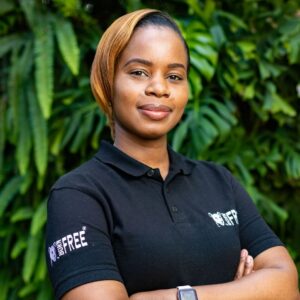
Ivy Malemba
Here, amongst 322 pupils aged between four and fifteen, we’ve launched the first implementation of the ’Model Schools Curriculum’, and the results are literally growing from the ground up.
“Conservation isn’t just about protecting wildlife – it’s about nurturing responsibility, integrity and citizenship among learners,” said the school’s Head, Ithanya Julius Mutwiri. “Born Free’s collaboration with schools and communities demonstrates the transformative power of environmental stewardship.”
But what is a Model School, and how does such an innovative curriculum help wild animals? Here is how we’re shifting the paradigm from rote learning, to rooted responsibility.
The philosophy: holistic education
The Model Schools Curriculum operates on a simple truth: humanity is interconnected with the natural world. You can’t teach maths without teaching stewardship, nor can you teach language without teaching empathy.
Developed with teachers, our new curriculum goes beyond the textbook to cultivate:
- Critical thinking and creativity: solving real conservation challenges, not hypothetical problems.
- Self-awareness and empathy: understanding how our daily actions impact the community and the ecosystem.
- Ethical values: instilling a sense of duty to act as responsible citizens entrusted with the management of natural resources.
- Interconnectedness: recognising that the well-being of current generations is tied to the survival of future ones.
We aren’t just teaching students to be smart. We’re teaching them to be good stewards – entrusted to help safeguard the wild.
Learning through practical activities
At Kathithine Comprehensive School, we have integrated conservation learning into every school activity. This isn’t an afternoon club – it’s the school’s entire operating system.
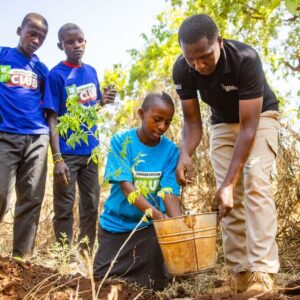
(c) Peter Ndung’u
Habitat restoration is the curriculum. Our learners don’t just read about deforestation, they fight it. And this process begins with a seed.
- Discovery: learners search for seeds or wildlings (sprouted tree seedlings) to plant.
- Technical training: With support from the Kenya Forest Service (KFS), students are trained in professional tree nursery management.
- Critical decisions: They learn which potting material to use, how to select a site, analyse soil types, and master the delicate process of transferring seedlings to the field.
Students appreciate the process of nurturing a seedling into a mature tree, because they feel the weight of that responsibility. When you water a seed every morning for six months, you don’t look at a forest in the same way ever again.
From classroom to community
The best part of this model is that the learning doesn’t stay ‘inside the fence’. Because we’ve stopped relying on ‘outsiders’ to bring tree seedlings, the students have taken ownership. This ownership naturally spills into the community.
Our learners are now identifying degraded community areas that need habitat restoration. They walk into local villages not as students, but as educators. They teach community members about habitat restoration, soil conservation, and the importance of native trees.
They don’t wait for the government or organisations like Born Free to act. They bring their own seedlings and lead the planting.
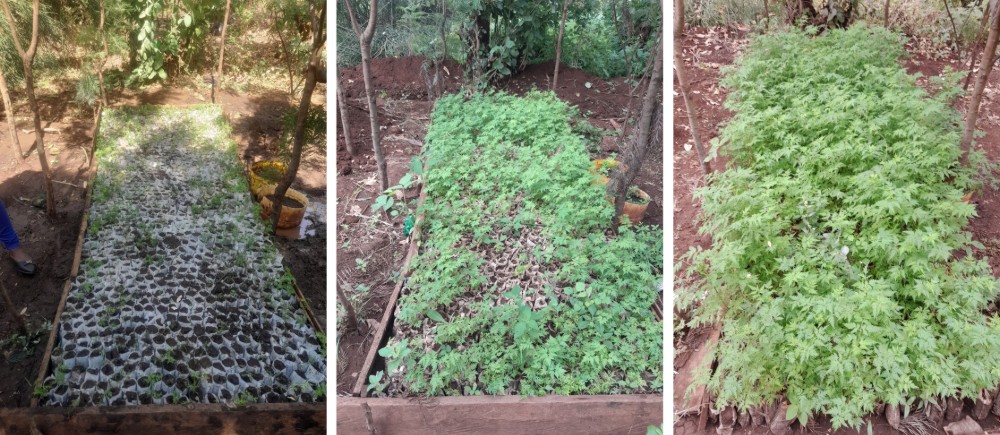
Students are able to see real progress as the saplings grow!
Our core objective
We have one clear goal at Kathithine: to create a permanent link between school conservation activities and community conservation initiatives. We are turning learners into Conservation Ambassadors in their own homes.
When a child goes home and asks their parent, ‘Where will we plant the tree I grew at school?’ — the dynamic shifts. The child becomes the teacher. The parent becomes the partner.
The takeaway
The environmental, social, and economic challenges we face are daunting. But the solution lies in proactive measures rooted in understanding. The Model Schools Curriculum demonstrates that, when you give children responsibility for caring for the earth, they rise to the occasion.
At Kathithine Comprehensive School, we’re not just restoring habitats. We are restoring hope. And proving the best way to secure the well-being of future generations and the nature world, is to put the future directly into the hands of our youth.
WANT TO HELP?
Born Free’s Community Engagement Programme works with schools and communities across the UK, Kenya, Ethiopia and South Africa, instilling a love of wildlife and igniting a passion to protect it. We believe that engaging, educating and empowering communities is key to ensuring that everyone, including young people, are aware of the issues facing our natural world.