
Julie the elephant’s first two months at Pangea
In early July, thanks to your donations, Julie arrived at her sanctuary forever home in Portugal, after performing in the circus for 40 years. But what happened next?
(c) Pangea / Wade Million
Two months ago, we announced huge news, Julie had arrived at Pangea – the very first elephant rehomed at the vast new sanctuary in Portugal. This was an 11-years-in-the-making dream come true, and it was thanks to your kind donations to our emergency appeal to help give her a loving home for life. But how has she settled in since then? Our long-term friends at Pangea report:
A remarkable transformation
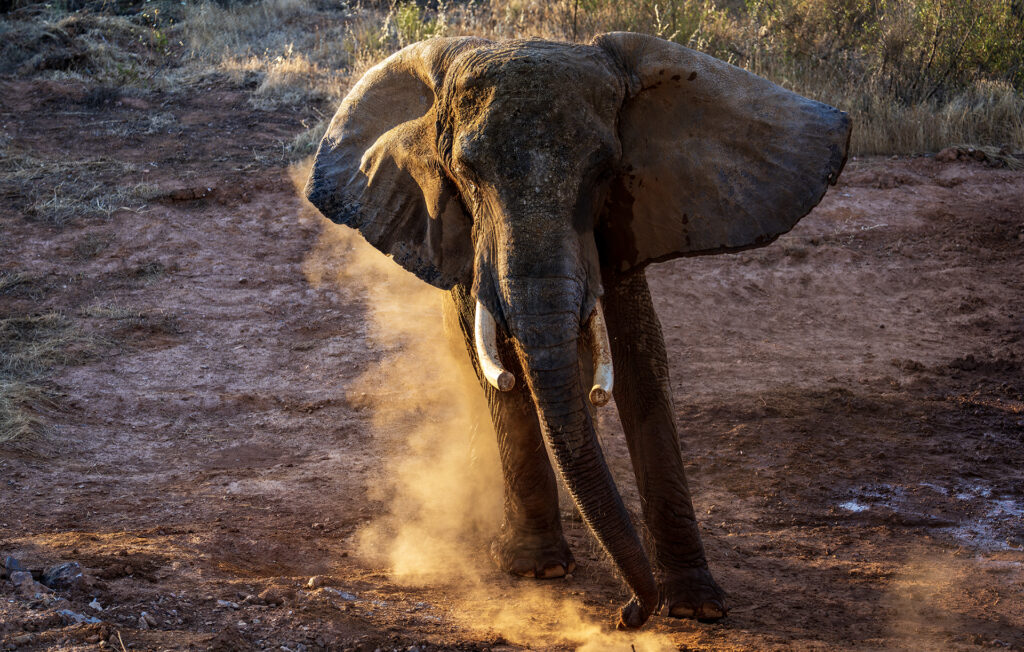
Since arriving at the beginning of July, Julie has settled in better than any of us could have hoped. In the first few days we couldn’t believe how quickly she took to her new life. We opened the barn gates leading into her paddock just 24 hours after her arrival and, after pausing for a few minutes, she walked straight out, sought a pile of soil and gave herself a mud bath. This has been one of her favourite activities ever since.
Julie also thoroughly enjoys using her tusks to dig and play in the dirt. Wild elephants would do this to forage for roots and tubers. It is wonderful to see her rediscovering this natural instinct and using her tusks in a way she was not able to do previously.
Julie’s tusks were shortened by her previous owners. In captivity, elephants don’t wear their tusks down naturally the way they would in the wild. Trimming can be done to prevent cracks, fractures, and other issues that could become a problem if left unchecked. Tusks are like hooves or nails and will continue to grow back over time. We hope that she will now be able to give her tusks natural wear and tear through all that digging.
Improved skin health
Her skin has turned a deep red, like the elephants of Tsavo in Kenya, because she just can’t get enough of Alentejo’s dust and mud. When she arrived her skin was grey, crusty and dry. If it weren’t for her distinctive tusks you might not know it was the same elephant.
Feeling safe & confident
Just recently, we were able to catch Julie fully lying down in her mud wallow for the first time. This is the most vulnerable position for an elephant, so they have to feel safe and secure in order to do so.
Even more so, we’ve also found evidence that she has been sleeping outside under the stars. We always leave the barn doors open for her to go in and out as she pleases, but most nights Julie would sleep inside because that was her safe space. Now she rarely sleeps in the barn, preferring to sleep out in the habitat like she would in the wild. These are great signs that Julie is feeling completely relaxed and confident in her new surroundings.
Discovering more about Julie
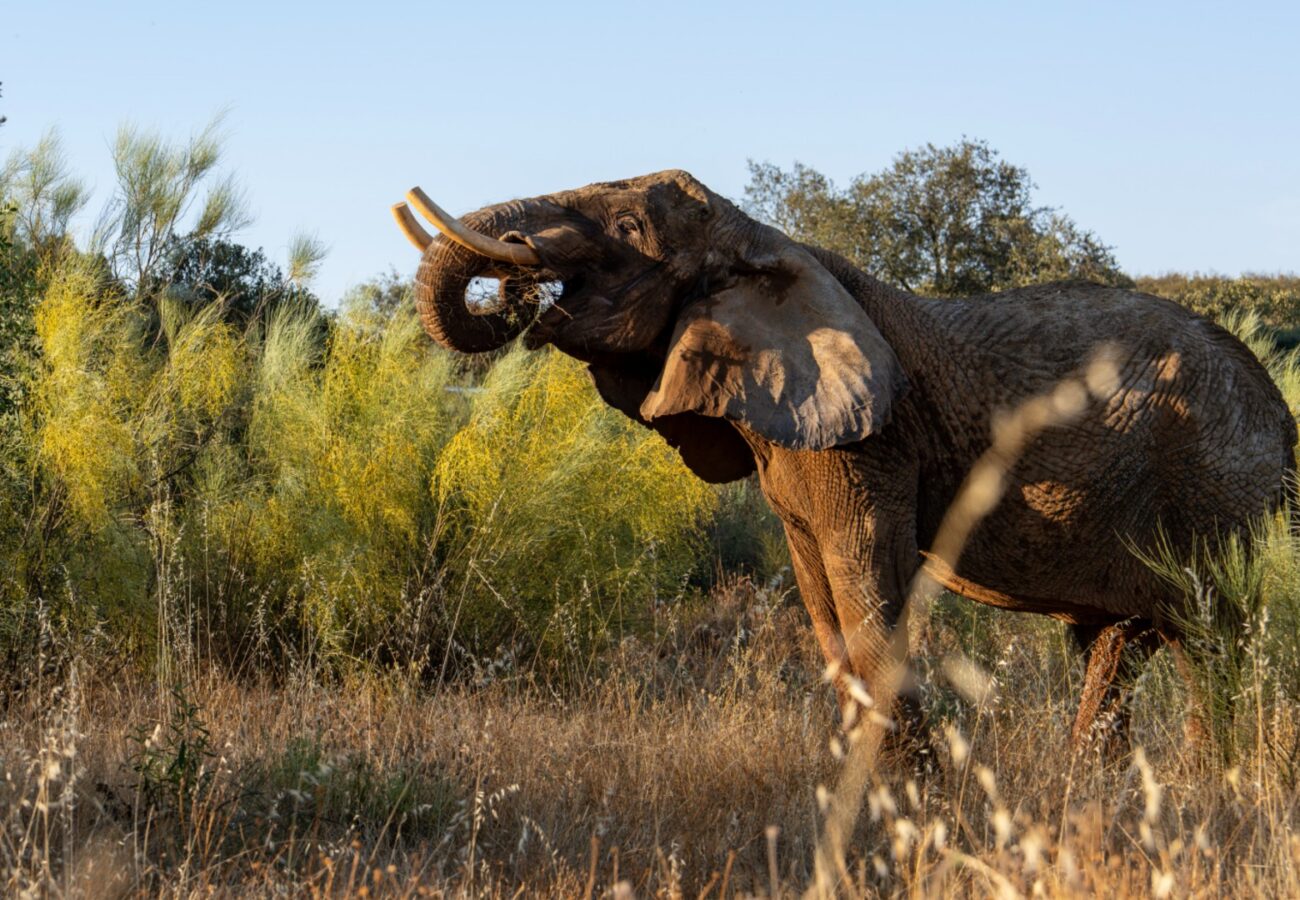
We’ve also learned a great deal about Julie and her habits, behaviour, likes, and dislikes. For example, none of us would have ever guessed that her favourite snack is actually raw onions! We did a special World Elephant Day video where Julie got to choose from a selection of tasty treats, including watermelon, bananas, carrots and onions. She goes for the onions every time without exception. They are her absolute favourite snack.
Every day we watch in awe as Julie explores more and more of her habitat, rediscovering natural behaviours and learning what it means to be an elephant. As she grows stronger, more confident, and more wild, we look forward to sharing every step of her journey and bringing her companionship in the near future.
YOU CAN HELP!
Thank you for all you’ve done to help transform Julie’s life at Pangea. Your gift today could support this colossal, life-changing project, and help fund Julies loving retirement at Pangea.