
Rescuing pangolins from poachers
Saved from wildlife traffickers, with the help of Born Free adopters, Wathu the pangolin is now getting ready for life back in the wild – where she belongs.
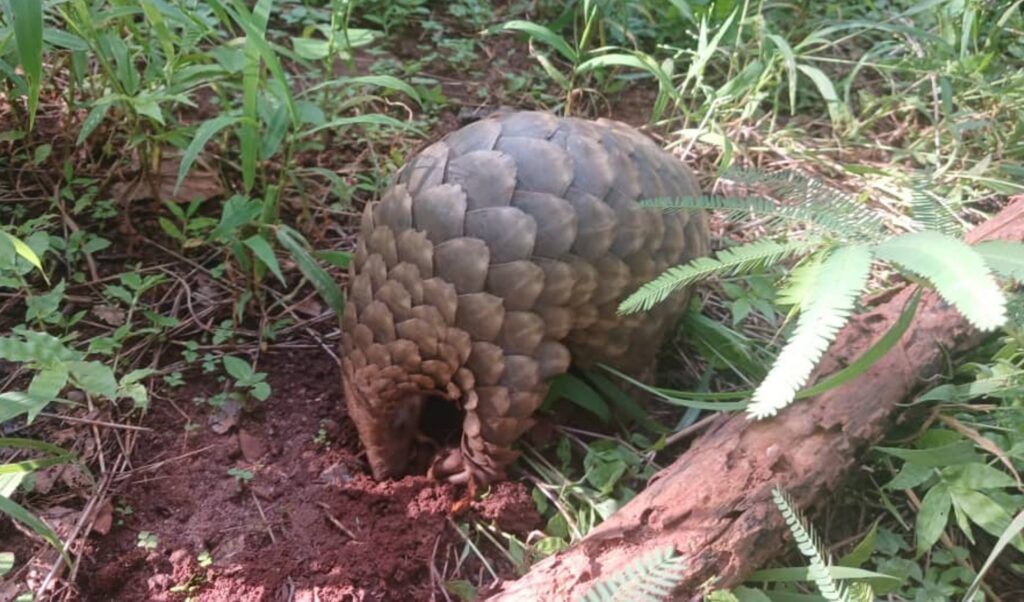
Wathu foraging (c) Lilongwe Wildlife Trust
Lilongwe Wildlife Trust, one of Born Free’s long-term partners, is dedicated to giving Temminck’s pangolins – also known as ground pangolins – a second chance in Malawi.
As one of the most trafficked animals in the world, sadly pangolins are regularly found in the illegal wildlife trade. They are sought after for their meat, as well as their scales – which are used in traditional medicine despite being made of keratin, like our fingernails, and having no medical value.
In Malawi, when individuals are confiscated, they are taken to Lilongwe Wildlife Trust’s centre, a renowned wildlife sanctuary based in the capital city, where they can receive expert care and begin their rehabilitation process.
“While pangolin intakes to the Trust’s centre dropped in 2023 and 2024, unfortunately this trend wasn’t sustained in 2025, with around one or two taken in each month,” said Anna Cryer from our Rescue & Care team. “These individuals are given expert care, helping them to recover from their traumatic experience and prepare for life back in the wild.”

Wathu shortly after rescue (c) LWT
One of the recent rescued pangolins was named Wathu, which means ‘ours’ in Chichewa – a Bantu language spoken in Malawi. Chosen by one of her pangolin carers, who felt that pangolins are ‘ours to protect’, Wathu was rescued from the illegal wildlife trade by law enforcement officers, who suspected she was originally poached in neighbouring Mozambique.
Weighing only 2.7kg on her arrival, Wathu had a long way to go before she was strong enough to be released. Lilongwe Wildlife Trust aims for a release weight of at least 5kg. Thankfully, she didn’t have any major injuries and, once treated for dehydration and mites, was ready to gain weight ahead of being returned to the wild.
Under the watchful eye of her dedicated pangolin carer, Wathu goes out for foraging walks every day.

Wathu on a walk (c) LWT
Pangolins eat vast quantities of ants and termites and, while we may think all ants taste the same, Wathu says otherwise. “She is picky and refuses to eat big ants, preferring the small ones,” explains her carer.
Another pangolin, Chilembwe was also recently taken into Lilongwe Wildlife Trust’s care. Much larger than Wathu, Chilembwe was a fully grown adult, weighing 10.2kgs. Similarly rescued from the illegal wildlife trade, Chilembwe was thankfully still healthy. She was able to be returned quickly to the wild, in a protected area where she will hopefully thrive in the years to come.
Thanks to the dedication of Lilongwe Wildlife Trust, pangolins like Wathu and Chilembwe can be returned to safe places in the wild, where they belong.
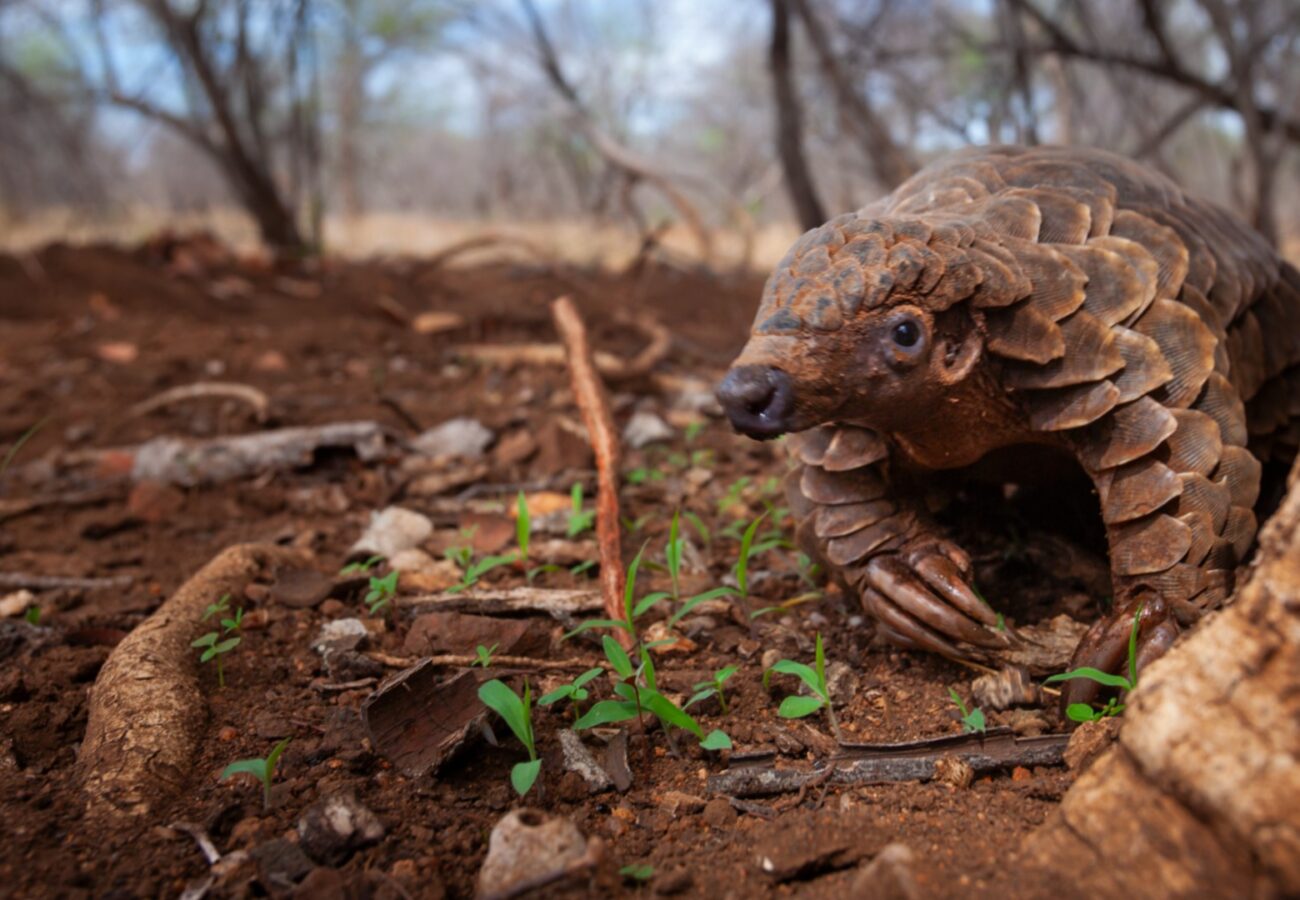
WANT TO HELP PANGOLINS?
You can stay up to date with all the pangolin news from the field, and support our work to protect pangolins, by adopting the Pangolin Family today.