
How to save a snared elephant
In a dramatic emergency mission, our long-term colleagues in Malawi have rescued a badly injured elephant, found with a deadly wire snare tight around her neck.
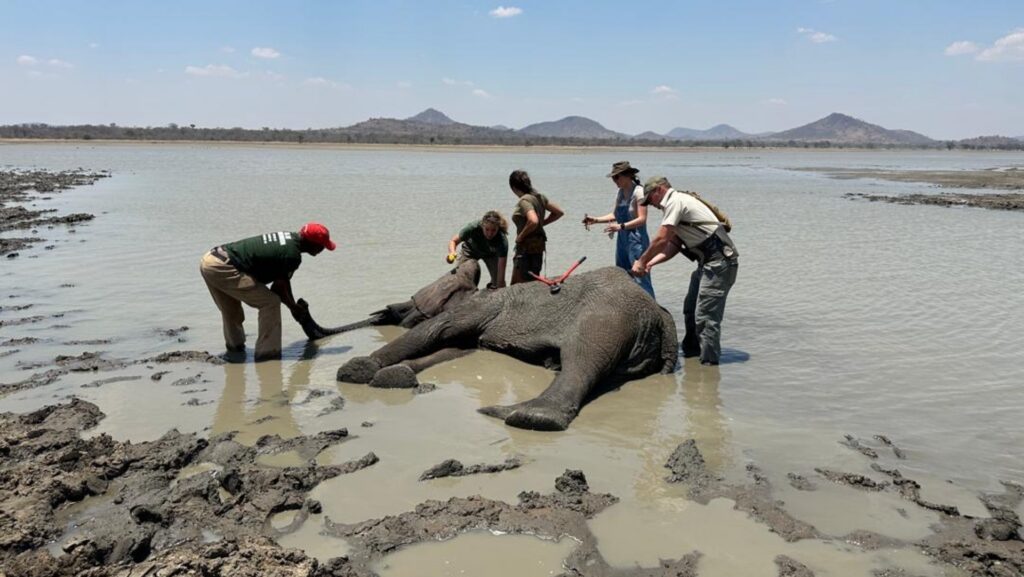
(c) Lilongwe Wildlife Trust
There’s never a dull day for Malawi’s Wildlife Emergency Response Unit – responding to injured wildlife at any time, from anywhere in the country. But how on earth do you help a badly injured elephant, spotted with a snare caught around her neck, in a vast wildlife reserve in the north of the country? An expert team, a dart gun, and a drone all play a vital role!
Born Free’s partner Lilongwe Wildlife Trust is the only organisation in Malawi to provide national wildlife rescue, rehabilitation and field veterinary services. Supported by Born Free since 2009, their Wildlife Emergency Response Unit (WERU) is on hand every day to respond to reports of injured wildlife.
In many callouts, the animal is treated in-situ and left to recover in the wild, where they belong. When this isn’t possible and individual requires further care, they can be taken to the sanctuary of Lilongwe Wildlife Centre – based in the capital city, where recovery and rehabilitation can occur under the watchful eye of an expert team.
By providing fast and in-situ medical treatment to wildlife, WERU is critical to reducing mortalities in injured wildlife. Many of the cases they respond to are animals injured by snares, spears or bullets, either a result of human-wildlife conflict or poaching incidents. But on some occasions, the team will be on another mission, when they notice a wild animal in urgent need.
“Our research and veterinary team had travelled to a protected area to help remove an old ‘tracking collar’ from an elephant, which had become loose. A pilot flew over the park with our vet to locate the individual,” explains Dr Leandra Stracquadanio, Lilongwe Wildlife Trust’s Head of Biodiversity Research. “But, while we were searching, we noticed another elephant who looked significantly underweight and appeared to have injuries.”
The team needed a closer look at this individual to find out what was wrong. “The bush was too dense to dart the animal from the air, so we landed and, with the help of a drone, managed to track and dart the elephant on foot,” Leandra continues.
Operations which involve darting elephants are never easy. But this one proved even more challenging than usual. Once an individual is darted, it can take a few moments before the anaesthetic takes full affect, allowing elephants to continue moving.

(c) LWT
This individual ended up going down on the edge of a lake – adding an extra element of difficulty for the rescue team. Upon closer inspection, the WERU team sadly discovered the elephant had a wire snare around her neck.
“While one member of the team held the elephant’s trunk out of the water so she could breath, we managed to remove the snare,” details Leandra. “It was caught around her neck and ears, and likely had affected her ability to eat – which probably explains her poor body condition.”
Thankfully, the vet could successfully treat the wound and give the elephant antibiotics. Then, after the anaesthetic was carefully reversed, the WERU team was able to breathe a sigh of relief, as they watched the elephant get back on her feet and safely walk away.
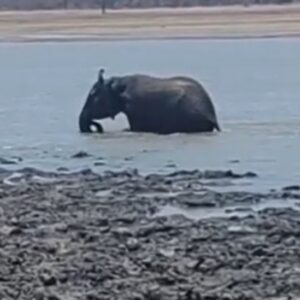
Looking happier after the rescue! (c) LWT
A few days later, the elephant was spotted again – moving well and looking stable despite her severe injuries. Without the WERU team’s rapid intervention, this elephant could have been a victim of a long and painful death, caused by an indiscriminate snare – no doubt set illegally by poachers to trap wildlife.
Oh, and the team went on to find the elephant with the old collar, then safely remove it. All in a day’s work for WERU!
Born Free is so proud to support Lilongwe Wildlife Trust and their incredible WERU team, and help ensure elephants in trouble are given a second chance.
LOVE ELEPHANTS?
A gift to Born Free can help us continue our life-saving work around the world, protecting elephants, and other precious wild species.