
How do animals sleep in the wild?
From not touching land for years, to only needing a few hours kip each night, the amount different animals sleep varies hugely.
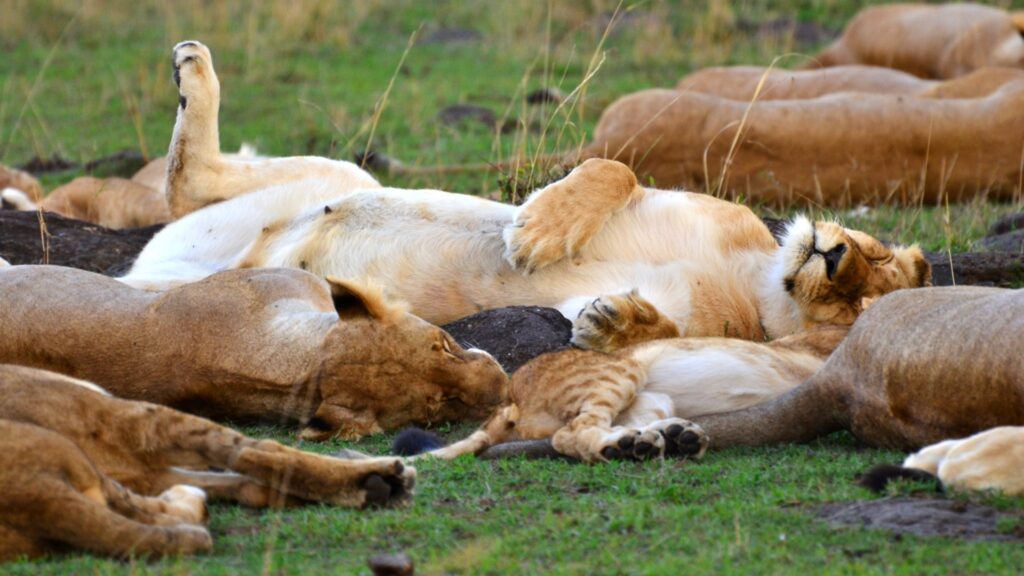
Sleeping lions (c) Norman Rayner
Whether it’s a giraffe carefully folding itself down for a brief nap, an elephant dozing in the cool hours before dawn, or a hedgehog tucked away for winter, every animal needs rest. Yet the way animals sleep can be as diverse as the species themselves.
Across the natural world, animals have adapted the way they sleep to survive the challenges of their environment, avoid danger and find enough food. From light snoozes to months-long hibernation, no two species do it in quite the same way.
Lions
(c) Norman Rayner
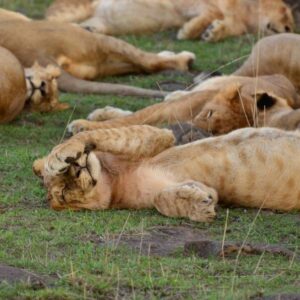
These big cats like to sleep. Lions in the wild may rest up to 21 hours a day! In contrast to large herbivores such as elephants and giraffes, lions’ long periods of rest are interrupted by periods of intense activity, such as hunting. While herbivores graze slowly throughout the day, eating more steadily to get the food they need, predators such as lions expend large amounts of energy trying to access food by hunting – something which isn’t always successful! Once they’ve eaten, lions will also rest for a long time, satiated by their meal.
Living in such hot environments, when resting or sleeping, lions will usually be in the shade. As the most social big cat, they spend a lot of time with other pride members, and resting is no exception: groups of lions resting are often found in close contact.
African Savannah Elephants
Despite their large size, savannah elephants need surprisingly little sleep! The only sleep for around one to two hours at a time, totalling around three to five hours over a 24-hour period. A group of elephants will usually synchronise their resting time, allowing some members of the group to be alert to danger, while others take a well-needed break.
One study found that two matriarchs in Botswana stayed awake for several days at a time! The two matriarchs only lay down to sleep every three or four days and when they did, that was when they hit REM (Rapid Eye Movement) sleep. With such big bodies, lying down isn’t that easy for elephants and they tend to only do it when they feel safe. Elephants usually rest late at night, between midnight and dawn, or early in the afternoon, when the day is hottest.
Giraffes
(c) Born Free
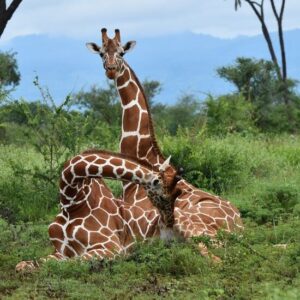
These towering giants have a long way to go to get down to the ground, but giraffes actually lie down more frequently than was originally thought. Folding their legs beneath them and curling their neck to rest their head on their rump, giraffes are able to enter deep sleep. Researchers say it’s quite a sight to witness – it looks like the giraffes are tied into a knot! This position is usually done at night, which is why for a long time, researchers weren’t sure how common it was for giraffes to lie down in the wild. Although it sounds like quite a complex position to get into too, they’ll only usually stay lying down for a short period of time – typically less than half an hour.
Luckily, they can also sleep standing up, snoozing at different points of the day, but again, not for long at a time. Like elephants, giraffes need surprisingly little sleep. They too will take turns sleeping, with individuals staying on guard as others sleep before switching.
Western European Hedgehog
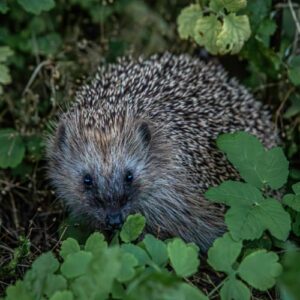 On the other end of the size spectrum, these little mammals sleep a lot – even months at a time! Over the winter in the UK, hedgehogs will go into hibernation, ‘sleeping’ from October/November to March/April. Though hibernation is often thought to just be sleeping, hedgehogs go into a state of ‘torpor’. This is where they drop their body temperature to match their surroundings, allowing them to save energy and stay in their nest for winter.
In their active months, hedgehogs in the UK will sleep during daylight hours and become active at night. In the day, they’ll hide in a nest, often in undergrowth, log piles or scrub to avoid disturbance.
Common Swift
The Common Swift, regularly seen in the UK, can stay airborne for a long time – even years! Swifts are able to do almost anything without touching back down to land, including sleep. When young swifts leave their nest, they won’t land again for 2-3 years, only touching down when they are ready to breed.
But how do they manage to stay in the air for years and sleep? This impressive skill comes from the ability to rest the two hemispheres of their brain separately. One side will remain active while the other rests, and vice versa.
Dolphins

Dolphins and whales are air-breathing mammals who need to be able continue surfacing the water for oxygen while they rest. Just like swifts, dolphins can sleep with one hemisphere of their brain, keeping the other side awake. This is called ‘unihemispheric slow wave sleep’.
Some animals, such as northern fur seals and sea lions are both aquatic and terrestrial – they can choose to sleep on land or in the sea. Where they sleep will dictate what type of sleep they use. When they are in the water, they do as dolphins do, and go into unihemispheric slow wave sleep; while on land both sides of their brain sleep at once, like people, in what is called ‘bihemispheric slow wave sleep’.
From sleeping on the wing to taking turns keeping watch, wildlife has evolved countless ways to rest while staying safe. These fascinating adaptations remind us that every species is uniquely suited to its place in the natural world, and why protecting wildlife and their habitats is so important.
LOVE FINDING OUT ABOUT ANIMALS?
Subscribe to our emails, you will receive all of the latest updates on Born Free’s work, our campaigns, and how your support is making a difference!