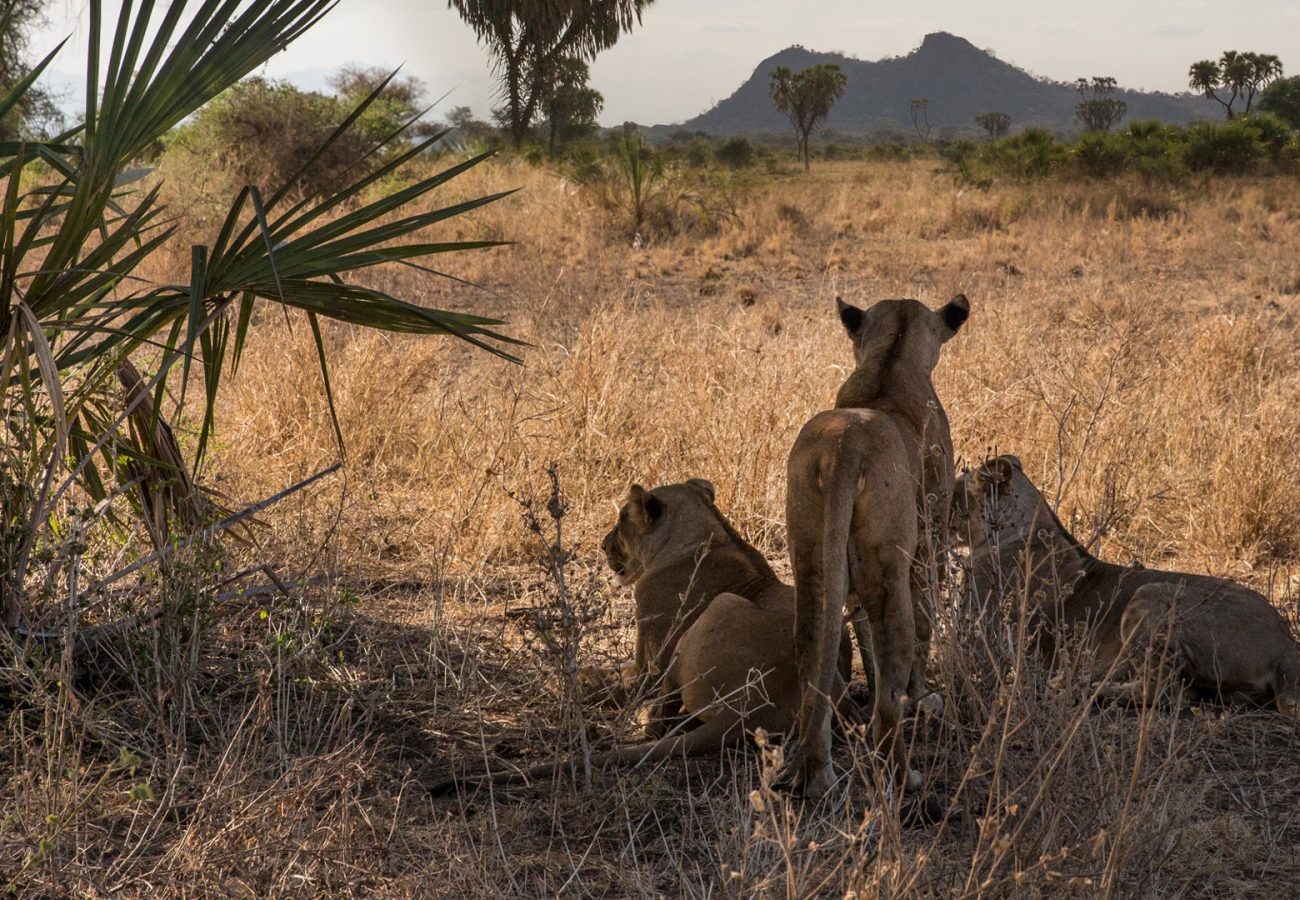
Based in the Kenyan farming community he grew up in, our Community Engagement Coordinator empowers local people to become conservation champions.
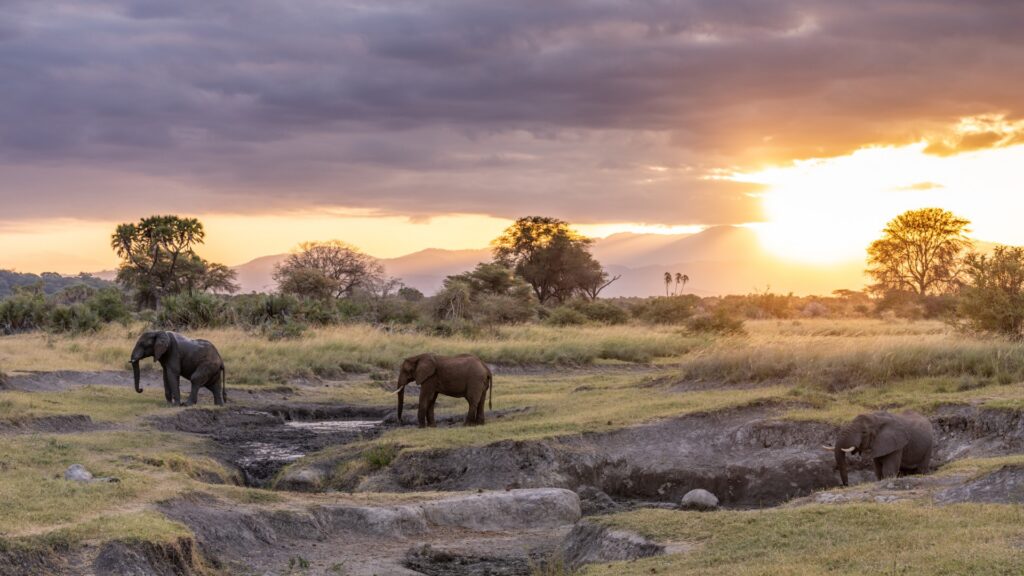
Elephants in the Meru landscape (c) Will Burrard-Lucas
What does an electrician, an acclaimed bass drummer, a sousaphone and tuba player, and formidable volleyball hitter have to do with wildlife conservation? Everything! Based in our charity’s heartland of Meru National Park – 220 miles northeast of Nairobi, Charles Njoroge is all this and so much more, explains Community Engagement Manager Phoebe Odhiang, in a fascinating long read.
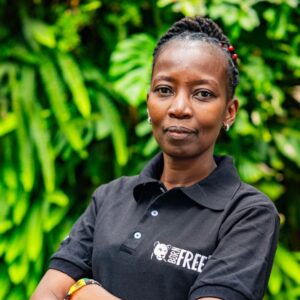
Phoebe Odhiang
Charles Njoroge inspires us every day, but he also challenges us all to show more empathy and courage, not least when working with people whose encounters with wildlife can be negative and even traumatising. To see him in action, whether on the volleyball pitch, playing music, or reassuring community members and explaining that the wildlife they live alongside can be of benefit, is to take a crash course in the power of influencing people.
Many of us go into careers in conservation because we have a passion for wild animals – we love elephants, we think lions are incredible, or we want to follow the examples of wildlife heroes like Dame Virginia McKenna, Dame Jane Goodall, Sir David Attenborough or Ian Douglas-Hamilton. Ultimately, we want to save wildlife. But Charles, or Njoroge as we call him, got into conservation because of the people. People like him, for whom wildlife is part of their everyday.
Growing up in Meru
From sleeping outside to prevent wild pigs eating his parents’ crops – which represented all their school fees, to walking to school while keeping an eye out for buffalo, hyena, and elephants, Njoroge had more negative encounters with wildlife as a child than most of us will have in our lifetimes. He has personally experienced both sides – the losses and trauma of problematic wildlife encounters, and the gains and positives of being employed by Born Free to protect wildlife, and help secure a safe future for Kenya’s natural heritage.
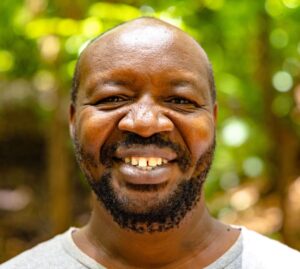
Charles Njoroge
Njoroge is passionate about working with the communities who encounter human-wildlife conflict. “I am one of them. My experiences have taught me there are simple solutions to coexisting with wildlife, and I don’t want to keep them to myself. I want those who – like me – have grown up alongside wildlife, to know that they have the solutions within themselves. They just need someone to help them realise this.
“I want to help close the knowledge gap, and uplift their lives, despite their perceived limited choices because of living in areas prioritised for wildlife. I want them to know they have options to reduce crop raiding by elephants, baboons and monkeys, as well as livestock attacks by carnivores, and any other negative effects felt by those who live in close proximity to wildlife.
I don’t want people to see themselves as victims, just because they live in marginalised communities who rely on farming, and have few options for formal employment. Their life experiences, from generations of living with wildlife, are proof they have the answer to coexistence.
Charles Njoroge
Breathtaking landscapes
Born Free works in some of Kenya’s most ecologically diverse and beautiful landscapes – from the shrublands of Meru, to the savannahs of Amboseli. With the chance to view wildlife from the famed Big Five to the tiny dung beetle, they are places of awe and wonder, destinations that countless tourists long to add to their bucket lists, having saved over years for the opportunity.
But those people who live next door to elephants, hyenas, lions and a myriad of smaller species, can spot wildlife almost every day, and not always in a good way. This was and still can be Njoroge’s reality. For many people who grow up in close proximity to wildlife, seeing an elephant or a leopard is a bit like that neighbour you’re on a first name basis with. You’re never sure what mood they’ll be in – especially if you put your car in their parking spot!
“Having grown up in a village bordering Meru National Park, I experienced firsthand the realities of living alongside wildlife,” Njoroge continues. “Raised in a farming family, we endured frequent human-wildlife conflict and crop destruction, as well as insecurity from armed poachers operating around the park.”
History of conflict
Today, the 336 square miles (870km2) of Meru National Park is marketed as a ‘complete wilderness’ area. But in the 1990s, when Njoroge was young, Meru was even more wild, and rarely visited, due to the aftermath of Kenya’s ‘Shifta War’ –which was reportedly funded through elephant and rhino poaching.
The insecurity and illegal killing of wildlife that resulted from this war was exacerbated by the vastness and remoteness of the greater Meru Conservation Area (MCA). This offered huge areas in which the bandits (‘shifta’ in Amharic) could hide and, as you can imagine, led to widespread insecurity amongst the communities neighbouring Meru National Park.
The MCA includes Meru and Kora National Parks, as well as Bisanadi and Mwingi National Reserves. It is a vast ecological and protected area administrative unit, totalling 1,500 square miles (4,000km2) of wilderness, making it the second largest protected area complex in Kenya.
Special individuals
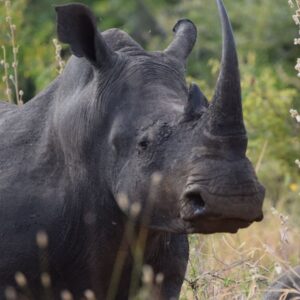
A white rhino in Meru
Despite MCA’s large area and the devastating impact of poaching on elephant and rhino populations, Njoroge remembers a few key individual animals from this time, including Father Collins, a bull elephant translocated to the park, as well as the last rhino left standing in Meru during the poaching epidemic – a male white rhino called Mukora.
Mukora is Swahili for ‘rascal’, because he was the only rhino clever enough to escape the poachers. To protect him, in 1989 Kenya Wildlife Service translocated Mukora to the safety of Lewa, a rhino sanctuary in northern Kenya – now established as Lewa Wildlife Conservancy. But he was brought back to Meru during the ‘restocking period’ of 2000-2007, a restoration project spearheaded by KWS. No doubt some of his descendants are now found in Meru’s rhino sanctuary, within the park.
“As a community, we faced many risks, even while going to school” Charles recalls. “Children often encountered elephants, buffaloes, and other wildlife along footpaths, creating fear and sometimes dangerous confrontations. These daily challenges shaped our resilience but also exposed the urgent need for better coexistence strategies.”
How do elephants behave?
For Charles, getting to school on time depended on his understanding elephant behaviour, and we now run elephant behaviour workshops to help people around the MCA to avoid injury if they encounter elephants. Njoroge nostalgically remembers starting walking as early as 5am to his boarding secondary school, at the start of each term, to make the 23-mile (37km) journey on foot.
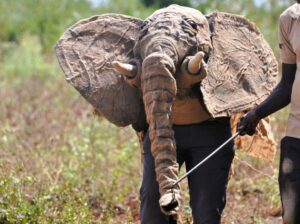
Elephant behaviour workshops help people avoid injury
But, if the crops had been very good that year, and the elephants overstayed their nightly foray into the farmlands, then he would be late for his first day, because he could only leave home after the elephants had lazily ambled back to the park. This meant walking the long dusty distance in hot afternoon sun, facing temperatures of more than 30 C.
Like several of our team members, being local to the area he works in gives Njoroge a massive advantage. He speaks the same language and can really relate to the human-wildlife interactions of his community.
A lived reality
Helping people coexist with wild animals involves demonstrating that the benefits of wildlife, and our interdependence with the natural world, are key to our very existence. It involves building community ownership initiatives and developing practical solutions to make it easier to live alongside wildlife. But, it can also mean acknowledging that sometimes people will sadly suffer losses.
Even today, the conflict I grew up with is not just a memory. At home, we still experience crop raids by monkeys, and last year I lost three goats to predation from leopards. These ongoing challenges remind me that coexistence is not theoretical, it is a lived reality for many families.
Charles Njoroge
Njoroge will have been at Born Free for seven years this July, after spending 15 years with the Kenya Wildlife Service. He keenly remembers, as a young man, being recruited to join KWS after coming first in an 800m race around their local stadium. Fascinatingly this was, and still is, one of the methods the armed forces in Kenya use to determine who is fit enough to endure military training.
Njoroge’s long journey
“After college, I joined Kenya Wildlife Service in September 2005, and completed paramilitary training,” said Charles. “I served in security, community and education departments, and was delighted in 2010, during the Mombasa International Agricultural show, to emerge as the best bass drummer.
“In 2014, I became a decorated marksman during Regional Rural Border Patrol Training. My long journey from a child growing up amid conflict, to becoming a conservation professional, fuel my commitment to building safer, more practical, and lasting solutions, that strengthen harmony between communities and wildlife in Meru.”
For the last seven years, we at Born Free Kenya have known Njoroge as our go-to person for all things community related. His lived experiences have translated into his empathetic approach to human-wildlife conflict issues, especially when communicating with community members. Being from the community he works with, he is trusted by people who can really relate to him.
This immensely benefits Born Free, and helps us maintain relationships with community members – whether to calm emotive sessions after a conflict incident, celebrate a key conservation day for one of our ‘keystone species’ such as an elephant or giraffe, or explain why Born Free has introduced a practical intervention such as beehive fences to protect crops from elephants, or water conservation to help people live harmoniously with wildlife and ensure equitable water use.
Njoroge might not currently be playing the tuba in a band, as Born Free doesn’t have one – yet. But, he continues to work his magic with the local communities, who know he’s got their backs, and understands them.