Rescuing orangutans and protecting their forest home
Funded with the help of adopters, and aided by drones, Orangutan Foundation is taking action on the frontline to rehabilitate orphans and protect critical habitat in Borneo.

Timtom (c) Orangutan Foundation
Many of you will know Timtom, Born Free’s adopted young orangutan, in the care of our long-term partners at the Orangutan Foundation – based in a special release camp in the tropical forests of Lamandau Wildlife Reserve, in southern Borneo, Indonesia. But you might be surprised that her adoption also helps combat climate change.
“We’ve shared Timtom’s story as she goes through Orangtuan Foundation’s soft-release programme, getting ready for life back in the wild,” said Anna Cryer, from our Conservation team. “While their work to rescue, rehabilitate and release orangutans gives a critical second chance to orphaned and traumatised individuals, they are also dedicated to protecting their forest habitat, ensuring these great apes have a safe home into the future.”
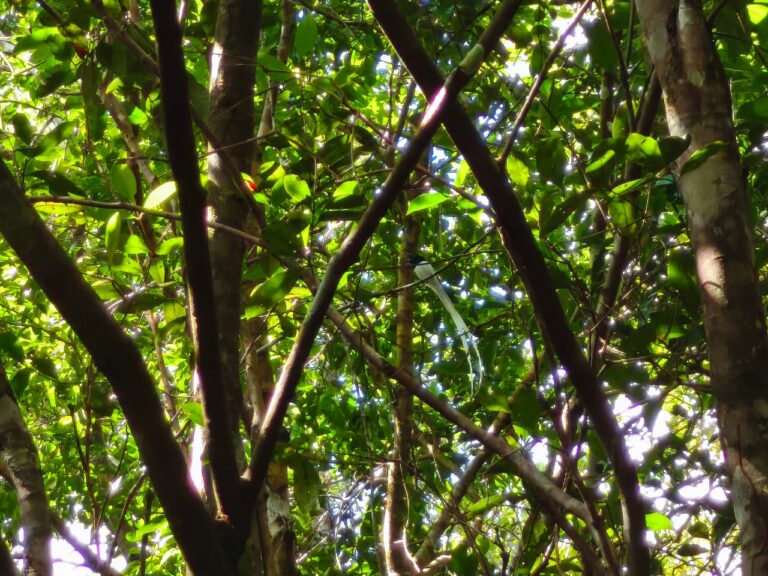
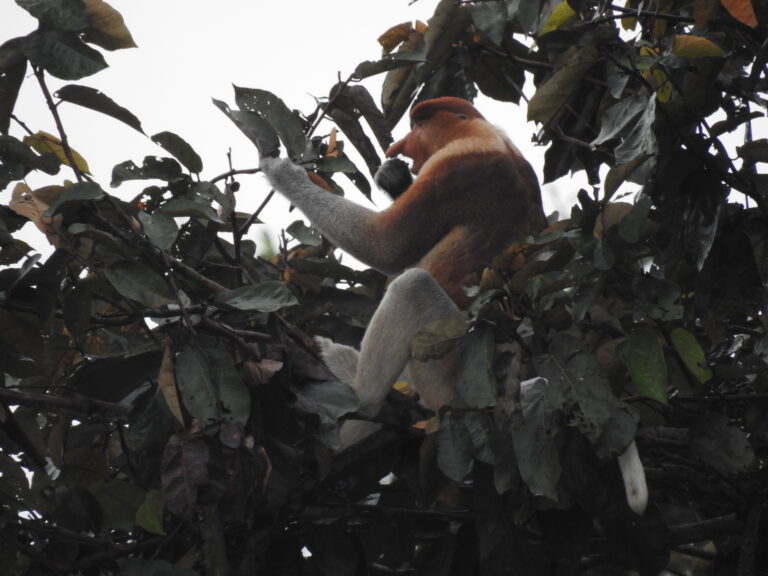
Almost 300 square miles in size – twice as big as the Isle of Wight – Lamandau Wildlife Reserve in Central Kalimantan is prime orangutan habitat, and home to many other wonderful species including proboscis monkeys, clouded leopards and paradise flycatchers. The land is also an important ‘carbon store’, containing over 36.5 million tonnes of carbon in its swampy peatland, equivalent to 134 million tonnes of CO2 emissions.
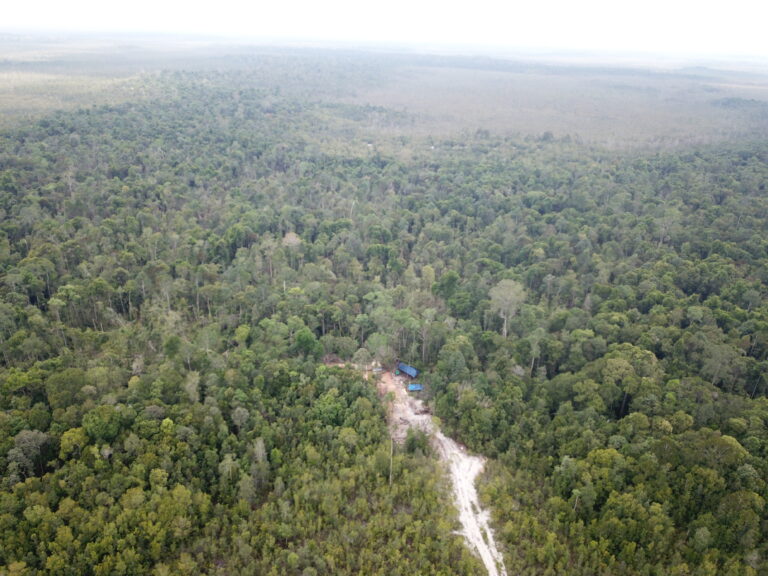
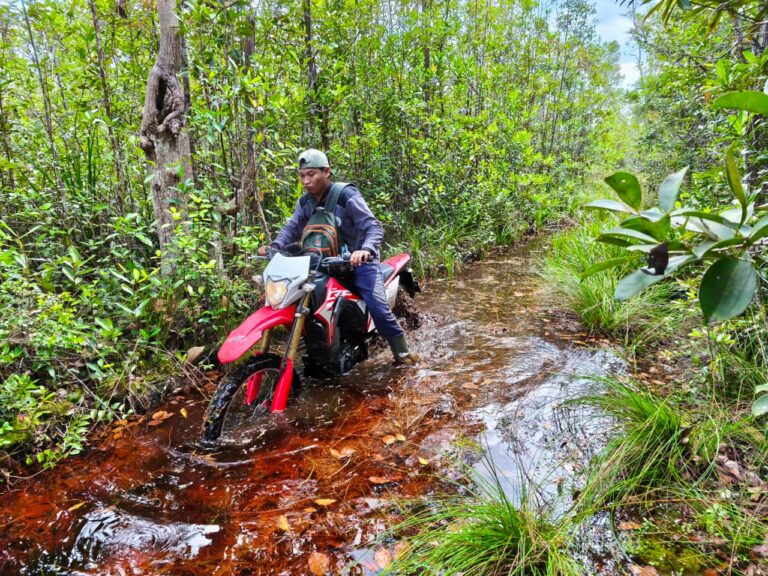
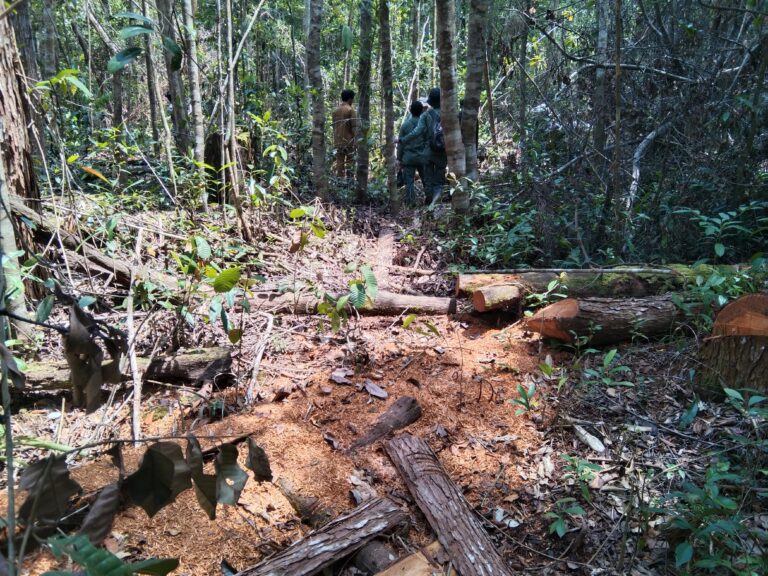
To ensure orangutans and other wildlife have a home, and to keep this carbon safely stored below ground, Orangutan Foundation field staff patrol the reserve – on foot, by bike and with drones – to detect any deforestation or illegal logging outbreaks.
This vital work to protect orangutan habitat is as important as ever. Sadly, last year four new orphans, under the age of two, were taken in by the Orangutan Foundation. Each surrendered separately by villagers, these orphans had been kept as illegal pets, likely taken from the wild just like Timtom. Naturally in the wild, a baby orangutan would stay with their mother until around eight years old.

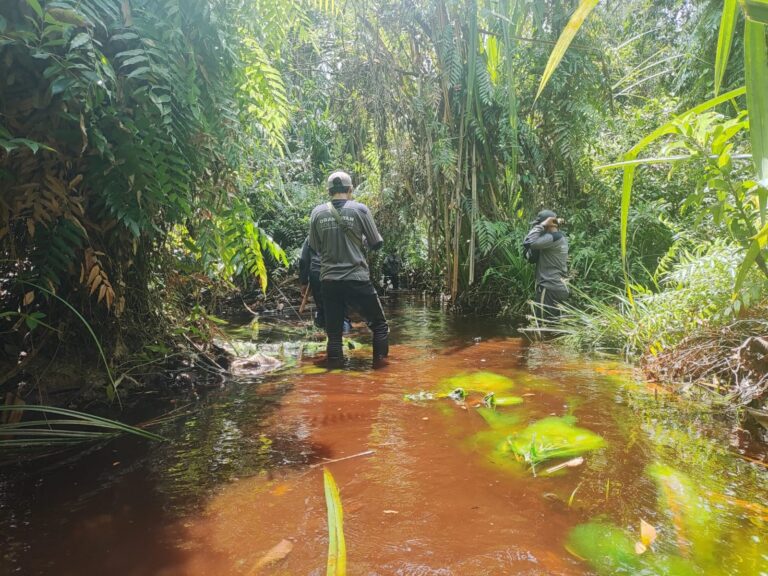
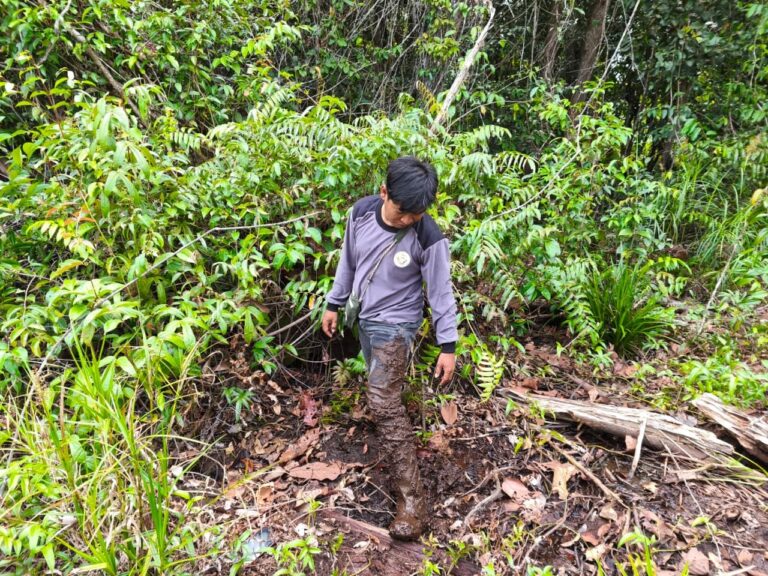
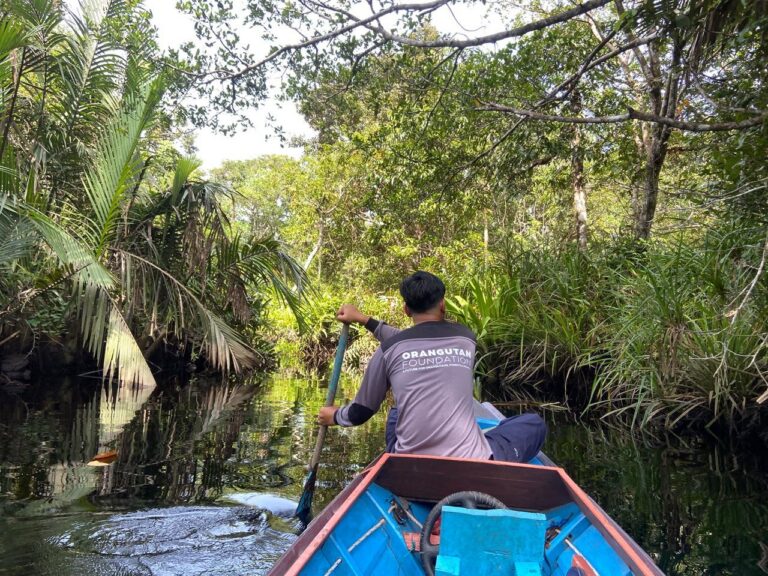
Protecting the reserve is no easy feat. The dense forest makes monitoring patrols tricky, and illegal loggers are skilled at evading guard post staff. Changing conditions as the seasons vary adds another challenge – two of the guard posts are regularly semi-submerged as the area floods in the wet season, which is usually from November to February.
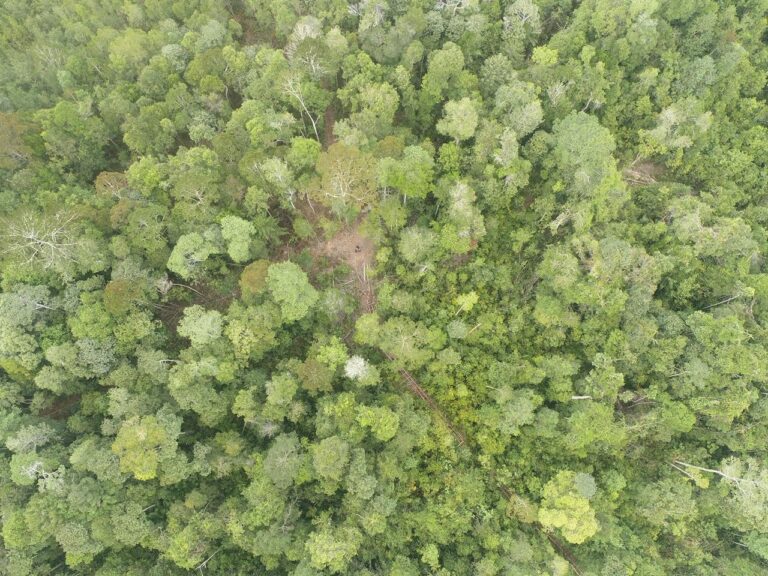
While foot patrols are a vital part of forest monitoring, drones have become an indispensable tool to help identify any changes in the forest cover, find potential fires and locate access routes used by illegal loggers. The drones take detailed images of the forest canopy and, when combined with satellite images, areas which are being illegally cleared are much more easily and quickly detected. Patrol teams on the ground are then able to investigate further and take action to halt the destruction.
Scroll to the bottom of this article to see a gallery of images from the patrols.
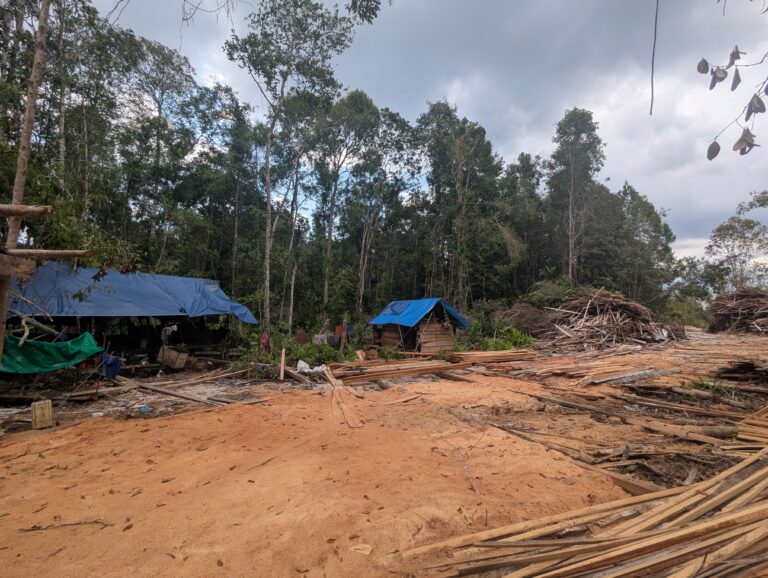
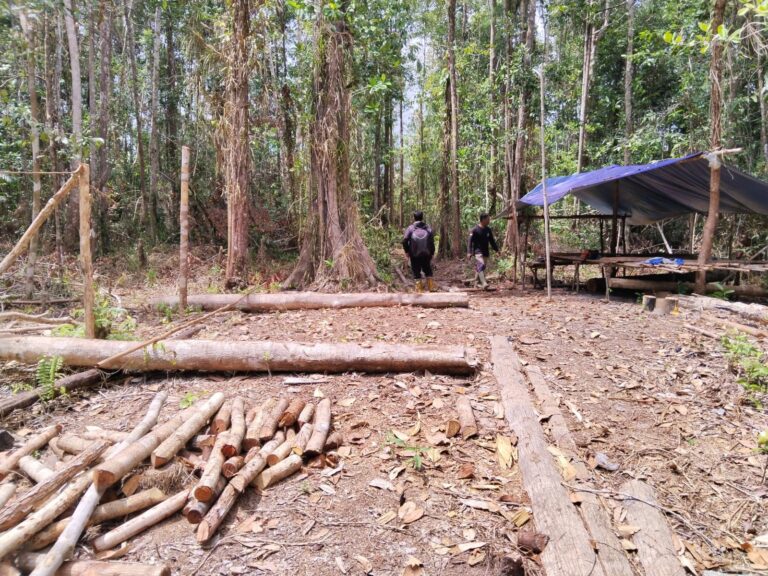
“Recently, a joint patrol uncovered an illegal logging base camp, complete with circular table saw and a generator for converting logs into beams and planks on site,” explains Yarrow Robertson, Orangutan Foundation’s Director of Indonesia Programmes. “Two railroads led from the camp into the forest, for over half a mile. This wooden railroad is used for extracting logs from the forest, which loggers push out in hand-held carts. When the patrol team arrived, the loggers had just fled – their campfire still glowing.”
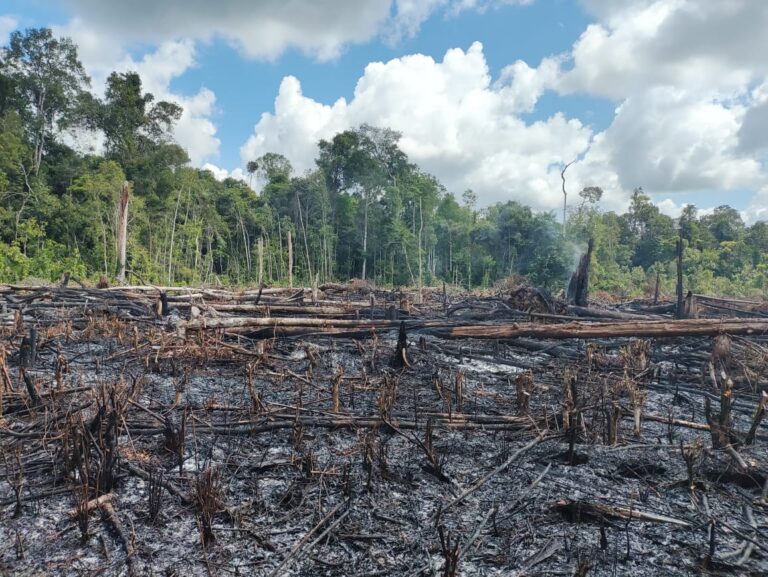
Another challenge for the patrol teams is to prevent forest clearing for agriculture or hunting.
“While some incursions may be small-scale operations by local farmers, to open up a small patch of forest to plant oil palm, unless stopped promptly, it will expand and turn into a large-scale commercial operation,” continues Yarrow. “Our field monitoring teams play a key role in assisting the local conservation authority by providing accurate, up-to-date data on illegal forestry activities inside the reserve – acting as extra eyes and ears for nature.”
Preventing forest clearing and logging is complex and requires a holistic approach. The Orangutan Foundation, like Born Free, work with local stakeholders to combat illegal logging and deforestation to ensure areas remain a safe home for our great ape cousins and the other species who call these forests home.
Young orangutans, like Timtom, and the other orphans in the Orangutan Foundations care including the four newcomers, deserve the promise of a safe home, once they are ready to live independently. Thanks to dedication of the Orangutan Foundation team, supported by Born Free, their forest home is being protected, ready for their return.

LOVE ORANGUTANS?
Deforestation is the most serious threat to orangutans and, over the last three decades, an estimated 80% of orangutan habitat has been lost. Adopt Timtom the orangutan today to help fund her care and release, as and support habitat protection for orangutans in Borneo.
PROTECTING FORESTS: SEE THE TEAM IN ACTION
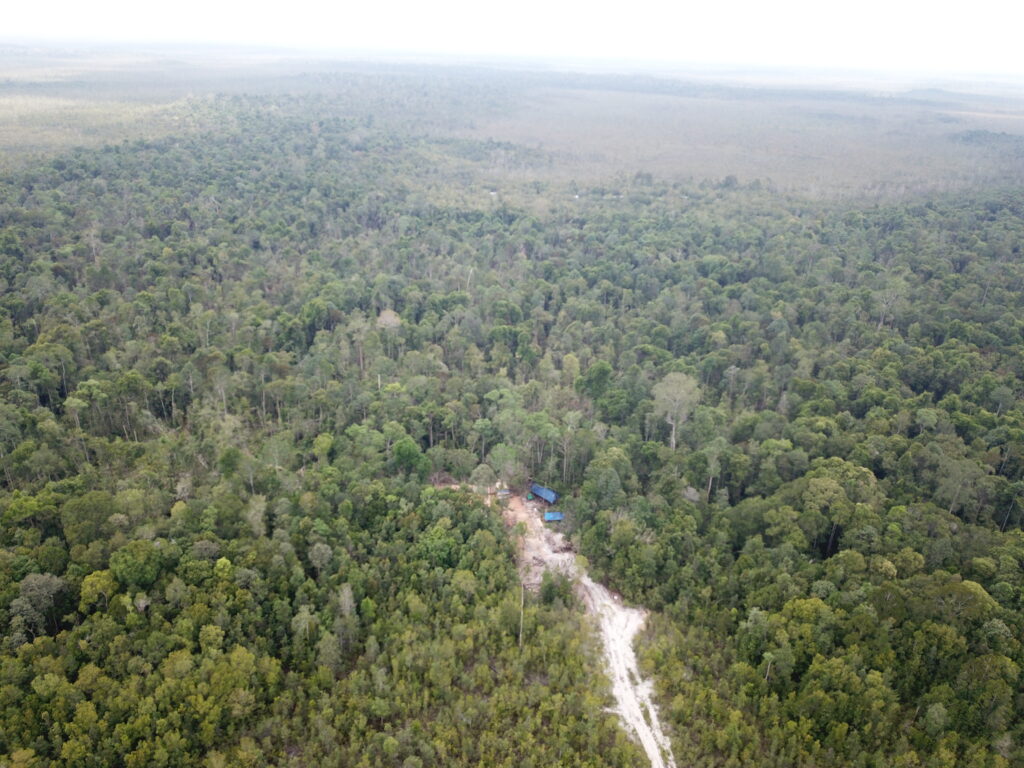
Drone monitoring for illegal logging (c) Orangutan Foundation
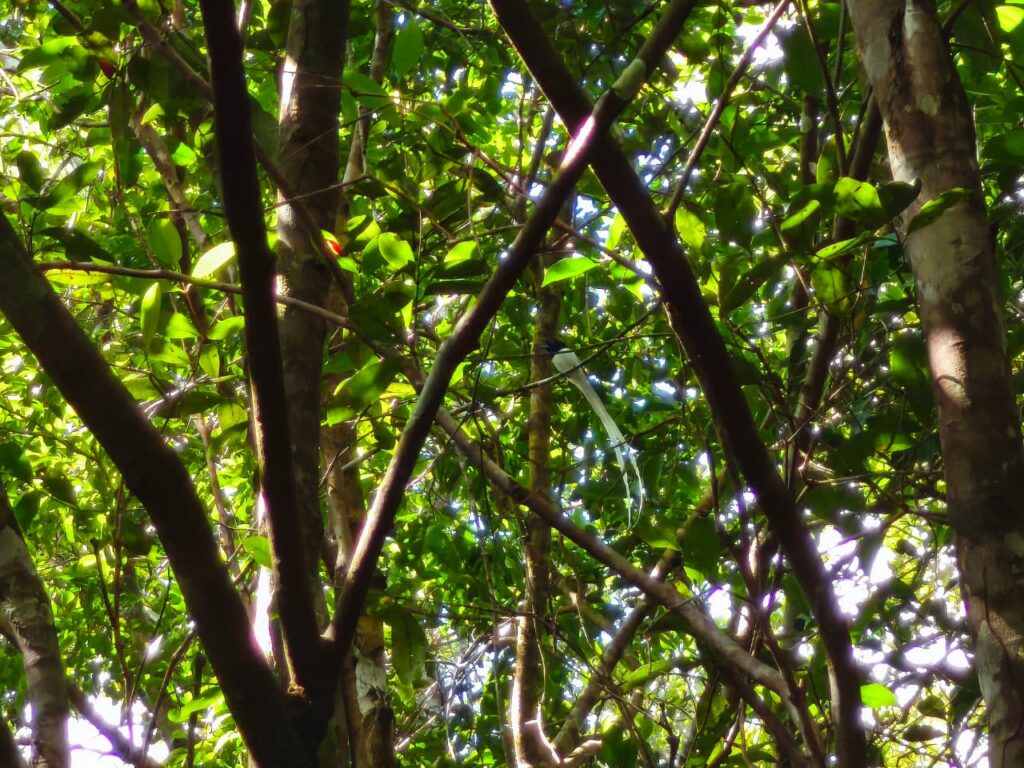
The area is richly biodiverse - here is Asian Paradise Flycatcher (c) Orangutan Foundation
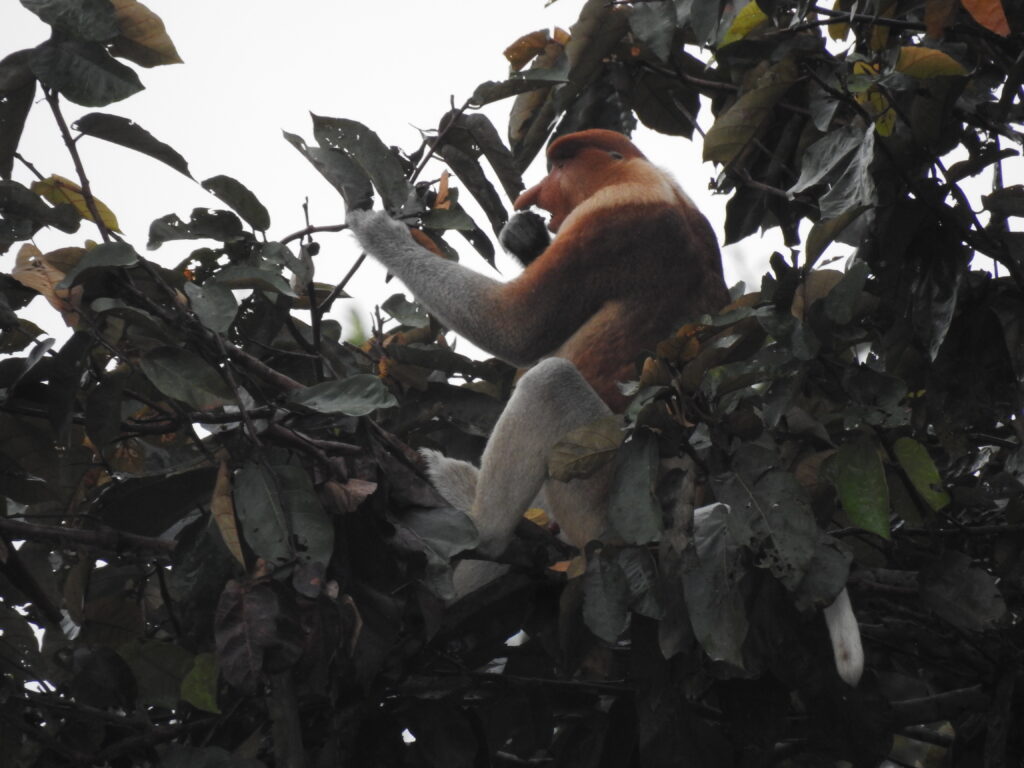
A proboscis monkey in the forest (c) Orangutan Foundation
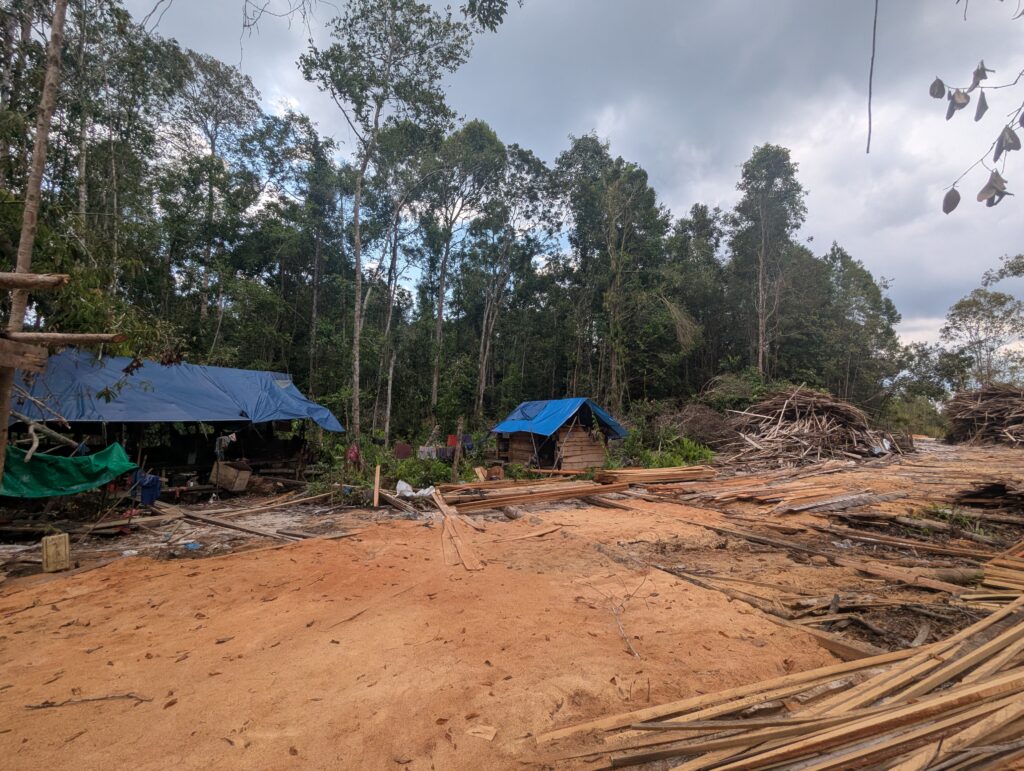
Illegal logging operations (c) Orangutan Foundation
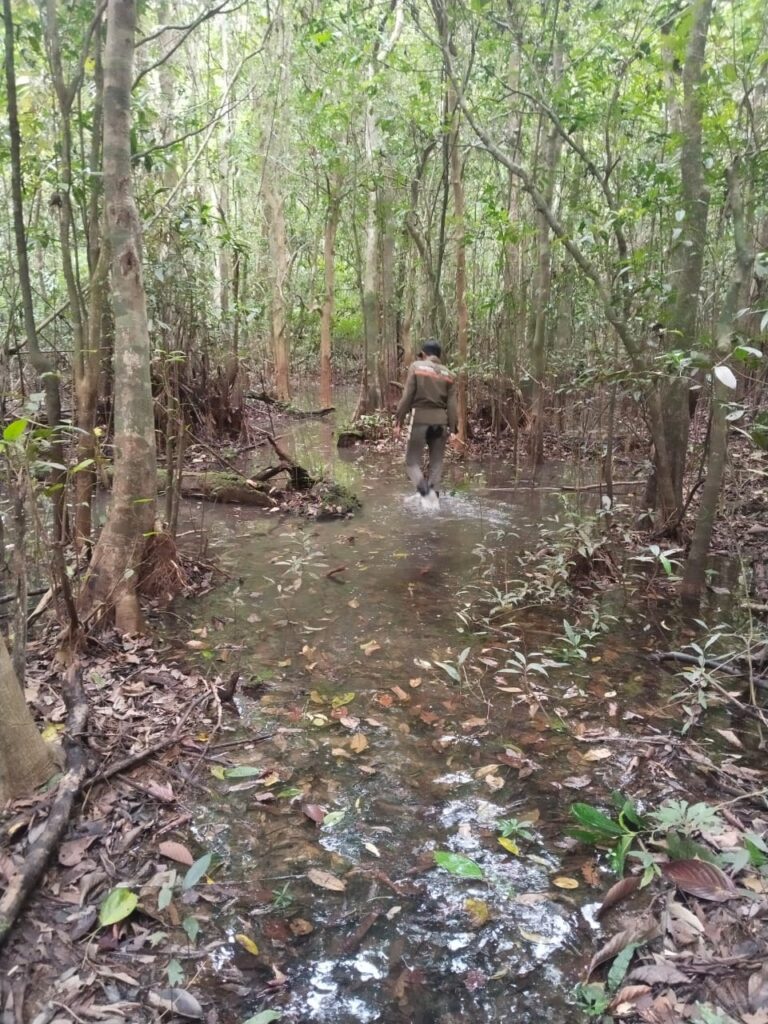
The patrol team in a swamp forest (c) Orangutan Foundation
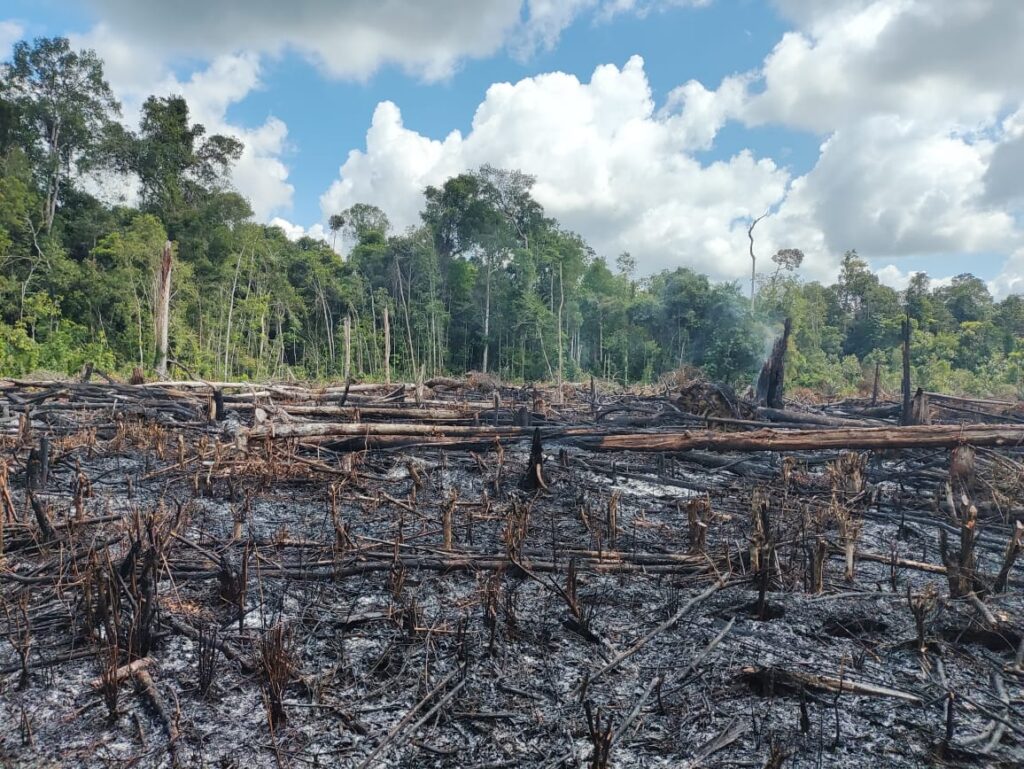
The patrol team are monitoring encroachment (c) Orangutan Foundation
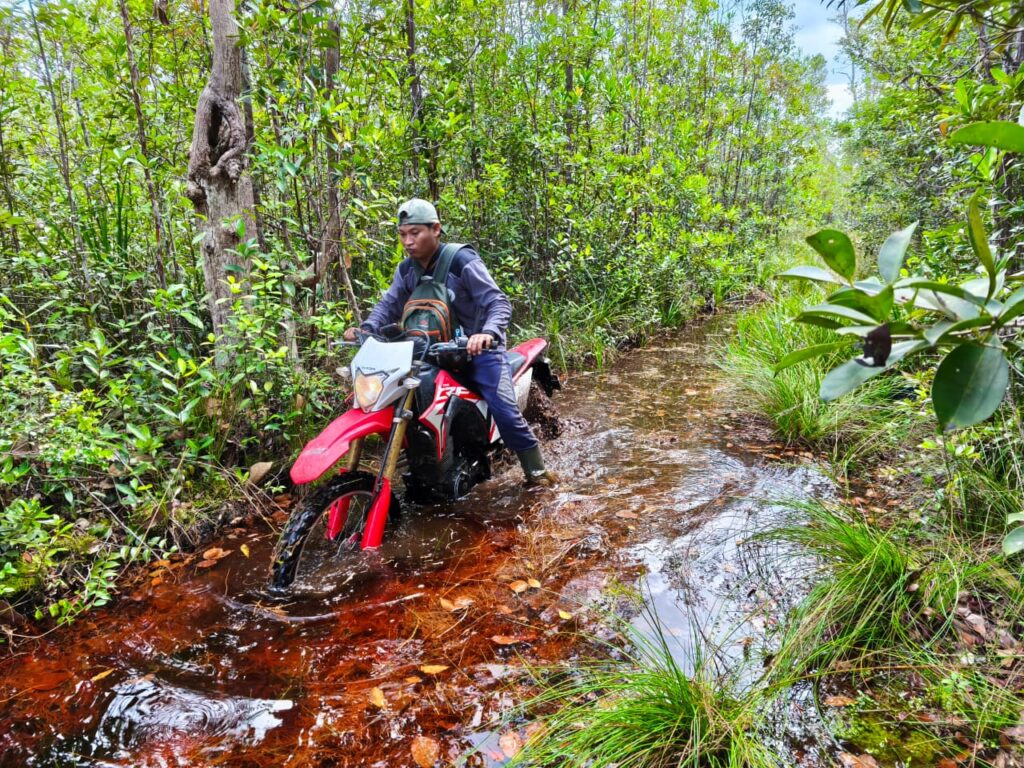
Travel can be difficult for patrol teams during the wet season (c) Orangutan Foundation
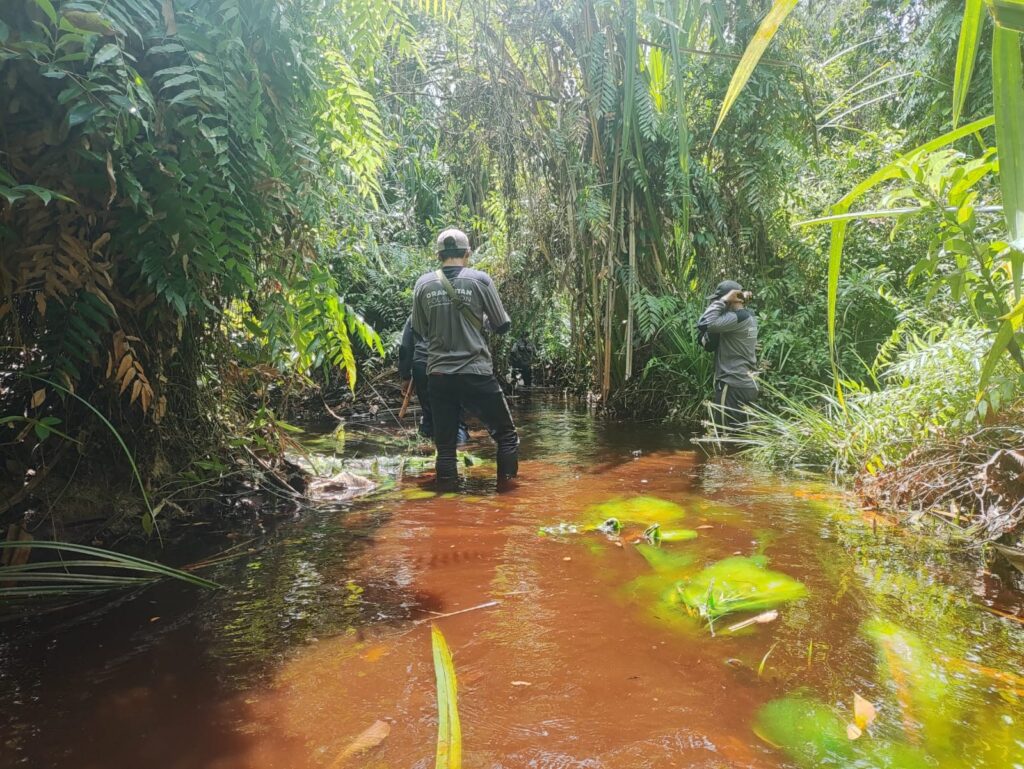
The eastern side of the reserve is often flooded (c) Orangutan Foundation
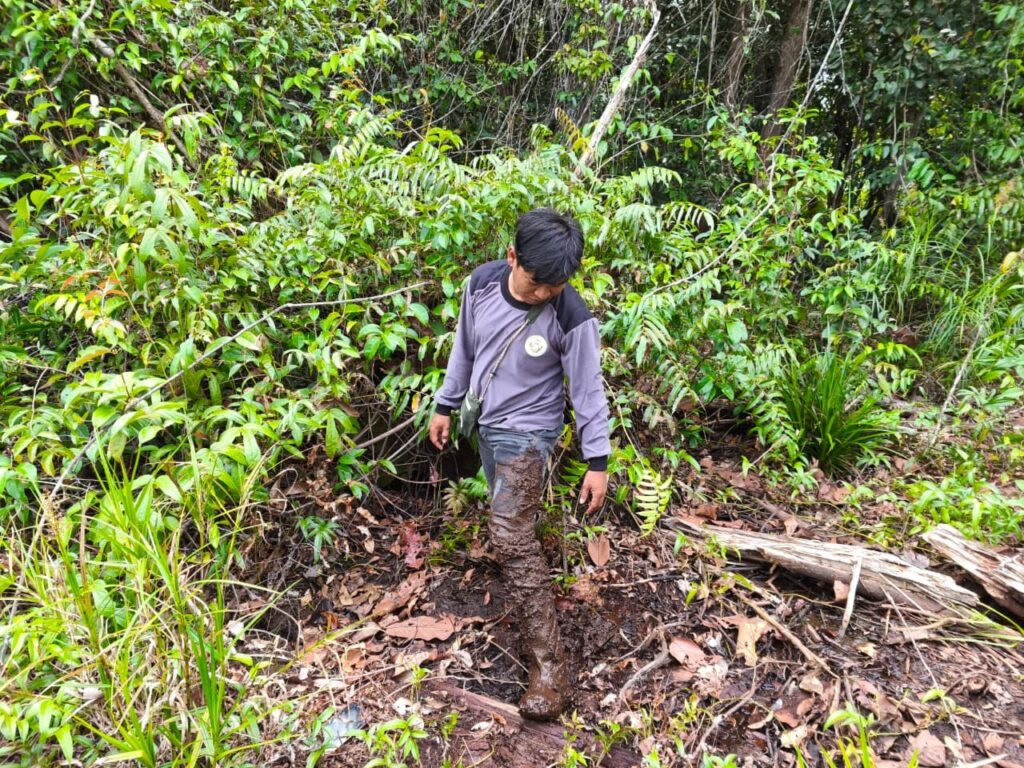
Sometimes it can get very muddy for patrol teams! (c) Orangutan Foundation
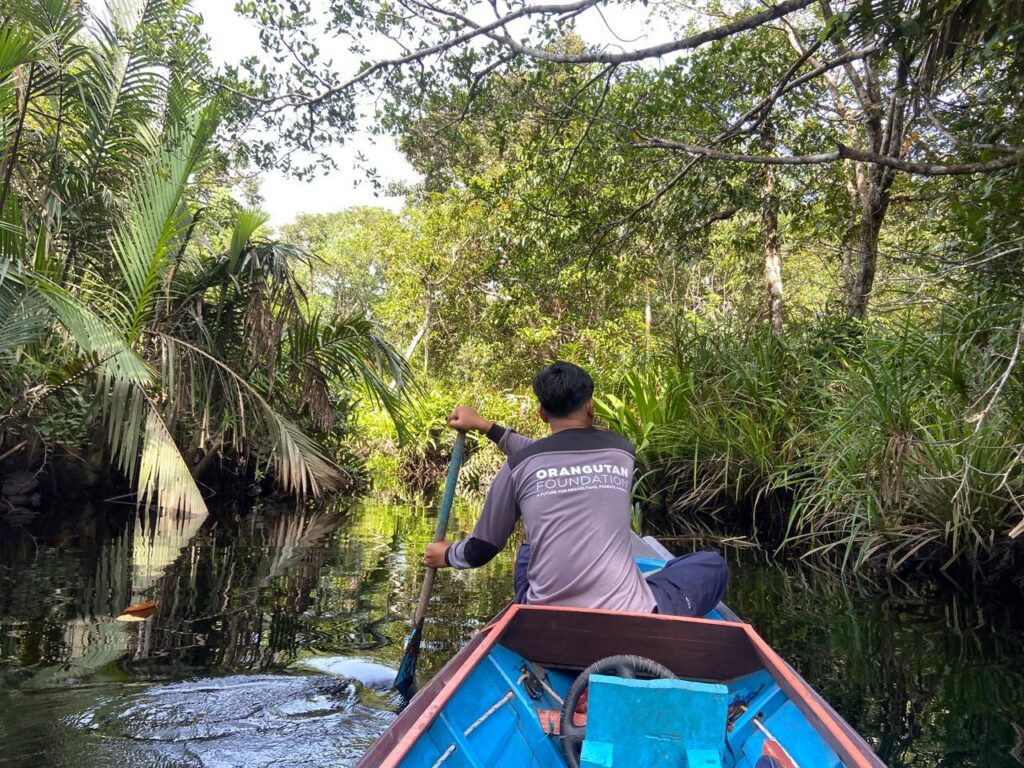
The teams use boats to navigate through the flooded forest (c) Orangutan Foundation
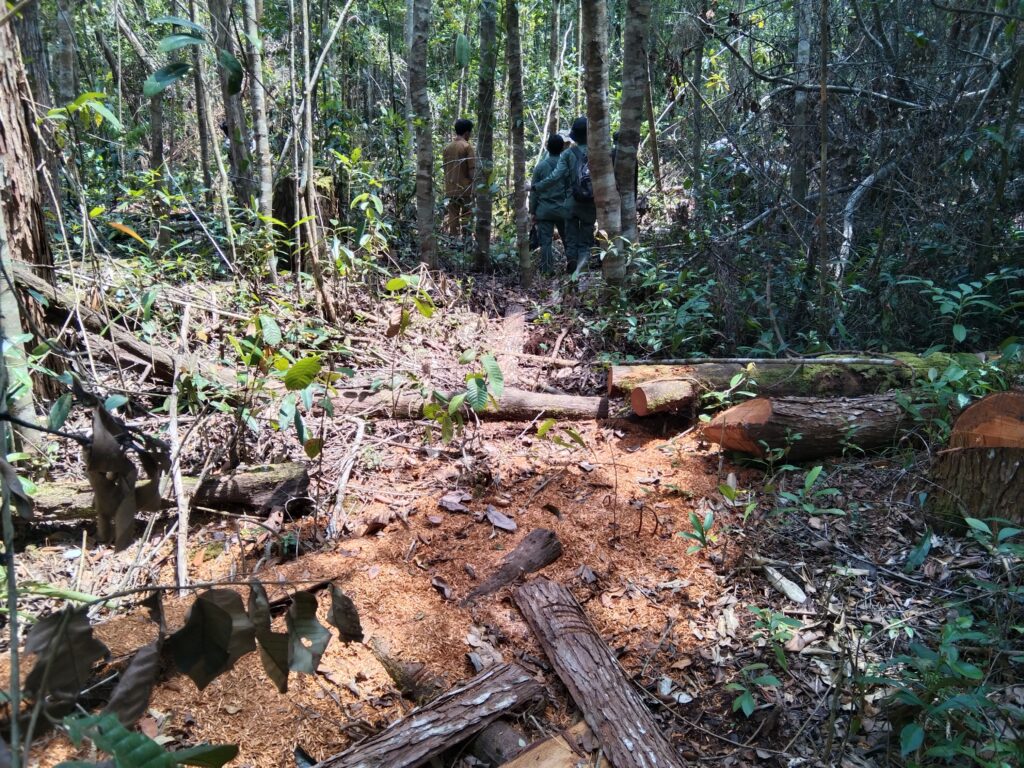
The team detect and prevent illegal logging operations (c) Orangutan Foundation
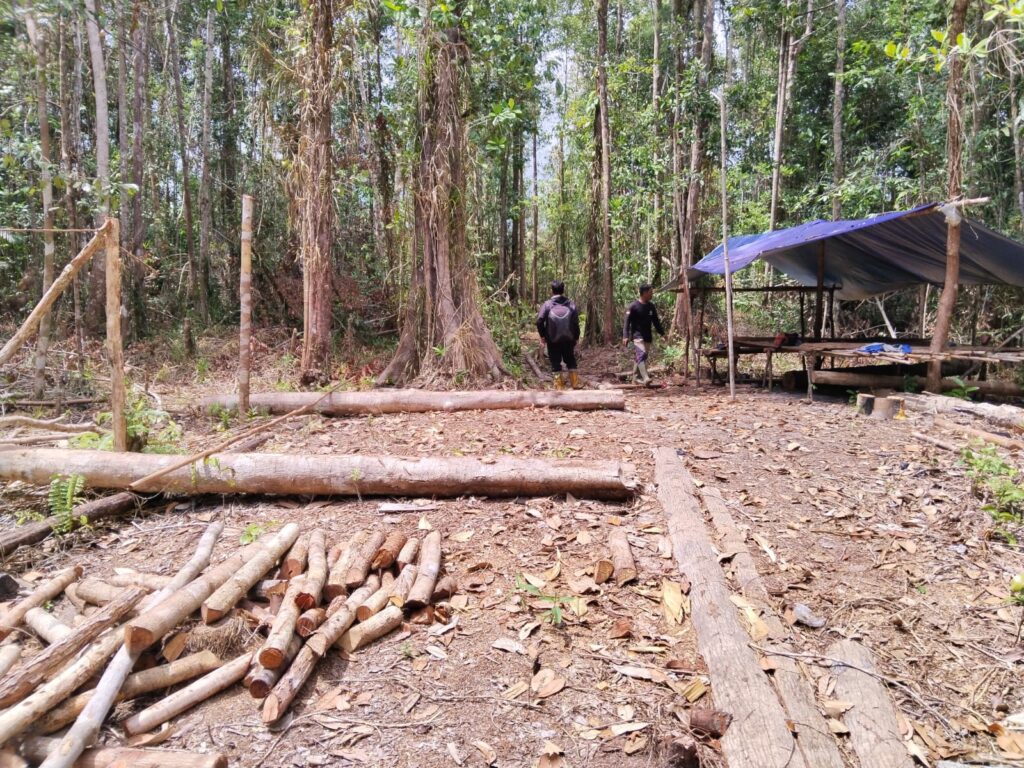
Another illegal logging operation is stopped (c) Orangutan Foundation
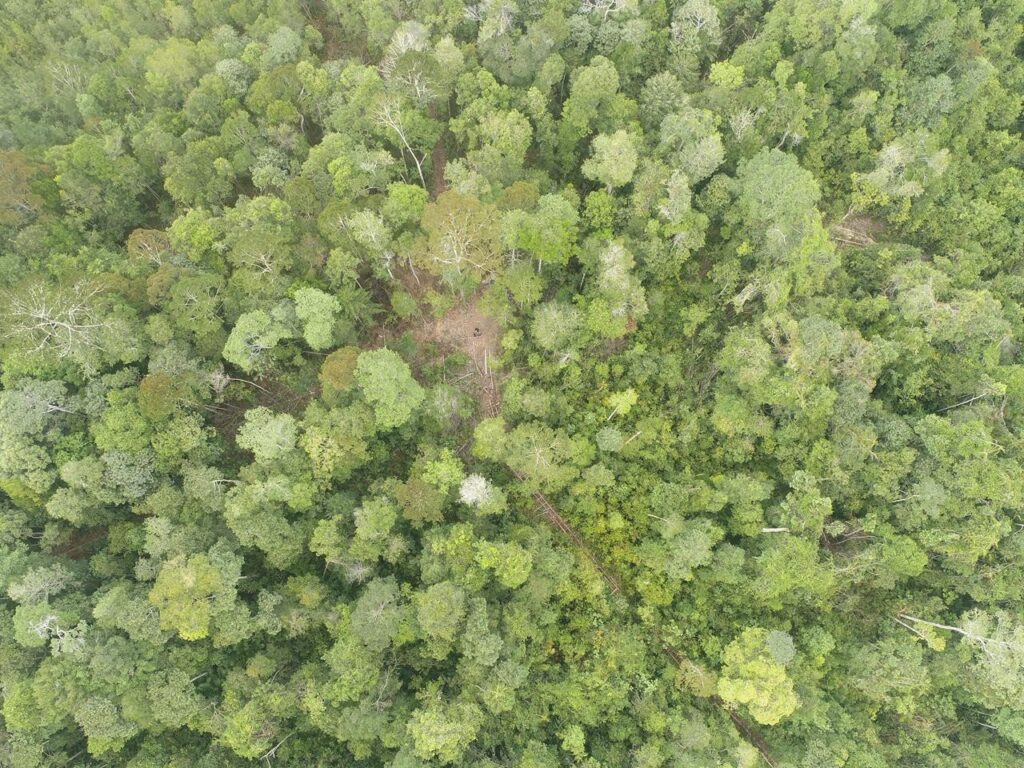
Drone monitoring in the forest can reveal illegal railroads used for timber extraction (c) Orangutan Foundation