Our team’s favourite Meru lions
Born Free’s hard-working Pride of Meru team has followed the lions of Meru National Park for many years, getting to know each one. But who has especially won their hearts?
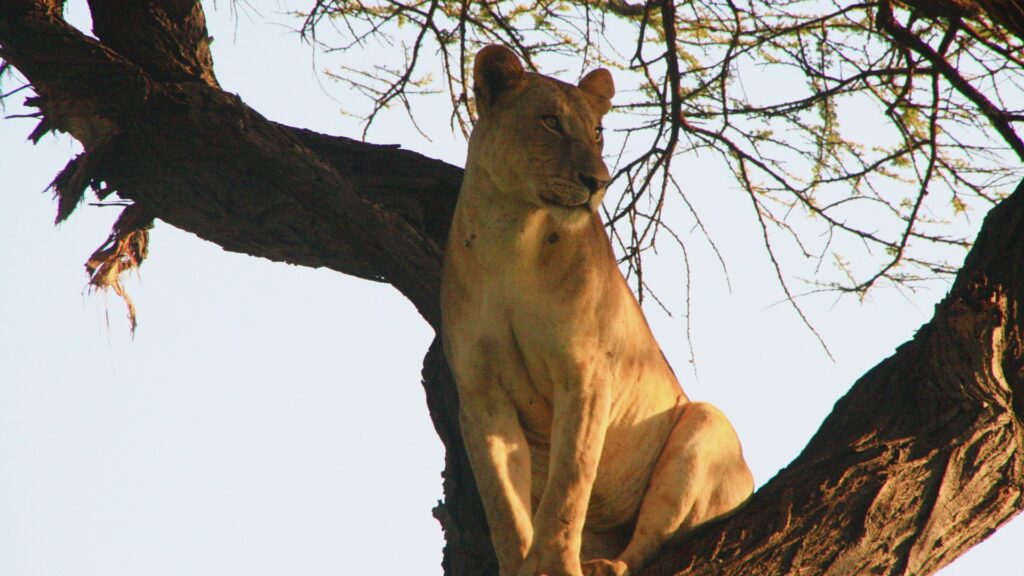
Gilly (c) Born Free Kenya
As we celebrate the 60th anniversary of ‘Born Free’ – the film that helped introduce the world to Elsa the lioness and lay the foundations for our charity – meet some of the lions who inspire our Pride of Meru team today.
In central Kenya, our team has been following five prides in Meru National Park for over ten years, getting an intimate look at their lives and watching individuals grow. We record every individual on our database, building detailed IDs and life histories. Every member of our Pride of Meru team has a lion who holds a special place in their heart, no matter how hard they try not to pick favourites!
Love lions? Donate today (or until noon on 29th April) and your gift to ‘Protect the Pride’ will be doubled, thanks to Earth Raise.
GILLY, BISANADI PRIDE
Gilly (c) BFK
“Gilly quickly gained her spot as my number one,” says Project Officer Jermiah Kimathi. Gilly is an adult female in the Bisanadi pride. “I’ve been with the Pride of Meru team for a year and a half and Gilly has become a firm favourite. She’s the queen of hide-and-seek, always dodging our field team’s cameras and denying us those perfect shots.
“Thankfully, Gilly has signature traits – she is a tree climbing lioness, an unusual behaviour in lions, and has a prominent scar on her right hind limb. These giveaways make it impossible to mistake her in the field, even when she tries to remain mysterious.”
By monitoring the prides living in the park, we can better understand ‘population dynamics’, how the lions behave and where they go. We can then use this vital information to better inform our ‘conflict mitigation strategies’ – finding practical ways to help these powerful predators safely live alongside local people.
LIZ, ELSA’S PRIDE
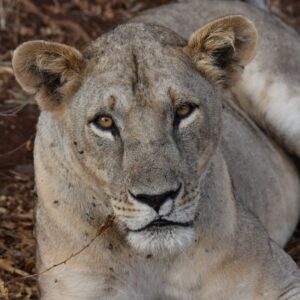
Liz (c) BFK
“My favourite lion is Liz, the ‘old adult’ in Elsa’s Pride,” exclaims Michael Mugo, the Pride of Meru Manager. “She is easily recognisable by a scar below her left nostril. At 11 years old, she’s the most experienced mother in this pride. She has perfected her skills in hunting, roaming the landscape, raising cubs and teaching new generations. Liz is a symbol of resilience, having been through seasons of plenty and scarcity, always emerging stronger.
“Liz isn’t just my favourite. She is also the ‘darling’ of the park guides, as she calls the area around Elsa’s Kopje home and is the most frequently sighted lion in the area – to the delight of visitors to the park.”
Elsa’s Kopje safari lodge is on a hill above George Adamson’s original campsite, where the lioness Elsa was raised, before her gradual release to the wild. It’s a poignant connection that the pride named in her honour still roams this area today.
KIMEU, MULIKA PRIDE/ELSA’S PRIDE
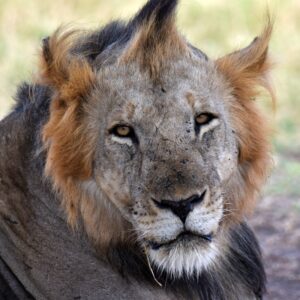
Kimeu (c) BFK
Moses Nyagah and Moses Gitonga joined our Pride of Meru team in 2015 and know the lions of Meru better than anyone. Interestingly, Moses Gitonga’s favourite lion was the only male to be chosen. Male lions migrate from their natal pride (pride they are born in), and can spend years roaming, as they search for new prides to join. Because of this wandering lifestyle, they can be less frequently seen over the years compared to females.
“Kimeu inherited the dark and large mane characteristic of his father, Mfalme. His great mane is unique in the ecosystem – most of the males here have shorter manes. I am so proud he’s made Meru his home. Kimeu comes from the Mulika Pride, and his distinctive mane makes him easily recognisable,” explains Moses Gitonga.
“But about six years ago, Kimeu disappeared from his natal pride. With male lions, we don’t always know if they have migrated out of the park or sadly died. While we always hope for the best, it’s a tough world, so you can imagine our delight when Kimeu recently made his reappearance! He wasted no time making his presence known upon his return, and was immediately observed mating with Liz from Elsa’s Pride.”
SAHARA, MULIKA PRIDE
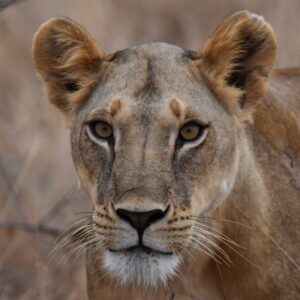
Sahara (c) BFK
Finally, Moses Nyagah shares the lioness which has won the place as his number one – and we suspect she may be some supporters’ favourite too. “Sahara is more than a lioness. She is a living testament of resilience and strength. Once struck with a poisoned arrow, she defied the odds and survived, becoming a symbol of courage and hope and helping to guide the Mulika Pride,” enthuses Moses Nyagah.
“Her triumph shaped her into a devoted mother of three cubs, symbolising fierce protectiveness and the grace born of hardship. Sahara’s dignity reminds me that endurance leads to renewal. Her legacy is one of survival, motherhood, and unyielding spirit – a true icon of the wild.”
Without your continued support, we wouldn’t know Meru’s lions so well, nor be able to ensure that the park and its surrounding landscape remain a safe haven for these magnificent mammals. Thank you for all you do.
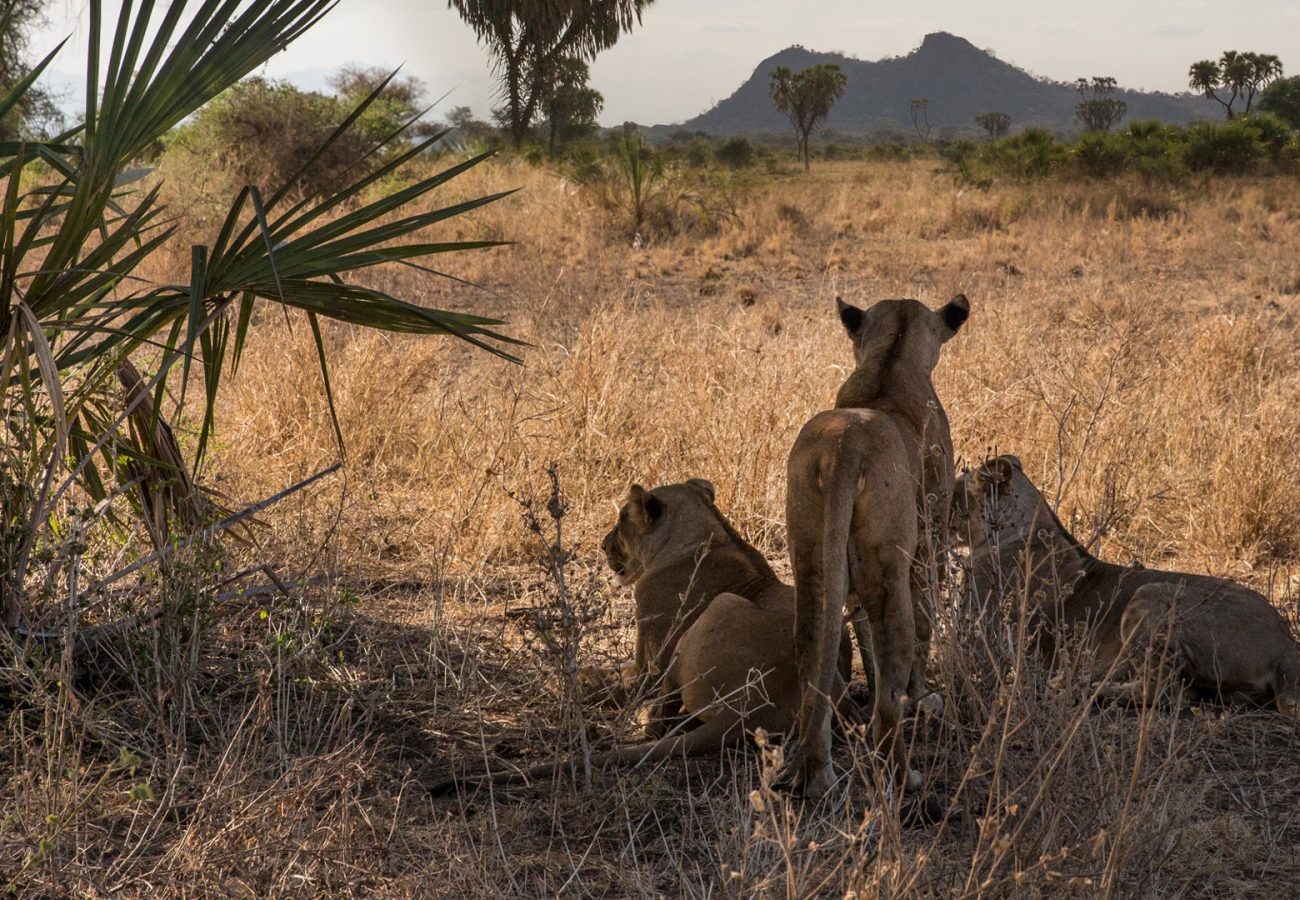
Adopt a Lion with Born Free
If you love lions as much as we do, you can help protect the iconic symbol of Born Free, in our charity’s heartland, by adopting Elsa's Pride.
By adopting from just £5 a month, you'll get a personalised adoption pack, regular updates, AND you'll be helping save lions!