
Escaped tiger killed by police in Germany
Born Free urges governments to take action following another tragic incident involving a privately kept big cat.
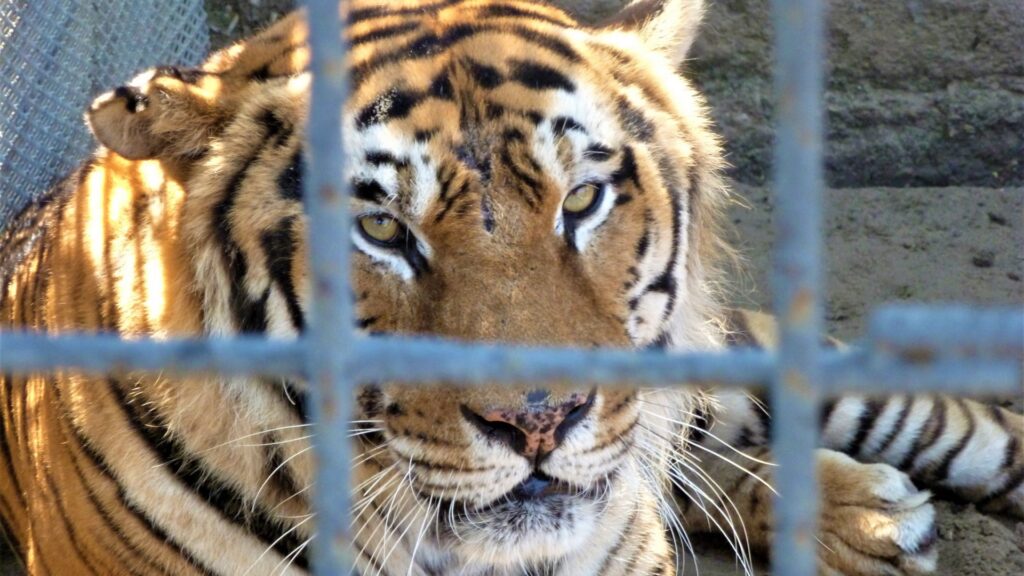
A captive tiger (c) Born Free
Responding to reports that a tiger has been shot and killed by German police after attacking a keeper and escaping on the outskirts of Leipzig, Germany, we’re reiterating our call for urgent reform of laws governing the private keeping of wild animals in the UK and abroad. The incident once again highlights the dangers and welfare concerns linked to privately owned wild animals.
Current regulations fail to adequately protect either animals or the public, allowing species with highly complex physical and behavioural needs to be kept in unsuitable domestic or private facilities. Private ownership of wild animals can often lead to poor welfare outcomes, including stress, neglect, inadequate housing, and dangerous interactions with people.
Chris Lewis, Born Free’s Captivity Research & Policy Manager said: “Wild animals belong in the wild, not in living rooms, back gardens, or makeshift enclosures. Time and again we see tragic examples of animals suffering in captivity and communities placed at risk because legislation has not kept pace with the realities of the exotic pet trade.”
The incident in Germany reportedly involved a tiger owned by controversial trainer and private owner Carmen Zander, who dubs herself Germany’s “Tiger Queen” and keeps several big cats at an industrial site, offering members of the public close-up encounters and ‘petting’ events.
In 2023, Born Free revealed that over 2,700 wild animals categorised as ‘dangerous’ under the Dangerous Wild Animals Act 1976 (DWA) were licensed to be kept across Great Britain, including seven tigers and more than 200 other wild cats.
Born Free is urging the UK Government to review the current DWA Act which is not fit for purpose, and develop tighter restrictions on the trade in, keeping and breeding of all wild animals, with a preference for a positive list approach, as adopted by a growing number of European countries, that clearly defines which species can legally and safely be kept as pets.
In addition, the public should be made aware of the conservation and welfare impacts of the exotic pet trade. Social media trends and online sales platforms continue to fuel demand for wild animals as novelty possessions, with purchases often being made on a whim without due consideration of the responsibility being undertaken or the level of care and expense required.
Meaningful reform is essential to prevent future incidents, improve animal welfare standards, and ensure that wild animals are treated with the respect and protection they deserve.
Born Free is wholly opposed to the use of wild animals in circuses and performance.