
Born Free celebrates World Environment Day in Kenya
From collecting rubbish, to planting trees and demonstrating wildlife art, young people are powerful agents of change and inspired their entire community on this special global day.
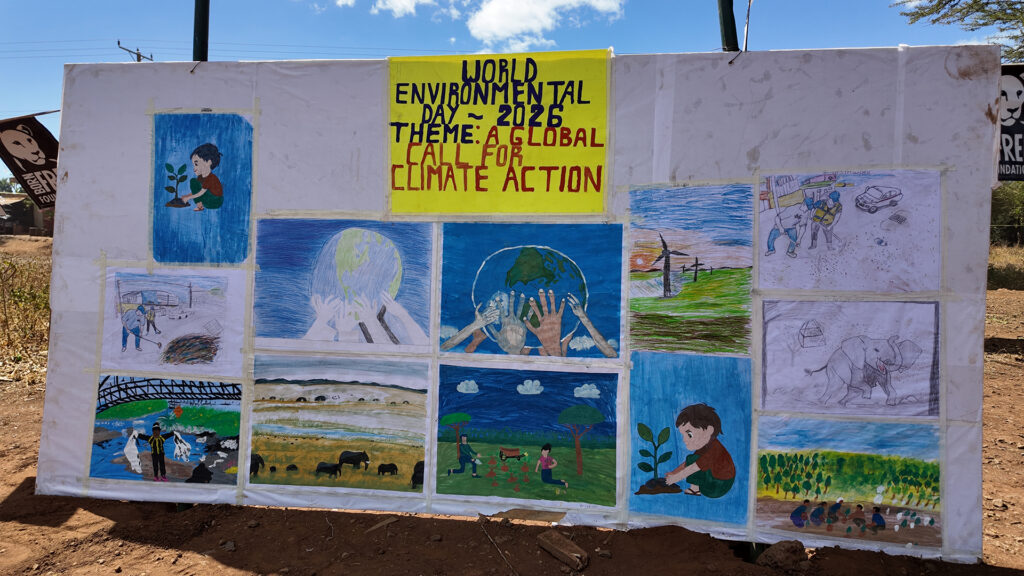
Murera Market, a trading centre and community hub in Kiengu sub-county, just outside Meru National Park, came alive on World Environment Day 2026. Born Free’s partners at Kathithine Art Club led a vibrant and impactful event under this year’s theme: ‘A Global Call for Climate Action’.
The normally quiet centre was transformed into an outdoor gallery of colourful masterpieces, with animal portraits, wild landscapes, art demonstrations and new artists in the making – not least Born Free staff and community members who were given the opportunity to discover hidden talents.
“The Art Club is just one of the amazing initiatives coming out of Kathithine Conservation Model School, a Born Free partner school since 2019,” explains Nicholas Bii, Born Free’s Education and Outreach Officer in Kenya. “With over 300 student learners, the school has made a commitment to create awareness in the community about wildlife conservation.
“The day was a powerful reminder that meaningful environmental change begins at the grassroots – with young people, communities, and collective action.”
The event brought together 85 learners from the Art and Conservation Clubs, three Village Saving and Loan Association (VSLA) groups, leaders from the market, community members, and environmental stakeholders. All united for one purpose: protecting and restoring the local environment.
A clean start: Murera Market clean-up
The afternoon event kicked off with a community clean-up exercise around Murera Market. Learners, VSLA groups, and market members worked side by side to collect and carefully dispose of rubbish, restore cleanliness and promote a healthy environment. The activity not only improved the physical surroundings, but reinforced the importance of shared responsibility in waste management and environmental conservation.
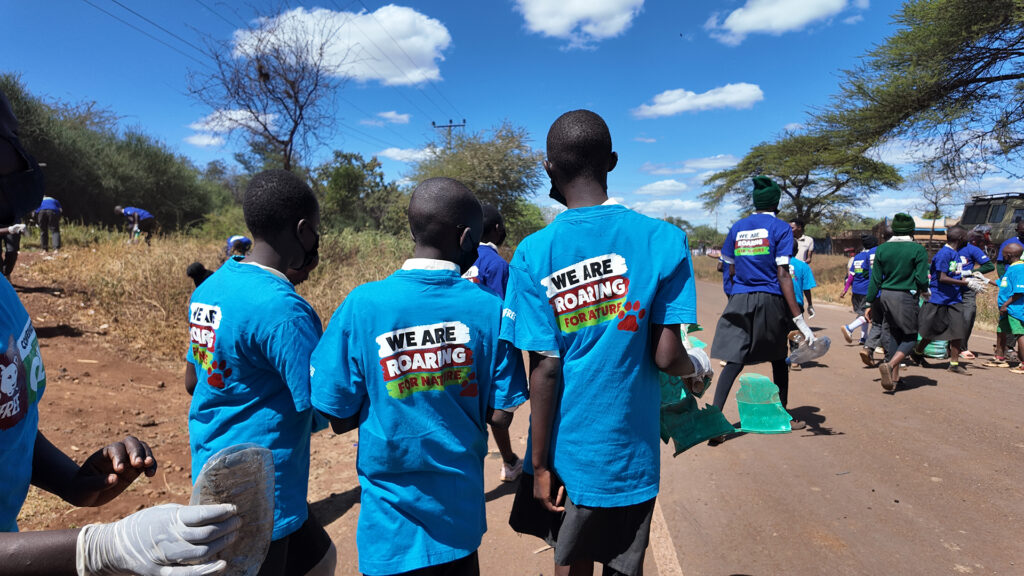
Growing the future: tree planting
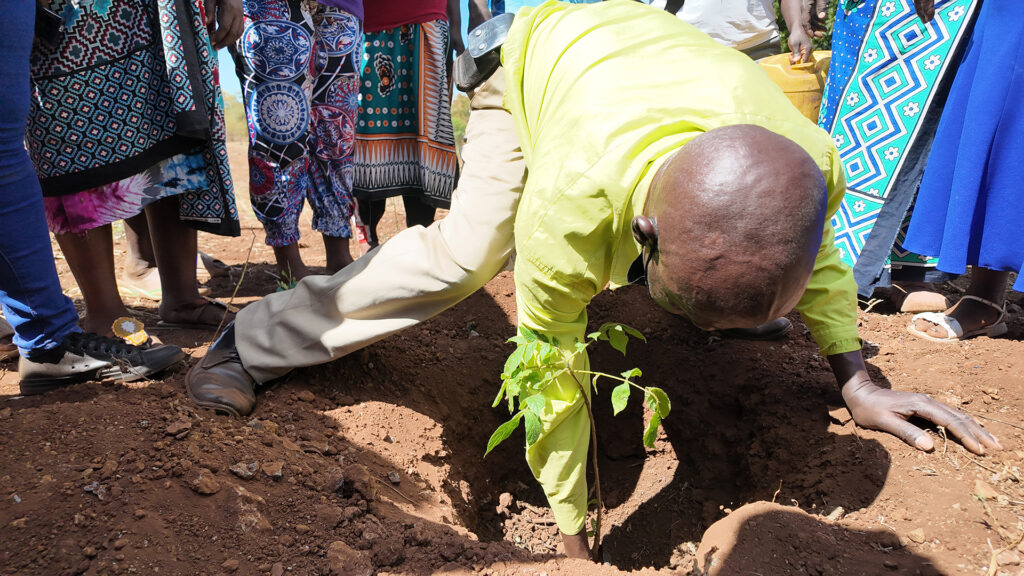
We then moved onto planting dozens of native trees, which formed a central part of the celebrations. VSLA groups and motorbike riders planted two species – Markhamia lutea (an evergreen shrub, harvested for wood) and Vitex keniensis (‘Meru oak’, a fast-growing timber tree) – as these trees can do well in semi-arid areas. Seedlings were provided by the Conservation Club’s tree nursery, showcasing student-led sustainability efforts.
Each participating group committed to take responsibility for nurturing the newly planted young trees, with learners pledging to conduct regular follow-ups to ensure the saplings’ survival – transforming planting into long-term stewardship.
Art for awareness and engagement
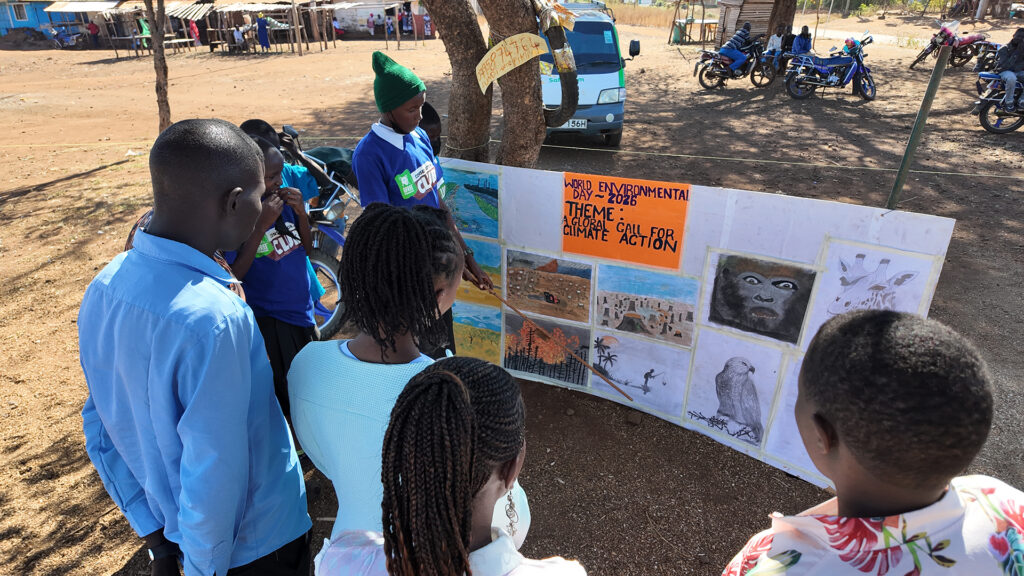
The rest of the day was led by Kathithine Art Club, who hosted a compelling outdoor gallery and environmental exhibition that vividly communicated:
- The threats facing wildlife
- The importance of well-protected ecosystems
- Harmful human activities that affect biodiversity
- The impacts of environmental degradation
- Practical solutions to restore ecosystems
Through creative expression, learners translated complex environmental issues into powerful visual messages that resonated deeply with the public. Art took centre stage, with onsite painting sessions allowing Art Club members to demonstrate their talent in real time. The event also fostered community participation, inviting members of the public to join the learners in painting images of wildlife.
This interactive approach created a shared learning experience and strengthened the link between art, conservation, and community engagement.
The Tree of Hope
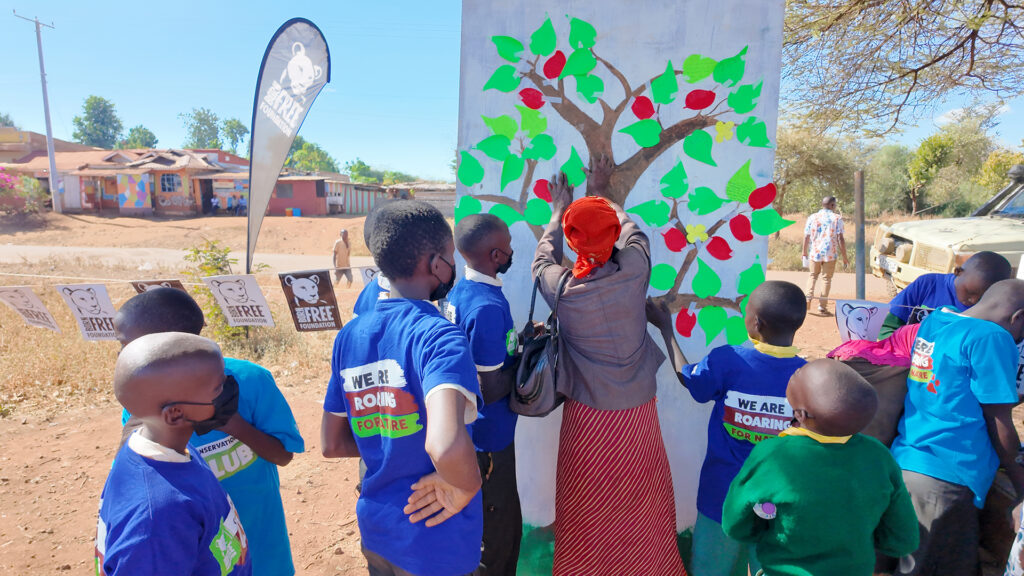
One of the day’s most memorable highlights was the ‘Tree of Hope’, an innovative evaluation activity, and symbol of collective action, that captured the spirit of the day.
Participants were invited to make personal commitments toward environmental conservation by adding leaves, fruits, and flowers to the symbolic tree. By the end of the event, the tree was fully adorned – representing collective responsibility and unity in climate action.
Mr Richard Lekurchalan, the Assistant Director of Meru National Park, led by example, becoming the first person to place a leaf on the Tree of Hope – an inspiring gesture that set the tone and encouraged others to participate.
The World Environment Day celebration by Kathithine Conservation Model School was more than just a one-day event. It was a significant launchpad for sustained local environmental action. With commitments made and trees planted, the journey continues. Learners have taken ownership of monitoring the young saplings, ensuring that the seeds of today’s efforts grow into a greener tomorrow.
Kathithine Art Club has demonstrated how young people can be powerful agents of change. By combining creativity, community engagement, and conservation action, they helped turn World Environment Day 2026 into a meaningful and lasting impact.
As the leaves on the Tree of Hope symbolized, every individual has a role to play. Together, we can answer the global call for climate action – starting right where we are.
We would also like to acknowledge the massive role that the Last Chance to Paint, Precious Africa Expedition played in supporting the Art Club at Kathithine in its early days.