
Born Free calls on Zurich Zoo to end elephant breeding
Following 11 deaths in 10 years, Born Free joins international group of elephant experts in calling for an end to the unnecessary suffering.
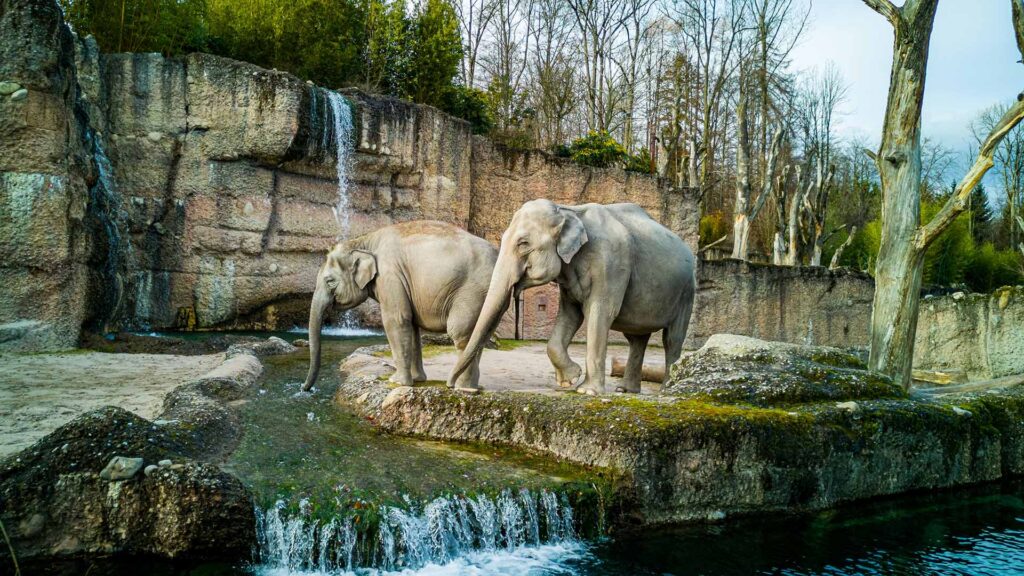
Elephants at Zurich Zoo
An international group of elephant experts, scientists, conservationists, welfare specialists and policy professionals, including Born Free, is calling on Zurich Zoo to immediately end its elephant breeding programme following the death of another newborn male calf.
The calf, born to Indi on 1 June 2026, was euthanised shortly after birth after he was unable to stand and walk. His death brings the number of elephant deaths at Zurich Zoo to 11 in the past 10 years. Most concerningly, every elephant calf born at the zoo during this period is now dead.
This is not an isolated tragedy. It is a repeated pattern.
Why breeding at Zurich Zoo must end
Since 2016, at least 11 elephants have died at Zurich Zoo. Only three were adults. The remaining deaths were calves or young elephants, including newborns, juveniles and young elephants who died from injury, failure to thrive or elephant endotheliotropic herpesvirus, commonly known as EEHV.
Behind each number is an individual elephant, a mother, a family group and another cycle of pregnancy, birth, distress, loss and separation.
Zurich Zoo may present individual deaths as isolated, unfortunate events. But when every calf born over a 10-year period dies in a small, intensively managed captive group, the issue can no longer be dismissed as chance. It raises serious questions about whether elephant breeding at Zurich Zoo can be justified on welfare, ethical or conservation grounds.
Elephants are sentient, socially complex animals. In the wild, calves remain closely bonded to their mothers for many years, and female calves remain with their mothers for life. Deaths, removals and disruptions within such social systems are not minor events. They are likely to cause significant distress to the elephants who remain.
The zoo’s elephant breeding programme does not produce elephants for release into the wild. Captive elephant breeding primarily serves to sustain zoo populations and future exhibits for visitors. It does not restore wild elephant populations, protect wild habitat, reduce human-elephant conflict, or return elephants to functioning ecosystems. Elephants bred in zoos are not being prepared for release into the wild. They are being born into a lifetime of confinement.
True conservation is measured by real benefits to wild populations and functioning ecosystems. Breeding elephants who will remain in captivity, while every calf born at the zoo in the past decade is now dead, cannot credibly be presented as a conservation success.
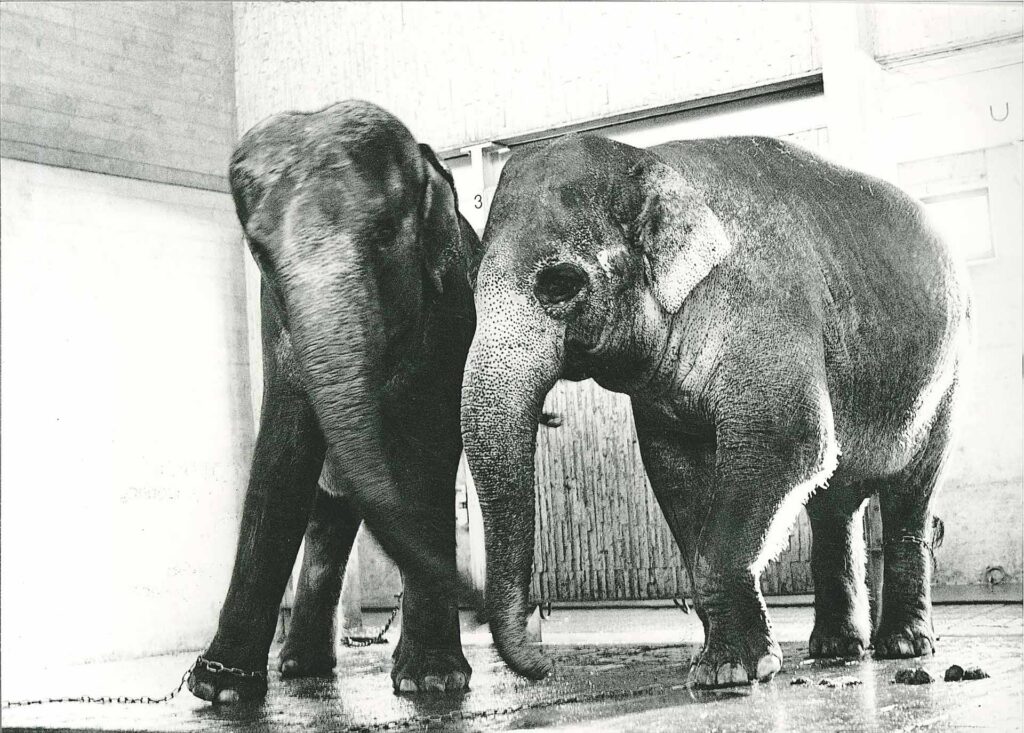
Elephants at Zurich Zoo in 1987, photographed by Bill Travers
The call to Zurich Zoo
- Immediately cease elephant breeding.
- Withdraw from any future breeding recommendations.
- Prevent further transfers for breeding purposes.
- Commission an independent welfare review of the elephant programme.
- Develop a transparent, time-bound plan to phase out the keeping of elephants at the zoo.
Zurich Zoo must now prioritise the welfare, stability and long-term care of the elephants already in its care. Breeding more calves into a system where every calf born in the past decade is now dead is no longer defensible.
It is time for Zurich Zoo to end elephant breeding.
Eleven Elephant Deaths in Ten Years: Experts Call for Zurich Zoo to end Elephant Breeding
We, the undersigned scientists, conservationists, veterinarians, elephant care professionals, animal welfare specialists and policy experts, are deeply concerned by the extraordinary number of elephant deaths at Zurich Zoo in Switzerland. The recent death of a newborn male calf, who was euthanised shortly after birth, brings the number of elephant deaths at the zoo to 11 in just 10 years. Among these deaths are eight captive-born calves and young elephants aged eight years or younger. Every elephant born at the zoo in the last decade is now dead.
This is not an isolated tragedy. It is a repeated pattern which raises serious questions about the welfare, ethics and conservation justification of Zurich Zoo’s elephant breeding programme.
In light of these repeated losses, and the likely profound suffering caused to calves, mothers and other members of the elephant group, we call on Zurich Zoo to immediately cease elephant breeding, withdraw from any future breeding recommendations, prevent further transfers for breeding purposes, and develop a transparent, time-bound plan to phase out the keeping of elephants at the zoo. Continuing to breed elephants despite this disturbing record is unethical and inhumane, and is inconsistent with any credible, welfare-led approach to keeping socially complex, long-lived animals.
While the zoo may present individual deaths as unfortunate but natural occurrences, the cumulative record of repeated deaths points to a deeply troubling elephant programme that has resulted in substantial suffering and loss.
Since 2016, at least 11 elephants have died at Zurich Zoo. Only three were adults. The remaining deaths were calves or young elephants, and every calf born at the zoo during this period is now dead. Four died as newborns, two after failing to thrive and two from fatal injuries inflicted by other elephants. The remaining four died young, one at just four months from leg-injury complications, and three from EEHV, a disease that is devastating mainly captive Asian elephants. None lived beyond eight years. Behind these numbers is a tragic pattern of loss, suffering and failed breeding. One current female has lost three of her five calves, while another has lost all four of hers. This is not a success story; it is a deeply troubling record that cannot be hidden behind a carefully managed zoo narrative.
These losses are not occurring within a large, free-ranging population of elephants, where some calf mortality is expected. They are occurring among a very small, intensively managed group of elephants living in an artificial environment where every aspect of reproduction, social grouping, veterinary care, and husbandry is controlled by humans. When every calf born over a ten-year period dies in such a setting, it is evidence of a disturbing pattern that cannot be dismissed as normal or inevitable.
These deaths are not merely statistics. They represent the loss of sentient, socially complex individuals and the suffering endured by the mothers left behind.
Among elephants, there is no greater bond than that between a mother and her calf. In the wild, mothers and calves remain closely connected for many years, with females staying with their mothers for life. Calves are nurtured not only by their mothers but by other related females in the family. Scientific research has demonstrated that elephants experience grief, distress and profound social disruption when family members die or are separated. The repeated cycle of births, deaths and separations at Zurich Zoo is likely to have caused significant distress and social disruption for the elephants who remain. This continued pain for the elephants must stop.
The captive breeding of elephants primarily serves to sustain zoo populations and future exhibits for visitors. It does not restore wild elephant populations, protect wild habitat, reduce human-elephant conflict, or return elephants to functioning ecosystems. Elephants bred in zoos are not being prepared for release into the wild. They are being born into a lifetime of confinement. The concept of maintaining a ‘reserve population’ of elephants in zoos cannot justify breeding programmes that produce elephants who will never be released into the wild and, in Zurich Zoo’s case, has resulted in the death of every calf born over the past decade.
Conservation is measured by real benefits to wild populations, not by the number of elephants maintained in captivity. True conservation protects elephants where they belong, within secure habitats and functioning ecosystems. It addresses the threats that imperil wild populations and promotes the long-term survival of the species in nature. Continuing to breed elephants in captivity, despite repeated premature deaths and suffering, is inconsistent with any meaningful definition of conservation.
The suffering inflicted on the elephants at Zurich Zoo, and the cycles of pregnancy, loss and separation for the purpose of producing more elephants for exhibition, must stop. After 11 deaths in 10 years, and with every calf born at the zoo during this period now dead, the evidence is clear: this breeding programme has failed to deliver acceptable welfare outcomes for calves and cannot be ethically justified in its current form.
Zurich Zoo must now prioritise the welfare, stability and long-term care of the elephants already in its care. Breeding more calves into a system where every calf born in the past decade is now dead is no longer defensible.
It is time for Zurich Zoo to end elephant breeding.
Signed by the undersigned experts,
- Catherine Doyle, MS, Director of Science, Research and Public Policy, Performing Animal Welfare Society, U.S.
- Dr. Marion E. Garai, Trustee and Elephant Researcher, Elephant Reintegration Trust, South Africa.
- Brett Mitchell, Chairman, Elephant Reintegration Trust, Director & Co-founder, WildChoices South Africa.
- Dr. Jan Schmidt-Burbach, Director of Wildlife Research and Veterinary Expertise, World Animal Protection Denmark.
- Dr. W. Keith Lindsay, Conservation Biologist, Amboseli Trust for Elephants, Kenya; Advisor Elephant Protection, Fondation Franz Weber, Switzerland.
- Audrey Delsink, D.Phil, Pr.Nat.Sci.
- Dr. Patricia London, Doctor of Veterinary Medicine, Director Elephant Wellness Project, U.S.
- Tenisha Du Toit (Roos), MSc, Elephant Researcher, Elephant Reintegration Trust, South Africa.
- Dr. Antoinette van de Water, Founder & Director, Bring The Elephant Home, The Netherlands
- Brooke Friswold, Regional Director, Bring The Elephant Home, South Africa & Board of Directors, Wild Choices, South Africa
- Dr. Kathleen Schuyler Gobush, Affiliate Assistant Professor, Department of Biology, University of Washington, USA.
- Jake Davis, Esq., Senior Staff Attorney, Nonhuman Rights Project, Inc. U.S.
- Tammy Eggeling, MSc, Elephant Researcher, Elephant Reintegration Trust, South Africa.
- Carol Buckley, Founder, Elephant Aid international, USA.
- Peter Stroud, Independent Zoological Consultant, Former Zoo Curator and Director. Melbourne, Australia.
- Dr. Bob Jacobs, Neuroscientist and Professor Emeritus, Colorado College, USA.
- Professor Phyllis C. Lee, Director of Science, Amboseli Trust for Elephants, Kenya.
- Dr. Cynthia Moss, Director, Amboseli Trust for Elephants, Kenya.
- Dr Mark Jones BVSc MSc (Stir) MSc (UL) MRCVS, veterinarian. Head of Policy Born Free Foundation.
- Chris Lewis, Captivity Research and Policy Manager, Born Free Foundation.
- Dr Lydia Tiller, Head of Human-Elephant Coexistence, Amboseli Trust for Elephants.
- Debbie Gibson, Wildlife ecologist.
- Dr Richard W Byrne FRSE, Emeritus Professor, University of St Andrews, Scotland.
- Prof. Karen McComb, Emeritus Professor of Animal Behaviour & Cognition, University of Sussex
- Dr. Michael Pardo, Senior Scientist, ElephantVoices, USA, Affiliate Researcher, Department of Fish, Wildlife, and Conservation Biology, Colorado State University, USA
- Les O’Brien, Palladium Elephant Consulting
- Courtney Fern Director of Campaigns, Nonhuman Rights Project
- Dr. Rob Atkinson, former Head of Wildlife, RSPCA, former CEO The Elephant Sanctuary in Tennessee
- Scott Blais, CEO, Global Sanctuary for Elephants