
Born Free advocates for migratory species at Brazil CMS COP
We’ll be attending the global platform for the conservation of migratory animals and their habitats – but what is it all about?

(c) Amboseli Trust for Elephants
For a week at the end of March, delegates from governments, academic institutions and wildlife organisations from all over the world will converge on the city of Campo Grande in Brazil, for the 15th Conference of the Parties (COP15) to the UN Convention on the Conservation of Migratory Species of Wild Animals (CMS).
Born Free will be there urging governments to use the opportunity to improve protection for migratory species, and bring more species into the purview of the Convention.
But what is CMS, and why is Born Free involved?
Check out our Frequently Asked Questions below.
What is CMS?
The Convention on the Conservation of Migratory Species of Wild Animals (CMS), also known as the Bonn Convention, is an environmental treaty of the United Nations. It was adopted in 1979 and came into force in 1983.
The Convention provides a global platform for the conservation and sustainable use of migratory animals and their habitats, by bringing together the Range States through which migratory animals pass. It lays down the legal foundation for internationally coordinated conservation measures throughout the migratory ranges of the species it protects.
As the only global convention specialising in the conservation of migratory species, their habitats and migration routes, CMS complements and co-operates with a number of other international organisations, NGOs, and partners in the media and corporate sectors.
Why is CMS important?
CMS is vital for wildlife conservation because migratory species cross national borders and depend on multiple habitats in different jurisdictions throughout their lives. No single country can protect these animals alone.
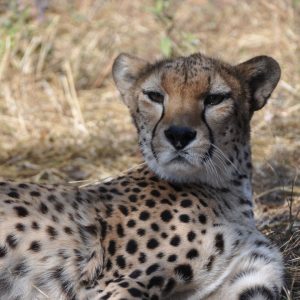
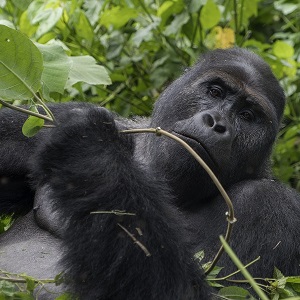
CMS provides a global legal framework that encourages governments to cooperate in conserving migratory species including whales, birds of prey, marine turtles, and land mammals such as elephants, gorillas and cheetahs.
By coordinating international action plans, improving habitat protection, and addressing threats like overexploitation, bycatch, habitat loss, animal health, and climate change, the Convention helps ensure that conservation efforts are consistent along entire migration routes.
It also facilitates data sharing, scientific research, and capacity building between governments, scientists and wildlife organisations.
Importantly, CMS also raises political awareness of the ecological importance of migratory species and the need for conservation efforts to extend across national borders. Without such collaboration, many migratory populations would continue to decline due to fragmented and uncoordinated management in different parts of their range.
How does it work?
Migratory species that are threatened with extinction can be listed on Appendix I of the Convention. Governments that are signatories to the Convention, called Parties, are committed to strictly protect these species by preventing them from being exploited, conserving or restoring the places they inhabit, identifying and removing obstacles to their migration, and controlling other factors that might threaten them.
Migratory species that need or would significantly benefit from international co-operation are listed in Appendix II of the Convention. Such cooperation is often achieved through the development of global or regional agreements among the Range States.
In this respect, CMS acts as a ‘framework Convention’. The ‘daughter agreements’ established under CMS range from legally binding treaties between governments that share migratory species (called Agreements) to less formal instruments, such as Memoranda of Understanding and Initiatives, and can be adapted to the requirements of particular regions.
The development of such agreements, which are specifically tailored according to the needs of the species concerned throughout their migratory range, is unique to CMS. Examples include agreements to protect marine mammals in the Mediterranean, Black and Baltic seas; gorillas across their entire range; European bats; and African-Eurasian Migratory Waterbirds.
Turtles, dugongs, sharks and seals, many bird species, and West African elephants are covered by Memoranda of Understanding among countries that share their habitats. Central Asian mammals and African carnivores benefit from initiatives that bring together the countries they call home to discuss and agree how to best protect them.
Which animals are protected by CMS?
Species can be listed on the CMS Appendices if they meet the definition of being ‘migratory’, which from CMS’s perspective means that a significant proportion of their populations cyclically and predictably cross one or more national jurisdictional boundaries.
At present, CMS covers around 1,000 species of birds, almost 100 terrestrial mammals (including elephants, several big cats and three species of primates), more than 60 marine mammal species, more than 50 species of fish, 10 reptile species and one insect species.
Which countries are Parties to CMS?
(c) www.christophermichel.com
At present, 133 Parties (132 countries, plus the European Union) have signed and ratified CMS, and are therefore legally bound to implement the Convention. Most of the Parties will send delegations to the meeting in Brazil.
The Parties are largely made up of European, Eurasian, African, South Asian and Latin American countries. Australia and New Zealand are also parties to the Convention. As yet, there is no North American Party. Only the Philippines and Mongolia are represented from East and South East Asia.
A map showing the current Parties to the Convention can be found here.
The CMS Secretariat is constantly talking to non-party governments to expand the geographic reach of the Convention. The most recent country to ratify the Convention was Bahrain, which became a Party in March 2022.
The United Kingdom signed up in October 1995.
How are decisions made at CMS?
Wherever possible, CMS tries to arrive at decisions through negotiation and consensus, following consideration of evidence and scientific advice. However, this process sometimes requires compromise that not all Parties are willing to make. Controversial issues can be decided by voting.
NGOs like Born Free can take part in formal sessions, discussions, debates and events, but cannot vote.
Why is Born Free involved?
Born Free has been engaging with CMS since 2014, and became an official Partner Organisation in 2018. We advocate for greater protection of wild animals who move from one habitat to another, in search of food, better conditions or a place to breed.
CMS considers the impact of threats such as exploitation, climate change, pollution, infrastructure development and wildlife health on the conservation of migratory species, and how these threats can be mitigated or managed. The Convention also has some very progressive workstreams on connectivity, animal culture and social learning, among other issues, which is helping to transform the way we think about wild animals, the role they play in their own societies and the wider ecology, and how we can best protect them.
By engaging with and encouraging these progressive CMS workstreams, we hope to influence governments with the aim of reversing the disastrous decline in nature, encouraging a greater appreciation of wild animals, and securing peaceful coexistence between people and wildlife.
What does Born Free want from COP15?

Veronika Andrews Andrews from Pixabay
COP15 will consider proposals to add a number of species of terrestrial mammals, birds and sharks to its Appendices, which would allow them to be protected by the Convention’s rules. Born Free strongly supports these proposals.
In particular, we will be supporting the listing of striped hyena, giant otters, and Zimbabwe’s population of cheetahs. We are also concerned about proposals to remove the Bukhara deer from CMS Appendix I, which could open the floodgates for the commercial hunting of this species and potentially undo all the good work that has been done across parts of its Central Asian range to help the deer recover.
The meeting will also consider documents covering everything from how the Convention is implemented, to new concerted actions for listed species. We will be focused on promoting efforts to better protect migratory terrestrial mammals, while also supporting wider initiatives that benefit other wildlife.
We don’t work at CMS in isolation. Rather, we will be collaborating with a number of wildlife protection-focused NGOs, scientists and Party delegates to ensure our ambitions for the meeting can be fulfilled.
We will also be hosting our own event entitled “Conserving Earth’s oldest and wisest animals: why it matters for migration and connectivity”, which will be moderated by Born Free’s Policy Advisor Ian Redmond OBE, and will feature experts on terrestrial mammals, freshwater fish, marine mammals and wildlife health. We hope the event will increase awareness of the damaging impact of the selective removal of older, wiser animals by activities such as hunting and fishing on the social and genetic stability of their family groups and populations, and lead to actions to reduce these impacts.
To see Born Free’s positions on key issues that will be discussed at CMS COP15, please click the link below.
BORN FREE’S POSITIONS AT CMS COP15