
18 amazing dolphin facts you should know
Discover fascinating dolphin facts, from their intelligence to the threats they face, and learn why these remarkable marine mammals need protection.
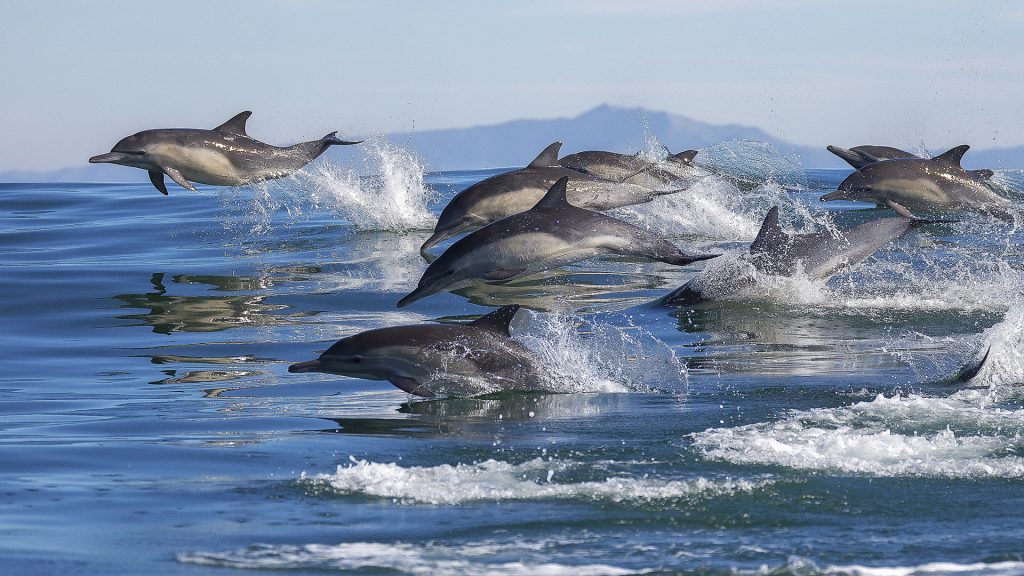
Dolphins are intelligent, social marine mammals found across the world’s oceans and some rivers. Discover 18 fascinating facts about their remarkable communication, behaviour, family bonds and the threats they face in the wild.
1. There are over 40 species of dolphins worldwide
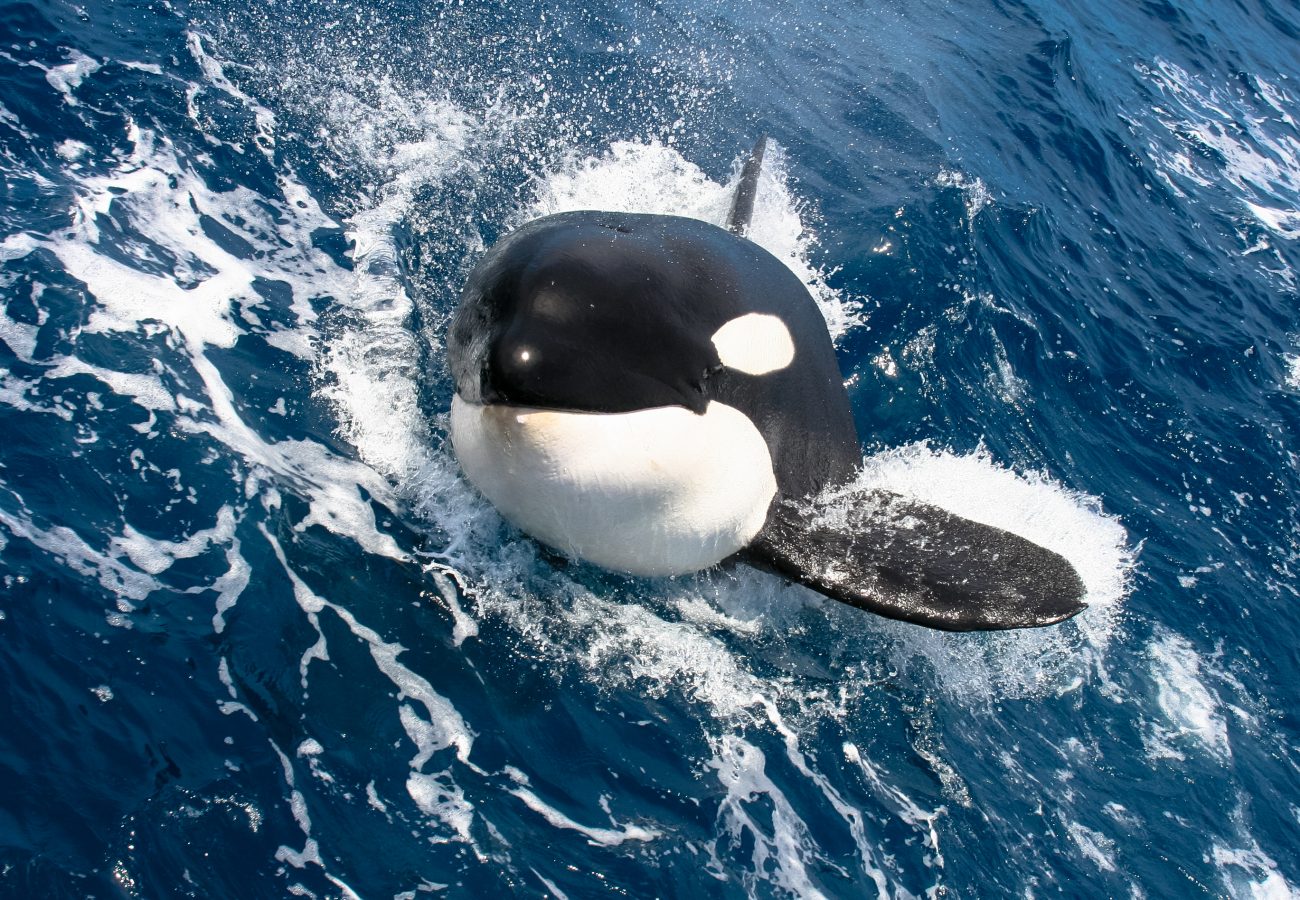
Dolphins live all over the world, in both oceans and some freshwater rivers. They belong to the cetacean family, which also includes whales and porpoises. One of the smallest species of dolphin is Hector’s dolphin, found off the coast of New Zealand. The largest species is the orca (killer whale), which live across the world’s oceans. The different species have adapted to very different environments, with some only found in a very restricted habitat.
2. Dolphins are mammals
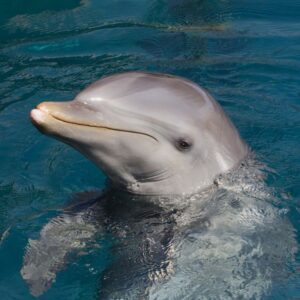
Dolphins are mammals, not fish. This means they need to breathe air, are warm-blooded and nurse their young with milk. Some species of dolphin are highly intelligent, with large and complex brains, relative to body size.
3. A group of dolphins is called a pod
Dolphins live in pods which usually range from a few individuals to around 30. On occasion, superpods can form, where multiple pods of dolphins come together leading to hundreds or even thousands of dolphins congregating at once. This usually occurs at times of mating or where there is an abundance of prey. Superpods will spend a short time together before parting ways.
4. Bottlenose dolphins have their own unique “names”
Researchers have found that some bottlenose dolphins have a signature whistle, which acts almost as their name. Other individuals will copy the whistle, effectively calling to the whistle owner. Each whistle is unique and specific to an individual.
5. Dolphins use echolocation to see with sound
Echolocation is the use of sound waves and the returning echoes to determine the location, size and shape of objects. Also called ‘bio sonar’, echolocation allows dolphins to understand their environment. They will let out clicks, which bounce off an object, such as a fish, and the returning echo gives the dolphin information about where and what it is.
6. Dolphins can recognise themselves in mirrors
Bottlenose dolphins, orcas and false killer whales, have all passed the mirror self-recognition test. This is a test set-up by scientists to see if animals understand that who they are seeing in the mirror is themselves. There are only a few species that have passed the test, such as the great apes, Asian elephants and Eurasian Magpies.
7. Dolphins sleep with half their brain at a time
Because dolphins have to consciously control their breathing and rise to the surface to take in more oxygen, this means that they cannot go into a deep sleep, like humans do. Instead, they use unihemispheric sleep, where one side of their brain goes to sleep, and they close one eye. They can alternate which side is asleep as needed.
 8. Dolphins are incredible swimmers
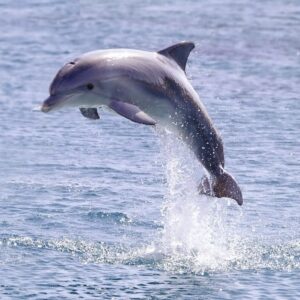
With streamlined bodies to reduce drag and powerful tails which propel them through the water, dolphins are designed to glide through the water. Orcas, the biggest dolphin species, can reach speeds of 33mph (54km/h).
9. Dolphins are skilled hunters
All species of dolphins are carnivores – they survive by eating meat. What they hunt will depend on where they live, their environment and the other wildlife available. Fish, squid, shrimp, jellyfish and octopus are some of their key food sources.
Pacific white-sided dolphins and fish-eating orcas in British Colombia, Canada, may work together to hunt salmon, showing cooperative foraging strategies.
10. Dolphins are playful by nature
Some species of dolphins appear to love to play. They will play with objects, such as seaweed, with each other or surf waves and bow ride on the waves created by boats. Play often serves some kind of function, whether learning skills or building social bonds but sometimes it appears to be purely for having fun!
 11. Dolphin mothers form strong bonds with their calves
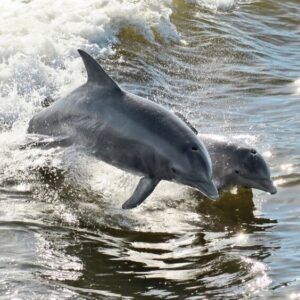
Calves will stay with their mother for a few years usually, the time varying between species. As calves grow, they will learn important skills in hunting and socialising from their mother and other pod members. Orcas have the longest pregnancy of any dolphin species – 18 months in total.
12. Dolphins communicate using sounds and body language
Using sounds, such as clicks and whistles, touch, body language and vision, dolphins are able to communicate well underwater. Their communication can help in hunting and social behaviour.
13. Dolphins have excellent memories
Bottlenose dolphins have been found to be able to recognise individuals they haven’t seen for 20 years! This long-term memory could help dolphins remember and assess social threats or hunting alliances.
14. Dolphins feel emotions and show empathy
Dolphins are sentient beings – this means they can feel and show behaviours linked to emotions such as joy, grief, and distress. If a calf dies, some mother dolphins will carry the calf with them for a time, in what appears to be mourning.
15. Dolphins can live for many decades
The lifespan of dolphins greatly varies depending on the species. Most dolphin research has been done on bottlenose and orcas – who can live a long time. Some bottlenose dolphins have been recorded reaching over 60 years old, while an orca, named Granny, who lived off the west coast of North America, was estimated to be over 100 years old when she died. Living long means that there is slow population recovery – when numbers fall, it can take a long time for the population to recover.
16. Dolphins face serious threats from human activity
Some of the threats faced by dolphins include fishing nets and being bycatch – where they are caught in fishing nets but were not the targeted animal, plastic pollution, such an entanglement in fishing gear or ingesting plastic. Noise pollution has detrimental effects on dolphin communication, reducing their ability to forage and communicate with each other.
(c) J McArthur
17. Dolphins suffer in captivity
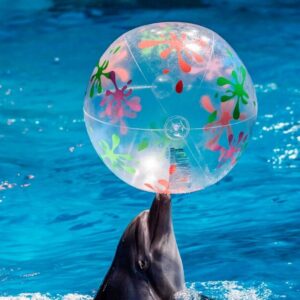
These highly intelligent, social complex animals do not do well in captivity – they are restricted to unnatural and inadequate enclosures, often concrete tanks with no natural features and many individuals kept in the small space. Mental stress and boredom commonly lead to abnormal behaviours, with individuals sometimes given drugs to control these. Individuals are even known to bite and hit the sides of their concrete pools, experiencing injuries from doing so.
Learn more about how Born Free has helped dolphins in captivity.
18. Dolphins urgently need our protection
Many dolphin species are in decline, with fewer than 100 individuals left of some species, such as Hector’s dolphin. To ensure dolphins can survive and have safe homes, we need to protect marine habitats, reduce the impact of fishing on populations and marine pollution.
Dolphins in captivity do not support conservation efforts and only cause suffering for those individuals confined to their tanks. Born Free’s Tank Free campaign aims to raise awareness of the plight of captive dolphins, including orcas, and porpoises. You can support this campaign by not visiting dolphinariums or swim-with facilities and standing with us against exploitation.
WANT TO HELP PROTECT DOLPHINS AND ORCA?
An orca adoption is a powerful way to support conservation work that protects these intelligent marine mammals in the wild.