
Shocking number of tiger deaths in Thai facilities
Born Free is appalled to hear reports of the deaths of 72 captive tigers in northern Thailand over a two-week period in February.
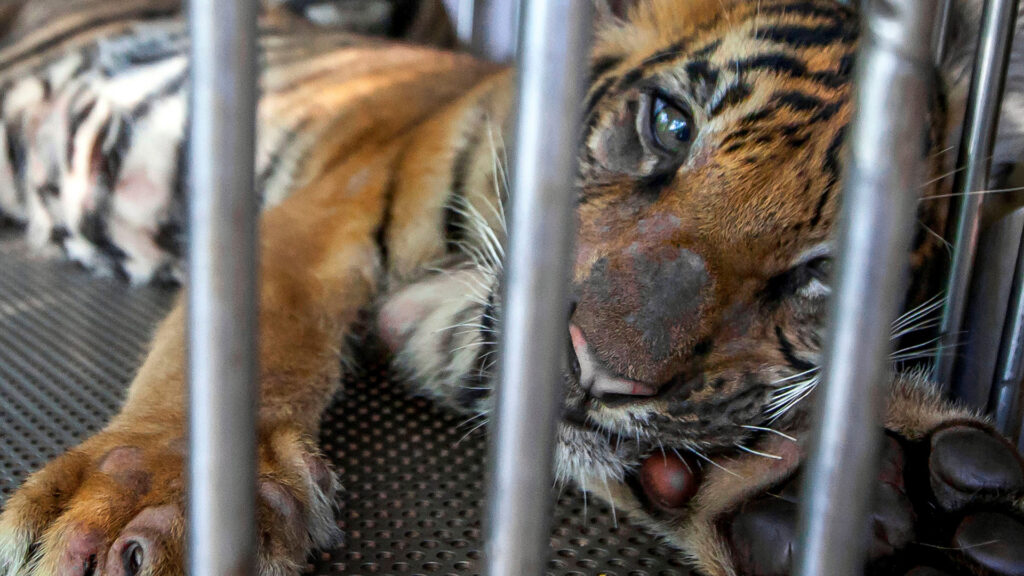
(c) Aaron Gekoski / Caters News
The two captive facilities that are implicated are owned by Tiger Kingdom Chaing Mai and reportedly kept over 240 tigers between them. Like many zoos and other captive facilities for wild animals the world over, they encourage and commercialise close contact experiences between their animals and human visitors.
Under these inappropriate conditions, in which large numbers of naturally solitary animals such as tigers are kept in close confinement and are frequently exposed to close contact with other animals and humans, the risk of transmission of infectious diseases is inevitably high, raising concerns for the wellbeing of animals, staff and visitors alike.
According to media reports, local vets and officials are suggesting that various infectious agents usually associated with domestic cats and dogs might be responsible for the casualties, including Feline Panleucopaenia virus and Canine Distemper virus.
This isn’t a first for Thailand: out of the 441 tigers held at the notorious Sri Racha facility in eastern Thailand, an outbreak of avian influenza virus (bird flu) led to the deaths of around 150 animals in 2004.
Thailand is not the only Southeast Asian tourist hot spot to be hit with such tragic deaths, with 47 tigers dying from bird flu between August and October in 2024 in southern Vietnam.
Born Free’s Senior Policy Advisor, Gabriel Fava, said: “To hear of so many captive tigers dying in such a short space of time is a tragedy. It is ironic that since the COVID-19 pandemic, Thailand has championed the One Health approach, which recognises the interconnectedness between human, animal and environmental health, and the incorporation of such considerations into conservation policy and practice. Thailand should therefore be leading the way in identifying and reducing the risk of infectious disease emergence and transmission, by ensuring that practices and conditions which weaken the collective resilience to global pandemics are phased out, including the keeping and breeding of tigers in stressful conditions for commercial purposes.”
Fundamentally, Born Free challenges the holding of hundreds of tigers in captive environments, given the suffering inflicted on these animals due to poor animal welfare, the likely absence of any conservation benefit whatsoever, and the significant risk of infectious disease outbreaks.
Thousands of tigers languish in poor conditions in facilities of various sizes across Asia and elsewhere. China alone is believed to house around 6,000 tigers in captivity, purely for entertainment and to feed the demand for tiger parts and products such as taxidermized skins to serve as luxury décor, and tiger bone wine to seal deals or curry favour with business colleagues or officials.
Born Free campaigns to phase out all tiger farms, through our engagement with the Convention on International Trade in Endangered Species of Wild Fauna and Flora (CITES), and through direct dialogue with governments and other stakeholders.
Born Free encourages the public to resist the temptation to visit captive wild animal ‘attractions’ in any country . If you do see instances of captive wild animal exploitation or suffering, we encourage you to take action by reporting what you see through our Raise the Red Flag portal.
For more information about our efforts to end tiger farming and to sign our pledge to end Selfish Selfies, follow the link below: