
What Samba the capybara’s escape reveals about zoos and ecological risk
Born Free’s Captivity Research and Policy Manager, Chris Lewis, discusses the often-overlooked potential ecological consequences when animals escape from zoos.
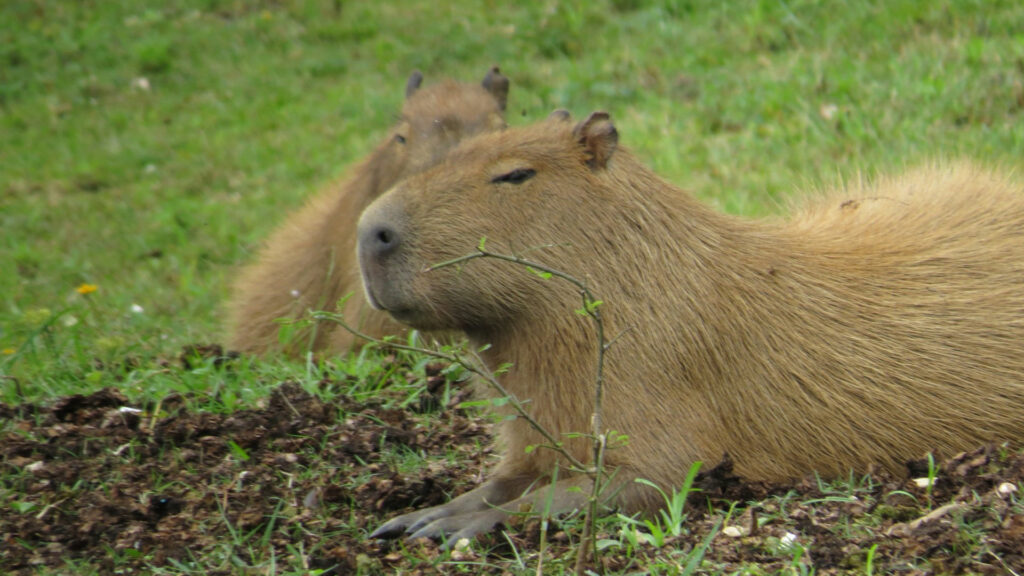
A wild capybara in Brazil (c) Jamie Dantas / UnSplash
The recent escape of Samba, a young capybara from Marwell Zoo, has captured public imagination as with most stories of escaped animals which have temporarily tasted freedom. Sighted along the River Itchen and evading sophisticated search efforts, she has become a symbol of curiosity and resilience.

Chris Lewis
However, her escape has also highlighted much deeper issues which are often lacking from the media coverage of such events, specifically relating to the fate of the animals that escape, and the impact they may have on our own native wildlife and the wider ecology. This brings into stark focus the potential risks associated with the confinement of thousands of non-native animals within zoos, at a time of ecological instability.
Samba’s story is, on the surface, a familiar one. A recently transferred animal escapes a temporary enclosure, while a companion is quickly recaptured. In recent years, there have been numerous incidents of animals escaping British zoos, including binturong, macaques, a red panda and a flamingo which made its way to France. These situations are not just single incidents, but a reflection of the systemic risks involved with keeping non-native wild animals’ captive.
Samba’s continued evasion, helped by her semi-aquatic behaviour and ability to travel via waterways, highlights that many zoo animals are potentially far more capable of surviving outside captivity than we might assume.
Capybaras are not native to the UK. They are large, adaptable rodents from South America, capable of thriving in the kind of wetland environments that are increasingly common across Britain due to land-use change and climate shifts.
In 2024, another capybara named Cinnamon escaped from a British zoo and was recaptured after a week. The story grabbed international headlines and the zoo subsequently capitalised on their failings to contain their animals by producing various pieces of capybara-themed merchandise. The question of ‘what if capybara establish themselves in the UK’ may soon need rephrasing to ‘when will they establish?’
The global conversation around invasive species often focuses on animals in the pet trade, those that hitch a ride with travellers, or those that are introduced through imports of food or agricultural products. Zoos represent a less discussed pathway. Across the UK and Europe, there is a steady record of zoo escapes involving a wide range of species. Most are recaptured. Some are not. The fate of those animals is often unknown.
Even short-term escapes can have ecological consequences such as disease transmission to native wildlife, predation or competition with local species, and habitat disruption. Repeated escapes can only increase the likelihood of establishment.
Aside from encouraging members of the public to not approach escaped animals, zoos often downplay the risks of such escapes. However, capybara have high reproductive potential under suitable conditions and possess the ability to alter ecosystems and compete with native herbivores. They are also growing in popularity within the global pet trade. In parts of the world where non-native rodents have established, the ecological consequences have been severe and long-lasting.
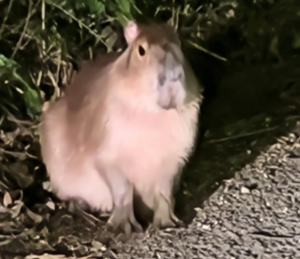
A sighting of escaped Samba (c) Sarah Devine
The UK’s environment is changing. Warmer temperatures and altered rainfall patterns are making it more hospitable for species that previously could not survive here. There are already several examples of species which have become established within the UK due to their escape from captivity, including grey squirrels in parts of Scotland, red-necked wallabies on the Isle of Man, ring-necked parakeets in Southern England, and Aesculapian snakes in North Wales.
The ecological consequences of zoo escapes are becoming less predictable and potentially more severe. When such animals escape, they enter environments that were once considered unviable but may now be increasingly suitable due to climate change.
The media and the public will doubtless continue to follow Samba’s journey with fascination. Born Free hopes that she is found safely and returned without being harmed. However, in a changing world, the line between “escapee” and “invasive species” is becoming dangerously thin, raising questions over the ethical and moral justification for zoos housing animals of species where the majority are not threatened with extinction in the wild.
Ultimately, the most effective way to prevent invasive risk is simple: reduce the number of wild animals held outside their natural ecosystems, and particularly those where there is no conservation justification for their captive keeping.
Samba’s story is not just about one capybara. It is about the growing ecological risks we create when we confine wild animals far from where they belong.
Find out more about UK Zoos and what you can do: