
Old World vs New World Monkeys | Key Differences Explained
Discover the key differences between Old World and New World monkeys, from nose shape to tails. Learn how to tell them apart and where they live.
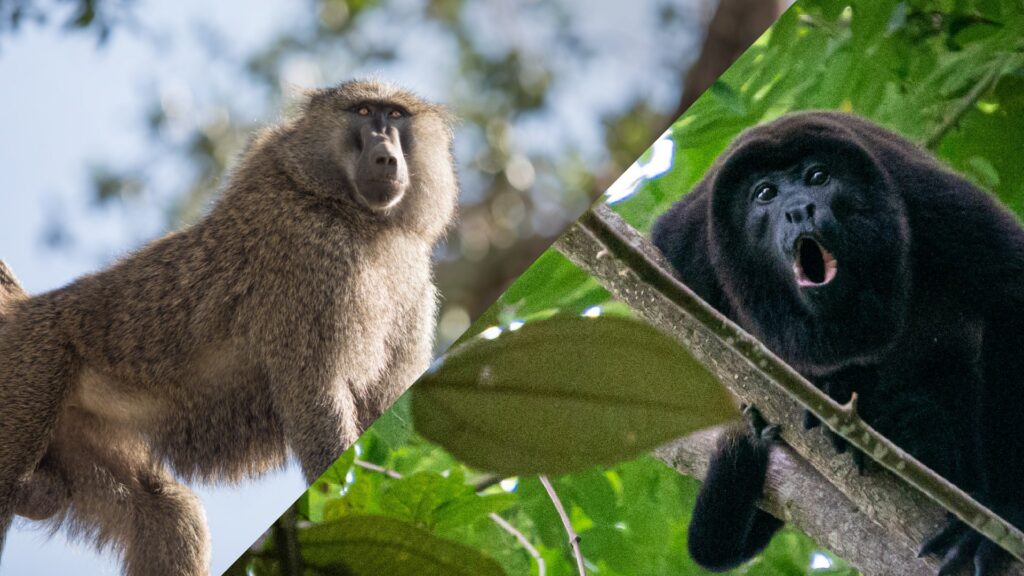
L: Baboon (c) georgelogan.com / R: Howler Monkey (c) Eric Gilbertsen, Unsplash
Old World vs New World Monkeys
Did you know, that the 200+ species of monkeys in the world can be divided into two distinct groups – Old World and New World? Here we delve deeper into the key differences between the two, and how you can tell them apart.
What does “Old World” and “New World” mean?
‘Old World’ monkeys refer to the monkeys found in Africa and Asia. They are categorised as ‘Old World’ as this area of the world was known to Europeans before they arrived in the Americas, and referred to that as the ‘New World’.
‘New World’ monkeys are those found in the Americas – from Mexico all the way down to Chile. They are also called Neotropical Primates.
The difference between these two categories of monkeys is primarily geographic, but there are evolutionary and biological traits that also make ‘Old World’ and ‘New World’ monkeys distinct from each other. Their common ancestor diverged millions of years ago, arriving in the Americas from Africa. Species then began to evolve in this new environment, leading to different adaptions.

Old World Monkey: Barbaray Macaque
Where do old world vs new world monkeys live?
Monkeys can live in a range of habitats, including forests, savannah, desert and even cities.
Old World monkeys live across Africa and Asia. There are a small population in of monkeys, Barbary macaques, who live in Europe, but these were introduced by people.
New World monkeys live in South and Central America, all the way from southern Mexico to northern Argentina.
Old World monkeys live in more diverse environments than New World monkeys, who are primarily found in tropical and subtropical habitats.
How can you tell old world monkeys vs new world monkeys apart?
Nose shape
Old World monkeys have a narrow septum, meaning that their nostrils are close together and downward-facing.
New World monkeys have a wide septum, side-facing nostrils (hence “Platyrrhini” meaning “flat-nosed”).
Tail function
Many New World monkey species have evolved to have prehensile tails, likely in response to their environment. This means that they can use their tail like a fifth limb, to grab onto things or hang from; especially howler, woolly and spider monkeys.
Old World monkeys don’t have prehensile tails. Tail size in Old World monkeys varies significantly, with some species such as Hanuman langurs having very long tails, while others, such as Barbary macaques and mandrills, have tiny tails. Those that do have tails use them for balance.
Thumbs
Old World monkeys usually have opposable thumbs, giving them good grip and ability to manipulate objects.
New World monkeys’ thumbs are less functional, with marmosets for example having non-opposable thumbs. Tamarins and marmosets also have claws instead of nails.
Padded buttocks
Some species of Old World monkeys have ‘ischial callosities’ (sitting pads) – which help when sitting on rough surfaces. In species such as geladas, who spend a lot of their time sitting, these sitting pads are particularly prominent.
As New World monkeys spend much of their time in the trees, they do not have ischial callosities.
Teeth
Old World monkeys have 32 teeth, while New World monkeys can have 36.
Size and physical features
Old World monkeys are generally larger and include the biggest monkey species: the mandrill. Male mandrills weigh around 30kg and live in the tropical forests of Central Africa.
New World monkeys are typically smaller and include pygmy marmosets, the smallest monkey species. The largest New World monkeys are the Atelidate family, which includes spider, woolly, howler and woolly spider monkeys. They weigh up to 15kg.
Behaviour
Many species of Old World monkeys are more terrestrial – this means they can spend much of their day on the ground.
New World monkeys are generally more arboreal, with many species spending most of their time in trees.
Arboreal primates can be harder to observe in the wild as they can travel through trees rapidly.
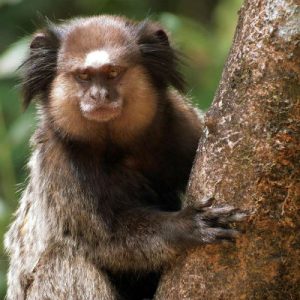
New World Monkey: Black-tufted marmoset
How Are Old World Monkeys and New World Monkeys Related?
Both New World and Old World monkeys belong to the infraorder Simiiformes. An infraorder is classification used to group families of species together. Orders are a taxonomic rank (e.g. Primates), grouping together families which share characteristics. An infraorder is a further classification within the order primates.
This infraorder is then split into two parvorders: Catarrhini (Old World) and Platyrrhini (New World). A parvorder is another taxonomic rank, below an infraorder, providing further classification.
Apes (including humans) belong to the Catarrhini group (with Old World monkeys).
This mean Old World monkeys are more closely related to humans than New World monkeys are.
In Summary: Old World vs New World Monkeys
| Characteristic | Old World Monkeys | New World Monkeys |
| Geographic Location | Africa, Asia, southernmost Europe | Central & South America, Southern Mexico |
| Nose Shape | Downward/forward-facing nostrils, narrow septum | Side-facing nostrils, wide septum |
| Habitat | Terrestrial and arboreal | Mostly arboreal |
| Tail Anatomy | Non-prehensile tail | Prehensile tails in many species |
| Sitting Pads | Present (ischial callosities) in some species | Absent |
| Thumbs | Generally opposable | Usually not opposable |
| Teeth Count | 32 teeth | 32 or 36 teeth |
| Relation to Humans | Closer evolutionary link | More distantly related |
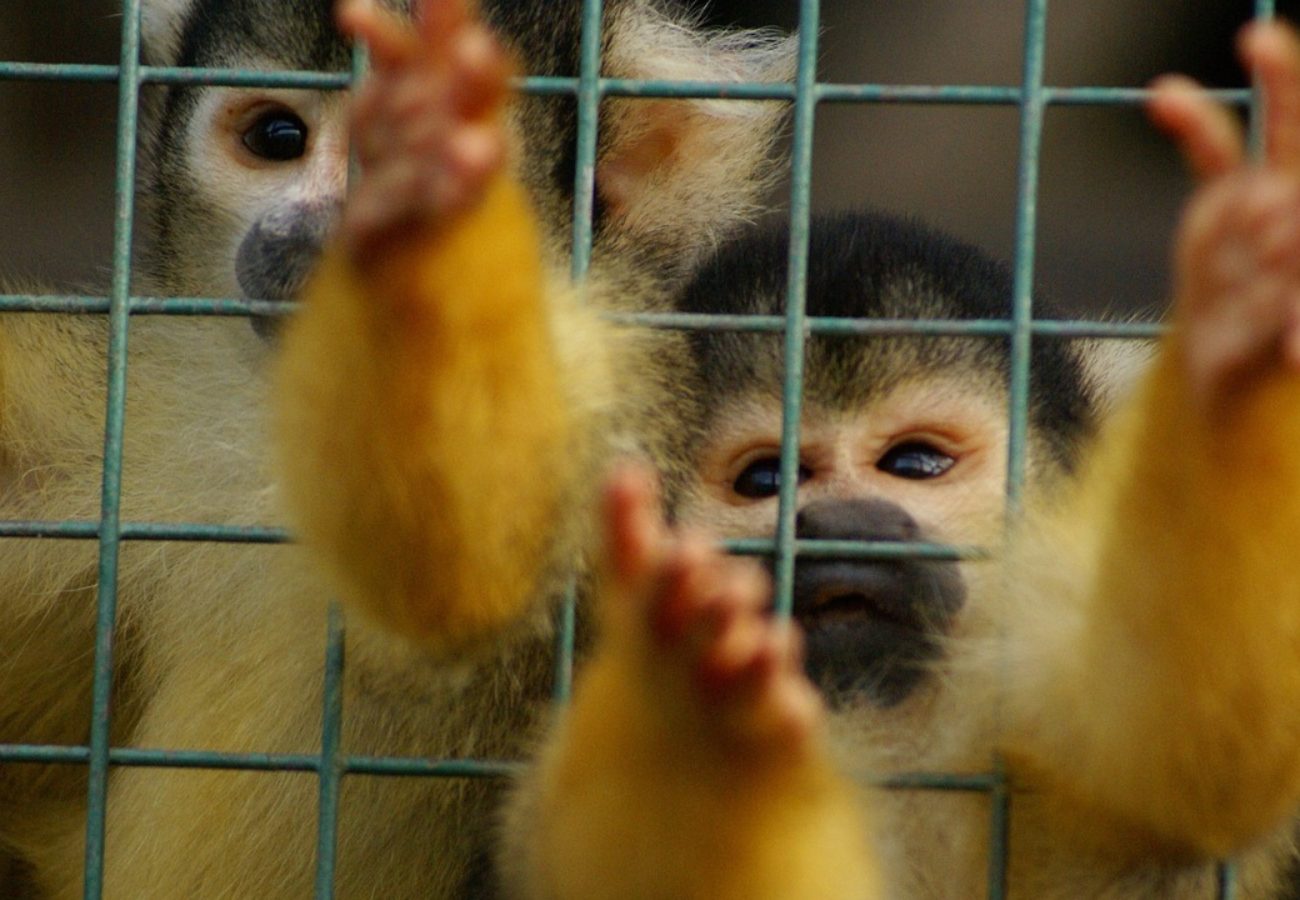
LOVE MONKEYS?
Born Free works to protect monkeys from the threats they face, both in the wild and in captivity. We support the rescue and care of individuals, and work to protect their natural habitats.