
New study questions effectiveness of British zoo inspection process
A new paper authored by members of Born Free’s Policy Team, highlights concerns with the consistency of inspections, their ability to detect non-compliance and drive improvements.
© Aaron Gekoski, Born Free
A new study, by members of Born Free’s Policy Team, entitled: Up to Standard? A Longitudinal Analysis of Regulatory Compliance in British Zoos has been published in the academic journal Animals. The study investigated the level of compliance of British zoos with standards relating to animal welfare, conservation and animal escapes across three consecutive formal inspections, which is equivalent to a full six-year licensing cycle of a British zoo.
The study, authored by Born Free’s Captivity Research and Policy Manager, Chris Lewis, and its Policy Support Officer, Frankie Osuch, is the culmination of over five years work and has involved the assessment of 324 inspection reports from 108 licensed zoos – the equivalent of approximately one-third of all licensed zoos in Britain.
Of the 324 inspection reports analysed, only 18% reported that the zoo had passed every assessed question. Failure to undertake the necessary number of animal escape drills was the most reported area of non-compliance in 41% of the reports. Across all animal welfare assessment criteria 89% of the questions were scored as compliant, however only 26% of inspections recorded that a zoo had met all welfare standards. The study revealed that zoos belonging to the British and Irish Association of Zoos and Aquariums (BIAZA) did not differ in the level of animal welfare compliance in comparison to non-accredited zoos.
Concerningly, around a quarter of all inspection reports identified that a zoo had failed to provide a suitable environment for at least one of the animals in its care.
Additionally, approximately a quarter of inspections indicated that a zoo had failed to address all areas of non-compliance identified during their previous inspection. This included three zoos at all of their assessed inspections, 19 zoos on two occasions and 30 zoos on one inspection.
(c) J McArthur
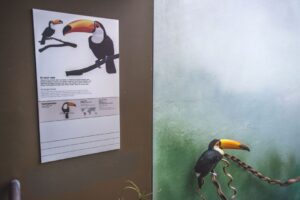
Inspection reports from 2020-2023 indicated that only a third of zoos participated in some form of repopulation or reintroduction of wild animals. This conservation measure was consistently undertaken by the fewest number of zoos across the study. In contrast, the exchange of information relating to the conservation of wild animals was met by the most zoos (84% of inspection reports). This can often be achieved by the displaying of signage by enclosures, albeit the degree to which visitors engage with and retain such information is open to debate.
Overall, a third of all zoos within the study were adjudged at one point during the assessment period to not be undertaking conservation at a level which is deemed appropriate for the resources of the zoo.
Across the study, the performances of different zoo types varied, with facilities categorised as farm parks performing least well. Such facilities were commonly found to have over three-times more animal welfare criteria deemed as substandard, and the lowest likelihood of meeting any of the required conservation measures contained within the Zoo Licensing Act 1981.
At present, there is no central government database of licensed zoos in Britain, and the responsibility for licensing and inspecting zoos falls on local licensing authorities. The study identifies a number of discrepancies within the current inspection process and raises questions in relation to the effectiveness of the process in implementing the requirements of the Zoo Licensing Act 1981, rectifying identified non-compliance, and improving standards in zoos.
Despite the importance of maintaining high welfare standards for animals in captivity, there have been very few studies which have investigated how welfare standards in British zoos are formally assessed by inspectors. Even fewer have examined compliance with standards over a full licensing period, or related conservation measures and animal escape prevention procedures.
The study proposes a number of changes which could aid inspection consistency and legislative enforcement and drive improvements.
These include:
- The need for formal assessments of animal welfare within zoos to be carried out when the zoo is open to the public, without prior notice to the zoo operator, to ensure that observations are reflective of the typical daily operations of the facility.
- The requirement for zoo inspectors to declare which enclosures, species and individual animals that have been assessed.
- The creation of inspection forms which are suited to different types of licensed zoos e.g. aquariums.
- The ability for zoos to undertake conservation measures which are more specific to their operation (e.g. bona fide sanctuaries which require a zoo licence to be open to the public should be subject to different requirements from a commercially operated private zoo), plus increasing conservation requirements for facilities as they become larger.
- The regular review of zoo inspection forms to identify areas of inconsistency and discrepancy, in order to increase consistency among inspectors and inspections.
Following the study’s publication on 27th March 2026, Chris Lewis said: “The findings of this study will be key in informing any potential revisions to the zoo inspection process in preparation for the implementation of the upcoming revised Standards of Modern Zoo Practice for Great Britain, which come into effect from May 2027.”