
Mondula (Mondy), the last remaining elephant in Scotland has died
Born Free is saddened to learn of the death of African elephant, Mondy, at Blair Drummond Safari Park.
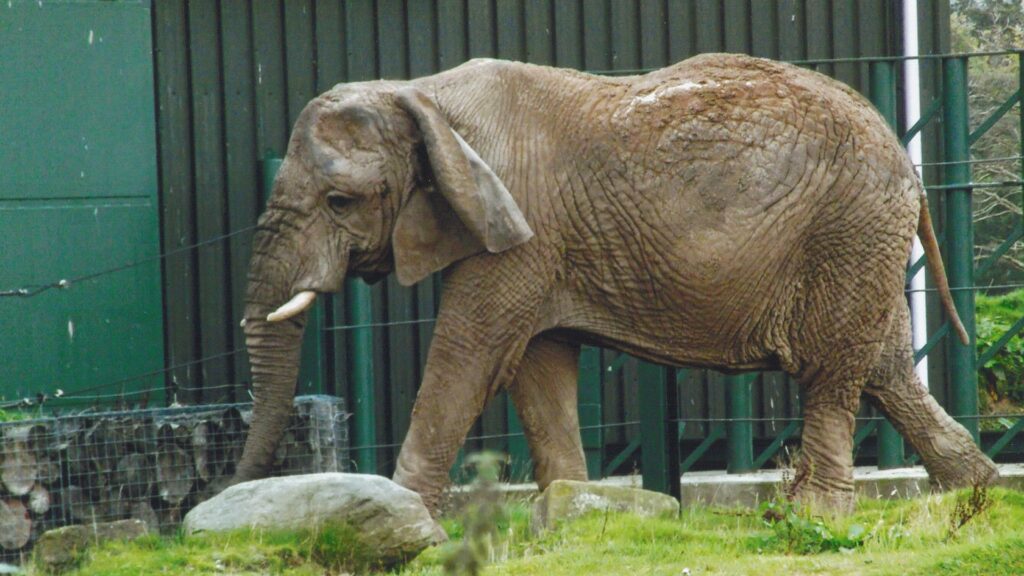
Mondy pictured at Blair Drummond Safari Park in 2017 (c) D MacKenzie
Blair Drummond Safari Park announced that Mondula (“Mondy”), the lone African elephant at the Park, had been euthanised at the age of 54 on the 8th February 2026. Her euthanasia was attributed to age-related illness and means that England is the only nation within the United Kingdom that currently houses elephants in zoos.
Mondy was taken from the wild as a calf in the 1970s, a practice sadly still employed by some zoos around the world today. She arrived at Blair Drummond Safari Park in 1998 having previously lived in a German zoo before her transfer to Scotland. The zoo acknowledged that “Mondy’s lack of exposure to a stable family herd structure during her formative years undoubtedly affected her ability to form close bonds with other elephants.”
Mondy’s story highlights the complex challenges elephants face when living in artificial environments. Elephants are highly social, intelligent creatures that form deep familial bonds and live complex emotional lives. In the wild, African elephants may live into their 60s or beyond, roaming across vast landscapes and interacting regularly with extended family herds, experiences that zoo settings cannot replicate. In contrast, elephants born within zoos across Europe commonly only live to half the age of their wild counterparts.
After the death of Mondy’s longtime companion, Toto, in 2016, Mondy lived alone, underscoring the impossibility of providing stable social groups that mimic natural herds within zoo settings. Elephants in captivity are often kept in small groups or even solitary situations due to space limitations, health constraints or logistical hurdles, a stark contrast to the extended, intergenerational family groups seen in the wild.
The revised Standards of Modern Zoo Practice for Great Britain (SMZPGB) which come into force in 2027, indicate that the keeping of elephants in UK zoos will sadly continue beyond 2040 despite the inherent welfare challenges they face. The disparity between the lifespan and general health of elephants in captivity compared to those in the wild have been linked to limited space, reduced opportunities for natural movement, captivity-induced disease, the physical and dietary challenges of captive environments, and the psychological impact captivity can have on an elephant’s wellbeing.
At present, Blair Drummond Safari Park’s enclosure would not meet the new requirements of the SMZPGB, and in consideration of the challenges Mondy experienced throughout her life despite the good intentions of her caregivers, Born Free calls on the zoo to make the compassionate decision to bring the keeping of elephants at the zoo to a permanent end.
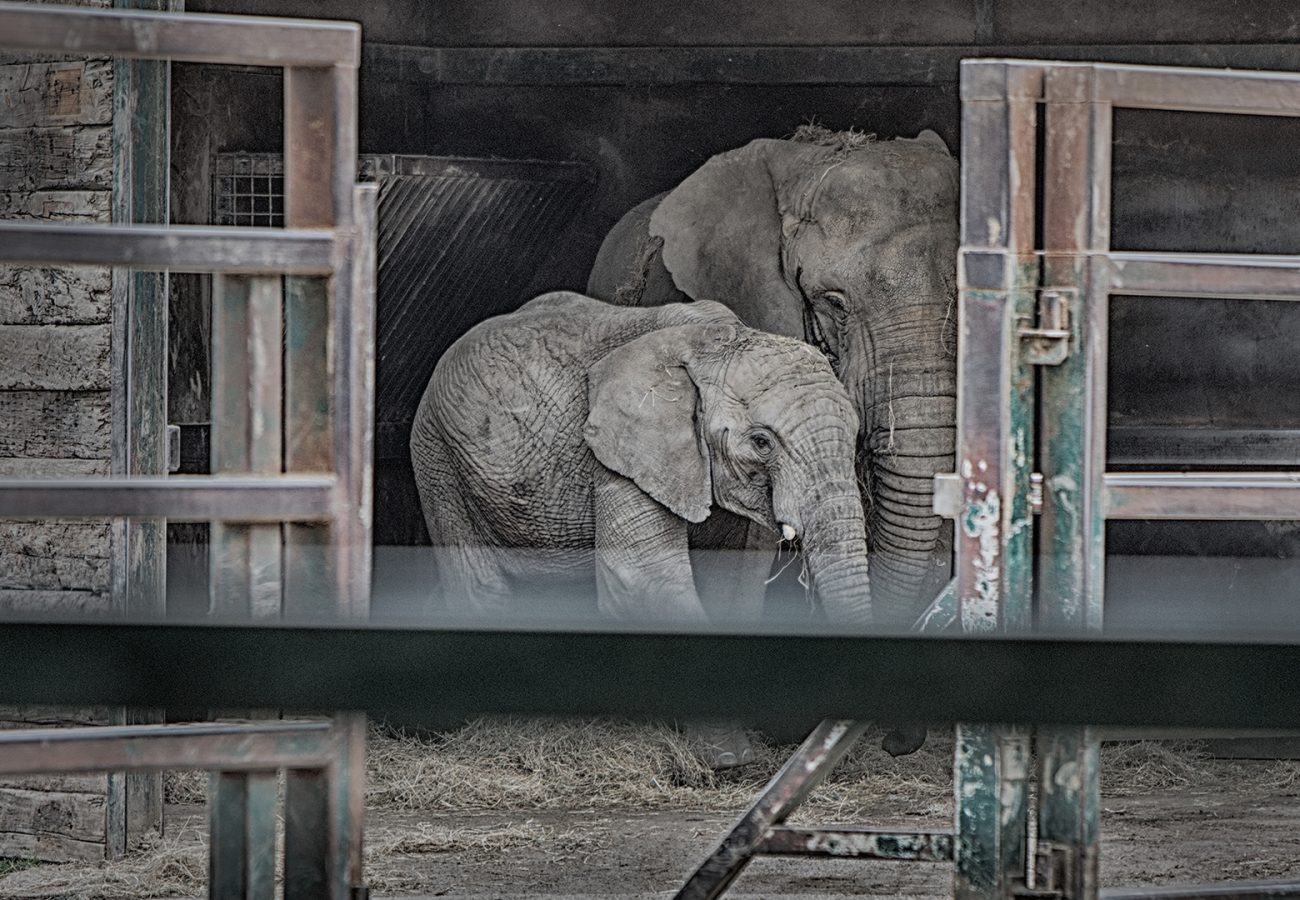
DO YOU SUPPORT AN ELEPHANT-FREE UK?
Captivity cannot possibly provide elephants with what they want or what they need. Zoos and other captive facilities cannot replicate the highly complex social and physical environment that elephants have evolved to live in.
Enough is enough. Born Free is calling for a phase out. We want an elephant-free UK. Will your support our campaign?