
Tracking Amani: historic lion collaring in Meru National Park
Tech can play a key role in conservation, and our team in Kenya has fitted a lioness with a lightweight satellite collar, to track her movements and help lions coexist with people.
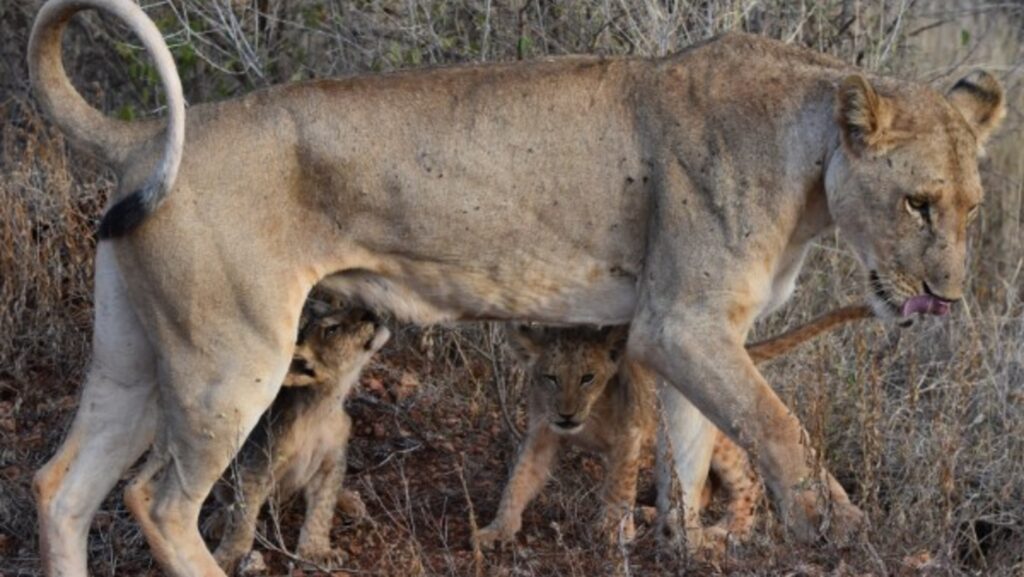
Amani with two cubs in 2025, before the collar was fitted
With your support, Born Free is developing exciting initiatives to protect a key population of lions in our homeland of Meru National Park, in central Kenya. Around 50 adult lions live in Meru and, one by one, we’re getting to know them all!
As you can imagine, by understanding how these lions behave and where they go, our mission to keep them safe and support local communities can be more effective. Our Pride of Meru Officer Jeremiah Kimathi Kinyoni reports on a momentous project to fit several lions with satellite-linked, GPS-enabled collars – starting with Amani the lioness.

Jeremiah Kimathi Kinyoni
We’d been searching for days but, in the early hours of 25th March, working alongside Kenya Wildlife Service vet Dr Michael Njoroge, we finally found five lions from the elusive Bisanadi Pride.
This pride is known to roam the northern part of the park, across the stunning landscapes of Mulika Plains, Leopard Rock, and Kampi ya Simba and Kampi Baridi campsites. Collaring a lion from this pride is a wonderful and rare opportunity to gather valuable data on how the lions utilise these habitats, so we can help them coexist with people, without conflict.
Meet the pride
The five lions included a mature adult male and female, as well as three young sub-adults – one male and two females. At nearly seven years old, Amani the adult lioness (her name means ‘Peace’ in Swahili) stood out as an ideal candidate for collaring.
Healthy, fully developed and an active hunter, Amani plays a key role in the pride’s movements, especially when dispersing from inside the park to nearby community lands. She could provide a vital indicator of human-lion interactions, and help us keep both people and predators safe.
We’ve been studying Meru’s lions since 2014, and Amani is a familiar face to our team. Back in December 2022, she gave birth to two healthy cubs, Vitani and Zira. Then, in January 2025, she welcomed her second litter of three cubs.
A carefully planned operation
As we watched, Amani moved into a nearby thicket and we cautiously followed. Dr Njoroge expertly darted her with a tranquiliser, which quickly took effect and soon she was deeply relaxed, very sleepy, and fully immobilised.
As you can imagine, a lion’s well-being and everyone’s safety are always top priorities. Every lion immobilisation is performed exclusively by an experienced Kenya Wildlife Service vet. Once sedated, Amani was closely monitored – every 10-15 minutes we carefully checked her temperature, heart rate, and respiratory rate.
To keep her calm, we covered her eyes to reduce stimulation and gently moved her to an open, well-ventilated area. An Iridium satellite collar was fitted around her neck. Designed to be safe and comfortable, it is snug enough not to catch on anything, but with enough room to ensure her comfort.
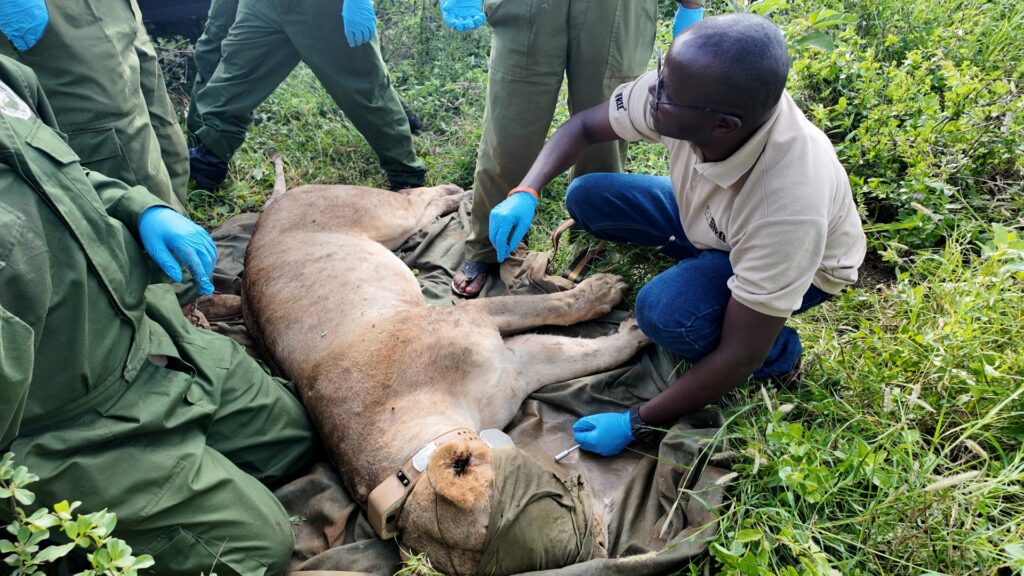
Amani was carefully sedated while the collar was fitted.
Gathering vital data
While Amani was safely immobilised, our team took the opportunity to record key body measurements and filled out an immobilisation datasheet. Dr Njoroge also collected blood samples to help determine her overall physiological health. He then made a tiny notch on Amani’s left ear, a permanent marker to help us identify her quickly, even after the collar is no longer in use.
Waking up and walking free
After a drug to reverse the sedation was administered, we watched to see Amani lift her head before standing, a little unsteady at first, but minutes later confidently walking away.
Our team stayed and watched until we were completely satisfied that Amani was alert, steady, and able to defend herself if needed. Only then did we drive off, full of satisfaction at a job well done and excited to see the data we would gather.
Why do we collar lions?
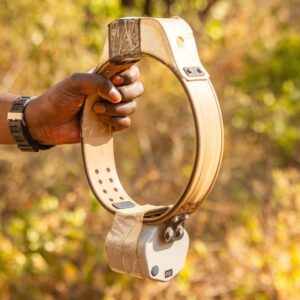
A satellite collar (c) Peter Ndung’u
Lions are elusive by nature. They roam vast territories, sometimes scores of miles wide, and hide in dense vegetation or rough terrain, camouflaged by their tawny coats. Meru National Park, with its thick bush and only patches of open savannah, makes it especially difficult to study and track lions.
This is where satellite collars become essential tools in lion monitoring. By tracking Amani’s movements, we can learn:
- Where she and the pride hunt and if they range into other prides territories.
- How she uses her habitat throughout the year, including the national park or when she leaves, venturing into nearby community lands.
- When she is near danger, such as areas where lions might come into conflict with people or face retaliation for targeting livestock.
In short, collaring doesn’t just help us study lions. It helps us protect them and support people.
Monitoring after fitting the collar
It has now been two weeks since the collaring, and Amani has been moving between Meru National Park and the neighbouring Bisanadi National Reserve, with a slight preference for Meru. The red spot on her tracking map below shows where she spent the longest time, likely a spot where she hunted and fed.
Using the EarthRanger app, our team continues to monitor Amani’s movements every day. This real-time data helps us make smarter, faster decisions to protect not just lions like Amani, but also their habitats and the communities living nearby.
Support lion conservation
Amani’s story is just one chapter in a much larger fight to protect Africa’s lions. Satellite collaring helps us understand where lions go, what they need, and how we can prevent conflict with people. But we can’t do it alone.
Join the pride. Support lion conservation today!
Big news ahead
We are gearing up to collar more lions. Stay tuned, we’ll be in touch with further lion collaring updates as we progress.
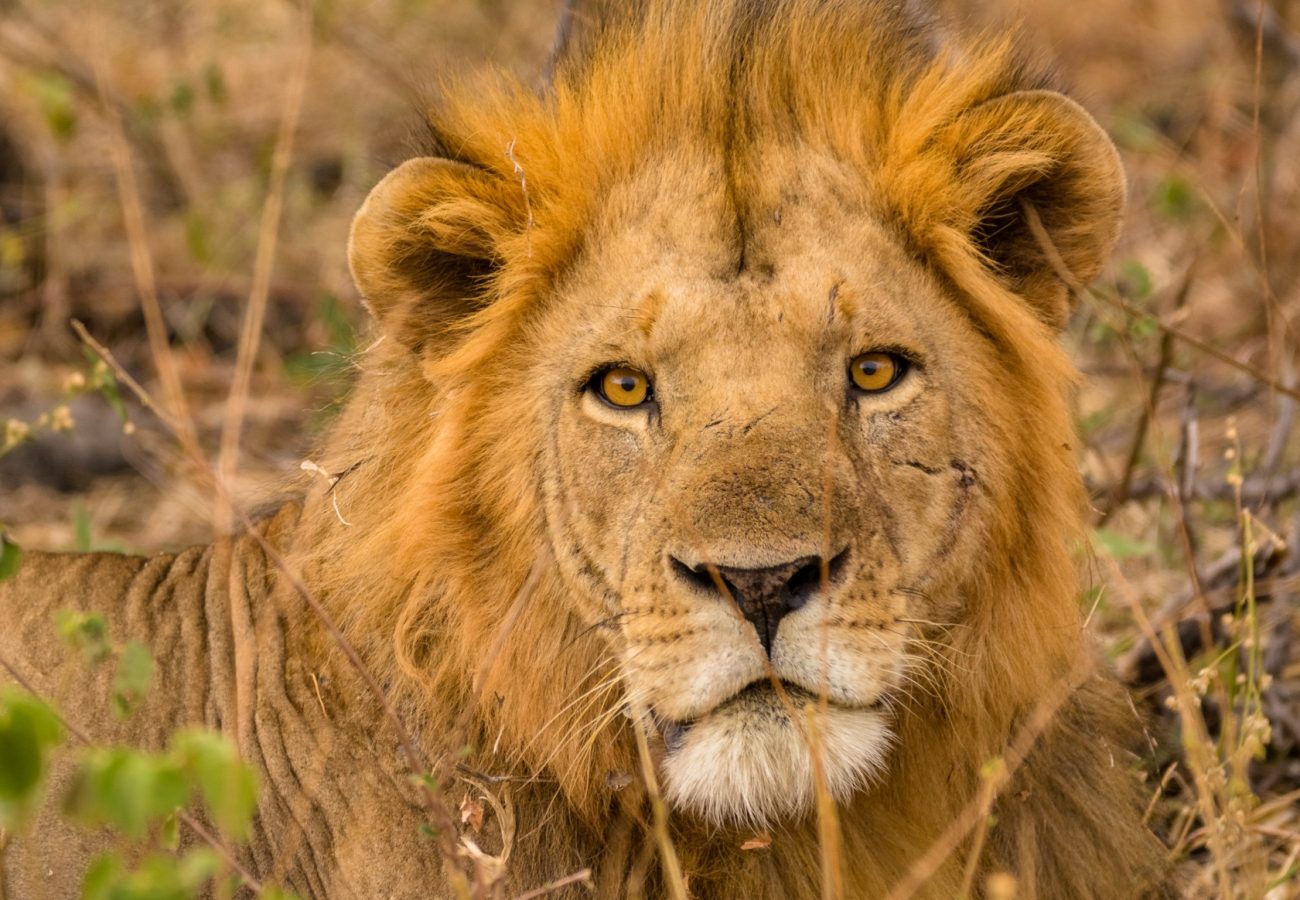
YOU CAN HELP
Help protect this key lion population and raise awareness about human-lion coexistence by adopting a Meru lion pride.
Every action counts, because when these apex predators thrive, our wild ecosystems thrive too.