
Indonesia Bans Elephant Riding in Zoos
Born Free welcomes the Indonesian Ministry of Forestry’s decision to officially end elephant riding activities at all conservation institutions across the country
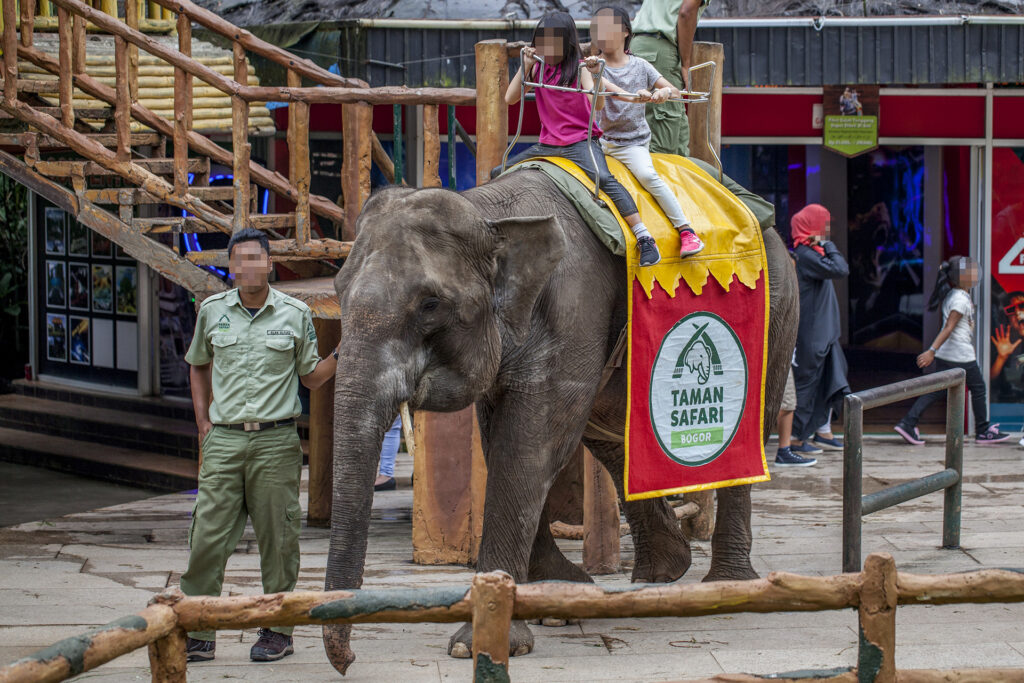
An elephant ride at Taman Safari (c) Aaron Gekoski
For decades, elephant riding has been promoted as a harmless tourist attraction across parts of South-East Asia. However, such interactions have long compromised the physical and psychological well-being of these highly intelligent and sensitive animals, as well as resulting in the death and injury of tourists. Chris Lewis, Captivity Research & Policy Manager at Born Free, reports.

Chris Lewis, Captivity Research & Policy Manager
Elephants are not designed to carry heavy loads on their backs. Their spines are not adapted for prolonged weight-bearing, especially when saddles, platforms, and multiple riders are involved. Over time, this causes chronic pain associated with open skin wounds and pressure sores, vertebral damage and muscle degeneration, leading to long-term health complications including arthritis and lameness.
Trekking elephants may also suffer from prolonged exposure to direct sunlight, have limited access to drinking water, and may develop foot problems from repeated walking on hard and hot surfaces while carrying heavy loads.
Elephants may also be forced to lie in rivers for hours at a time or stand chained, while paying tourists bathe or feed them and pose for photographs. Such practices will be allowed to continue at present, including in facilities that have officially ended their elephant riding programme.
In order to ‘tame’ elephants for close human contact and their use in tourism, they may routinely undergo abusive training regimes. In many facilities, young elephants are subjected to harsh methods to break their spirit and enforce obedience. This process usually involves the separation of young elephants from their mothers – a process which in itself is extremely stressful. A series of horrific acts are then inflicted upon the terrified animal, such as binding with ropes or chains; confinement in a small crush cage; beatings; and food and water deprivation.
Even in facilities that claim to use “gentle” methods, elephants are frequently confined, restrained, and denied the freedom to roam, socialise, and forage as they would in the wild. These conditions can lead to stress-related behaviours, psychological damage, and reduced life expectancy.
Despite the ban, it is understood that it does not signal the immediate end to elephant riding by tourists in Indonesia, with some local tour operators still able to advertise and sell elephant riding experiences or ‘safari rides’. In addition, strong enforcement, regular monitoring, and clear welfare standards for those elephants that remain in captivity are needed to ensure any ban is meaningful.
Indonesia’s decision reflects growing public awareness that animal welfare matters, with many tourists seeking to engage in ethical wildlife tourism. We call on tourism operators, policymakers, and the public to support this transition and reject harmful practices that exploit wildlife across the globe.
Born Free strongly advises people not to ride elephants or to participate in other close contact activities with elephants or any other wild animal.
If you are concerned about the welfare or treatment of a captive wild animal you’ve seen being used in an encounter or interaction, please speak out and report it to Born Free via our ‘Raise the Red Flag’ online form.
Find out more about close encounters and interaction with captive wild animals: