
Incredible rescued leopard update from South Africa
Hold the front page. Mowgli the rare melanistic leopard, rescued six years ago in a dramatic emergency operation, has been seen on his viewing platform. So why are we so excited?
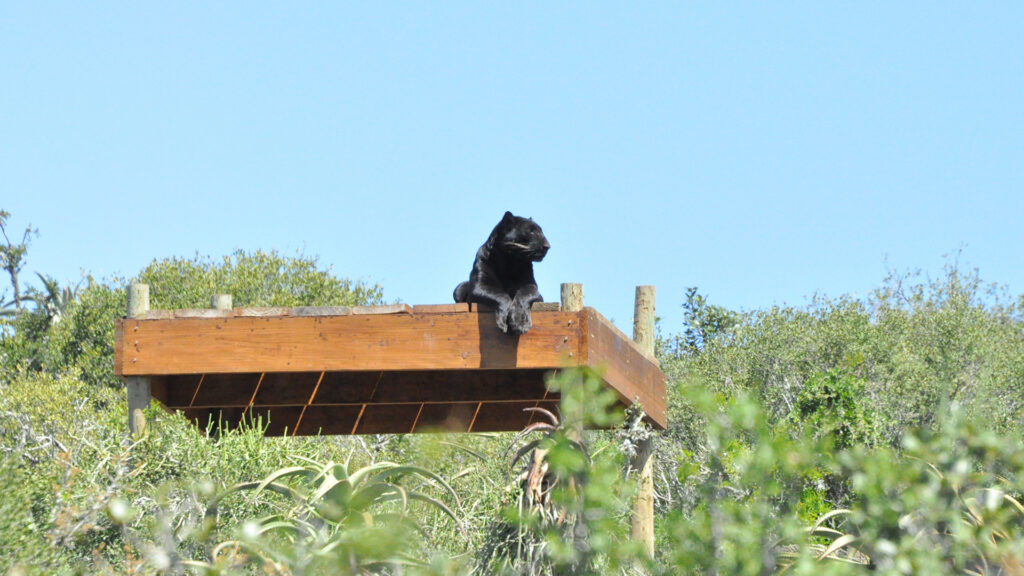
Mowgli seen enjoying his viewing platform for the first time
Something extraordinary has happened at our big cat sanctuary, at Shamwari Private Game Reserve, in South Africa. We’ve been eagerly waiting this news since 2020: our colleague Rotondwa Sithagu, Born Free’s Community Engagement Coordinator, explains more.
“I was on my lunchbreak and took a walk around our tranquil sanctuary. To my amazement I spotted Mowgli, in plain sight, happily lying on his viewing platform and clearly enjoying the sunshine. Helped by a downward wind, I slowly inched forward to take these pictures.
“This is big news, the very first time we’ve seen Mowgli out on his deck in the daylight. He seemed relaxed, though a little timid of sudden movements. Despite not having seen me, he kept scanning around.
“Something had caught his interest, maybe Angela, the lion rescued from a circus in France, was close to her fenceline in her enclosure next door. I moved a little closer and Mowgli spotted me, but remained on the deck for a few minutes, before jumping down.”
Six years ago today, racing against the clock before a Covid-19 country lockdown, Born Free rescued two leopards from shocking enclosures at a failed zoo, and brought them to our sanctuary. Shamwari’s Head of Wildlife and veterinarian at the time, Dr Johan Joubert (who retired in 2026), and Born Free’s Animal Care Manager Glen Vena made the 855-mile dash to collect Mowgli and a second leopard, Zeiss, from Bloemfontein Zoo – in South Africa’s capital city.
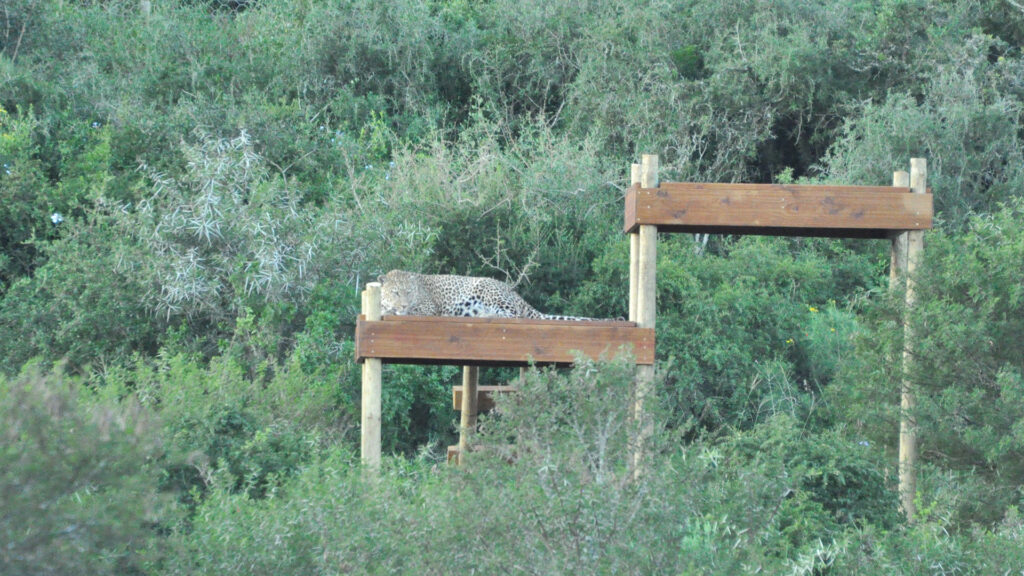
Zeiss has been seen enjoying his viewing platform too
Tragically, many animals had been left to starve at the closed zoo. But, Born Free worked with other organisations including our friends at Panthera Africa Big Cat Sanctuary and Bloemfontein SPCA, and together we were able to ensure that all the remaining animals – including reptiles, monkeys and hyenas – were rehomed and cared for.
Mowgli is a melanistic leopard, also known as a black panther, with ebony spots on dark fur, while Zeiss is a more typical yellow. Born October 2018, Mowgli was just 18 months when rescued in March 2020, while Zeiss was six years old. After all they had endured, the pair were understandably very nervous, especially Mowgli. In the wild, leopard cubs can stay with their mother until they are two years.
Leopards are naturally solitary and, safe at Shamwari and supported by their wonderful Leopard Family adopters, Mowgli and Zeiss could explore grass slopes, shady shrubs, indigenous trees and dense undergrowth in separate spacious enclosures. Big cats appreciate a good view of their surroundings, so wooden platforms allow all our rescued leopards, as well as lions, at Shamwari to view neighbouring hills.
But until now, we’ve never seen Mowgli climb onto his deck, and our Animal Care Manager Glen Vena is over the moon. “This is a precious moment, and we are so thrilled and a little shaken at the same time. It’s been such a long journey for Mowgli.
“Over the years, both leopards have settled in well. Zeiss became visibly more relaxed, and is often seen lounging peacefully in his favourite shady spots, or exploring his enclosure. But Mowgli has remained our most private and elusive cat in our care.
“We mainly monitor his progress thanks to cameras discretely positioned around his enclosure, and ensure his space remains a haven of calm. His well-being has always been our priority, which is why we’re so very happy after years of our gentle patient care.”
The leopards enriched life at Shamwari is such a contrast to their deprived existence at the zoo. Mowgli and Zeiss will never be able to fend for themselves, so will always rely on us.
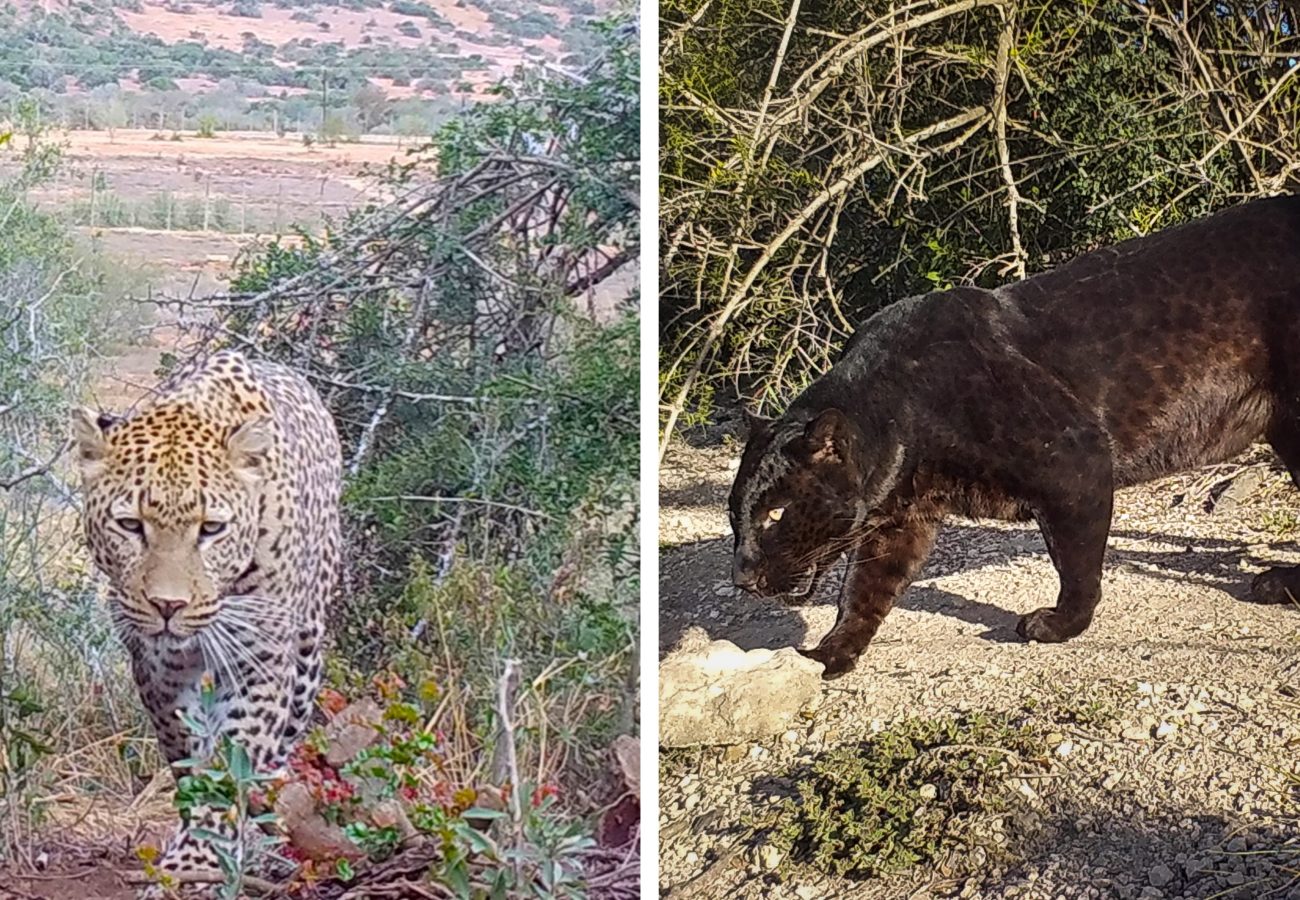
You can help Mowgli and Zeiss
By adopting our Leopard Family, you can help provide the lifetime sanctuary care Mowgli and Zeiss need.