
How tech saves tigers in India
To help secure vital corridors, and ensure a safe future for the world’s biggest cat, our partners in Central India are using AI, drones, and cutting-edge new camera traps.
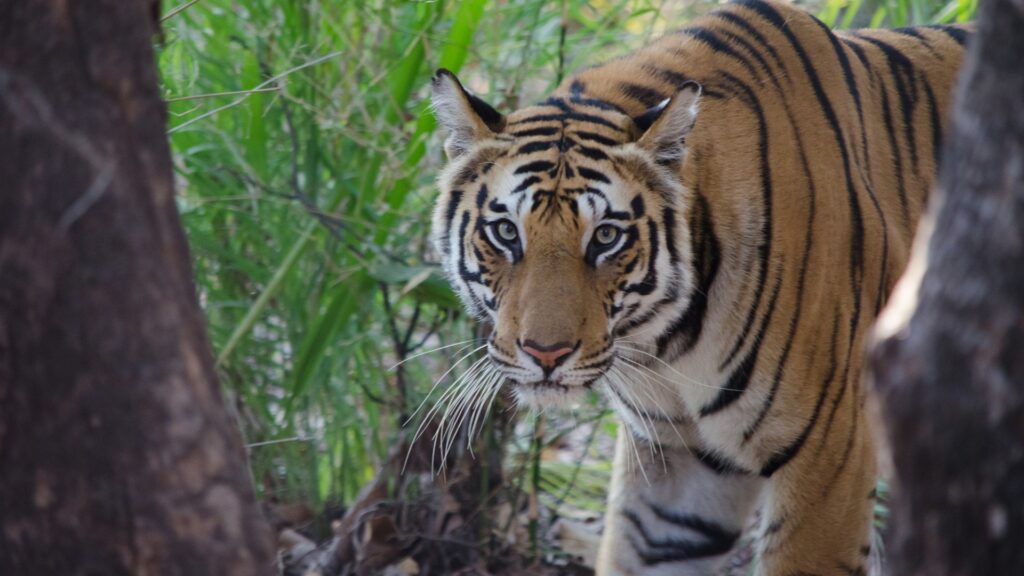
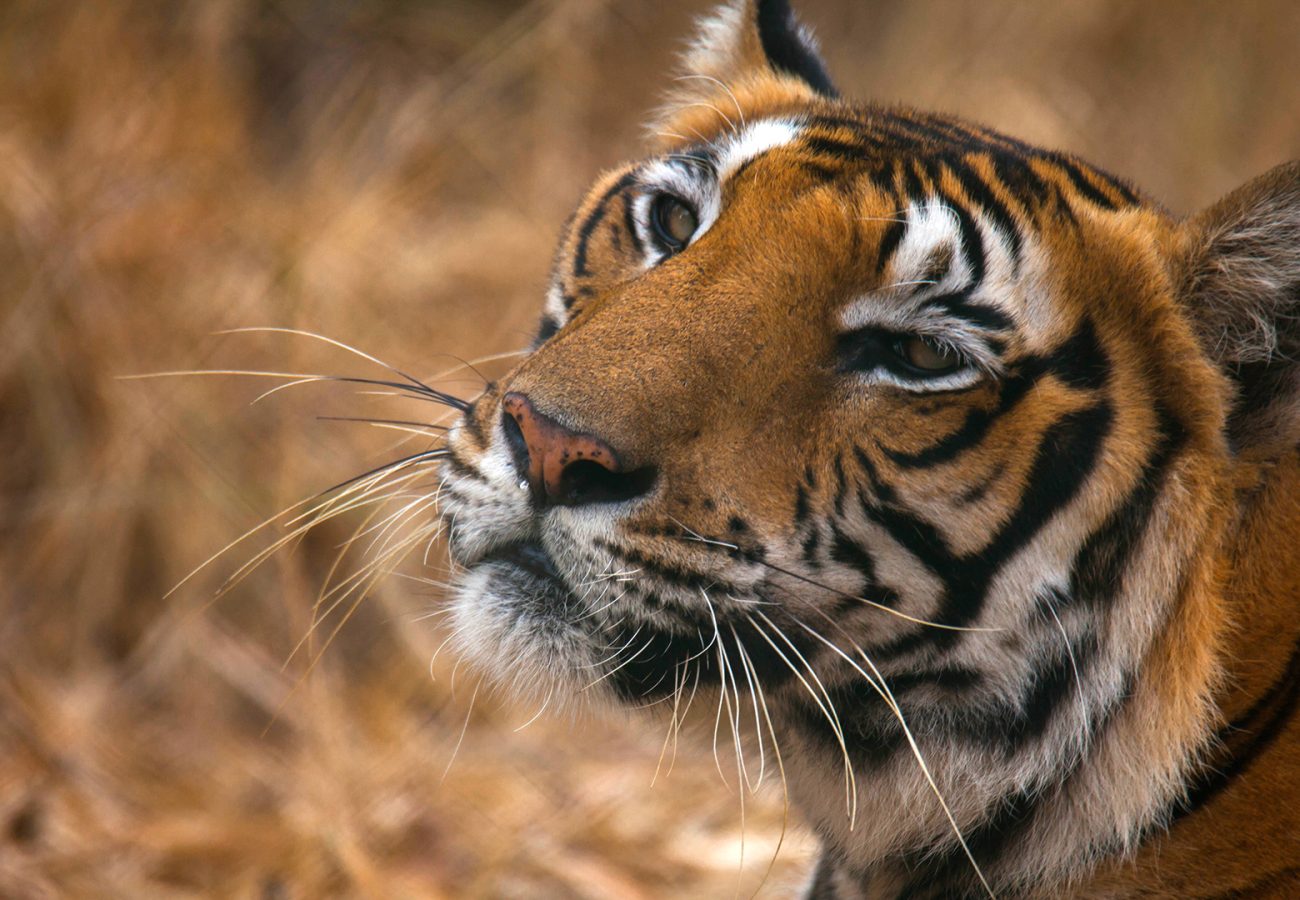
A wild tiger (c) Yashvardhan Dalmia
India is a crucial home to Bengal tigers, with the Satpura-Maikal mountain range in Central India providing one of the world’s most critical contiguous tiger habitats.

Yashvardhan Dalmia
“Ensuring this vast landscape remains a safe space for these big cats to roam is vital to their survival,” explains our consultant, Yashvardhan Dalmia, who coordinates the Satpuda Landscape Tiger Partnership. “This means not only protecting tigers, but also safeguarding prey species, their habitats, and the human communities that live alongside them.”
The Satpuda Landscape Tiger Partnership (SLTP) is a successful network of nine Indian organisations, working collaboratively across this vital but vast terrain, brought together by Born Free and Oxford University’s WildCRU team to support tiger conservation. A key partner in this alliance, the Satpuda Foundation, has been working on the ground with communities, forest departments, and local stakeholders since 2001.
Born Free proudly supports the Satpuda Foundation’s Landscape Monitoring Unit (LMU). This specialised unit works to support communities during human-wildlife conflict events, strengthen the frontline capacity of the Forest Department, and professionalise the local eco-tourism sector.
A high-tech edge for frontline protection
To meet the challenges of an increasingly fragmented landscape threatened by rapid infrastructure development, the LMU has significantly upscaled its operational capabilities, with 104 advanced new camera traps and three drones. These devices will play a vital role, contributing to critical landscape and wildlife monitoring (see below).
“This transition toward high-resolution, data-driven conservation is a milestone for our landscape,” explains Mandar Pingle, Deputy Director of the Satpuda Foundation. “By deploying camera traps and drones, we aren’t just filling our servers with data, we’re providing our frontline governmental partners – the Forest Department – with the analytical edge they need to protect the wilderness. Our dedicated field team’s groundwork has made this important project possible.”
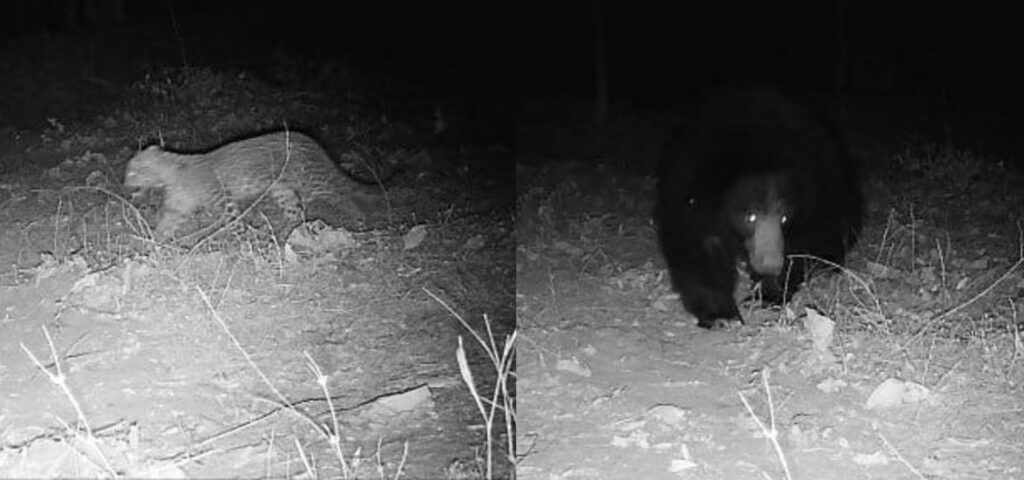
Images of a leopard and a sloth bear taken using a camera trap
Real-time intelligence & AI integration
These new camera traps are able to transmit data instantaneously, combining standard motion-sensing photography with built-in wireless technology. Rather than relying on manual ‘memory-card collection’, as is often the case with remote camera traps, the images are fed directly into a cutting-edge AI model specially developed for the Satpuda Foundation by Harrier Systems Pvt Ltd, Nagpur.
The AI is custom-trained to rapidly and accurately identify critical large carnivores – including tigers, leopards, and sloth bears – who are most likely to be involved in negative interactions with humans and livestock. When a tiger is captured on the camera traps for example, the LMU will be alerted immediately and can respond as needed.
“We are currently in the exciting testing phase of this AI-driven, real-time alert system,” continues Mandar. “Once fully operational, this will mark a quantum leap in our ability to respond to field data instantaneously.”
Beyond conflict mitigation, this real-time data allows the team to monitor wildlife movements through critical ‘ecological bottlenecks’. The cameras are helping researchers observe how animals use underpasses on one of the national highways to move between the buffer zones and territorial forest corridors.
When individual tigers are logged by the system, they are also cross-referenced and identified using the official database from the 2020-21 ‘All India Tiger Estimation’ (AITE).
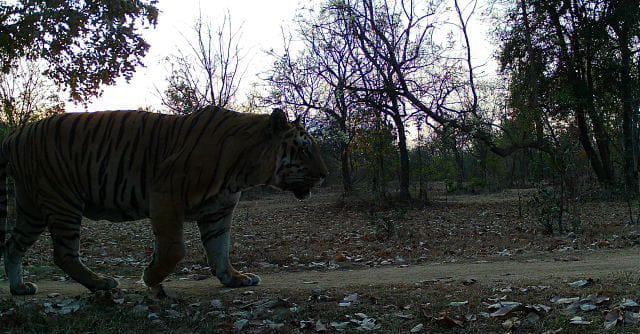
A an image of a tiger from the camera trap
Groundwork, collaboration, and community trust
Technology is only as effective as the human network supporting it. The Satpuda Foundation field team is actively providing technical and strategic support to the frontline forest staff.
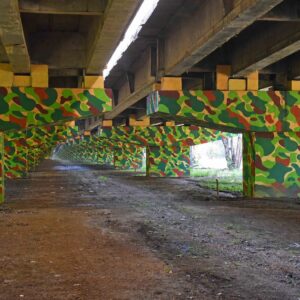
Underpasses help wild animals move safely between areas
By training forest guards to integrate drone imagery into routine foot patrols and wildlife monitoring, they are able to better understand the landscape and respond more quickly. On rare occasions, both aerial and ground teams can be mobilised to monitor and safely rescue ‘problem animals’, those involved in multiple conflicts or animals suffering from severe, debilitating injuries.
Local Range Forest Officers have taken a keen interest in the initiative, collaborating actively with the LMU team to optimise camera placements. This, alongside acceptance by the local community has helped the project progress quickly.
“The true triumph lies with the community,” says Mandar. “Their choice to treat this equipment as a communal asset rather than a target is the most powerful endorsement we could receive. It proves they recognise that these cameras are, in fact, sensors for their own safety and prosperity.”
By combining community trust with corporate sponsorship and state-of-the-art software development, the Satpuda Foundation and Born Free are proving that the future of tiger conservation lies in intelligent, cooperative coexistence.
Footnote
The addition of camera traps and drones to the LMU was made possible thanks to Corporate Social Responsibility funding raised from Praj Foundation, Pune (contributing two drones and 66 cameras) and Persistent India Foundation, Pune (contributing one drone and 38 cameras).
WANT TO HELP PROTECT TIGERS?
Adopting a tiger helps support the lifetime care for rescued tigers in India, in spacious, natural enclosures with the expert care they need. Your support also helps protect tigers in the wild from poaching, the illegal wildlife trade, habitat loss and human-tiger conflict.