
GCSE Natural History confirmed to move ahead
Four years ago, we told you about a landmark new qualification in natural history, for pupils aged 14-16 years. But what happened next, why is it taking so long, and why was the GCSE so important in the first place?

(c) Shamwari Private Game Reserve
With Year 9 pupils countrywide currently busy choosing their GSCE subjects for this September, sadly Natural History isn’t yet an option for them.
Announced in April 2022, a brand new GSCE in Natural History had been formally agreed by the Department of Education. But, despite a curriculum being drawn up, the project then stalled, with delays including the General Election and change in government
Thankfully, the Department of Education has now reconfirmed plans for the new GCSE to move ahead, announcing a forthcoming public consultation. Whilst we await confirmation of timings, and continue to support the UK exam board developing the project, our Head of Community Engagement, Laura Eastwood, considers the impact of the proposed new GCSE.
Given the green light back in April 2022, after much work by both wildlife groups (including Born Free), advisors and MPs alike, the Natural History GCSE will allow students to develop a rich understanding of the natural world, through topics including local wildlife and ecosystems.
Despite delays in making this GCSE available to students, late last year the government reconfirmed plans to continue work on this new qualification, which will be available through Cambridge OCR, the leading exam board, once complete.
Why is this GCSE is important?

Laura Eastwood
My journey to a wildlife-related career did not get off to a very directional start. But, I was lucky. I had a fantastic biology teacher and a great university experience, followed by a physically challenging, yet deeply meaningful, volunteer placement with the National Trust.
So, what would a Natural History GCSE have given me if available when I was at school? I suspect it would have been life changing. Without doubt, it would have sent me down an ecology and conservation path far sooner, and with much greater direction and more knowledge of environmental issues.
However, this GCSE will not only benefit people like me who end up working for wildlife. Environmental education has been proven key to expanding all students’ understanding, both of humanity’s place within the natural environment, and the importance of wildlife to maintain these wild habitats (i). All young people should have access to this vital opportunity, no matter which career they go on to choose.
Transforming understanding
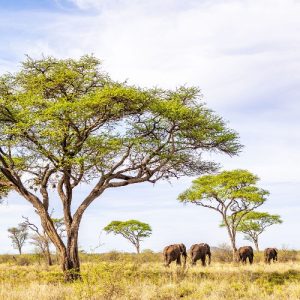
(c) Peter Ndung’u
This exciting and timely GCSE will help to transform general understanding of the natural world, both locally and globally. It will help create a generation of students who truly understand what sustainability means and why it’s so important.
There is also the potential to increase capacity for future conservation efforts, as students become motivated by their own ability to make a meaningful contribution to conservation, and their increased understanding of the relevance and impact of STEM subjects (Science, Technology, Engineering, and Mathematics) in the real world (ii).
This formal platform would also start to address the common misconception amongst young people that their peers don’t care about making a difference for the natural world. This values-perception gap can result in young people not taking the action they would otherwise wish – or be able – to take (iii), and perhaps even internalise feelings of powerlessness and distress.
Having a GCSE option which focuses on these crucial subjects could offer an opportunity for young people to refocus any feelings of anxiety linked to the state of the natural world. This would not only build a better connection to nature – associated with increased wellbeing and educational outcomes (iv), but also help students see they are an essential part of the solution.
Not just for students
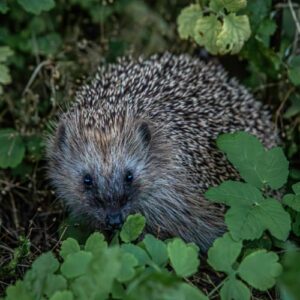 As an international wildlife charity, Born Free has campaigned to keep wildlife in the wild for over 40 years, focusing on the protection and care of some of the world’s most iconic, yet threatened species, in their natural habitats.
A GCSE which teaches about both species and habitats – their interactions, interconnection and the vital role wild animals play in helping to maintain their ecosystems – could not just be transformative for students, but also the country. As one of the most nature-depleted countries in the world, the UK has a long way to go to protect and restore our natural habitats.
In addition, the global climate-nature crisis we are currently immersed in has to be a defining moment in history. Our reaction, how we address the crisis, and move toward a greener, safer future, will impact all life on earth, for generations to come.
Unpredictable and extreme weather
I appreciate this might seem an over-dramatisation, but the reality is in front of us. From flooding to record-high temperatures, droughts and wildfires, the impacts of the dual climate-nature crises are being undeniably seen today, with increasingly frequent extreme weather events and a million species at risk of extinction (v).
But, are these enough to convince us all that radical international change is needed? With sea levels and global temperatures predicted to rise, leading to vast human displacement forecast to occur in the lifetime of our current secondary school students, I would argue we can no longer sideline nature within our conversations, our decision making, or our education system.
In light of the importance of this new GCSE and in anticipation of wider consultation in the coming months and years, Born Free’s Community Engagement Team has been contributing to an OCR panel around the practicalities of implementing a course such as this and will continue to offer our support as the process progresses.
References:
i Salazar et al., 2024, Chanvin et al., 2023
ii NEEF, 2024
iii Global Action Plan, 2021
iv Natural England, 2016
v IPBES Global Biodiversity Assessment, 2019