
Football mania and monkey madness in Morocco
As the 2025-26 African Cup of Nations (AFCON) football tournament reaches its quarter finals in Morocco, Born Free continues to call for compassionate action from the Moroccan authorities to end wild animal exploitation and suffering.

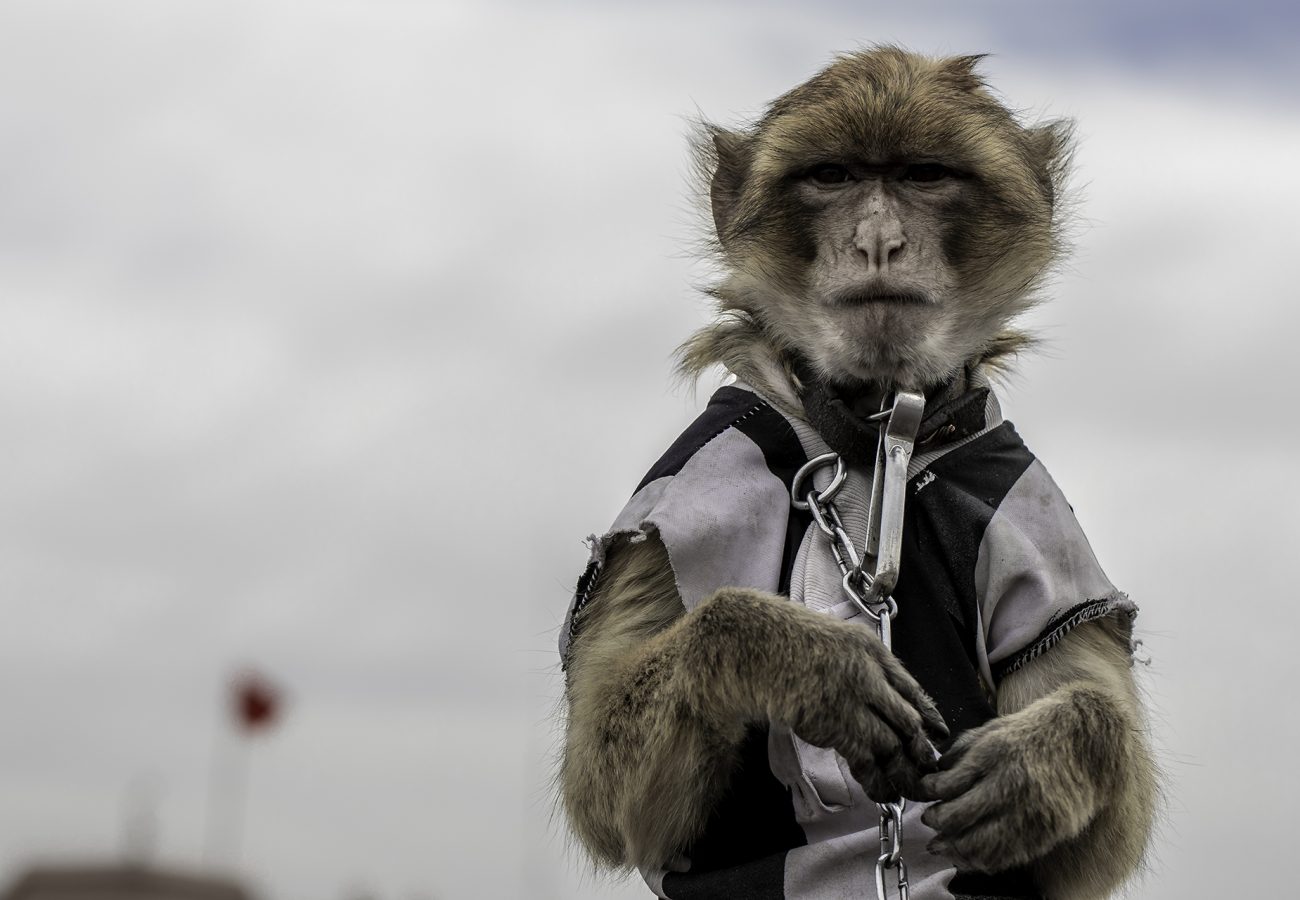
Endangered Barbary macaque monkeys continue to be exploited for tourist photos in the busy marketplaces of Marrakesh. Born Free calls on supporters to take action to stop this mistreatment of such intelligent, sensitive animals.

Sarah Jefferson, Born Free Policy Team
“Hundreds of British and international tourists have sent Born Free reports via our Raise the Red Flag programme, after witnessing the distressing exploitation,” explains Sarah Jefferson, Born Free’s Captivity Campaigns Information Coordinator. “Captive Barbary macaque monkeys are touted as photo props in the bustling Jemaa el-Fna market square in Marrakesh’s Medina quarter.
“It’s grotesque, but these macaques are typically dragged around by a chain around their neck and frequently dressed up in clothes. These include football shirts of players currently taking part in the AFCON tournament hosted by Morocco, such as Senegalese left winger Sadio Mané.” (See photo above.)
Macaque handlers try to lure in tourists to pose with their macaques for a souvenir photo in return for money. When not in use, these exploited monkeys are typically confined to, and transported in, small, wooden crates.
Morocco’s hosting of major sporting events such as AFCON and the FIFA World Cup in 2030 inevitably leads to increased tourist numbers with fans combining their love of football with taking in the local sights.
Media reports have indicated officials are keen to ensure that the focus is not only on football, but also on how the tournaments can support the country’s ‘wider tourism goals’ and ‘strengthen Morocco’s position as a global destination’. However, the perception of poor animal welfare associated with the exploitation of Barbary macaques and other animals in Marrakesh is likely to contribute to a negative image of Morocco.
Native to the Atlas Mountains in Morocco and Algeria, Barbary macaques are classified as ‘Endangered’ in the wild. In 2016, in recognition of the increasing threat of extinction, they were given greater protection by the Convention on International Trade in Endangered Species (CITES). But what has that changed for macaques?
Born Free moderated a side-event at the recent CITES CoP in Uzbekistan, which highlighted the Barbary macaque as an example of successful species conservation resulting from a combination of increased protection against international trade (following the 2016 uplisting of the species to CITES Appendix I) and domestic legislation and enforcement efforts, which have largely curbed the capture of macaques for the international pet trade.
However, the exploitation of individual captive macaques for use in tourism in Marrakesh has sadly been allowed to continue. This is despite the majority of tourists surveyed stating that they thought the use of macaques as photo props should be illegal, with many concerned for the welfare of the animals and their own personal safety. There have been numerous reports of tourists being injured by these stressed macaques, including a woman who was recently bitten and taken to hospital for treatment and vaccination against possible infectious diseases that can spread from monkeys to humans.
The exploitation of macaques as photo props is claimed by some to be a ‘traditional’ activity. We don’t believe that tradition should ever be used as an excuse for animal suffering. There is now far greater understanding of the welfare requirements of wild animals; the kind of exploitation that continues to take place in Marrakesh belongs in the past.
Born Free representatives have visited Marrakesh several times over the last 11 years. Our latest visit in 2025 revealed that the situation sadly hasn’t changed. For many years, Born Free has been calling on the Moroccan environmental and tourism authorities, along with the Mayor of Marrakesh, to bring these horrific and outdated activities to an end.
We’ve also reached out to the Moroccan Ambassador to the UK, the British Ambassador in Morocco, and the All-Party Parliamentary Group on Morocco. Frustratingly, we have received little indication to date that officials are willing to address this blatant animal cruelty.
You can help
You can help us to persuade the relevant authorities to continue promote Morocco’s rich cultural history without exploiting wild animals and inflicting animal suffering.