
Flashing lights protect livestock from predators
To help keep livestock safe in Kenya, conservationists and pastoralists are getting innovative! Predator deterrent lights are proving successful in both the Meru and Amboseli landscapes.
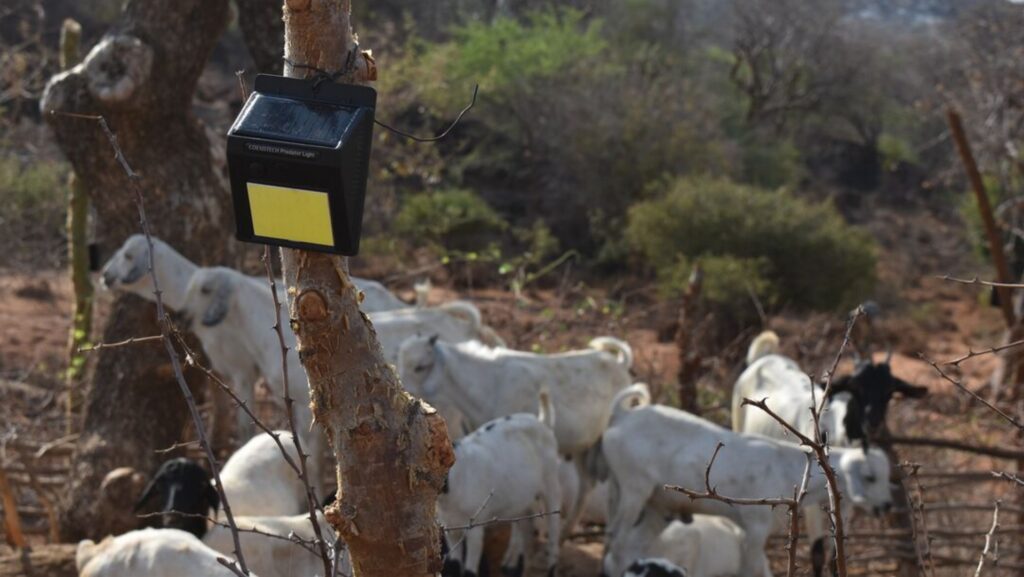
Predator Deterrent Lights protecting goats in Meru (c) Born Free
As wild habitats and species come under continued pressure in Kenya, people and wildlife can come into increasing conflict. With prey numbers on the decline, predators may look for alternative food sources, and livestock can offer an easy meal for a hungry hyena, lion or leopard.
Born Free’s Kenyan team works closely with pastoralists in both the Meru and Amboseli landscapes to help them keep their livestock safe. If predators attack and kill livestock, people may retaliate, to protect themselves or their livelihoods. Many predator populations are already under threat. So, reducing human-wildlife conflict is vital to secure a future for iconic species such as lions, leopards and hyenas.
One simple method used to deter predators from bomas (livestock enclosures), are Predator Deterrent Lights (PDLs). These small, solar-powered flashing lights are installed around bomas, and in the darkness of night, will flash intermittently, cleverly mimicking someone patrolling with a hand torch.
A lion or other predator would be deterred from targeting livestock if there was a risk that people were awake and patrolling. Despite living in increasingly close proximity, both predators and people like to keep their distance from each other!
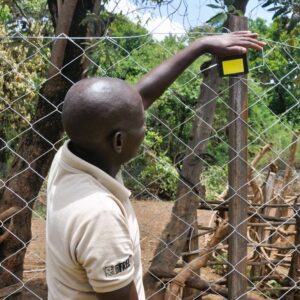 In June 2023, our Pride of Amboseli team installed 171 PDLs in bomas around Amboseli. This formed part of a trial, and after 18 months we checked how they were doing. “These lights are very effective,’’ enthuses Boi, one of the PDL beneficiaries in Amboseli. “I have not lost any livestock to predation since they were installed.”
“We learned a lot from this first trial,” explains Kisimir Saibulu, Pride of Amboseli Project Officer. “Assessing the effectiveness of any predator deterrent tool is vital to ensure we are providing communities with effective solutions to mitigate human-carnivore conflict. In this trial we noted how important the distance between each PDLs is. For our next installations, we are reducing this distance, ensuring there are no large gaps between PDLs on a boma.”
Asked whether an increase in lion population is a good thing, Melita, another PDL beneficiary in Amboseli shared: “Provided with proper coexistence strategies for living alongside lions, the increase in the lion population is not something that worries me.” This highlights how important working closely with the community and providing effective mitigation tools is to lion conservation.
The Pride of Amboseli and Pride of Meru teams installed an incredible 480 new PDLs each across the two landscapes over the last year. And they won’t stop there – both programmes will continue distributing the lights to livestock owners in the coming year.
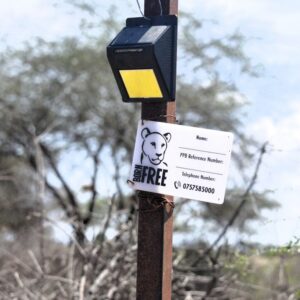 “Last year, we installed PDLs in the two counties reporting the highest numbers of ‘Human–Carnivore Conflicts’ around Meru National Park,” explains Jeremiah Kimathi, the Pride of Meru Project Officer. “This installation formed our latest PDL trial which aims to assess how many PDLs per boma is most effective, how placement can influence their effectiveness and which brands of PDL have more impact.
“Across all trials, communities report that PDLs significantly reduce predator intrusions, especially from hyenas, which is great news. When conflict incidents are lower, tolerance toward wildlife improves. PDLs are now widely accepted by the communities as an effective livestock-protection tool and we are frequently asked to install even more!”
We will continue supporting communities to live alongside wildlife, providing them with effective tools to reduce human-wildlife conflict, ensuring both livestock, lions and other carnivores remains safe.
HELP US WORK WITH COMMUNITIES TO PROTECT WILDLIFE
Our Conservation Programme aims to directly address the most critical threats facing the world’s threatened species, while working with communities that live alongside them to reduce human-wildlife conflict.