
Clamping down on wildlife crime
From badger baiting, to persecuting birds of prey, the UK needs to do more to tackle wildlife crime, so we co-hosted a vital event at the Labour Party conference to highlight the issues.
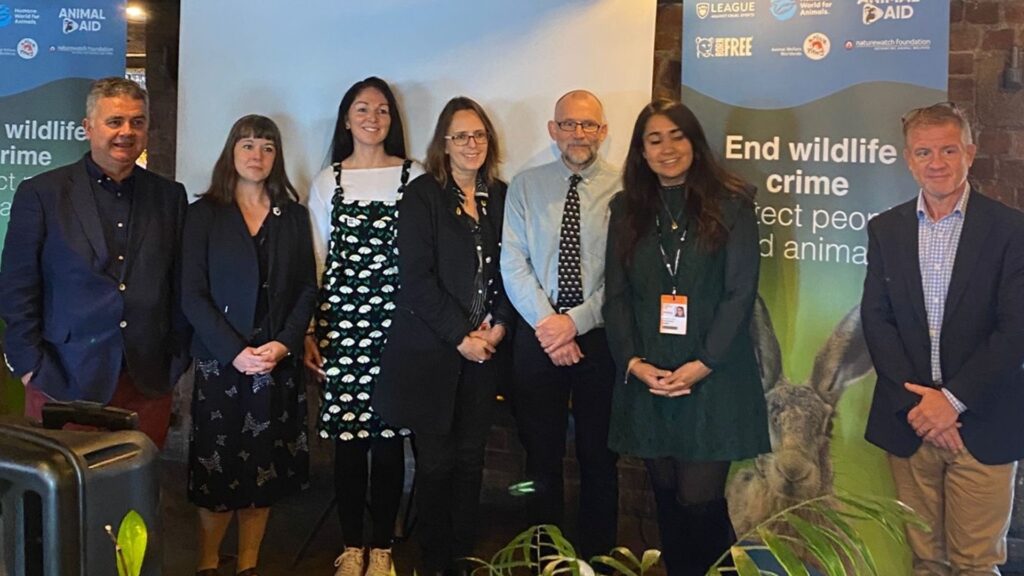
Born Free’s Dominic Dyer and Dr Mark Jones with speakers at the event
Born Free together with the League Against Cruel Sports, Four Paws UK, Humane World for Animals UK, Animal Aid and NatureWatch Foundation organised a reception at the Labour Party Conference in Liverpool on Tuesday 30th September.
The event focused on protecting wildlife and rural communities from crime and anti-social behaviour in the countryside, and was opened by Dominic Dyer, Born Free’s British Wildlife Advocate, who is also Chair of the Wildlife & Countryside Link, Wildlife Crime Group.
Dominic spoke of the need to recognise the growing problem of wildlife crime in the countryside, its impact on both people and animals, and the substantial evidence linking wildlife crimes and wider criminal behaviour in society. A short film narrated by naturalist, author and broadcaster Chris Packham was then screened, to show the extent of wildlife crime in the countryside and its impact on rural communities.
Chief Inspector Kevin Kelly, Head of the National Wildlife Crime Unit, presented the latest data on the link between wildlife crime and human crime, including growing evidence of strong links between wildlife criminals and domestic violence, drugs and firearms offences.
Ruth Jones MP called for politicians to recognise that wildlife crime often leads to threats, intimidation, trespass, damage to property, harm to livestock and domestic pets and in some case violence against people.
Jim Clarke from NatureWatch spoke of the need to make wildlife crime a recordable offence and bring laws for cruelty to wild animals into line with domestic animals, resulting in higher fines and longer custodial sentences for wildlife criminals. He also spoke of the need for more training and resources for the Police to make tackling wildlife crime a higher priority.
Born Free’s Head of Community Engagement, Laura Eastwood, closed the event with a focus on the growing problem of young people becoming involved in cruelty towards wildlife, and sharing images and videos on social media. She emphasised the importance of engaging with young people to make them aware of wildlife protection laws, and how a criminal record for wildlife crime could have a serious impact on the rest of their lives, explaining how Born Free and other wildlife protection organisations can play a vital role in teaching young people to value and protect wildlife and the natural world, and steer them away from exploitative and cruel behaviour.
Following on from the event, Born Free will continue to work with our partners to ensure that the UK government recognises wildlife crime as a serious crime affecting animals, the wider environment, and people, and is closely connected to other types of serious criminal activity. We are calling for:
- All wildlife crimes to be notifiable and recordable
- Permanent funding for the National Wildlife Crime Unit
- More training on wildlife crime for police officers and staff
- More specialist wildlife crime officers
- Tougher penalties for wildlife crimes
- Comprehensive sentencing guidance for judges and magistrates
We are also calling for the incorporation of empathy for animals, as well as education around the importance of nature, including the damaging impacts of wildlife crime and other threats facing wildlife, into the school curriculum.