
Cecil: the Lion and the Dentist
Born Free responds to the two-hour documentary film broadcast on Channel 4 in February 2026.
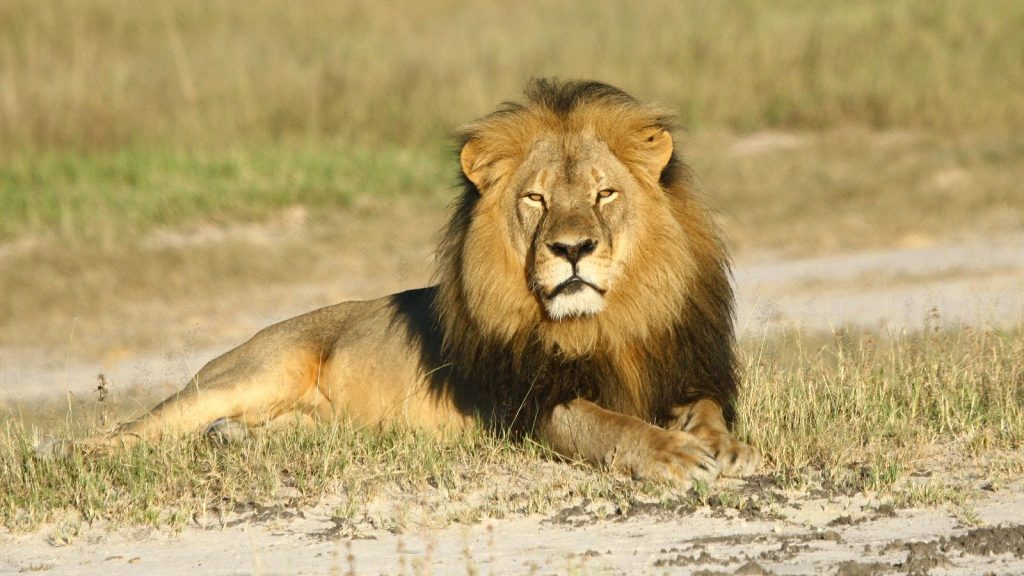
Cecil the lion (c) AJ Loveridge
On 19th February, Channel 4 aired the Film 4 production “Cecil: The Lion and the Dentist”, which told the story of the brutal slaughter of Cecil the lion in Zimbabwe in 2015, by Minnesota Dentist Walter Palmer. Cecil’s death sparked international public and media outrage at the time and has since been a central theme of campaigns by Born Free and others to end trophy hunting.
Who was Cecil and how did he die?
Cecil was 12 years old. In spite of his relatively advanced age for a wild male lion, he was still head of two prides and was widely revered because of his size and his distinctive dark mane.
While Zimbabwe allows trophy hunting of wildlife on private land, Cecil lived within Hwange National Park in which he was protected, and at the time of his death there was no quota for lion hunting in the area because hunters had previously been killing younger male lions and the population needed to recover.
However, a local professional hunter made arrangements for Cecil to be lured from the park to an elephant carcass, in order forWalter Palmer, a prolific trophy hunter whose preferred weapon of choice was a bow, to target him. In the event, Cecil was injured by Palmer’s first shot, and only finally killed several hours later.
The incident was discovered by researchers who had been following Cecil’s movements through a tracking collar. Palmer left the country soon after Cecil had been killed, leaving the professional hunter and trackers to deal with his carcass and attempt to hide his death by moving the tracking collar, which was later retrieved.
News of Cecil’s death spread rapidly, and resulted in international outrage and condemnation, leading to the arrest of the professional hunter and calls for Palmer to be extradited. Neither were convicted of the crime.
What does the documentary focus on?
The film centres around two characters: Brent Stapelkamp, who was part of the Oxford University team researching lions in Hwange at the time of Cecil’s killing and who was clearly deeply affected by it; and Theo Bronkhorst, the professional hunter who organised and coordinated the hunt for Walter Palmer, and continues to insist he did nothing wrong. Palmer himself by all accounts declined to be interviewed.
The film features footage of Cecil prior to the incident, who was a major draw for tourists from around the world who came to see and photograph the magnificent lion; alongside interviews with local community members and safari business owners, all of whom were clearly upset by his killing. It also features media coverage at the time, video footage of protests outside Palmer’s dental practice, and interviews with a US-based hunter who defends Palmer.
However, while the film touches on wider questions around the ethics, financial flows, corruption, animal welfare issues and ecological impacts associated with trophy hunting, it failed to explore these questions in greater depth, and no experts from conservation or animal welfare NGOs featured in the film. This seems like a missed opportunity.
In July 2025, Born Free co-organised an event at Westminster to mark the 10th anniversary of Cecil’s death and highlight the lack of real progress towards ending trophy hunting that has been made since.
The fact that Cecil features in a film almost 11 years after his untimely death is testament to the impact his killing had at the time. Nevertheless, trophy hunting continues virtually unabated. Since 2015, hundreds of lions and thousands of animals belonging to other species have been killed in Africa by trophy hunters. Even as the film aired, South Africa is once again proposing to reopen its doors to trophy hunters who want to target elephants, black rhinos and leopards, all of which, like lions, are threatened with extinction.
Cecil’s death will continue to be a poignant moment in the fight to bring the heinous, colonial, corrupt and morally bankrupt practice of trophy hunting to a permanent end.
To find out more about Born Free’s campaign to end trophy hunting, and how you can support our call to ban the import of hunting trophies into the UK, follow the link below.