
Born Free welcomes the outcomes of the IUCN World Congress
Dr Mark Jones explains why we’re calling for urgent and robust implementation of the outcomes, following the meeting in Abu Dhabi.
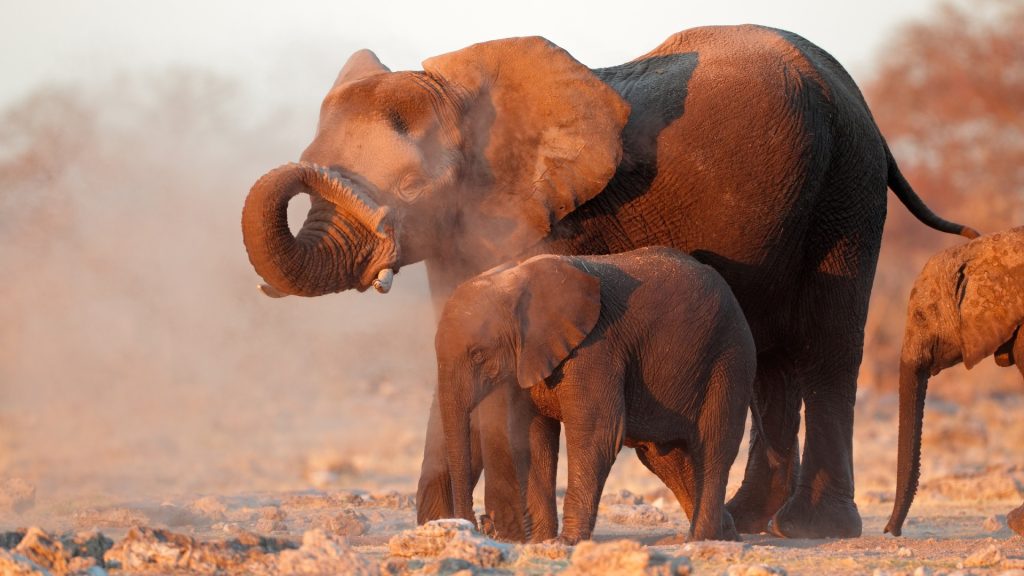
The International Union for the Conservation of Nature (IUCN)’s World Conservation Congress in Abu Dhabi took place between 8-15 October, and incorporated more than 1,000 events aimed at setting the conservation agenda for the coming decades.
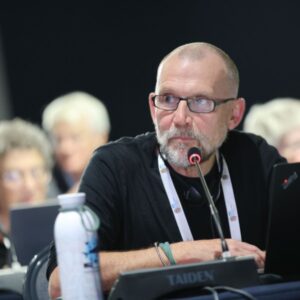
Dr Mark Jones at the congress (c) Anastasia Rodopoulou
Born Free’s Head of Policy, Dr Mark Jones, attended alongside an estimated 10,000 delegates from all over the world who took part in person or online, including decision-makers from government, civil society, Indigenous Peoples’ organisations, academia, and business.
At the meeting, IUCN members adopted a 20-year vision for “a just world that values and conserves nature”, alongside a four–year programme of work. New Council members were elected to take this work forward.
Alongside its renewed vision, the congress adopted the Abu Dhabi Call to Action, urging the global community, under IUCN’s leadership, to accelerate urgent and practical action across five key areas: reaffirming nature as the foundation of well-being; strengthening multilateralism; ensuring justice and inclusion; advancing knowledge and innovation; and scaling up resources for nature and climate action.
IUCN’s members also adopted over 140 motions on a wide variety of issues that had been developed and submitted by IUCN members over the preceding months for consideration. These now become Resolutions and guide the activities of the IUCN going forward.
Born Free submitted or co-sponsored the following motions, all of which were adopted:
- Crimes that Affect the Environment
- Mobilising the role of wild animals in ecosystems as a climate solution
- Updating the IUCN Policy on the Sustainable Use of Wild Living Resources
- Enhancing sustainable tourism practices through the incorporation of welfare standards for wild animals in captivity and in the wild
- Advancing the One Health approach for biodiversity, health and global cooperation
- Actions to avert the extinction of Rice’s whale (a critically endangered species of baleen whale endemic to the Gulf of Mexico)
- Recognising the crime of ecocide to protect nature
- Development of IUCN guidelines to effectively control the commercial pet trade in terrestrial wildlife
- Strengthening planning for preserving biodiversity through the use of Longevity Conservation approaches to ensure naturally age-structured populations of species
- Addressing the Direct Exploitation of Wild Species
Born Free also co-sponsored two motions which were presented and adopted under the rules concerning ‘new and urgent’ issues:
- Upholding science-based wildlife conservation in Switzerland (which focussed on the need to protect Switzerland’s delicate wolf populations from being targeted for culling)
- Reaffirming IUCN’s commitment to multilateralism and global cooperation
Among the Congress’s important achievements was the adoption of the motion recognising wild animals as allies in our efforts to mitigate the climate crisis. This motion, which was sponsored by 10 animal protection groups including Born Free, elevates the role played by wild animals in carbon capture, seed dispersal, nutrient cycling, and ecosystem resilience.
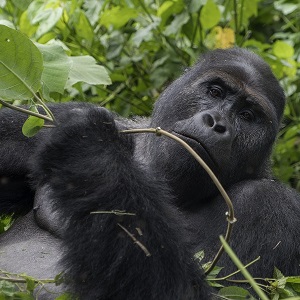
(c) www.christophermichel.com
The resulting resolution formally urges IUCN and its state members to integrate this recognition into international frameworks, including the UN climate agreement, and into national wildlife and climate policies.
Equally important was the adoption of the motion on advancing the One Health approach for biodiversity, health and global cooperation.
There is increasing recognition that human, animal and wider environmental health are intimately interconnected. The motion calls on the IUCN Council to develop a One Health strategy, integrating human and animal health considerations into all planning processes, in line with Born Free’s long‐held position that wildlife exploitation and biodiversity loss cannot be addressed in isolation from public and animal health.
Also welcomed is the adoption of the motion calling for global guidelines to regulate the commercial trade in wild animals for the pet market. Over 90% of IUCN members backed the motion, reflecting the growing recognition that the trade in wild animals as pets is not only a conservation issue, but also deeply impacts animal welfare, ecosystem integrity and the risk of future pandemics.
Yet challenges remain
While these outcomes are promising, Born Free has serious concerns about whether they will translate into real improvements on the ground.
First, many of the motions, resolutions and guidelines stop short of binding commitments.
Without strong, measurable targets, resources to back them, and measures to hold governments and others responsible, there’s a risk they remain aspirational. Important language about animal welfare, sustainability, indigenous rights and the integration of actions on climate and nature must be matched by implementation, enforcement, funding and transparency.
Second, measures to assess the effects of trade, exploitation and captivity on animal welfare and wider biodiversity remain weak.
Born Free has long questioned the claims made by zoos, aquariums and recreational hunters of their contribution to wildlife conservation. Yet these organisations continue to exert considerable influence at IUCN, exemplified in Abu Dhabi by the concerted efforts by trophy hunting groups to wreck the motion submitted by Born Free on the need to protect natural age structures within wildlife populations to secure their social and genetic integrity. Thankfully the IUCN membership saw through these efforts and adopted the motion largely unscathed, by an overwhelming majority.
Third, the resolution on the trade in wild animals as pets is only a first step.
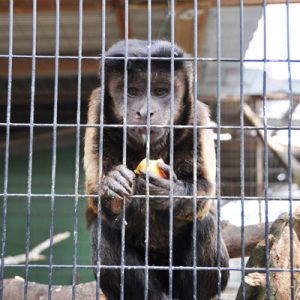
A captive capuchin monkey (c) Born Free
The trade is vast and regulating it globally is likely to be complex and highly contested. There must be strict rules around which species (if any) can be traded, welfare standards, transport conditions, risk of disease, and traceability. Born Free will be working hard with our partners to ensure the guidelines that emerge from the process that was agreed at congress are precautionary and welfare‐focussed, not simply trade‐friendly.
Finally, there is the perennial issue of finance.
How much money will be made available, who controls it, and will communities, Indigenous Peoples and local conservationists – all of whom often bear the cost of protecting wildlife – benefit equitably. If the financing mechanisms remain vague or underdeveloped, key promises risk remaining unfulfilled.
Looking Ahead: what Born Free hopes will happen
Born Free calls on IUCN member governments and partners to ensure that:
- The resolutions adopted are translated into international and national law and policy with clear implementation plans, milestones, transparent reporting, and accountability mechanisms
- Animal welfare is embedded in all relevant agreements, not as an afterthought, but as a central criterion for ensuring that wildlife trade, captive breeding, species reintroductions, and habitat restoration efforts, are conducted in ways that are ecologically sustainable, legal, and safe for animals and people alike
- Financial commitments are increased and allocated in ways that empower communities and frontline conservationists. Richer nations must honour their obligations to support those nations that are rich in biodiversity but lack the resources to protect it effectively, and where the threats to wildlife and biodiversity are often most acute
- The new guidelines on the trade in wild animals as pets must adopt strict standards and a highly precautionary approach, to avoid unintended harms to the welfare of individual animals, the conservation of populations, and the health of animals, people and the wider environment
- Scientific evidence and monitoring are made publicly available, welfare impacts are measured, successes and failures shared, so that the global conservation sector can learn and adapt
Halting nature’s decline
The IUCN Congress in Abu Dhabi has delivered important signals that can shift political will to halt and reverse nature’s decline, as the world ‘s governments have committed to do under the Global Biodiversity Framework adopted in Montreal in December 2022.
The recognition of the importance of wild animals in climate change mitigation, the integration of One Health principles into wildlife conservation, new guidelines to regulate the trade in wild animals as pets, and the need to ensure our activities do not disrupt the complex and delicate social and genetic integrity of animal populations, are all welcome developments.
But the real test is in what comes next. While many governments and their agencies are IUCN members, the IUCN is not a legislator. Will governments follow through? Will the welfare of animals be safeguarded? Will promises lead to greater protection, not just on paper following meetings, but in forests, savannahs, rivers, the oceans, and all wild places?
The crisis facing global biodiversity demands nothing less.
Click below for a full summary of the outcomes of the World Conservation Congress.