
25 fascinating facts about lemurs
Discover 25 amazing facts about lemurs, including where they live, what they eat and how together we can protect them.

Indri lemur (c) Rose Summers
Lemurs are unique primates, found in the wild in only one country on earth. They include the smallest primate in the world and are made up of over 100 species. Find out everything you need to know about lemurs here!
1. Lemurs are endemic to Madagascar
This means that wild lemurs live exclusively on the island of Madagascar. Mongoose lemurs are also found wild on the nearby Comoros Islands, but this is likely due to human introduction.
2. There are over 100 different species of lemur
From tiny mouse lemurs to large indris, scientists have identified more than 100 lemur species and subspecies. In 2020, the IUCN Red List recorded 107 species of living lemurs. Despite only living on one island, lemurs represent more than 15% of all living primate species.

Black lemur (c) Bob Brewer, Unsplash
3. Lemurs are primates – but not monkeys or apes
Lemurs belong to a more primitive suborder of primates called Strepsirrhini, making them distinct from monkeys and apes. Strepsirrhini’s split from haplorrhines (monkeys and apes) about 70 million years ago.
4. The smallest lemur is just 9cm long
Madame Berthe’s mouse lemur is the smallest primate in the world, measuring only about 9 cm (3.5 inches) long, excluding the tail and weigh only around 30g.
5. The largest lemur is the indri
Indris weigh between 6-9.5kg and are known for their loud, eerie calls that echo through the forests, which they use to maintain territory. Indris live in family groups of 2-6 individuals and don’t reproduce until they are around 7-9 years old.
6. Lemurs likely arrived in Madagascar by rafting
Scientists believe that lemur ancestors may have floated to Madagascar on mats of vegetation from mainland Africa over 50 million years ago. A lack of other species, and no primates, allowed lemurs ancestors to evolve and after colonising Madagascar, many different species began to emerge, filling a wide range of niches.
7. Lemurs have excellent night vision
Most lemurs have large eyes and a special reflective layer behind the retina called the tapetum, which helps them see in low light. This improved night vision also suggests that lemurs’ ancestors were likely nocturnal.
8. Lemurs have a strong sense of smell
Unlike many primates, lemurs rely more on scent than sight for communication, thanks to their acute sense of smell. They are adapted to using this sense, with longer snouts than other primates, and wet noses.
9. Female lemurs are often the leaders
For many lemur species, including ring-tailed lemurs, females dominate males in group hierarchies. This contrasts many group-living mammals where males often outrank females.

10. Ring-tailed lemurs are perhaps the most famous lemur species
With long black-and-white ringed tails, ring-tailed lemurs always received attention. King Julien, from the Madagascar films, is a ring-tailed lemur and he helped introduce lemurs to a global audience.
11. The aye-aye is perhaps the strangest lemur
Aye-ayes are an unusual looking nocturnal lemur species. They are unique with long middle fingers which they use to gently tap trees – a foraging method called ‘percussive hunting’. Once prey is located, aye-ayes will break away the wood and use their long finger to extract the prey. Aye-ayes are the only living member of the Daubentoniidae family.
12. All lemurs except aye-ayes have a ‘toothcomb’
Lemurs are the only primate with toothcombs. Their front incisors and canines form a comb like line, which they use for grooming, and some species will use it to feed on seeds or bark.
13. Ring-tailed lemurs engage in ‘stink fights’
Males rub scent glands on their tails and wave them at rivals during confrontations, wafting their scent, in what is called a stink fight!
14. Lemurs communicate with calls, scents, and gestures
Lemurs use a variety of ways to communicate. Some, such as ruffed lemurs, have loud vocalisations, while others such as mouse lemurs use whistles and purrs to communicate. Some species communicate using scent-marking on tree trunks.
15. Sifakas don’t walk, they jump or hop
Sifakas are a group of lemur species, who don’t walk along the forest floor, they hop or jump, and can leap up to 3 metres (10 feet) in a single bound. There are nine living species of Sifaka today.
16. Some lemurs sunbathe to stay warm
Ring-tailed lemurs and Coquerel’s sifakas are often seen outstretched in a sun-worshipping pose, soaking up heat in the morning.

Crowned lemur (c) Bob Brewer, Unsplash
17. Lemurs are ancient creatures
Lemurs evolved tens of millions of years ago, and many fossil lemurs were significantly larger than today’s species. Giant lemurs once roamed Madagascar and weighed up to 160kg! It is likely that humans contributed or caused the extinction of these giant lemurs.
18. Dwarf lemurs hibernate
During winter, dwarf lemurs will go into hibernation. They are among the only primates known to hibernate or enter torpor (physical and mental inactivity).
19. Lemurs don’t have prehensile tails
Despite many species having impressive, distinctive tails, lemurs can’t use their tails to grasp objects, like Neotropical monkeys can.
20. Lemurs help forests grow
Like many primates, some lemur species are excellent seed dispersers. They do this by spreading seeds through their droppings, which plays a crucial role in maintaining Madagascar’s ecosystems.
21. Lemurs are threatened by deforestation
The forests of Madagascar are under severe threat. From 2000 – 2021, Madagascar lost an estimated 29% of its forest cover. This is on top of already high deforestation rates pre-2000. Habitat loss is the biggest threat to lemur survival.
22. Almost all lemur species are endangered
According to the IUCN, over 90% of lemur species are threatened with extinction. In the 2020 Red List Assessment, 30 species were considered Critically Endangered. There are only two species of lemur considered ‘Least Concern’; the grey-brown mouse lemur and the grey mouse lemur.
23. Conservation groups are racing to save lemurs
Numerous projects and organisations such as the Lemur Conservation Network are working to prevent habitat destruction, educate communities, and carry out research to prevent extinction.

A lemur in Belgrade Zoo (c) BFF
24. Lemurs have been in captivity since the 18th century
They’ve been popular in European zoos for hundreds of years, likely a result of their striking appearance. But animals belong in the wild, not in captivity. Born Free advocates for a world where wildlife can be free from suffering, cages and protected.
25. Lemurs don’t make good pets
Lemurs are wild animals and should never be kept as pets. They deserve to live freely in Madagascar and although they are cute, they can bite or scratch when threatened.
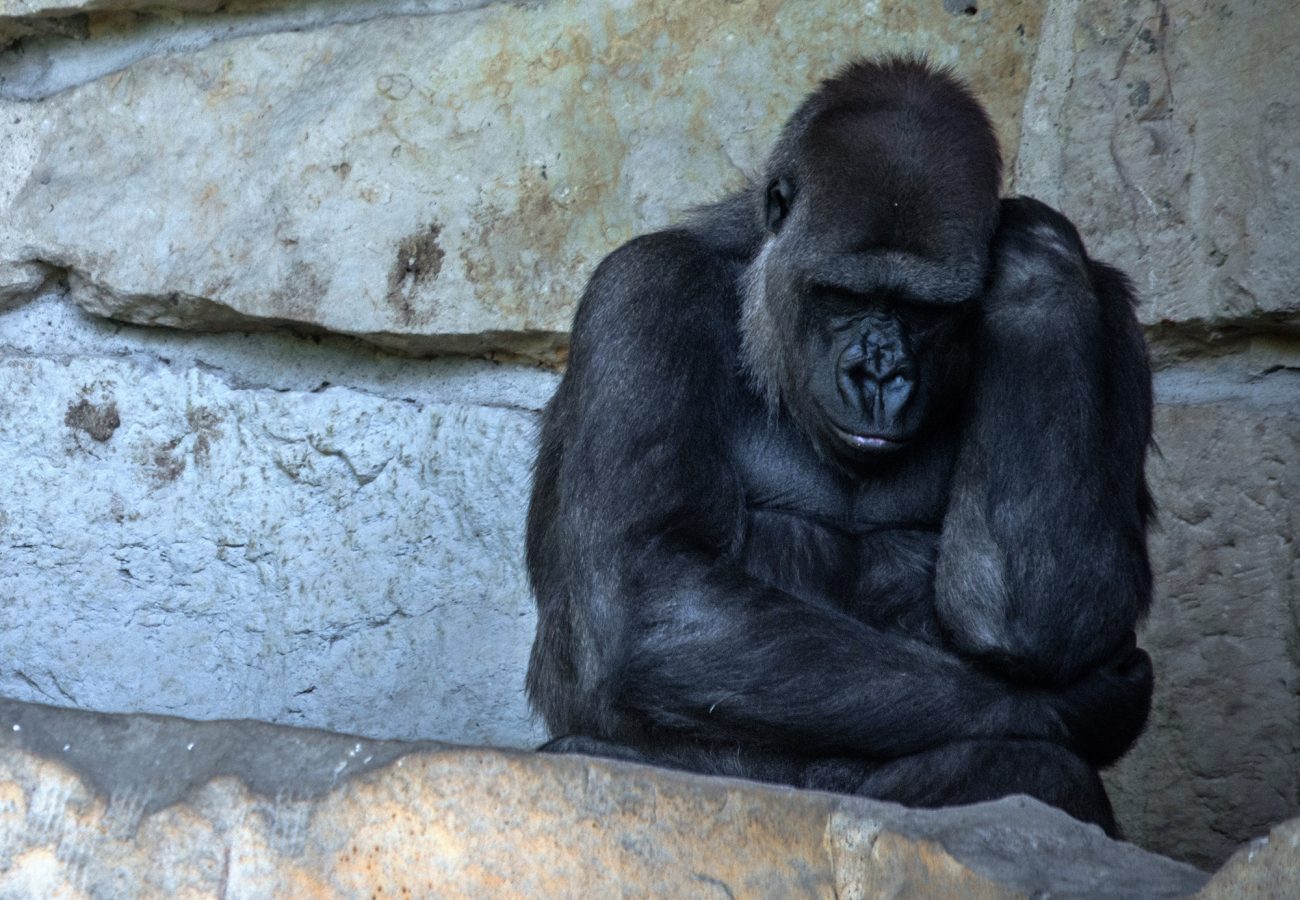
JUNGLE NOT JAIL FOR GREAT APES
Will you pledge never to visit a facility which keeps great apes captive for entertainment?