
200 years of zoos: a time for reflection, not celebration
The untimely death of a young elephant at London Zoo led to the start of our charity. As the zoo marks their bicentenary, we consider 200 years of keeping wild animals captive in the UK’s capital.
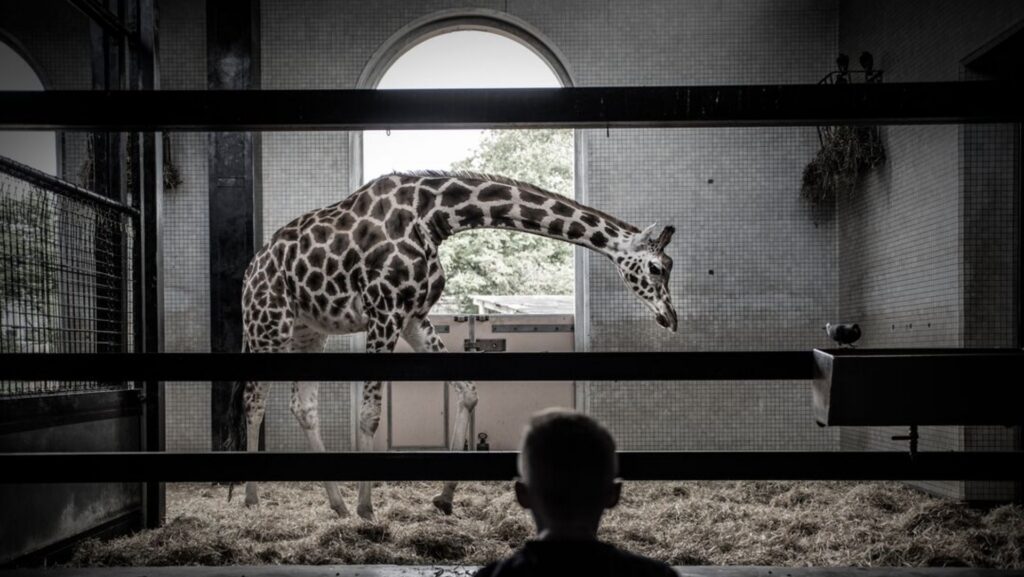
A giraffe at London Zoo in 2016 (c) Britta Jaschinski
As the Zoological Society of London (ZSL), marks its 200th anniversary, there is no denying the historical significance of such a milestone. Two centuries of wild animal capture, confinement, conservation claims, and public entertainment have shaped the modern zoo into what it is today. But, from the perspective of the Born Free Foundation, this anniversary should be an opportunity for honest reflection by modern society.
Zoos were born in an era when the world was viewed through a lens of human dominance over nature. Exotic animals were ripped from their natural habitats by collectors for display, to satisfy the curiosity of and entertain the public. While much has changed in 200 years, including the requirement for zoos to undertake conservation- and education-related work, the fundamental premise remains: zoos confine wild animals for human purposes.
ZSL, like many modern zoological institutions, positions itself as a leader in conservation and education. There is no doubt that ZSL’s research arm, the Institute of Zoology, has conducted valuable scientific and conservation research, and contributed to our understanding of wildlife and the need to protect it.
A tiger at London Zoo in 2018 (c) georgelogan.co.uk
However, the vast majority of the animals at ZSL’s two zoos in London and Bedfordshire will never be returned to the wild, and the ‘research’ carried out in the zoos themselves is primarily focused on maintaining those animals in captivity. This raises questions as to whether the continued existence of the zoos is necessary, or can be ethically justified.
The outdated practice of keeping thousands of wild animals in captivity, for little or no meaningful conservation benefit, increasingly undermines the society’s valuable broader conservation work. At present there are estimated to be over 20,000 animals from over 550 species at ZSL’s London Zoo and Whipsnade Zoo sites.
The conservation narrative often used by zoos suggests that keeping animals in captivity helps protect species from extinction. Yet, the vast majority of animals in zoos are not part of meaningful reintroduction programmes, and the majority of species kept at ZSL’s zoos are not threatened with extinction.
Instead, they live entire lives in enclosures that, no matter how advanced, cannot replicate the complexity, scale, and freedom they have evolved to experience in the wild.
Moreover, the educational value of zoos is frequently overstated. Observing a lion pacing within a confined space, or a gorilla exhibiting signs of stress, does little to convey the true nature of these animals in the wild. Education should inspire respect and understanding, as well as creating behavioural change in the public, rather than normalising the confinement and commodification of wild animals.
At a time when biodiversity is in crisis, Born Free questions the rationale for ZSL spending a reported £20 million on a state-of-the-art animal hospital with public viewing areas, when efforts to protect wild animals in their natural habitats and support the communities that live alongside them are desperate for support and funding.
“Conservation efforts can and should focus on protecting animals in their natural habitats, and addressing the root causes of decline such as habitat destruction, climate change, and human-wildlife conflict,” said Chris Lewis, Born Free’s Captivity Research & Policy Manager.
“As ZSL reflects on its 200-year legacy, we urge the Society and the broader zoo community to consider what the next 200 years should look like. This anniversary should not be a celebration of the past. It is an opportunity to reimagine the future, one where zoos are extinct and wild animals are truly free.”