
16 fun and fascinating giraffe facts
Discover amazing giraffe facts – from their long necks to unique patterns – and learn how to help protect these gentle giants.
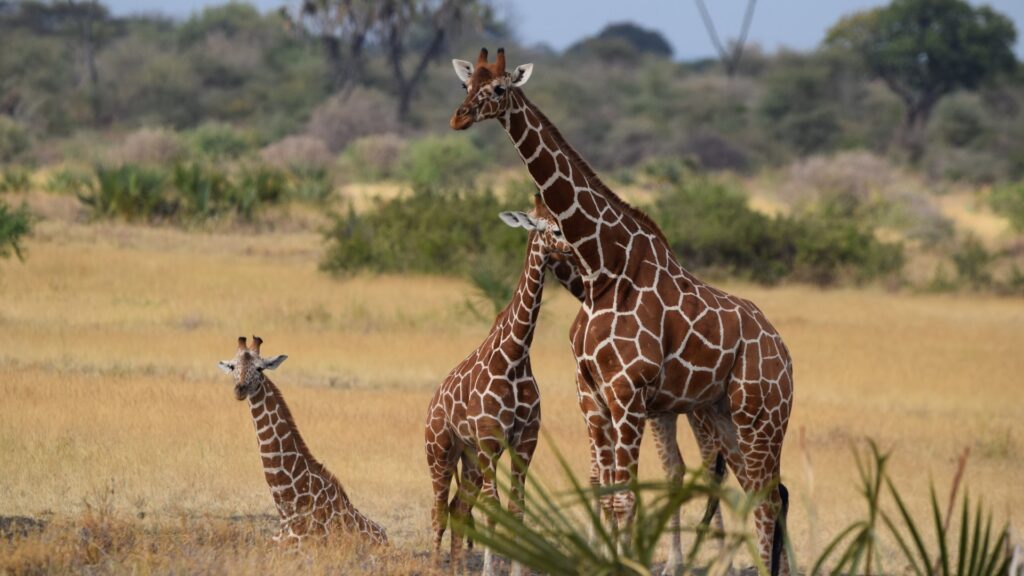
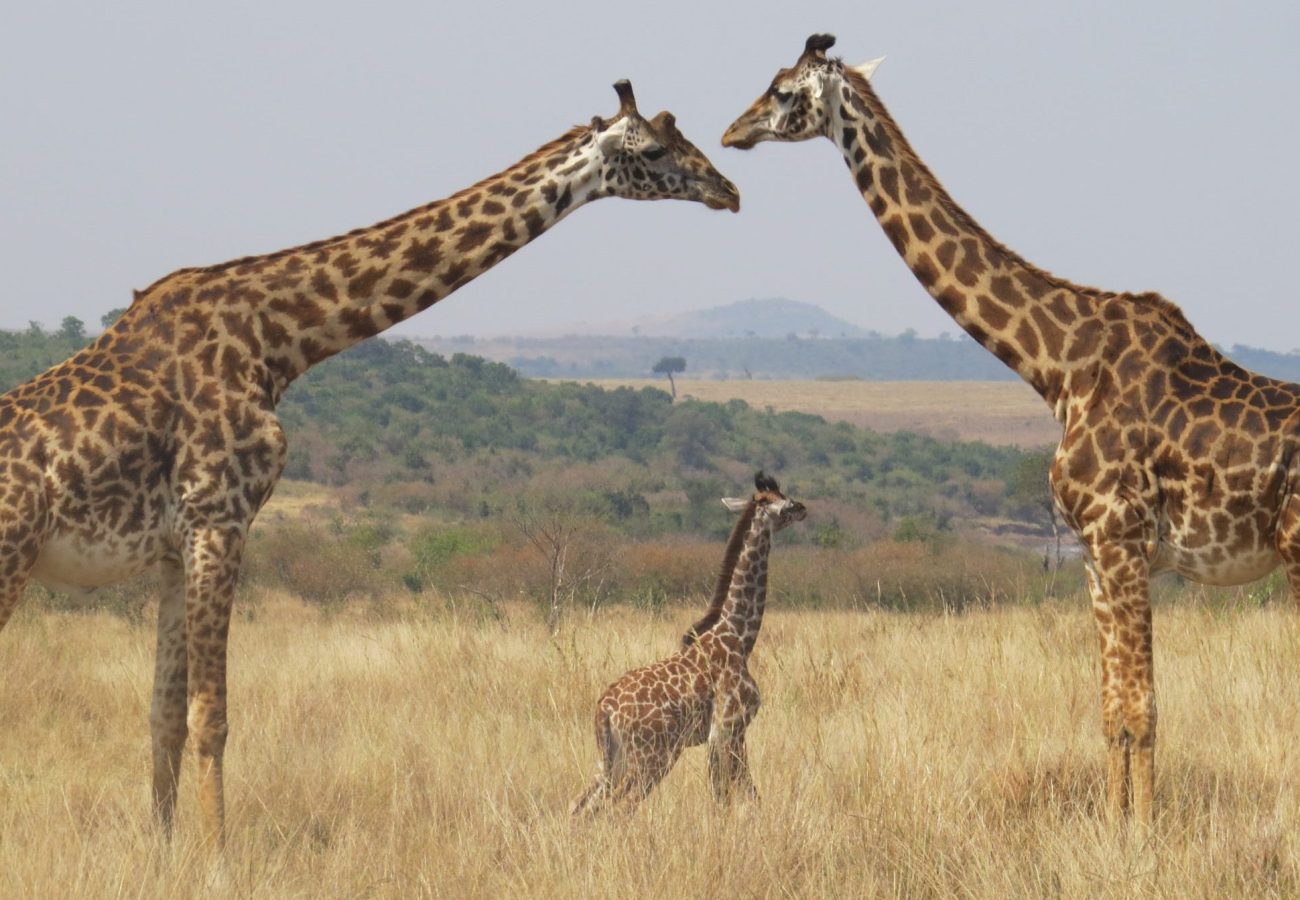
A family of giraffes in Meru National Park, Kenya (c) Born Free
16 fun and fascinating giraffe facts
With their extremely long necks and distinctive orangey patches, giraffes are among Africa’s most recognisable animals. Find out everything you need to know about giraffes in our fun giraffe facts.
1. Giraffes are the tallest mammals on Earth
Giraffes can reach up to 5.5m (18ft) tall!
A newborn giraffe calf is already around 1.8 m (6ft) tall when born. Despite their long necks, giraffes don’t have extra vertebrae compared to other mammals.
2. There are four distinct giraffe species
-
Masai giraffe (Giraffa tippelskirchi)
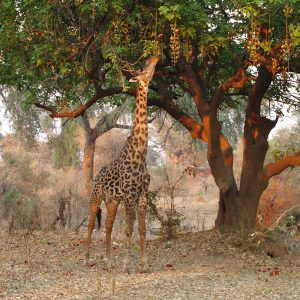
Considered Endangered by the IUCN. Masai giraffes live in Kenya, Rwanda, Tanzania and Zambia. The Luangwa Giraffe (also known as Thornicroft’s giraffe) is a subspecies of Masai Giraffe found only in the Luangwa Valley, Zambia.
-
Northern giraffe (Giraffa camelopardalis)
There are three subspecies of Northern giraffe: the Kordofan, Nubian and West African giraffes. They live in Cameroon, Central African Republic, Chad, Democratic Republic of Congo, Ethiopia, Kenya, Niger, South Sudan and Uganda.
-
Reticulated giraffe (Giraffa reticulata)
Considered Endangered by the IUCN. Reticulated giraffes primarily live in Kenya, with small populations in Ethiopia and Somalia.
-
Southern giraffe (Giraffa giraffa)
Southern giraffes have the largest population of the four species. They live in Angola, Botswana, Eswatini, Malawi, Mozambique, Namibia, South Africa, Zambia and Zimbabwe. There are also some very small populations in the Democratic Republic of Congo, Mali, Nigeria, Senegal. There are two sub-species of Southern giraffe: Angolan and South African giraffe.
It was only last year that these four species became officially recognised. Before, despite there being much debate, officially there was only one species of giraffe with nine sub-species. Find out more here.
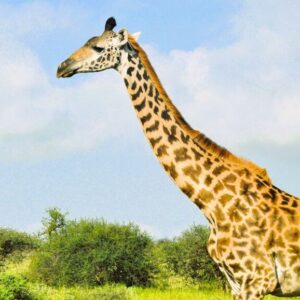
Wild Giraffe (c) Amanda Poole-Connor
3. Each giraffe has a unique coat pattern
Every giraffe’s spot pattern is unique to them. Their spots don’t change throughout their lives.
Scientists have used giraffe’s spot patterns to identify individuals since the 1950s and now, with the advancement of technology, this is even easier. Born Free’s Saving Meru’s Giants team in Kenya also use this technique to identify and monitor giraffes.
There are different reasons suggested by researchers why giraffes have spots – with the main two leading theories being camouflage and body temperature regulation (thermoregulation).
4. Giraffes have enormous tongues
Giraffes have impressively long, prehensile tongues (up to 50cm!) which they use to strip leaves from thorny trees.
Their tongue has thickened skin, and their saliva is designed to protect their mouths from thorns while they eat.
Another giraffe mystery is why their tongues are a black-blue-purple colour. The leading theory is that it is to protect their tongue from sunburn, as they forage in strong sunlight all day. But a giraffe’s closest relative, the Okapi, also has a dark coloured tongue and Okapi’s live in dense rainforest, where they wouldn’t need added sun protection.
5. They eat a lot – but drink very little
Giraffes primarily eat leaves and shoots, but they will also eat flowers, seeds and bark when its available. To fuel their large bodies, giraffes need to eat between 34-75kg of food a day!
Giraffes’ long necks are thought to have evolved to reduce competition with other smaller herbivores. Their long necks allow giraffes to access the fresh leaves and shoots at the top of trees which other herbivores are unable to reach.
6. Drinking is a dangerous challenge
Drinking puts giraffes in a vulnerable position as they have to manoeuvre their legs to allow their head to reach the ground. At a waterhole, giraffes may spend some time surveying the area to ensure it’s safe from predators before taking a drink.
Luckily, they don’t need to drink water every day.
 7. They have super-powered circulation
There are around 2 metres between a giraffe’s heart and their hooves, and even further all the way to their head!
Despite their heart being able to pump blood around their whole large body, a giraffe’s heart isn’t significantly bigger than other mammals, relative to their body size. To pump blood around their body, including all the way up their long neck, giraffes have high blood pressure.
8. Giraffes are megaherbivores
Megaherbivores are herbivores (plant eaters) which weigh over 1 tonne (1,000kg). There are only a few species of megaherbivores left in the world, all found in Africa and Asia.
9. Giraffes have huge feet
To hold up their massive body, giraffes need big feet. Giraffes are ungulates, which are animals with hooves. A hoof is made up of keratin, the same material as our fingernails.
10. A group of giraffes is sometimes called a ‘tower’
Giraffes typically live in groups of around 3-9 individuals, but some are lone individuals. Until 2000, researchers didn’t think giraffes had a distinct social structure, but research has shown that they have complex social systems with matrilineal (based on the mother or female) societies.
Giraffes live in fission-fusion social systems. This is where there is a social unit of set individuals, which will come together and split apart frequently.
11. Male giraffes fight by necking
‘Necking’ is a behaviour displayed by male giraffes during confrontations. Males will deliver powerful blows to each other to assert their dominance.
12. Calves have a dramatic start to life
Female giraffes give birth standing up, with babies having a dramatic entry to the world. At birth, an infant giraffe can weigh up to 100kg!
13. Giraffes are born with ossicones
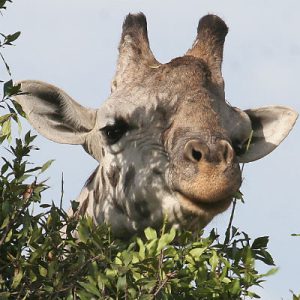
Ossicones are small bony structures on a giraffe’s head. When they are born, the ossicones are made of cartilage and lay flat on their head. They will gradually grow and ossify (solidify) into bone.
Ossicones are often confused with horns, but as they are covered in skin and fur, they are different from horns. Some males can grow a second pair of ossicones behind their first pair.
14. Giraffes primary natural predator is lions
Lions are the main predator of giraffes in the wild. Both adult and juvenile giraffes can be hunted by lions.
Giraffes are extremely alert with good vision, and use vocalisations to assess a threat.
15. Giraffe’s closest living relative is the Okapi
Found only in the Democratic Republic of Congo, Okapis are elusive, forest-living herbivores.
An okapi’s neck isn’t quite as long as a giraffe’s, but they share other similarities such as the presence of ossicones.
16. Giraffes are threatened by poaching and habitat loss
With their eyes so far away from their feet, giraffes are particularly vulnerable to snares. These small wire traps, cleverly concealed and hard to detect, can easily trap a giraffe and cause injury or death. Born Free’s Twiga Team patrol Meru National Park, removing deadly snares and protecting giraffes.
The global giraffe population fell considerably from 1985 to 2015, by an estimated 50,000 at least. Now, at a species level, giraffe populations are relatively stable, but some sub-species and population pockets are Critically Endangered.
Why giraffes need our help
Despite being one of Africa’s most iconic species, giraffes were often overlooked in conservation. Born Free is dedicated to protecting giraffes through our Saving Meru’s Giants programme and community engagement and outreach work. You can support our work and help conserve these marvellous mammals by adopting our Giraffe Family.
ADOPT THE GIRAFFE FAMILY
The Giraffe Family live in Meru National Park, Kenya. Adopting them today will help us monitor wild giraffe populations, protect their natural habitat, and introduce measures to reduce conflict between people and wildlife.