The Big Question (x2)

May 20th, 2013

***Update*** Read Will’s report on the meeting here

Dear Friends of Wildlife

Big Question 1:

What happens when an irresistible force meets an immovable object? The irresistible force of millions of people who are deeply concerned about the future of wildlife and the impact of poaching and illegal trade including HRH Prince of Wales, HRH Duke of Cambridge, our UK Government Ministers, the Former Secretary of State Hilary Clinton, current Secretary of State John Kerry, Virginia McKenna, Brian May, Nicky Campbell, Zac Goldsmith, Born Free supporters (and me!), meets the immovable object of demand for ivory, rhino horn, lion and tiger body parts, bear gall bladders, shark fins …….

The answer is can we prove that the object is no longer immovable; we can persuade the Chinese Polit Bureau to demonstrate global leadership and set aside tradition in favour of conservation; we can work with governments in Africa and the rangers, wardens and forest guards to deliver on-the-ground protection wherever it is needed; we can train and support customs officers to effectively intercept wildlife crime (along with drugs and guns and people and more); we can support the judiciary in the application of deterrent sentences to make sure that crime doesn’t pay; we can educate consumers so that they understand that elephant teeth do not just ‘fall out’; that rhino are dying in their hundreds for bogus cancer cures; that tigers face extinction so the wealthy can ‘show off’ and buy tiger bone wine; that wild lion numbers have halved in 30 years and exports of lion skeletons from South Africa to Lao PDR are up 10,000% since 2009; that thousands of bears endure a lifetime of deranged suffering so that some people can drink their putrid bile; that one hundred million sharks a year die for soup.

Tomorrow (21st May 2013) Prince Charles, Prince William, UK Government Ministers, including Owen Paterson and Richard Benyon, will set aside a day to put illegal wildlife crime at the top of the political agenda so that it becomes an irresistible force for good.

I will be there with Virginia and I will report back.  Is it a tipping point?  I hope so. If it isn’t it may be too late for some.

Blogging off

Will

PS Ooops! Nearly forgot Big Question 2. I am down to appear on The Big Questions next Sunday (2nd June) at 10.oo am on BBC1 talking about the plight of wild animals.  Tune in or set the recorder if you get a chance.

Will Travers | 2 Comments »

Does Rhino Horn Work? No One Moved a Muscle!

May 14th, 2013

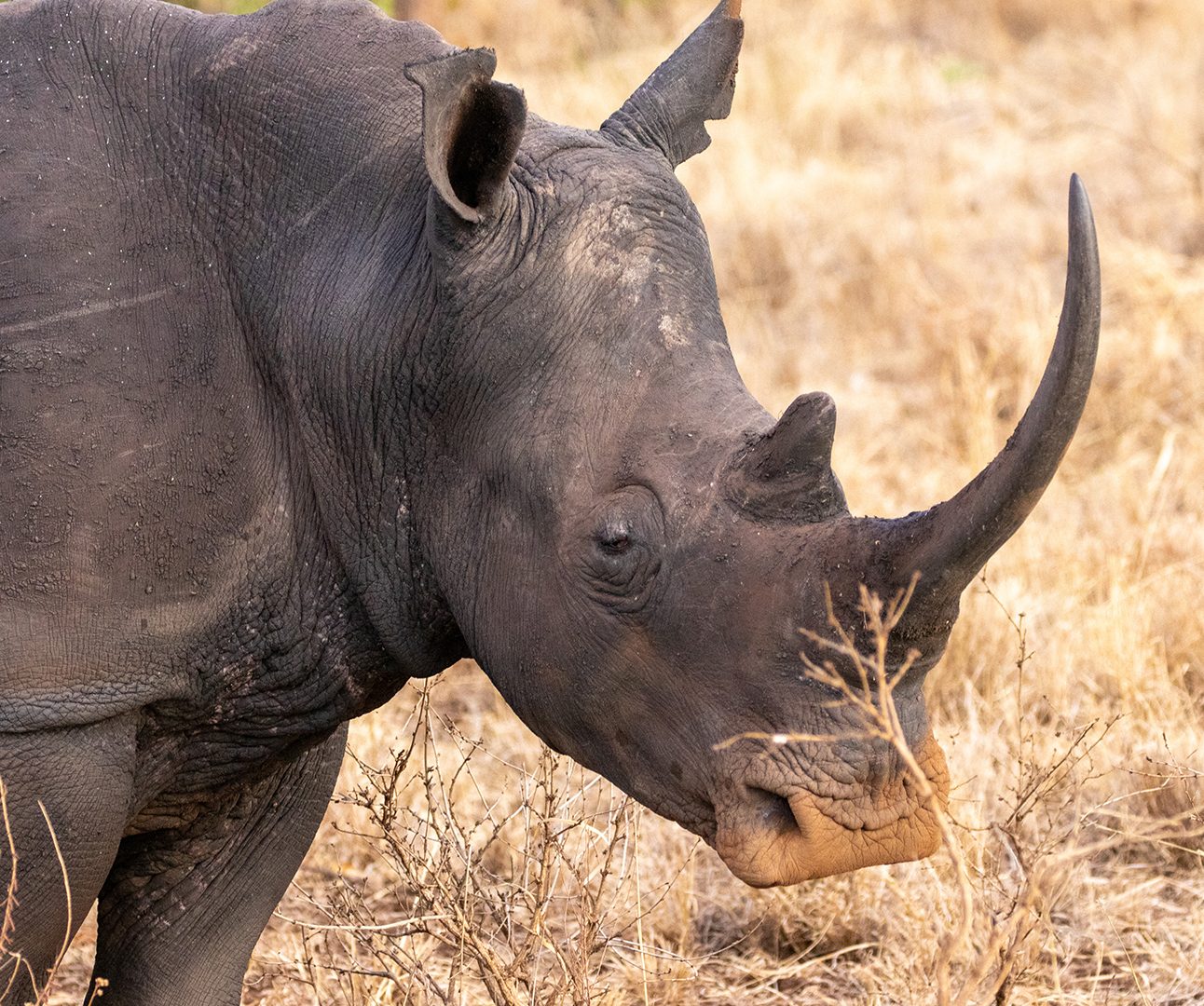
News reports out of South Africa with respect to the rhino crisis are alarming, with more than 290 animals already poached so far in 2013 – annualized that will be over 800 by year end – and even dehorned rhinos are being slaughtered.

As CEO of the Born Free Foundation I attended the recent CITES Conference in Bangkok, Thailand. In front of more than 100 people I personally asked the South African Minister responsible for wildlife, the President of the Private Rhino Owners Association, the President of the Professional Hunters Association, an eminent South African economist and the South African Ambassador to Thailand, all of whom were there promoting the idea of legalising rhino horn trade, to raise their hands if they believed that rhino horn was effective in medicinal use. Not one of them moved a muscle.

Yet they would be willing to sell rhino horn to folks in the Far East, knowing full-well it doesn’t work, exploiting the ignorance of people who mistakenly believe it will cure their mother/father/sister/brother of cancer.

Unethical? Unacceptable? Downright disgraceful? Too right!

In my view, legalising rhino horn trade will legitimise the use of a substance which absolutely does not work, make a handful of private rhino owners very rich, provide a legal cover for illegal trade, further jeopardise the security of all Africa’s rhino, and allow the poachers, and the organised criminal gangs who back them, to – quite literally – carry on making a killing.

What do you think?

Blogging off!

Will

Will Travers | 1 Comment »

Pinioning: As Free as a Bird?

May 3rd, 2013

The ‘P’ word – what does it mean?

Pinioning involves cutting a bird’s wing at the carpal joint, permanently removing the part of the wing from which the primary feathers grow. It is a surgical procedure, classed as a “mutilation” under the Animal Welfare Act 2006 in England and Wales and the Animal Health and Welfare (Scotland) Act 2006 in Scotland. A bird that has had its wing pinioned can never fly nor be released back to the wild as the amputated part – equivalent to a human “hand” – will not grow back. Whilst this sounds like a practice from a forgotten era that should have been consigned to the history books long ago, it is in fact still legal in zoos and being practised by many captive facilities in Britain today.

The Born Free Foundation’s colleagues at The Captive Animals’ Protection Society (CAPS) recently published the results of an investigation into the pinioning of birds in British zoos, with a particular focus on the Wildfowl & Wetlands Trust centres [http://www.express.co.uk/news/uk/395283/Zoos-chop-birds-wings-in-half-to-keep-them-captive]. Over the years, Born Free has heard many justifications from zoos in defence of pinioning: it’s necessary to improve the welfare of the birds as it allows them to have access to larger, roofless enclosures; aviaries are much more costly to build than open air enclosures, and pinioning can be carried out at little to no expense to the zoo; pinioning allows the public to get close to birds; pinioning can be justified in the name of conservation, making sure rarer, breeding birds don’t fly away and get separated; and so on. These so-called justifications are, at best, flimsy and none outweigh the impact of this invasive surgery on the individual animals.

What is apparent is a worrying lack of transparency between zoos and their visitors. According to CAPS, the Wildfowl & Wetlands Trust currently has 5,663 “resident” (captive) birds, all of which have been pinioned, yet until the CAPS investigation was launched, there was little or no information on their website about this practice. We are convinced that members of the public should, at the very least, be provided with open and accurate information regarding pinioning and similar invasive measures taken by zoos (such as de-barbing rays in aquaria) so they can decide for themselves whether they still wish to visit.

Virginia McKenna OBE, founder of the Born Free Foundation, recently commented: “Why does a bird have wings”? It is scandalous that zoos appear to consider mutilation an acceptable “tool” in the name of conservation and education. The message is, at best, confusing. Seeing birds walk around or swim in a pond may look delightful – and is better than seeing them in a cage – but they have paid a huge price to live this half-life. And we are being misled, to put it politely.”

Countries such as Estonia, Italy, Kazakhstan, Netherlands, Norway and Switzerland, have all outlawed pinioning, and yet it is still a perfectly legal practice in zoos in this country. Born Free is proud to support the “Fight for Flight”, and commends CAPS for bringing this important issue into the public arena. We need to ask ourselves what is more important: the few seconds spent admiring individual, mutilated captive geese or ducks, or the bird’s ability to use its most definitive adaptation – its wings – and fly?

Will Travers | 3 Comments »

Farewell Desmond Hamill

May 2nd, 2013

He was there when one of the biggest wildlife stories of the 20th century broke – and he was part of that extraordinary narrative. Desmond Hamill, the award-winning ITN reporter, died on the 9th of April 2013. Apart from courageously covering numerous wars, civil unrests, high profile national issues – not be mention being kidnapped with his film crew in Beirut – Hamill reported on the mass slaughter of Africa’s elephants and the extent of the illegal ivory trade, leading to the international ivory trade ban in 1989.

The Born Free Foundation (then Zoo Check), together with the EIA (the Environmental Investigation Agency) were at the forefront of the campaign (the EIA’s damning footage and our 600,000 name petition proving critically important) that secured the ban and brought at least temporary respite to Africa’s beleaguered elephants.

Although elephants and the bloody ivory trade are still making headlines (www.bloodyivory.org) we want to salute Desmond for making this cause a part of his life’s work and making sure we never forget.

Will

Will Travers | 2 Comments »

Congratulations Virginia!

April 18th, 2013

I’ve some wonderful news to share and wanted personally to tell you without delay.

My mother and Founder of the Born Free Foundation, Virginia McKenna OBE, has just been awarded the prestigious ‘Outstanding Contribution Honour’, at ITV’s inaugural British Animal Honours 2013. Broadcast earlier this evening, the dazzling awards ceremony was hosted by Paul O’Grady and celebrated the country’s most extraordinary animals and the amazing people who dedicate their lives to them. I hope you managed to see it, but if not you can see a video and read a transcript of Virginia’s speech here.

Here at the Born Free Foundation we’re deeply moved and very proud that Virginia’s tireless work for wildlife has been so publicly recognised – the tributes from Martin Clunes, Jenny Seagrove, Helen Worth, Brian May and Anita Dobson are still ringing in my ears.

The awards ceremony included a fascinating insight into her life as a wildlife crusader and, of course, as a much-loved actress.  Virginia, who was voted one of the most inspirational people of all time in a Daily Telegraph poll, starred in some of our best-loved films, including Carve Her Name With Pride, A Town Like Alice, Ring of Bright Water and of course, the phenomenally successful Born Free – a film which changed her life and that of my late father Bill with whom she co-starred.

But despite an exceptional career in cinema and theatre, Virginia pushed aside the glamour of movie stardom and the West End stage to focus on her personal mission with the Born Free Foundation, the wildlife charity she helped found back in 1984 and on whose behalf has worked unstintingly ever since.

Seeing her recognised in this way – by her peers and by the public at large – has given me fresh inspiration and I know you too share her passion for lions, elephants, tigers, gorillas, bears, dolphins, wolves and thousands of wild animals that rely on us for their safety and survival.

It’s great to count on you as part of the Born Free family and so, as a mark of respect for Virginia’s work, I have a personal request to make. I wonder if you would click on the buttons below and take further action to save lives, stop suffering, rescue individuals and protect species.

Virginia has just launched a major appeal to raise funds to protect Africa’s lions from exploitation and we urgently need your help and support.

And finally, you can keep up to date with our work to help animals through our social media.  Follow us on Facebook and Twitter, and sign up to our free monthly e-newsletter BF-Mail.  Get connected to the wild today!

Together, thanks to Virginia, we are a voice for the animals and a force for good.

Will Travers | 17 Comments »

Anna Merz – A Tribute

April 9th, 2013

When I received the news of the death of Anna Merz I was knocked sideways.  This wonderful lady, who was the ultimate champion of rhinos, just couldn’t be gone.  I have a recent letter from her on my desk awaiting my reply.  Now there won’t be one.  Only this tribute from a like-minded old person – one who shares her deep respect for living creatures and the natural world, and who also sometimes finds the way humans treat them callous, intolerable and mystifying.

In 1982 Anna created the Lewa Downs Rhino Sanctuary (now the Lewa Wildlife Conservancy).  Her vision, determination and compassion made her one of the pioneers of wildlife conservation in the wild.  A role model for us all.

I had the great joy of visiting her and her rhino sanctuary in the 1980s. I will always remember it, and her, and thank her for her loyalty and devotion to the animals she was determined to save, and for being such an inspiration to all of us who share her passion.

Virginia

Virginia McKenna
Founder Trustee
Born Free Foundation

Will Travers | 4 Comments »

Follow the Tiger Tracks

April 1st, 2013

Dear Friends of Wildlife

The new Tiger Territory at London Zoo, following hard on the heels of the Zoo’s Gorilla Kingdom (almost £10m between the two of them) and Edinburgh Zoo’s dalliance with captive giant pandas (there goes another £6m) does surely call into question whether endangered species are getting the best possible support in these difficult times and when the challenges of survival in the wild are so pressing.

Having just returned from the CITES Conference in Bangkok where the global zoo community (10,000 zoos and hundreds of thousands if not millions of zoo professionals) were largely conspicuous by their absence, it seemed clear to me and the Born Free team that, with the best will in the world, the impact of this multi-billion pound global industry on the future of species and their habitats is largely negligible.

The handful that try to make a meaningful contribution provide barely a fig leaf to cover the zoo body-corporate but they cannot conceal the paucity of what zoos actually deliver compared to the conservation and education rhetoric they espouse.

You are probably aware of the Save Wild Tigers,  Born Free and EIA ‘Tiger Tracks’ event that ran throughout March at St. Pancras International, London. Last Thursday the 21st March I attended the Tiger Tracks Gala Dinner, an event to raise funds to help protect tigers in their natural habitat. The night was a great success, raising thousands of pounds for our life saving conservation and wildlife law enforcement work. Vitally, it showed that there is a real interest in protecting and conserving tigers in the wild, and not preserving in costly, minuscule, and alien living museums.

Blogging off

Will

Will Travers | 5 Comments »

Global leaders vote to protect many wildlife species at Bangkok meeting

March 14th, 2013

Dear Friends:

I write to you on the final day of deliberations at the 16th Meeting of the Conference of the Parties to the Convention on International Trade in Endangered Species of Wild Fauna and Flora (CITES), which has deliberated in Bangkok for two weeks on some of the most important wildlife conservation issues of our time.

And for those same two weeks the Born Free team has fought to address the rhino and elephant poaching crises, the intensive captive breeding of tigers, commercial logging of endangered tree species, the unsustainable fisheries that consume tens of millions of sharks each year, and so much more.

I am pleased to report that we have won success after success in these hard-fought debates. Vietnam, a major rhino horn consumer, was taken to task and urged to reduce demand; the West African manatee received the Treaty’s strongest protection with the support of almost all of the species’ range States; the African Elephant Action Plan, a blueprint for the species’ survival across the continent was reaffirmed and mechanisms for allowing new ivory trade were postponed; renewed calls to act on big cat conservation – lions, tigers, and cheetah – were sounded loudly; and commercially-fished shark and tree species were added to the CITES list of protected species for the first time.

A resounding success indeed!

So to the Born Free team, the Species Survival Network team, the team of dedicated government delegates who supported our positions where it matters most, and to you, who supported us every step of the way, I say thank you.

For the animals,

Will

Watch a clip of Will’s address http://www.youtube.com/watch?v=p68VTDXUQ2k

Will Travers | 8 Comments »

END THE CHEETAH TRADE

March 8th, 2013

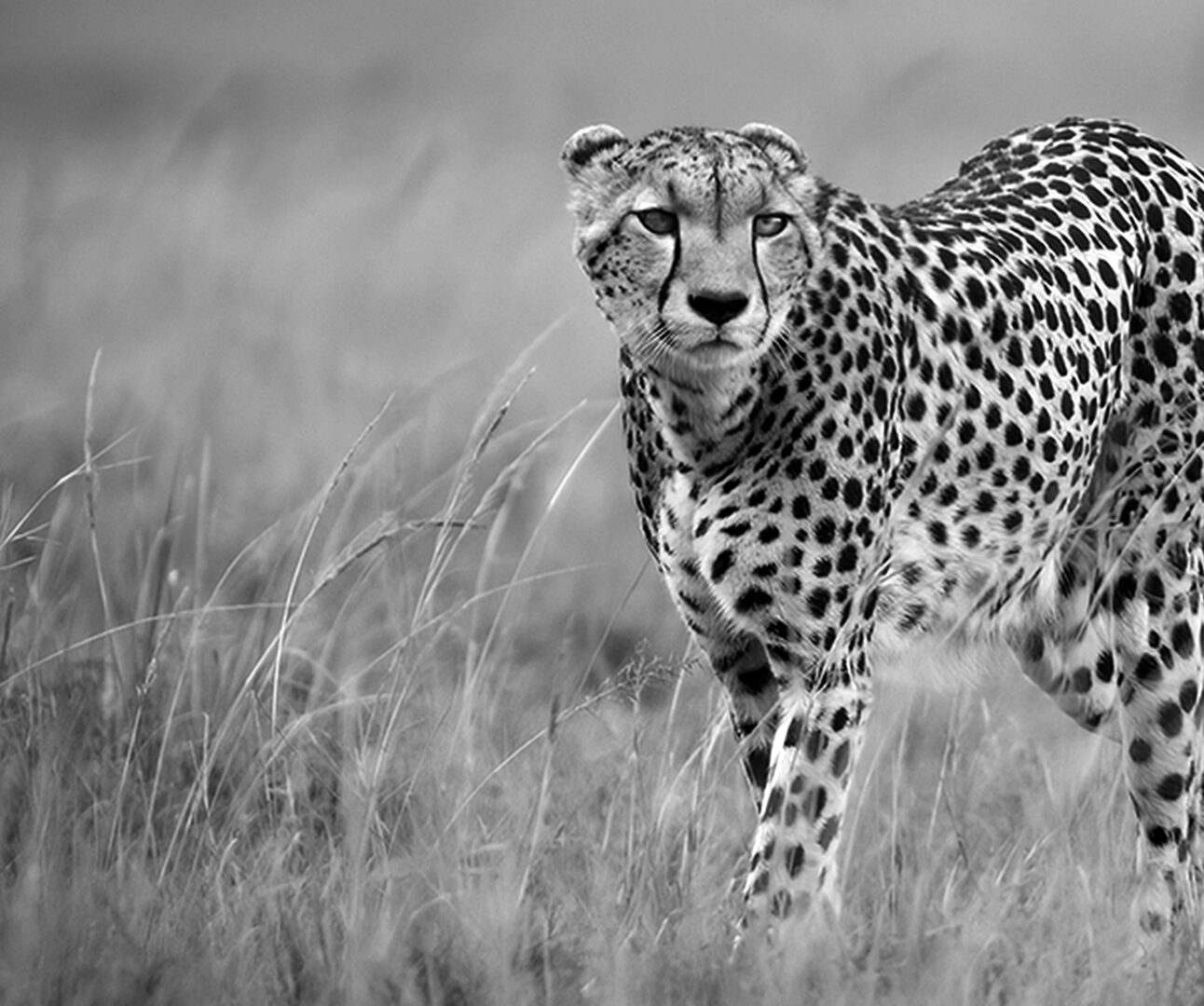
Member countries of CITES today considered the delicate issue of the trade in cheetah from Africa to the Middle East. Born Free strongly supported the document presented by Kenya, Ethiopia and Uganda, calling for an important study of legal and illegal trade in cheetah.

Given a lack of comprehensive data regarding the nature and extent of the international cheetah trade, it is currently hard to determine the overall impact that the trade may be having on this iconic species; however, Born Free believes the trade to be increasingly problematic for the cheetah.

Born Free has first-hand knowledge of this issue through its work at Born Free Ethiopia, which, in partnership with the Ethiopian Wildlife Conservation Authority, has established the Ensessakotteh Wildlife Rescue and Education Centre outside Addis Ababa.

At the centre, we care for a number of rescued animals, including cheetah confiscated from the illegal pet trade. We have evidence of cheetah being smuggled from either Kenya or Ethiopia to Somaliand as a transit point to the final destination. Current information suggests that this trade is continuing unabated and there may be dozens of illegally acquired cheetah being held in the region.

We are honoured to be working with the Ethiopian authorities to provide lifetime care for rescued individual animals, and we hope to release these animals back into the wild where possible. That said, the real goal should be to stop the illegal trade from creating this problem in the first place.

As member countries to CITES know, more widespread anecdotal evidence suggests that the trade is extensive and hundreds of live animals a year may be leaving the Horn of Africa.

Born Free believes that wildlife belongs in the wild and in the case of cheetah, not in the commercial pet trade.

Blogging off,

Will

Will Travers | Comments Off

On Selling Rhino Horn

March 7th, 2013

Rhinocerous

The International Union for the Conservation of Nature (IUCN) is the self-professed world’s largest professional global conservation network and a forum for governments, NGOs, scientists, business and local communities to meet the challenges facing conservation.

In September 2012, IUCN members adopted many Resolutions and  Recommendations, one of which “recognize(d) that the successful conservation of rhinos across the entire range will be best achieved via a diversity of management and economic mechanisms” and furthermore called on African countries with rhinos to “maintain enabling land-use and investment policies together with support for appropriate and well-managed, sustainable, income-generating options that encourage investment in rhinos, sustainable populations and which help fund effective conservation by the private wildlife industry and communities”.

Confusing for the non-scientist? Need translation into English? To successfully bring the current rhino poaching epidemic – which is a serious crisis – under control we shouldn’t just be thinking about wildlife law enforcement, demand reduction in ‘consumer’ countries, etc. but also the legalisation and sale of rhino horn, likely to the same markets driving the poaching in the first place. The fact that this has already been tried in the case of elephant ivory and not only failed miserably to bring elephant poaching under control  but also further stimulated demand, seems to be lost on these ‘experts’. What parallel universe are they living in?

Unfortunately, this Recommendation was used by pro-trade advocates and some members of the IUCN Rhino Specialist Group at their side event at the current CITES meeting in Bangkok yesterday, seeking to promote the idea of a proposal to sell rhino horn. Rhinos are coming up for discussion this Friday and two more side events are also planned, one of which, entitled ‘Rhino Economics’ to be attended by the relevant South African Minister, leaves nothing to the imagination for what agenda it might be promoting.

I dare say it’s a good thing Born Free is here to bring some reason and common sense to the otherwise confused conservation priorities and plans of a self-serving few…

Blogging off

Will

Will Travers | 5 Comments »