
Punch the macaque: Born Free calls again to avoid ‘famous’ animals in zoos
Punch is the latest in a line of animals in zoos gaining online popularity, however Born Free urges fans and the wider public not to visit them.
(c) David Mareuil/Anadolu via Getty Images
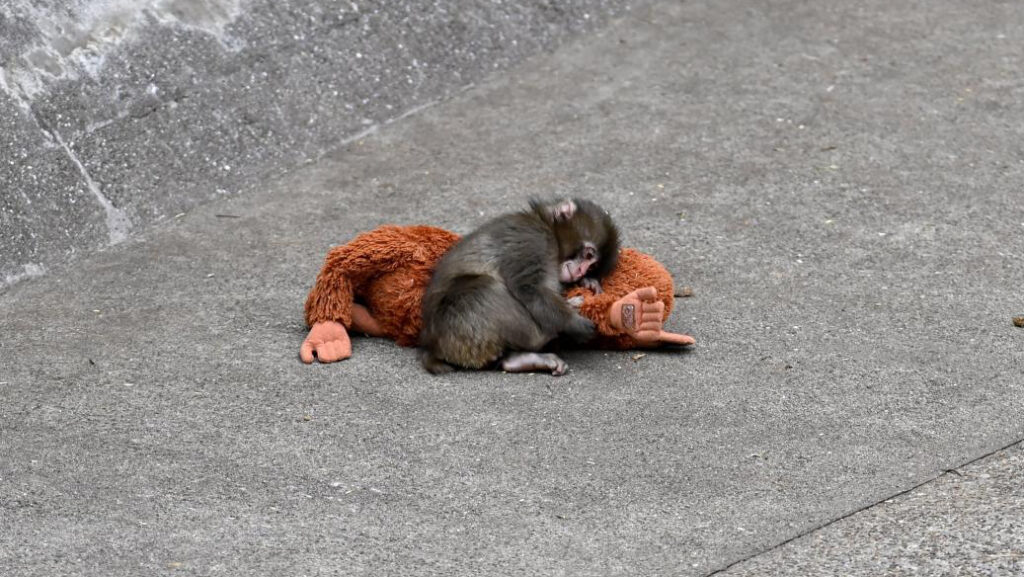
Following on the heels of Moo Deng, the pygmy hippo at Khao Kheow Open Zoo, Thailand, another animal has shot to global attention: the tragic story of Punch the Japanese macaque (Macaca fuscata) at Ichikawa City Zoo, Japan.
Reports indicate that following rejection from his mother, he was hand-reared by zookeepers before attempts were made to reintegrate him into the zoo-housed group. Such situations often present zoos as the heroes or saviours of the animal, however it can often be the inadequacies of the zoo environment that have caused such issues to occur.
Macaques are incredibly complex animals, and many species have developed their own cultures and behaviours. Yet in zoos, they are deprived of their autonomy and confined in enclosures which completely fail to replicate the complex environments and social structures they need to thrive.
In Born Free’s 2025 report, Our Captive Cousins: The Plight of Great Apes in Zoos, we highlighted how unnatural social structures in zoos may result in severe behavioural disorders among primates, such as the rejection and/or mutilation of infants. The frequency of maternal neglect in zoo-housed gorillas is significantly higher than that in the wild. Individuals who have not had the opportunity to observe or participate in maternal behaviours, or those who have been hand-reared, have been found to be significantly more likely to reject or neglect their young.
High numbers of stillbirths and neonatal deaths are also seen in zoo-housed chimpanzees where younger mothers lack experience of maternal care and when tension within the group is high. The neglect of offspring by low-ranking female primates may be due to their lack of ability to separate themselves from higher ranking individuals, as they would in the wild in order to protect their young.
Whilst it is unclear what the future might hold for Punch, it is encouraging that he is beginning to participate in affiliative behaviours, such as grooming, which is vital in primate hierarchal structures. However, he still appears to be bonded to his human caregivers, which may lead to problems when he becomes older and more aggressive. Similar issues arise when primates kept as pets are hand reared.
Viral fame, but long-term pain
While social media can be a powerful tool for raising awareness and encouraging pro-environmental behaviours, the images and videos of Punch being circulated sadly do very little to educate viewers about the species’ natural behaviour and environment, or the threats they face in the wild.
Some content may even be detrimental to public knowledge and attitudes, especially where it elicits anthropomorphic sentiment. Worryingly, when a cute wild animal becomes popular online, this can lead to a desire to own one as a pet, as often expressed in the comments section of social media posts.
Zoos will commonly produce merchandise based on particular animals, further profiting from their popularity. The amount of merchandise sold, increase in ticket sales, number of views on social media and interest from celebrities significantly benefits the zoo, while the individual animal remains in an unnatural captive environment with little or no chance of being reintroduced into the wild. Whilst attention may quickly move onto the next ‘viral’ attraction, these animals will most likely remain where they are for the rest of their lives, long after their short-term fame fades away.
Rather than visiting a zoo to see a ‘famous’ wild animal, Born Free encourages anyone who is interested in these animals to learn about and support the conservation of their wild populations and the protection of their habitats, and to advocate for improving individual captive animal welfare, so that one day there will be no more wild animals kept in zoos.
Trade of macaques
Macaques are among the most widely dispersed and adaptable primates. They are intelligent, emotional, and thoughtful. Sadly, they are also one on the most exploited and misunderstood wild mammals on Earth. Their ability to survive and thrive in human-dominated landscapes can give a false impression of high numbers, when in fact their numbers in the wild are rapidly declining and they are threatened with extinction. They are widely persecuted as ‘pests’, traded as pets, exploited for tourism, and exported in huge numbers for use in biomedical and toxicological research.
Find out more about our work to protect Macaques: