
Protecting rare pangolins in Cameroon
As we celebrate World Pangolin Day, Born Free is stepping up to secure a safe future for these remarkable animals, in the vast rainforests of West-Central Africa.
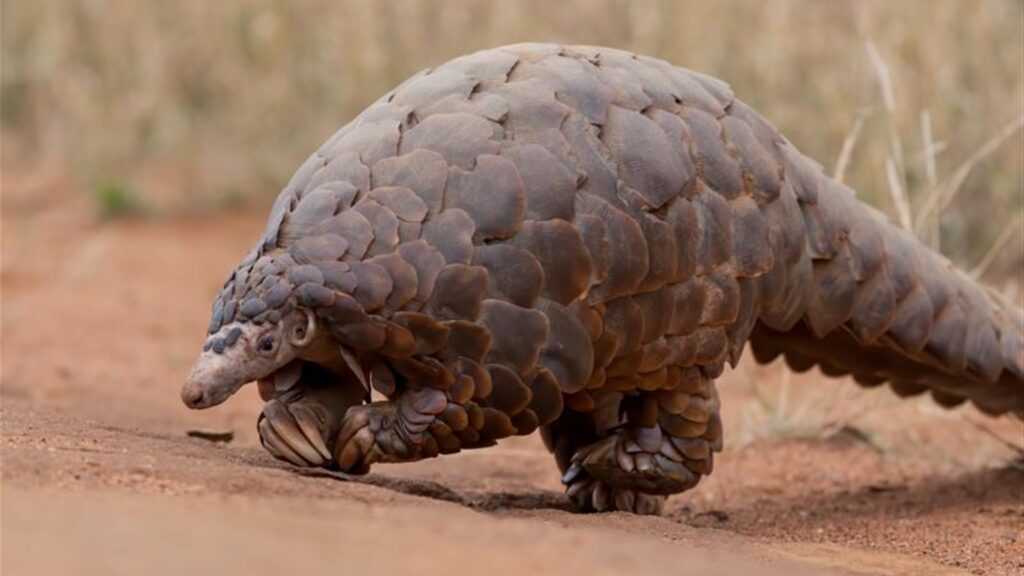
Giant Ground Pangolin (c) D Brossard
With your support, and a big focus on gorilla conservation, Born Free’s Guardians of Dja programme has been closely working with communities on the northern periphery of the Dja Faunal Reserve, since 2022. Much has been achieved for wildlife and, in an exciting development, our team is now expanding their scope to take action for the threatened pangolins who live there.
“Deep in the East Region of Cameroon, the reserve protects a sweeping expanse of ancient rainforest,” explains Anna Cryer, Born Free’s Conservation Admin and Communications Officer. “This tropical rainforest is an important stronghold for gorillas, as well as chimpanzees, forest elephants, and countless other species that depend on this rich and fragile ecosystem.
“Excitingly, two of Africa’s four pangolin species are found there as well – giant ground and white-bellied pangolins. But, it’s possible a third species also calls these forests home, though the black-bellied pangolin’s elusive, arboreal nature makes them hard to spot.”
Pangolins in danger
Sadly, pangolins face serious threats. Protecting them in Cameroon has never been more imperative. The country is both an important home for pangolins, and also a major hub of pangolin trafficking in Central Africa.
While habitat loss and degradation do threaten pangolin populations, the main threat faced by these scaly mammals is overexploitation by people. In rural regions, they have been hunted and consumed at a local level for decades. But their popularity has also risen as bushmeat (meat from wild animals) in urban areas too.
Alongside this, Cameroon became a centre point for pangolin trafficking in Central Africa, with established trafficking routes facilitating the exploitation of pangolins.
Exceptional animals
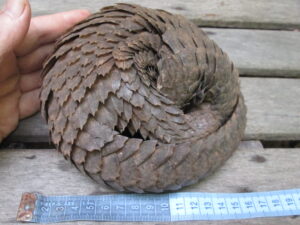
A white-bellied pangolin curled into a ball
As you might know, pangolins are unique, as the only mammal covered in overlapping scales – which form a protective armour when they roll into a ball. Some people consider pangolin meat to be a delicacy, while their scales are sought after for use in traditional medicine – despite being made of keratin, the same substance as human fingernails.
While the current population of these shy, secretive animals in Cameroon, and across much of Africa, remains unknown, the rate at which they are being killed and removed from the wild indicates populations are declining. All of Africa’s pangolins are considered to be Vulnerable or Endangered by the International Union for Conservation of Nature (IUCN) – which categorises species according to their risk of extinction.
Taking action
The hunting of wild animals for subsistence, or a small amount of income, is common around Dja Faunal Reserve, and pangolins are often caught in deadly indiscriminate snares – illegally set to trap wildlife. It seems the pangolins killed in the villages where Born Free works are mostly for local consumption, rather than sold to traffickers. Since 2022, we have recorded over 200 pangolins killed – each one an important part of their population, each loss significant.
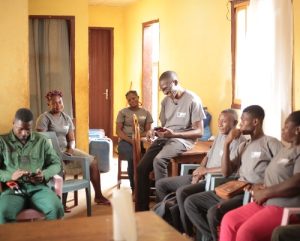
Dja community outreach
Our Guardians of Dja programme is now stepping up to expand our scope and safeguard these remarkable animals, alongside our existing gorilla conservation work. By eating vast quantities of termites and ants, pangolins play a key role in protecting their forest habitats.
So, by working closely with local villages to raise awareness about pangolins and their importance, the Guardians of Dja team will fight to reduce the number killed each year. The programme has built strong, trusted relationships with communities, deepening understanding of wildlife, conservation and sustainable living.
Through these partnerships, we will be empowering communities to protect pangolins and their forest habitat, fostering a future where people and wildlife can thrive together.
We look forward to updating you, and reporting our progress, later in the year!
LOVE PANGOLINS?
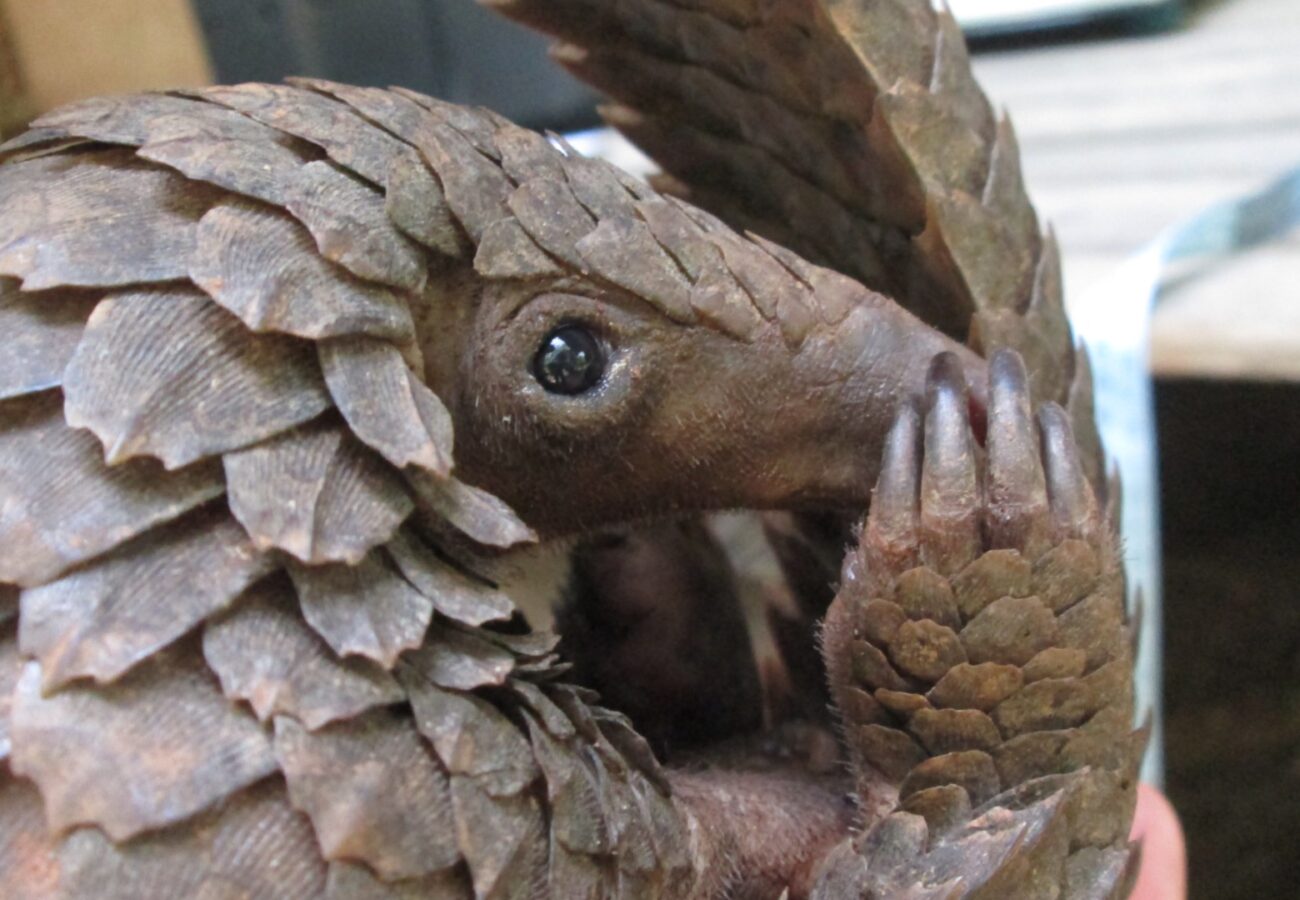
Adopt The Pangolin Family and help Born Free care for pangolins rescued and rehabilitated by Lilongwe Wildlife Trust, and to monitor their progress once released back into the wild. In addition, your adoption will help to fund our work to campaign against the illegal wildlife trade and protect their natural habitat.