
Culling of wolf pack in Kent raises serious ethical questions for zoos
Born Free reacts to the recent news that Wildwood, Kent has culled its entire wolf pack as a ‘last resort’
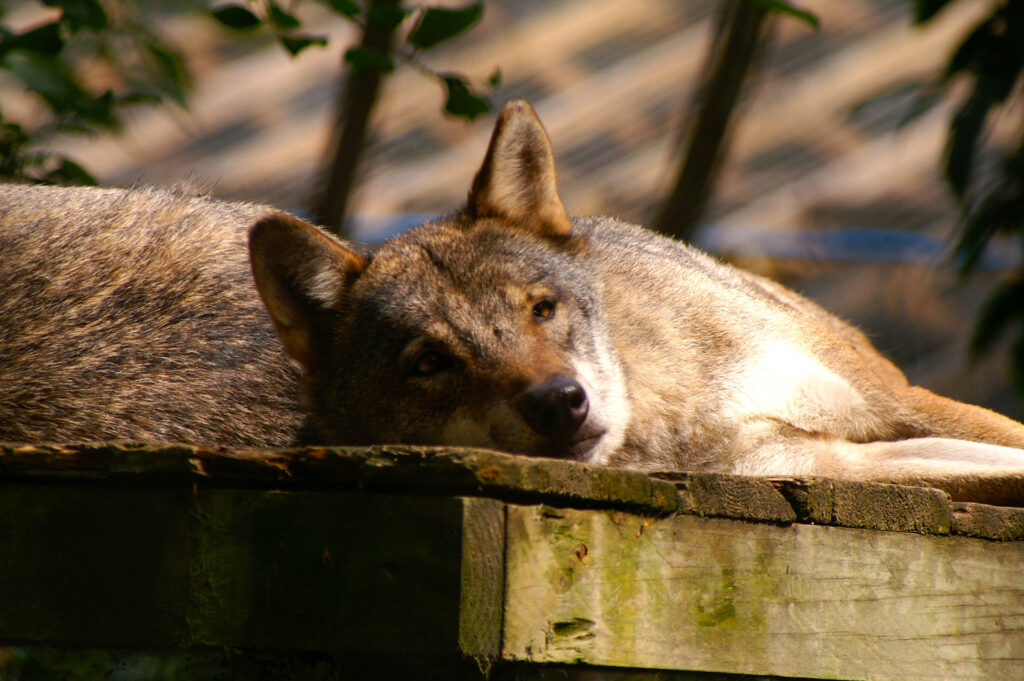
A European grey wolf at Wildwood (c) M Dooley
The recent news of a wolf pack being culled at a Kent zoo is both deeply distressing and profoundly troubling. Whilst our sympathies are with the keepers who cared for these animals, it raises urgent questions about the ethics of keeping highly social, intelligent animals in captive environments that are fundamentally ill-equipped to meet their complex needs.
Wolves naturally live in intricate social structures, defined by cooperation, communication, and strong familial bonds. In the wild, these dynamics evolve naturally, with individuals able to disperse, avoid conflict, or establish new territories when tensions arise.
Captivity removes these choices. When conflict emerges in an enclosed setting, animals typically have nowhere to hide or escape. The result is often escalation which sometimes ends in tragedy, either through zoo intervention and culling, or as a result of the conflict itself. Such conflict is not unique to captivity, however the inability to escape is.
The reported cull highlights the stark reality that when zoos attempt to replicate natural social groupings without the space, flexibility, or ecological context that sustains them in the wild, they create conditions that can quickly become unmanageable. Instead of addressing the root cause of the matter, – that these animals should not be housed if it can ultimately result in the culling of the whole group should things go wrong – zoos often adopt a reactive approach, while framing it as the ‘kindest’ or ‘only’ option.
This is not conservation. Nor is it education in any meaningful sense. It is an approach that places animals in situations where their natural behaviours, which have evolved over generations to enable them to survive and thrive in the wild, become liabilities; where animals may pay with their life. Incidents like this demonstrate that, for certain species, the standards required to keep them successfully and humanely are extraordinarily difficult, if not impossible, to achieve.
We must ask ourselves difficult but necessary questions. If a facility cannot safely accommodate the social complexities of a species, should it be keeping that species at all? If the breakdown of group dynamics leads to lethal outcomes, what does that say about the adequacy of the environment provided?
This should serve as a moment for reflection, not justification. We urge a reassessment of how and why complex social species are kept in captivity, and whether the current model truly serves their best interests. Because when the system fails, it is the animals who pay the ultimate price.
Find out more about the issues with zoos in the UK: