
What is it like to be a giraffe calf?
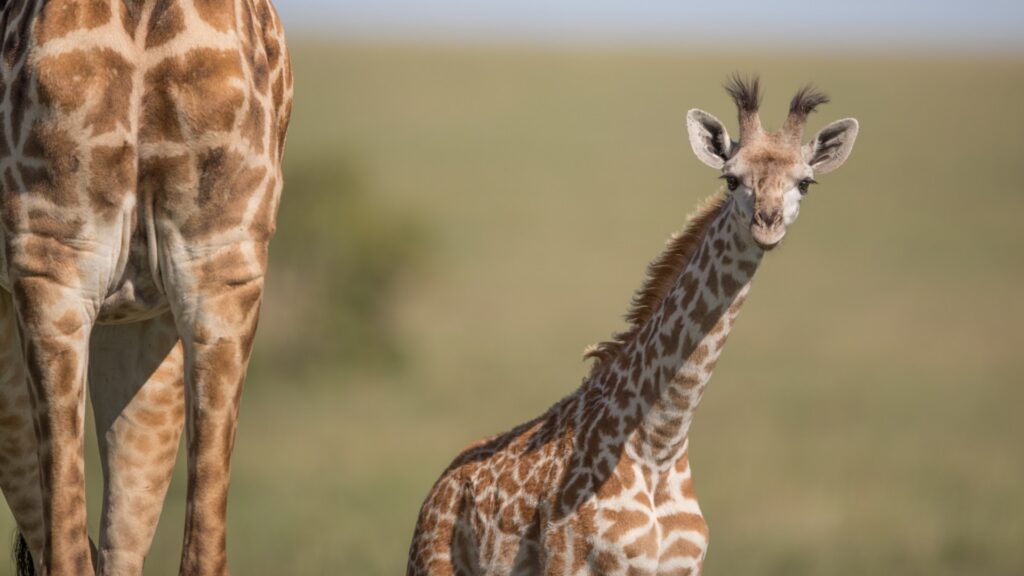
Already standing tall as a newborn, giraffe calves have a lot to learn to develop the skills needed for life in the wild.
(c) georgelogan.co.uk
As one of the world’s most recognisable animals, giraffes are found in population pockets across Africa. Once found roaming across much of the continent, giraffes support healthy ecosystems, browsing on the leaves out of reach of other herbivores. Life for a giraffe calf is full of challenges – Born Free’s Conservation Officer Anna Cryer explains more.
Born with a bump

Anna Cryer (c) Born Free
Giraffe calves start life in the world with a bump, as female giraffes give birth standing up. Able to stand within 5-20 minutes of being born, calves will begin suckling from their mother within an hour. Already weighing around 100 kilograms, they need a lot of milk, and their mothers rise up to the task, producing between 2.5-10 litres of milk a day depending on the age of their calf.
Giraffe mothers will give birth alone and remain alone with their calf, away from other giraffes for about a week. When calves are too young to defend themselves from predators, they will remain still, lying on the ground while their mum is close by. Mothers will also actively defend their calves against predators, such as lions, who can try to prey on young giraffes. 7
Giraffe herd life
In the first month, once the mother and calf have returned to their herd, calves will begin grouping together in creches, if there are other young individuals in the herd. Mothers may leave their calves in these creches as they go to forage, returning before dark for the calves to suckle.
Young giraffes can be very playful, running and jumping near their mothers. They sometimes even nip at others and try to play with adult giraffes. Play is not just for fun; it is an important learning tool for developing physical abilities and social skills.
Chewing the cud
(c) A Poole-Connor / Born Free
Once calves reach 3-4 months, they will begin to browse on plants, and ruminating. This is when some herbivores digest plants by regurgitating and re-chewing a semi-digested mass, called cud. The saying ‘chewing the cud’ comes from ruminating animals. Ruminating helps breakdown tough plant materials and done by other animals, classified as ruminants, such as sheep, cattle, antelope, deer and bison.
Giraffe calves are weaned around 9-12 months and become independent of their mother by two years old, though this independence does not mean they leave their mother. Giraffes are thought to live in ‘matrilineal’ societies, where female-bonded kin groups (related individuals) are a core feature of giraffe society.
Maturing and forming social bonds
(c) georgelogan.co.uk
Giraffes reach maturity at different ages – females are mature from age 4-5 years old, while males take longer, not reaching maturity until they are between 8-11 years old. Even once individuals have matured, mothers and their offspring can remain closely associated for as long as 15 years.
Researchers used to think giraffes had weak social bonds, appearing to be ‘aloof’, moving between individuals regularly without much connection. But further research has shown that they do in fact have strong social bonds. Living in fission-fusion societies, their groupings are flexible and fluid, with individuals coming together or apart throughout the day or over longer-periods. Within the group in a landscape, there will be strong connections between individuals, often based on kinship.
Help Born Free protect giraffes
In Kenya, Born Free works in the Meru landscape to protect Reticulated giraffes from poachers. Snares set in bushes and trees can catch giraffes’ legs easily, leading to a long, painful death. While giraffes may not be the target of these snares, this indiscriminate method can cause immense suffering.
Born Free’s Twiga Team patrol Meru National Park on foot, removing snares and preventing giraffes from pain. You can support this work and help keep giraffes safe by Adopting the Giraffe Family.
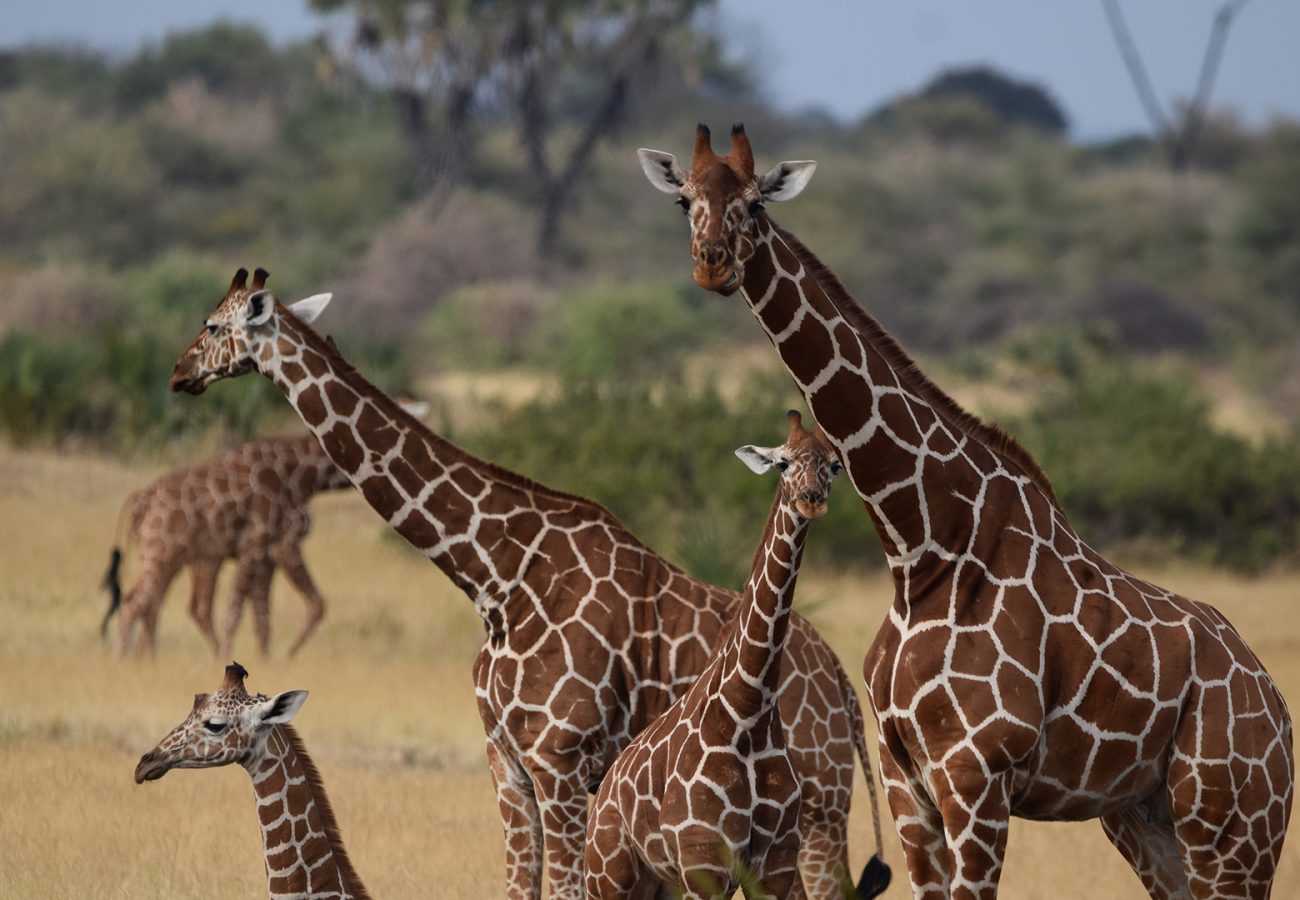
Adopt the Giraffe Family
You can help our long-legged friends by adopting the Giraffe Family today, from just £5 per month, including a welcome pack and optional giraffe cuddly toy.