On the anniversary of Pole Pole the elephant’s death, we’re calling for an end to isolation of elephants across Europe.
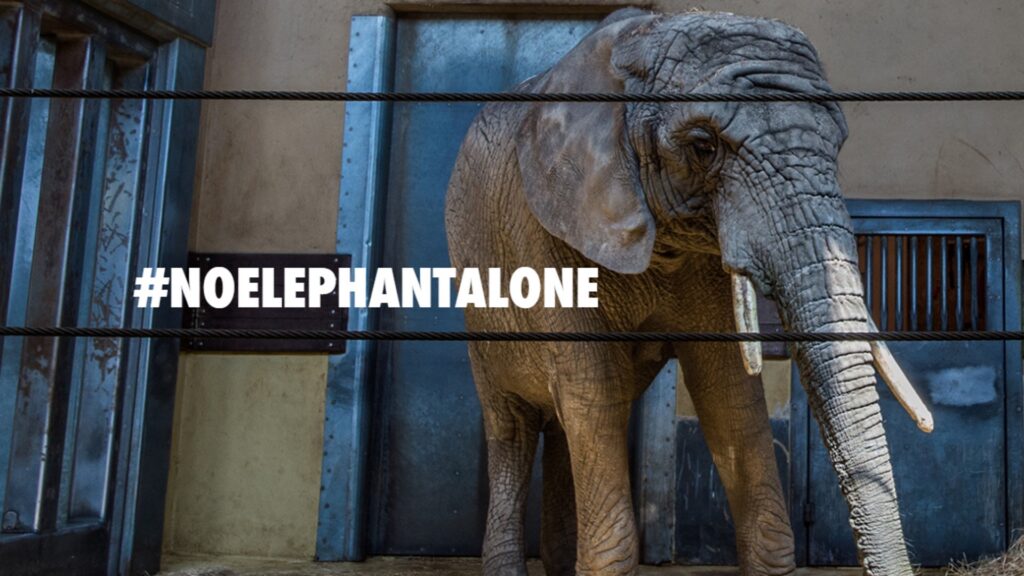
It started with Pole Pole. It ends with No Elephant Alone.
Forty-three years ago today, Pole Pole the elephant died at London Zoo. After spending several years alone, her tragic story inspired the creation of the Born Free Foundation. Now, on Pole Pole Day, we are launching #NoElephantAlone to call for an end to the isolation of elephants across Europe.
Pole Pole died on 17 October 1983, thought to be around 17 years old. Born Free was founded, originally as ‘Zoo Check’, to ensure her death would not be in vain.
Yet, more than four decades later, tragically an estimated 22 elephants are still living alone in zoos and circuses across Europe.
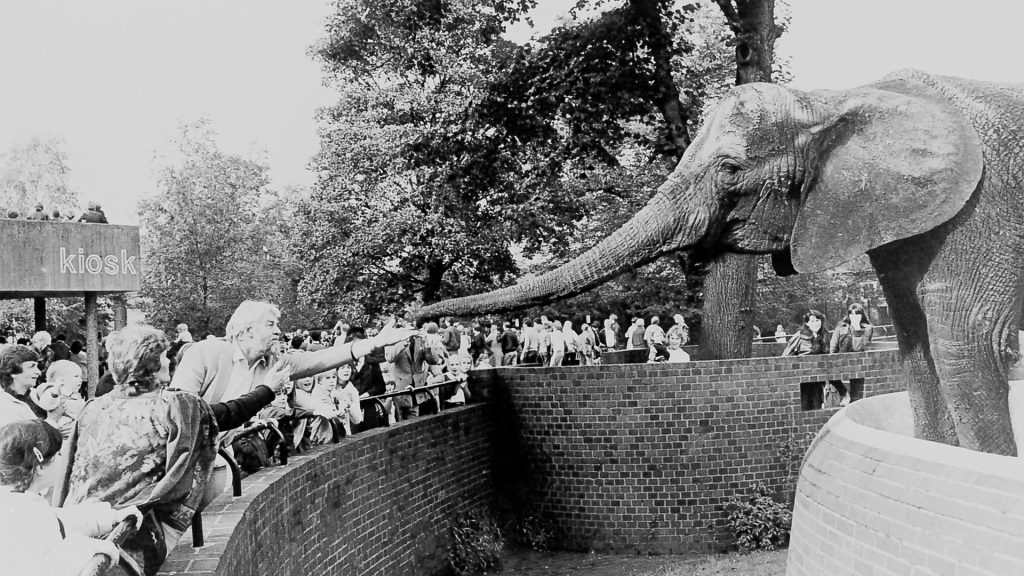
Dame Virginia McKenna and Bill Travers MBE, reach out to Pole Pole at London Zoo (c) Daily Mail
Elephants need elephants
Elephants are deeply social and intelligent. They form close relationships, comfort one another, learn from each other and maintain lifelong bonds.
No human care, however dedicated, can replace the companionship of another elephant.
The European Association of Zoos and Aquaria recognises this. Its guidelines state that female elephants must always have social contact, bulls must have the option of social contact, and keeping single elephants should be avoided except in exceptional circumstances.
And yet, some elephants have been alone for years. Some lost a companion. Others are the last elephant where they live.
Every one is an individual. Every one deserves better.
View our map of lone elephants
Different elephants. Different solutions. One goal.
For some, the answer could be welcoming compatible companions where they live, if conditions are suitable. For others, it may mean joining elephants elsewhere, moving to a specialist sanctuary or, where possible, relocating within their natural range.
Every solution must reflect the elephant’s health, history and individual needs.
The route may differ, but the goal is the same: #NoElephantAlone.
A new future for Kariba
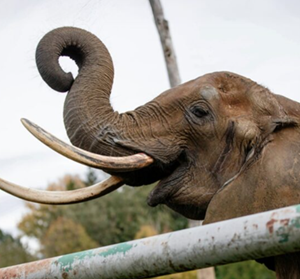
Kariba
Kariba has lived alone since her companion, Jenny, died in 2022. But her life is set to change. Through a partnership involving Pakawi Park, Pangea Elephant Sanctuary and Born Free and other founder members*, she is preparing to move to Pangea in Portugal in the near future.
There, with specialist care and carefully managed introductions, Kariba will have the opportunity to form a relationship with Julie, Pangea’s first resident, who also spent years alone.
Pangea is one solution. Kariba’s story shows what is possible when people put an elephant’s needs first.
Donate to support Kariba’s relocation
Pole Pole’s legacy lives on
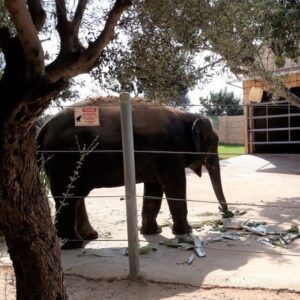
Shoba (c) RTRF
Forty-three years after Pole Pole’s death, elephants such as Shoba are still waiting for change.
Shoba lives alone at Pafos Zoo in Cyprus. Her isolation is being sold as an experience. Visitors can pay to feed her, touch her and pose for photographs. This is not the companionship she needs. She is an elephant, and she needs elephants.
Explore the map. Learn their names. Share their stories.
Explore the #NoElephantAlone Map
Elephants need elephants. Together, we can create a future where there is #NoElephantAlone.